
Instant heat and ambiance for Grant County homes.
With winter lows averaging 29°F and a climate that rarely demands round-the-clock heat, an electric fireplace gives Grant County homeowners real warmth and a real flame look—no chimney, no gas line, and usually no permit hassle.
Every Project Starts From One of These Five Situations
A mild climate that favors simple, flexible heat.
Grant County sits in the Gulf Coastal Plain of south-central Arkansas, bordered by the Ouachita National Forest and its familiar mix of oak, hickory, and pine. Climate zone 3A means humid summers and short, mild winters—the county logs roughly 3,255 heating degree days a year, a fraction of what a place like Fargo, ND or Duluth, MN racks up in a single season. That lighter heating load changes the math on hearth appliances: a full wood-burning or gas system built for sustained sub-zero nights is often more capacity than a Grant County home actually needs.
That's where electric fireplaces earn their keep. Plug-in and hardwired units heat a single room fast, run without any venting or fuel storage, and slot into an existing fireplace opening, a bare wall, or a bookshelf-style built-in with minimal construction work. For homes around Sheridan and the rest of the county where central HVAC already covers most of the heating load, an electric fireplace adds zone heat and ambiance to the room people actually live in—without the cutting permits, cordwood stacking, or chimney maintenance that a wood stove requires.
Three steps. No salesperson until you're ready.
Tell us about your project
Your zip code, your situation, and the fuel you're leaning toward—or let the answers point you to one.
See what's actually available
The brands dealers within 100 miles genuinely carry—real options, never a catalog mirage.
Get your dealer & Project Guide
A trusted local dealer, plus the free Project Guide & Parts List that names every component of the job.
Frequently Asked Questions
How much does an electric fireplace installation cost in Grant County?
Most electric fireplace projects in Grant County run in the $300 to $2,500 range. A plug-in insert or freestanding stove dropped into an existing fireplace opening sits at the low end—often just the cost of the unit itself. A built-in linear unit or a wall-mount model that needs a dedicated 120V or 240V circuit run by a licensed electrician adds $150 to $400 for the wiring work. Custom mantels, recessed wall framing, or units placed away from an existing outlet push toward the higher end. Because there's no venting or gas line involved, electric is consistently the least expensive hearth option in the county.
Do I need a permit to install an electric fireplace in Grant County?
Usually not. A plug-in electric fireplace or insert that uses a standard household outlet doesn't require a building permit—there's no chimney, no gas line, and no combustion to inspect. If you're having a built-in unit hardwired on its own circuit, the electrician handling that work will typically pull whatever electrical permit the county requires and coordinate the inspection. It's a much lighter process than a wood or gas installation, which is one of the reasons electric is a popular first hearth upgrade for Grant County homeowners.
What size electric fireplace do I need for my room?
Electric units are rated for heating a single room rather than a whole house, so sizing comes down to square footage and how open the floor plan is. A 1,000-2,000 BTU unit comfortably heats a bedroom or den; larger great rooms or open-concept living areas typically call for a 4,600-5,000 BTU insert or built-in, which is close to the top output for most residential electric fireplaces. In a Grant County home where the central system already carries the bulk of the heating load through most of the winter, sizing for comfortable supplemental heat in one room—not for whole-home backup—is usually the right approach.
Electric vs. wood—which makes more sense for my Grant County home?
Wood remains a practical option here: the Ouachita National Forest issues cutting permits for $10 to $20 per cord during the May-through-October season, and local oak, hickory, and pine burn well and are easy to source. But wood means chimney maintenance, ash cleanup, and stacking cordwood for heat that, given the county's mild 3,255 heating-degree-day climate, you may only need on the coldest handful of nights. Electric skips all of that—no permits, no wood handling, no venting—in exchange for needing grid power to run. For most Grant County homes using a fireplace for ambiance and light supplemental heat rather than primary winter survival heat, electric is the simpler fit.
Will an electric fireplace work during a power outage?
No—electric fireplaces require grid power to run the heating element, flame effect, and any fan, so they go dark the moment the power does. That's the one real trade-off compared to a wood stove, which keeps producing heat regardless of outages. If backup heat during storms is a real concern for your property, pairing a wood-burning unit elsewhere in the house with an electric fireplace in your main living space is a common approach among Grant County homeowners who want both convenience and a fallback.
What types of electric fireplaces are available for Grant County homes?
The three most common formats are inserts (which drop into an existing masonry fireplace opening and instantly modernize an old wood-burning hearth), wall-mount or built-in linear units (popular in newer construction and remodels for their low-profile, modern look), and freestanding electric stoves (which mimic a traditional wood stove footprint without any venting). For a county with a good number of older homes built around existing brick fireplaces, an insert that reuses the opening is often the most cost-effective upgrade—you get real flame visuals and supplemental heat without touching the chimney at all.
How much does it cost to run an electric fireplace?
A typical electric fireplace draws 1,500 watts on the heat setting, which costs roughly 15-25 cents per hour to run depending on your local electric cooperative's rate—a few dollars for a full evening of use. Since Grant County's heating season is comparatively short, most homeowners find electric fireplace operating costs modest compared to running a whole-home HVAC system harder, especially when the unit is used to heat one room rather than as a whole-house solution.
Can an electric fireplace be my main source of heat?
It can work as a primary heat source for a single room, but it's not designed to heat an entire house. Given Grant County's mild winter lows—averaging around 29°F—and modest heating-degree-day count, many homeowners here use an electric fireplace as the main heat source in a den, home office, or bonus room while central HVAC or another appliance covers the rest of the house. For anyone hoping to go off-grid on heat entirely, wood or a properly sized gas system is a better match than electric.
Can I convert my existing wood fireplace to electric?
Yes, and it's one of the simplest hearth upgrades available. An electric insert slides into your existing masonry fireplace opening, plugs into a nearby outlet (or a new dedicated circuit for larger units), and gives you a real flame look and supplemental heat without touching the chimney, damper, or firebox. It's a popular option for Grant County homes with an older brick fireplace that's rarely used for actual wood burning anymore—you keep the look, lose the ash and creosote, and skip any cutting permits or firewood stacking altogether.
Can I put a TV above my fireplace?
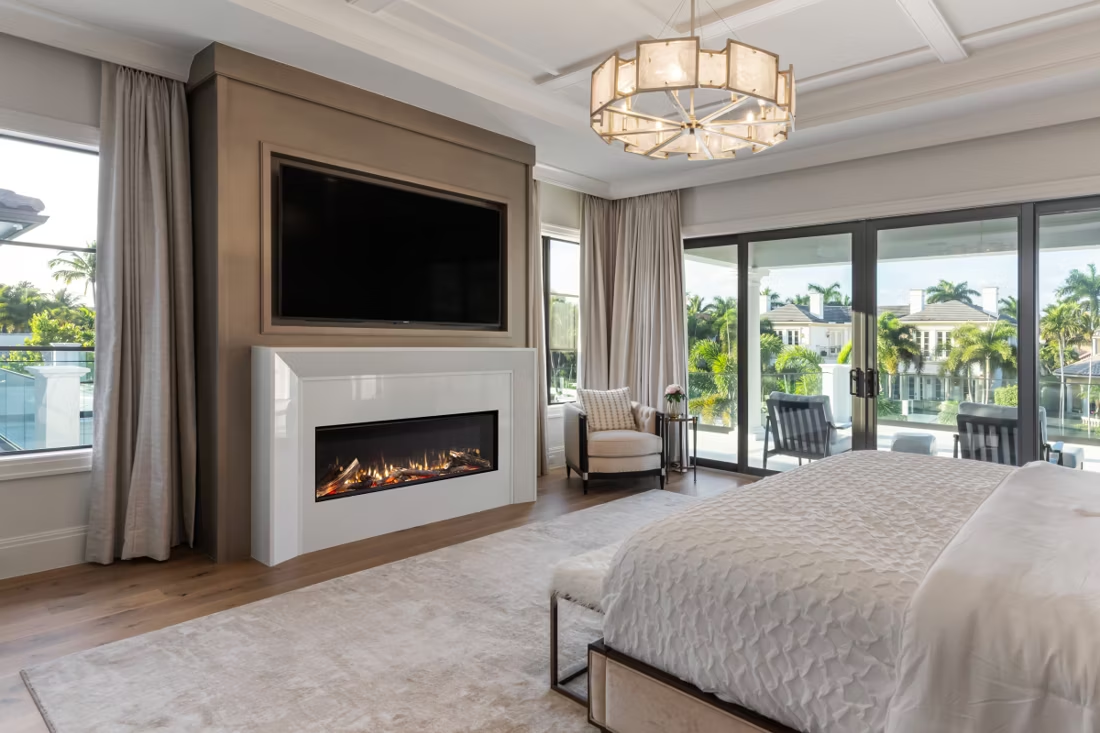
Yes—with an asterisk. Fireplaces are hot and TVs don't like heat. Either put a mantel between them to deflect rising warmth, or choose a fireplace with heat-management technology that creates a cool zone on the wall above—the wall stays around 125 degrees, barely warm, while the room still gets full heat. If you like clean lines and don't want a mantel, heat management is the answer.
Do electric fireplaces actually produce heat?
Yes—most put out around 4,800–5,000 BTUs from a standard outlet, which comfortably warms a bedroom, office, or den as a comfort-zone heater. What they won't do is carry a whole house the way wood, gas, or pellet can. Think of electric as ambiance-first with honest supplemental heat: flames on with no heat in July, flames plus warmth in January.
What is an in-home preview and do I need one?
It's a visit where a hearth professional measures your space, confirms the model you picked actually works in your home, and walks the specs—framing, gas line, venting, finish work—before anything is ordered. Some details you just can't know until you see the house. Never make a down payment without one; it's the single most-skipped step that burns buyers.
Can I install a fireplace myself?
If you're putting a fire in your house on purpose, it's best to work with an expert. Unless you're genuinely experienced in framing, gas line, vent pipe, and the national code on clearances to combustibles, have a professional do it—and ideally the same company that sells you the fireplace, so warranty, service, and liability all live under one roof.
Find your electric fireplace in Grant County.
Tell us a bit about your home and we'll match you with a trusted local dealer and send over a free Project Guide & Parts List—sized for your room, with the right unit and parts spelled out.
Find Your Fireplace →