
Clean, automatic heat for Drew County winters.
Drew County's winters rarely demand a roaring fire—they call for a thermostat-controlled stove that runs itself for days on a hopper of pellets. Find the right size for your home and get matched with a trusted local dealer.
Every Project Starts From One of These Five Situations
Pellet heat fits Drew County's mild, timber-rich climate.
Drew County sits in the pine timber belt of southeast Arkansas, where oak, hickory, and pine have supported sawmills and rural households for generations. The climate here is Zone 3A—mild by national standards, with an average winter low near 34°F and a light overall winter heating load, a fraction of what a place like Duluth, MN or Fargo, ND sees each winter. That means most Drew County homes don't need a whole-house heating overhaul; they need an efficient, low-fuss way to take the chill off the living room on the handful of genuinely cold nights and keep it comfortable through the long mild stretches in between.
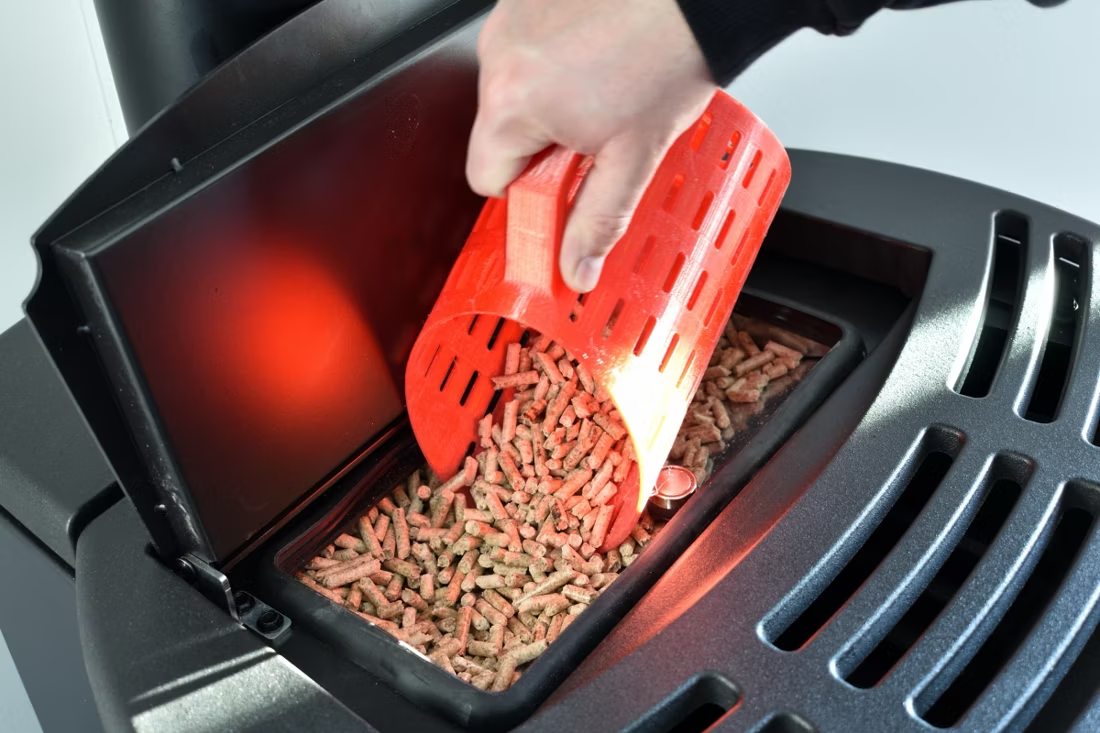
That's exactly what a pellet stove is built for. Load the hopper, set the thermostat, and it runs itself—no splitting, stacking, or tending a fire, and no chimney sweep required the way a wood system needs. Drew County also sits within reach of regional pellet supply from brands like Lignetics and industrial biomass operations such as Indeck Energy Services, so fuel isn't an imported novelty here—it's made from the same pine and hardwood forests that surround Monticello and the rest of the county. With no air quality non-attainment issues or winter inversion advisories on record locally, there are no burn curtailment periods to plan around, either.
Three steps. No salesperson until you're ready.
Tell us about your project
Your zip code, your situation, and the fuel you're leaning toward—or let the answers point you to one.
See what's actually available
The brands dealers within 100 miles genuinely carry—real options, never a catalog mirage.
Get your dealer & Project Guide
A trusted local dealer, plus the free Project Guide & Parts List that names every component of the job.
Frequently Asked Questions
How much does a pellet stove installation cost in Drew County?
Most pellet stove installations run in the range of roughly $2,500 to $5,000 depending on the unit, whether you're venting through an exterior wall or an existing chimney, and any hearth pad work needed for clearance. Because pellet stoves vent through a simple PL-rated pipe rather than a full masonry chimney, installs in Drew County are typically faster and less invasive than a wood stove project. A local dealer can give you a firm number after seeing your room and wall layout.
What size pellet stove do I need for a Drew County home?
With Drew County's mild winter lows—averaging around 34°F—and a light overall winter heating load, most homes don't need a large, whole-house-rated stove. A small to mid-size pellet stove (rated for 1,000 to 1,800 square feet) is usually enough to comfortably heat a living area or main floor, even on the coldest nights of the year. Oversizing is a common mistake in mild climates like this one—a stove sized for a cold-climate home will run on low settings most of the winter, which is inefficient and can shorten auger and igniter life. A local dealer can size it correctly based on your square footage and how the room is laid out.
Where can I find a certified pellet stove installer near me?
Look for a dealer whose installers carry NFI (National Fireplace Institute) certification, which covers proper venting, clearance, and combustion-air requirements for pellet appliances. In a county the size of Drew, with Monticello as the population center, most retailers cover the surrounding rural communities as well—expect a modest travel charge if you're well outside town. Buying and installing through the same company also keeps warranty coverage straightforward if the auger motor or igniter ever needs service.
What's the difference between a pellet stove and a pellet insert?
A pellet stove is a freestanding unit that sits on its own hearth pad and vents through a wall or existing chimney—it can go almost anywhere in a room with the right clearances. A pellet insert is built to slide into an existing masonry fireplace opening, turning an old open fireplace into a sealed, thermostat-controlled heat source. For Drew County homes with an existing wood-burning fireplace that rarely gets used, an insert is often the simpler upgrade since it uses the opening and chase you already have. Homes without an existing fireplace are usually better served by a freestanding stove.
Do I need a permit to install a pellet stove in Drew County?
Yes—a solid-fuel appliance installation, including a pellet stove, typically requires a building permit through your local building official to confirm proper venting, clearances, and hearth pad compliance. Most local dealers handle this paperwork as part of the install so you don't have to coordinate it yourself. Because Drew County has no listed air quality non-attainment issues or winter curtailment periods, there's no additional burn-restriction paperwork to worry about beyond the standard installation permit.
What's the best pellet stove for Drew County's climate?
Given the mild winter lows and light heating load here, a mid-efficiency pellet stove with a moderate BTU output and a decent hopper capacity (40+ pounds) is usually the sweet spot—it'll run comfortably on low-to-medium settings most of the season without cycling excessively. Look for a model with a reliable auger feed system and an easy-clean burn pot, since ash removal is the main routine maintenance task. A local dealer can walk you through specific models once they know your room size and whether you want it as primary supplemental heat or occasional-use ambiance.
Where do I buy pellets, and does the brand matter?
Look for PFI (Pellet Fuels Institute) certified bags, which guarantee a consistent moisture content and low ash percentage—both matter for clean, efficient burning. Lignetics is a widely available national brand carried by many regional retailers, and larger-volume industrial supply through operations like Indeck Energy Services also serves the south Arkansas region. Given Drew County's humid subtropical climate, store bagged pellets off the ground and away from moisture—humidity is a bigger threat to pellet quality here than it would be in a drier climate.
Will my pellet stove work during a power outage?
Not without a backup power source. Pellet stoves rely on an electric auger to feed fuel and a blower to distribute heat, so a power outage stops the stove even with a full hopper. Some homeowners pair a pellet stove with a small battery backup or generator for exactly this reason. If uninterrupted heat during storm-related outages is a priority for your Drew County home, a wood stove—which needs no electricity to run—is worth considering as a complement, especially given the abundance of local oak, hickory, and pine.
Pellet stove vs. wood stove—which is right for my home?
Wood stoves work without electricity, burn the oak, hickory, and pine that are abundant throughout Drew County, and often cost less to fuel if you're cutting or buying local firewood. Pellet stoves are more hands-off—no splitting or stacking, thermostatic operation, and a cleaner burn with less ash—but they need electricity to run the auger and blower. Given the county's mild winter climate and light overall heating load, either fuel comfortably handles the heating load; the choice mostly comes down to whether you value the convenience of a pellet stove's set-it-and-forget-it operation or the outage-proof reliability of wood.
How often does a pellet stove need cleaning?
A clean pellet stove is a happy pellet stove. Plan on cleaning the burn pot about once a week when you're burning regularly—ash and clinkers gum up the air holes just like a pellet barbecue. Most pellet stove problems trace back to skipped cleaning that nobody explained up front. Some designs make it easy with a trapdoor burn pot: pull a lever and the gunk drops into the ash pan.
Why is my open fireplace making my house colder?
Open fireplaces suck—literally. As the fire burns, it consumes air your furnace already paid to heat and pulls it out through the chimney, so the house is actually colder after the fire goes out than before you lit it. An insert fixes this: it seals the chimney, puts fixed glass across the front, and turns that hole in your house into a real heat source.
How much should I budget for a fireplace?
For an average home—covering the fireplace, the vent pipe, and basic installation—a budget between $3,900 and $5,500 gives you a lot of options across wood, gas, and pellet. By the time you add finish work, gas line, and electrical, the average complete installation lands between $5,000 and $12,000 all-in. In a remodel or new build, a good rule is to put about 2.5% of the total project cost toward the fireplace.
What is an in-home preview and do I need one?
It's a visit where a hearth professional measures your space, confirms the model you picked actually works in your home, and walks the specs—framing, gas line, venting, finish work—before anything is ordered. Some details you just can't know until you see the house. Never make a down payment without one; it's the single most-skipped step that burns buyers.
Stove and Fireplace Dealers in Drew County
Pellet Brands Stocked Around Drew County
Manufacturers will point you to the nearest stocking dealer.
Find your pellet stove in Drew County.
Tell us a bit about your home and we'll match you with the right pellet stove or insert, plus a free Project Guide & Parts List—including the exact vent kit—from a trusted local dealer.
Find Your Fireplace →