
Electric heat that fits Drew County's mild winters.
No chimney, no gas line, no permit hassle—just plug in or hardwire and enjoy real flame-look warmth in Monticello, Wilmar, Winchester, and everywhere in between. Find the right unit and connect with a trusted local dealer.
Every Project Starts From One of These Five Situations
Ambiance and easy heat for a mild climate.
Drew County sits in south-central Arkansas, climate zone 3A, with an average winter low around 34 degrees and roughly 2,634 heating degree days a year. That's a fraction of what a place like Duluth, Minnesota racks up in a single month—Drew County winters are short, mild, and rarely demand a full-time primary heat source. For most homes in Monticello and the smaller communities around it (Wilmar, Winchester, Jerome, Selma), the heating season is really about taking the edge off cool mornings and adding a focal point to a living room, den, or primary bedroom rather than fighting off sub-zero nights.
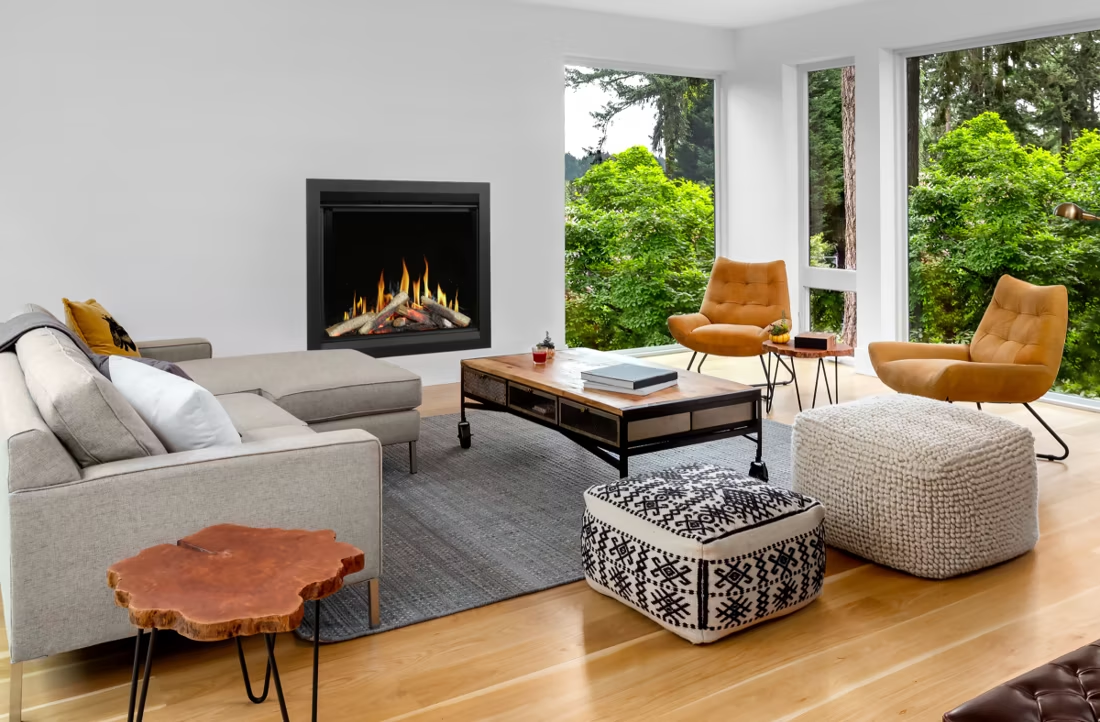
That's exactly the niche electric fireplaces fill well here. There's no chimney to build, no venting to route, and no gas line to run—a plug-in insert or freestanding unit can go into almost any wall or existing masonry opening, and a built-in wall unit typically just needs a dedicated 120V or 240V circuit run by a licensed electrician. C&L Electric Cooperative Corporation, headquartered in nearby Star City, serves much of rural Drew County, with Entergy Arkansas covering in-town Monticello customers—either way, running an electric fireplace costs pennies compared to heating an entire home with it. A local dealer can size the unit correctly, confirm your circuit can handle it, and make sure any hardwired installation meets Drew County code.
Three steps. No salesperson until you're ready.
Tell us about your project
Your zip code, your situation, and the fuel you're leaning toward—or let the answers point you to one.
See what's actually available
The brands dealers within 100 miles genuinely carry—real options, never a catalog mirage.
Get your dealer & Project Guide
A trusted local dealer, plus the free Project Guide & Parts List that names every component of the job.
Frequently Asked Questions
How much does an electric fireplace installation cost in Drew County?
A basic plug-in electric insert or freestanding stove runs $300 to $700 for the unit itself, with little to no installation cost since it simply plugs into an existing outlet. A built-in wall-mounted unit or a linear electric fireplace set into a framed wall or existing masonry opening typically runs $1,200 to $2,500 once you factor in a dedicated circuit, an electrician's time, and any surround or mantel finish work. Costs run toward the higher end for homes without an existing 240V circuit nearby, since running new wiring is the main cost driver. A local dealer will confirm exact pricing after seeing your wall and electrical panel.
What size electric fireplace do I need for my Drew County home?
Given how mild Drew County winters run—average lows around 34 degrees and only about 2,634 heating degree days a year—most homeowners here are choosing an electric fireplace for ambiance and supplemental warmth in a single room, not whole-home heat. A 1,500-watt unit comfortably takes the chill off a living room or bedroom up to roughly 400 square feet. Larger linear units built into a great room wall can push more BTUs, but few Drew County homes need the maximum heat output these units are capable of. If you're in an older farmhouse with drafty rooms outside Monticello proper, a local dealer can recommend a slightly higher-output model for supplemental heat on the coldest nights.
Do I need an electrician to install an electric fireplace?
A small plug-in insert or freestanding electric stove doesn't need an electrician—it runs on a standard household outlet like any other appliance. A built-in wall unit or a larger linear fireplace usually draws enough current to require its own dedicated circuit, which does call for a licensed electrician to run new wiring and tie into your panel. The hearth dealers who serve Drew County typically coordinate this electrical work as part of the install, so you're not left hiring a separate contractor and matching up schedules yourself.
What's the difference between an electric insert, a wall-mounted unit, and a freestanding electric stove?
An electric insert is built to slide into an existing fireplace opening—a common upgrade for older Drew County homes with an unused masonry fireplace that never gets used for wood. A wall-mounted or built-in linear unit is designed to be framed into a wall, either flush or with a surround, and is the most common choice in newer construction or remodels around Monticello. A freestanding electric stove mimics a traditional wood stove's look and can sit anywhere near an outlet without any wall modification at all—a simple option for a den, sunroom, or rental property.
Do I need a permit to install an electric fireplace in Drew County?
A portable plug-in unit needs no permit at all—it's treated like any other appliance. A hardwired, built-in electric fireplace that requires new circuit wiring may need a basic electrical permit, depending on whether you're inside Monticello city limits or in unincorporated Drew County. Most local dealers and their electricians handle this paperwork as part of the installation, so it's rarely something a homeowner has to manage directly.
What's the best electric fireplace for Drew County's climate?
Since Drew County winters are mild and short, heat output matters less here than flame realism and finish quality—most homeowners are buying for the look and the occasional supplemental warmth on a cold front, not to replace a furnace. Linear models from Dimplex or Napoleon with multi-color LED flame technology and adjustable heat settings (including a flame-only, no-heat mode for warm months) tend to be popular choices for living rooms and primary bedrooms. For a fireplace-style insert into an existing masonry opening, a classic-look model with a realistic log set fits older Monticello homes better than a modern linear design.
How much does it cost to run an electric fireplace in Drew County?
A typical 1,500-watt electric fireplace costs roughly 15 to 25 cents per hour to run on heat mode, depending on your rate through C&L Electric Cooperative Corporation or Entergy Arkansas. Running it several hours a night through a mild Drew County winter usually adds only a few dollars a month to your bill—far less than heating an entire home with electric resistance heat. Most units also run in flame-only mode with the heater off, which draws minimal power and is popular for year-round ambiance in a region where the heating season is short.
Electric vs. wood—which is right for my Drew County home?
Wood offers real flame, real heat, and works during power outages—a meaningful consideration if you're in a rural part of the county where outages can run longer, and local oak, hickory, and pine are all readily available firewood species. Electric offers instant on-off convenience, zero mess, no chimney or venting, and safe operation even for households with young kids or renters who can't modify a fireplace opening. Given how mild Drew County winters are, plenty of homeowners choose electric simply because the ambiance-to-effort ratio is better—you get the visual warmth of a fire without stacking wood or sweeping a chimney. Homes wanting emergency backup heat still lean toward wood or a dual setup with both.
Electric vs. gas—which is right for my Drew County home?
Gas delivers more realistic heat output and can run during a power outage with the right ignition system, but many parts of rural Drew County don't have natural gas service, meaning a gas fireplace install would require a propane tank and regular fuel deliveries. Electric skips all of that—no tank, no fuel deliveries, no gas line permit—and installs almost anywhere with just a plug or a simple circuit. For homeowners in Monticello or the surrounding rural county who want warmth and ambiance without adding a fuel account to manage, electric is usually the simpler and faster path.
Can I put a TV above my fireplace?
Yes—with an asterisk. Fireplaces are hot and TVs don't like heat. Either put a mantel between them to deflect rising warmth, or choose a fireplace with heat-management technology that creates a cool zone on the wall above—the wall stays around 125 degrees, barely warm, while the room still gets full heat. If you like clean lines and don't want a mantel, heat management is the answer.
How much does an electric fireplace cost to run?
With the heater on, a typical unit draws about 1,500 watts—at average electric rates that's roughly 20 cents an hour. Run the flame effect alone and it costs pennies; the flames are LED-driven and use about as much power as a light bulb. There's no pilot light, no fuel delivery, and essentially no maintenance.
How much should I budget for a fireplace?
For an average home—covering the fireplace, the vent pipe, and basic installation—a budget between $3,900 and $5,500 gives you a lot of options across wood, gas, and pellet. By the time you add finish work, gas line, and electrical, the average complete installation lands between $5,000 and $12,000 all-in. In a remodel or new build, a good rule is to put about 2.5% of the total project cost toward the fireplace.
What is an in-home preview and do I need one?
It's a visit where a hearth professional measures your space, confirms the model you picked actually works in your home, and walks the specs—framing, gas line, venting, finish work—before anything is ordered. Some details you just can't know until you see the house. Never make a down payment without one; it's the single most-skipped step that burns buyers.
Stove and Fireplace Dealers in Drew County
Find your electric fireplace in Drew County.
Tell us a bit about your home and we'll match you with the right electric fireplace, insert, or wall unit—plus a free Project Guide & Parts List with the exact wiring and mounting hardware your project needs, and a trusted local dealer to install it.
Find Your Fireplace →