
Steady, thermostat-controlled heat for Conway County homes.
From Morrilton to Petit Jean Mountain, Conway County's mild winters don't call for a wood-hauling operation—just a pellet stove that lights, holds a set temperature, and doesn't ask much of you. Find the right unit and connect with a trusted local dealer.
Every Project Starts From One of These Five Situations
Consistent warmth without the wood pile.
Conway County sits in the Arkansas River Valley, with Morrilton as the county seat and Petit Jean Mountain rising along its southern edge. At roughly 9,700 residents, it's a rural county where a lot of homes still burn wood—the oak, hickory, and pine stands that fill the Ozark-St. Francis and Ouachita National Forests make that easy. But Conway County's climate zone 3A winters are mild by national standards: a 29-degree average winter low and a fairly short, mild heating season overall, a fraction of what a place like Duluth, Minnesota sees in a single season. That combination—moderate cold plus abundant hardwood but not a brutal, months-long heating season—is exactly where pellet stoves earn their keep as a clean, low-effort alternative or supplement to a wood-burning setup.
A pellet stove in Conway County doesn't need to be sized to survive a polar vortex; it needs to hold a comfortable, even temperature through the shorter, milder cold snaps that define an Arkansas winter, then sit idle for long stretches in between. Regional suppliers like Lignetics and Indeck Energy Services keep pellets reasonably accessible in this part of the state, and there are no local air quality restrictions or burn bans on pellet appliances here—one less thing to plan around. For homeowners who like the ambiance of a real fire but don't want to split, stack, and haul cordwood, or who want a supplemental heat source that's easier on aging knees than a wood stove, pellet is a genuinely practical fit for this county.
Three steps. No salesperson until you're ready.
Tell us about your project
Your zip code, your situation, and the fuel you're leaning toward—or let the answers point you to one.
See what's actually available
The brands dealers within 100 miles genuinely carry—real options, never a catalog mirage.
Get your dealer & Project Guide
A trusted local dealer, plus the free Project Guide & Parts List that names every component of the job.
Frequently Asked Questions
How much does a pellet stove installation cost in Conway County?
Most pellet stove and insert installations in this part of Arkansas run in the $3,500 to $6,500 range, depending on the unit, whether you're venting through an existing masonry chimney or need a new through-wall vent kit, and whether electrical work is required for the hopper's auger and blower. Because Conway County's winters are moderate, many homeowners here choose a mid-size unit for supplemental or zone heating rather than the largest model on the floor, which keeps costs toward the lower end of that range. A local dealer can give you a firm number after seeing your chimney or wall configuration in person.
What size pellet stove do I need for my Conway County home?
Because Conway County only sees a fairly short, mild heating season overall—mild compared to much of the country—most homes here don't need a stove sized to run flat-out all winter. A small to mid-size unit (rated for 1,000 to 1,800 square feet) comfortably heats a main living area or handles supplemental heat for a larger home with central HVAC as backup. If you're aiming for a pellet stove as your primary heat source in an older, less-insulated farmhouse near Morrilton or out toward Petit Jean, size up slightly and ask your dealer about hopper capacity, since a bigger hopper means fewer refills during the coldest stretches.
Where can I buy pellets in or near Conway County?
Pellets aren't grown on every corner in this part of Arkansas, but regional brands including Lignetics and Indeck Energy Services distribute into this area, and local hearth dealers and farm supply stores typically stock bagged pellets by the ton, especially heading into fall. Because Conway County's burning season is shorter than in colder states, it's worth buying your season's supply early—some rural retailers sell through their stock before spring and don't always restock mid-winter. Ask your installing dealer where they source pellets locally; most can point you to a reliable supplier or handle seasonal orders directly.
What's the difference between a pellet stove and a pellet insert?
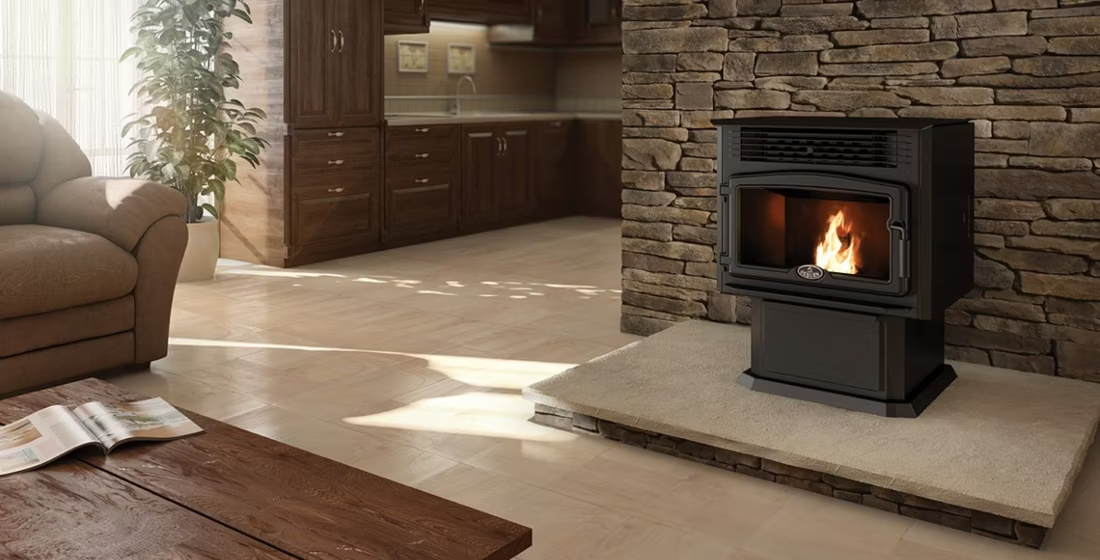
A pellet stove is a freestanding unit that sits on its own hearth pad and vents through a wall or existing chimney—it can go almost anywhere in the house with the right clearances. A pellet insert is built to slide into an existing masonry fireplace opening, which is common in older Conway County homes that already have a wood-burning fireplace they no longer use. If you've got an open masonry fireplace that's mostly decorative, an insert converts it into an efficient, thermostat-controlled heat source without giving up the fireplace opening. If you don't have an existing fireplace, a freestanding stove is the simpler path.
Do I need a permit to install a pellet stove in Conway County?
In most cases, yes—a building permit is typically required for a new pellet stove installation, whether that's through the Conway County Building Department for rural and unincorporated areas or the City of Morrilton for installations within city limits. The permit process mainly confirms the venting and clearances meet code. Most established hearth dealers pull the permit as part of the installation, so you shouldn't need to navigate it yourself. Unlike wood stoves, pellet appliances aren't subject to any local air quality curtailment rules in Conway County, since there are none in effect here.
What's the best pellet stove for Conway County's climate?
Because winters here are moderate—a 29-degree average low rather than the sustained single digits you'd see farther north—you don't need the largest-hopper, longest-burn-time model on the market. A mid-size unit from a mainstream manufacturer with a straightforward auger feed system will comfortably handle the shorter cold stretches typical of an Arkansas River Valley winter. What matters more locally is humidity: this is a humid climate zone, so ask your dealer about pellet storage recommendations, since pellets that absorb moisture swell and jam feed systems. A dry, sealed storage setup matters as much here as raw BTU output.
How much maintenance does a pellet stove need?
Pellet stoves need more frequent light maintenance than wood stoves but far less heavy upkeep. Plan on emptying the ash pan every few days during regular use, wiping the glass as needed, and cleaning the burn pot weekly to keep the fire feeding properly. Most manufacturers also recommend a full professional cleaning of the exhaust venting and hopper system once a year—typically before the season starts. Given Conway County's shorter, milder burning season compared to colder states, many homeowners here get away with lighter annual service than someone running a stove nonstop for six months.
Can I burn wood pellets that I make myself or buy in bulk from out of state?
Technically most pellet stoves will burn any standard hardwood or softwood pellet, but manufacturers specify pellet quality standards (ash content, moisture, density) for a reason—off-spec pellets can clog the auger or leave excess ash. Regional brands like Lignetics are formulated and tested for consistent burn quality, which is why local dealers generally recommend sticking with known brands rather than bargain-bin pellets of unknown origin. If you're buying in bulk to save money for the season, confirm the ash content is under 1% for easiest maintenance.
Pellet vs. wood—which is right for my Conway County home?
Wood is genuinely abundant here—Conway County sits near the Ozark-St. Francis and Ouachita National Forests, where cutting permits run $10 to $20 per cord during the May-to-October season, and oak, hickory, and pine are common and inexpensive if you're willing to cut and season your own. Wood stoves also work without electricity, which matters during storm-related outages. Pellet stoves trade that self-sufficiency for convenience: no splitting or stacking, a thermostat that holds a set temperature, and a cleaner burn with far less ash—but they need electricity to run the auger and blower, so they won't help during a power outage unless paired with a battery backup. For a household that values low-effort daily operation over self-sufficiency, pellet is usually the better fit in this mild climate; for those with access to cheap or free wood and a taste for hands-on heating, wood still makes sense.
How often does a pellet stove need cleaning?
A clean pellet stove is a happy pellet stove. Plan on cleaning the burn pot about once a week when you're burning regularly—ash and clinkers gum up the air holes just like a pellet barbecue. Most pellet stove problems trace back to skipped cleaning that nobody explained up front. Some designs make it easy with a trapdoor burn pot: pull a lever and the gunk drops into the ash pan.
Why is a fireplace insert so efficient?
An insert does two things: it seals the chimney completely, so you stop losing air you already paid to heat, and it radiates warmth into the room through the firebox and glass. Most add a heat-exchange fan that pulls cool room air underneath, wraps it around the hot firebox, and pushes it back out warm. Your home is more efficient before you've even lit the first fire.
Does a fireplace add value to my home?
On average, a fireplace adds back to the home about the same amount you spent installing it. Add the monthly savings from heating the rooms you actually use instead of the whole house—often hundreds of dollars a year—and the value case is strong before you even count what a fire does for how your family uses the room.
What is an in-home preview and do I need one?
It's a visit where a hearth professional measures your space, confirms the model you picked actually works in your home, and walks the specs—framing, gas line, venting, finish work—before anything is ordered. Some details you just can't know until you see the house. Never make a down payment without one; it's the single most-skipped step that burns buyers.
Pellet Brands Stocked Around Conway County
Manufacturers will point you to the nearest stocking dealer.
Find your pellet stove in Conway County.
Tell us a bit about your home and we'll match you with a trusted local dealer and put together a free Project Guide & Parts List—the exact stove, vent kit, and installation plan for your Conway County home.
Find Your Fireplace →