
Efficient pellet heat, built for Columbia County's mild Arkansas winters.
With average winter lows around 31°F and a mild, short heating season, most Columbia County homes need steady supplemental warmth, not a furnace-grade system. Find the right pellet stove or insert and connect with a trusted local dealer.
Every Project Starts From One of These Five Situations
Zone heat that fits a mild South Arkansas winter.
Columbia County sits deep in the south Arkansas pine belt, just north of the Louisiana line, with Magnolia as the county seat and Waldo, Emerson, McNeil, and Taylor rounding out the rest of the county's roughly 13,900 residents. Climate zone 3A means winters here are nothing like Duluth, Minnesota or International Falls—average lows hover around 31°F and the county has a mild, short heating season, a fraction of what colder regions see. That makes most heating needs here supplemental rather than survival: a pellet stove that takes the edge off a cold front, warms a den without firing up the whole HVAC system, and holds the fort during the ice storms that occasionally knock out power across rural south Arkansas.
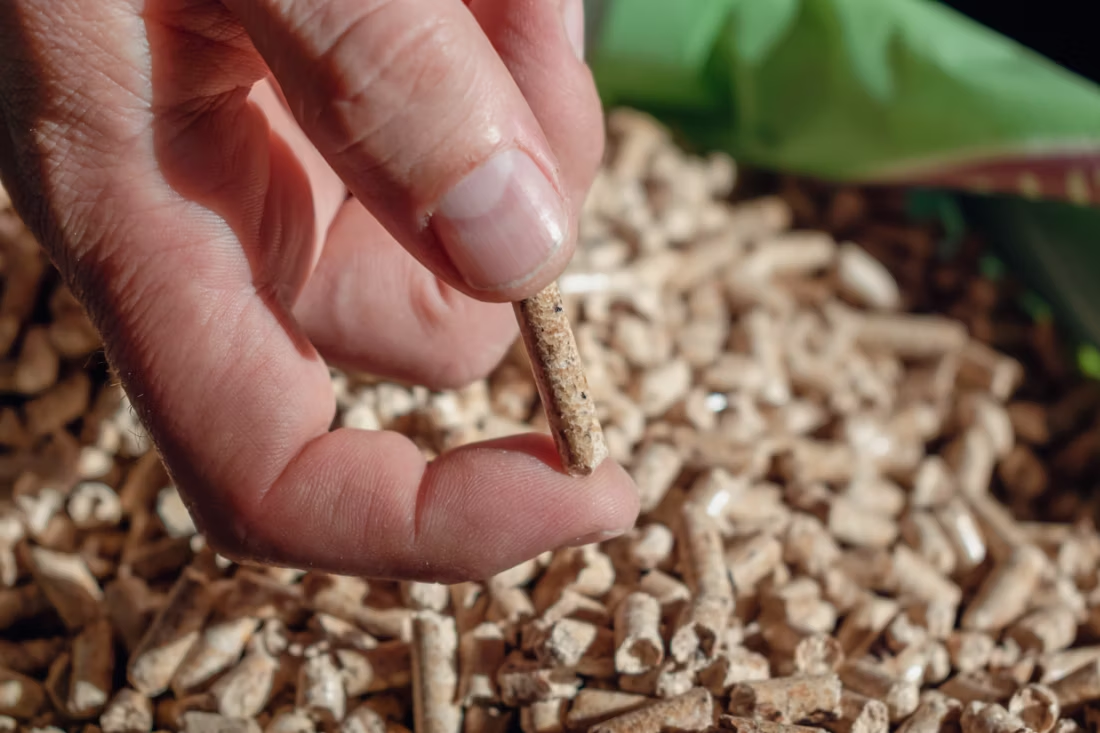
This is also timber country—the oak, hickory, and pine that fill county forests have supported sawmills and paper operations for generations, and that same regional wood supply feeds pellet production nearby. Lignetics and Indeck Energy Services both operate in the broader Arkansas-Louisiana pine belt, which keeps pellet fuel reasonably priced and easy to source locally rather than trucked in from out of region. With no air quality non-attainment designation and no winter burn curtailments in Columbia County, there's also none of the red tape that pellet or wood burners face in stricter-air-quality parts of the country—permitting here is straightforward.
Three steps. No salesperson until you're ready.
Tell us about your project
Your zip code, your situation, and the fuel you're leaning toward—or let the answers point you to one.
See what's actually available
The brands dealers within 100 miles genuinely carry—real options, never a catalog mirage.
Get your dealer & Project Guide
A trusted local dealer, plus the free Project Guide & Parts List that names every component of the job.
Frequently Asked Questions
How much does a pellet stove installation cost in Columbia County?
A freestanding pellet stove installation in Columbia County typically runs $3,000 to $6,500, depending on the unit, whether an existing hearth or masonry fireplace can be reused, and how much venting work is needed. A pellet insert going into an existing fireplace opening tends to land on the lower end since it uses the chimney chase that's already there. Given the mild climate here, most homeowners are choosing a mid-size unit for supplemental heat rather than a large whole-home model, which also keeps costs down. A local dealer can give you a firm number after seeing the install site.
What size pellet stove do I need for a Columbia County home?
Because Columbia County only sees a mild, short heating season—far less than a cold-climate region like Fargo or Bismarck—most homes here don't need a maxed-out pellet stove. A small to mid-size unit (rated for 1,000 to 1,800 square feet) is usually plenty to heat a den, living room, or open-concept main floor as a supplemental source alongside central heat or a heat pump. Homes using a pellet stove as the primary heat source, which is less common here but does happen in older farmhouses outside Magnolia, should size closer to the larger end. A local dealer can walk your space and size it properly rather than guessing off square footage alone.
Where can I find a certified pellet stove installer near me?
Look for installers with NFI (National Fireplace Institute) certification, which covers proper venting, clearances, and pellet-specific appliance setup. Dealers based around Magnolia typically cover the rest of Columbia County, though expect a modest travel charge for installs out toward Waldo, Emerson, McNeil, or Taylor. Because pellet stoves rely on an electric auger and combustion blower, correct wiring and venting matter as much as the appliance itself—this isn't a project for a general handyman, even though pellet venting is simpler than a masonry wood chimney.
What's the difference between a pellet stove and a pellet insert?
A pellet stove is a freestanding unit that can go almost anywhere with the right clearances and a vent run to the exterior wall. A pellet insert is built to slide into an existing masonry fireplace opening, using the existing chimney chase (typically with a smaller-diameter liner) rather than requiring new venting from scratch. For Columbia County homes with an older brick fireplace that rarely gets used, an insert is usually the more cost-effective upgrade. Homes without an existing fireplace, or new construction, are better suited to a freestanding stove.
Do I need a permit to install a pellet stove in Columbia County?
Most pellet stove installations require a building permit through the local building department, and your installer will typically pull it as part of the job. Because Columbia County has no air quality non-attainment designation and no seasonal burn curtailment periods, there's none of the extra restriction that pellet and wood burners deal with in parts of the country with winter inversion problems. The permitting here is mainly about venting placement and clearance-to-combustibles, not emissions compliance.
What's the best pellet stove for Columbia County's climate?
Since winter lows here average around 31°F rather than the sub-zero nights a place like Bozeman or Buffalo sees, you don't need the largest-BTU catalytic unit on the market. Mid-size non-catalytic pellet stoves from brands like Harman or Englander are a common, reliable fit for supplemental heat in a south Arkansas living room or den. Because Lignetics and Indeck Energy Services both operate in the regional pine belt, fuel availability is good locally, so it's worth asking your dealer which stove models run cleanest on the pellet brands most readily stocked nearby.
Where can I buy pellet fuel in Columbia County?
Local hearth dealers and farm supply stores in the Magnolia area typically stock bagged pellets from regional producers, including Lignetics and Indeck Energy Services, both of which draw from the same Arkansas-Louisiana pine and hardwood belt that supplies the county's timber industry. Because the pellets aren't trucked in from far away, prices tend to run more favorably here than in regions without a nearby pellet mill—generally in the $250 to $300 per ton range, though it's worth checking current pricing with a local supplier before stocking up for the season.
Will my pellet stove work during a power outage?
No—and this is worth knowing before you buy. Pellet stoves rely on an electric auger to feed fuel and a blower to distribute heat, so they shut down without power. That matters in Columbia County because ice storms occasionally roll through south Arkansas in winter and can knock out power for a day or more in rural areas. If backup heat during an outage is a priority, look into a small battery backup unit sized for a pellet stove's low draw, or consider a wood-burning stove or insert as a secondary option that doesn't depend on electricity at all. Ask a local dealer about battery backup options if this is a concern for your home.
Pellet stove vs. wood stove—which is right for my Columbia County home?
Wood stoves burn cordwood cut from local oak, hickory, and pine, work without electricity, and are the better backup-heat choice during the ice storms that occasionally hit south Arkansas. Pellet stoves are more convenient day to day—no splitting or stacking, a thermostat-controlled burn, and less ash—but they need electricity to run, so they go dark in an outage. Given Columbia County's mild winters and modest heating load, either fuel comfortably handles supplemental heat; the choice usually comes down to whether you value the low-maintenance convenience of pellets or the storm-ready independence of a wood stove. A local dealer can walk through both options for your specific space.
Why is a fireplace insert so efficient?
An insert does two things: it seals the chimney completely, so you stop losing air you already paid to heat, and it radiates warmth into the room through the firebox and glass. Most add a heat-exchange fan that pulls cool room air underneath, wraps it around the hot firebox, and pushes it back out warm. Your home is more efficient before you've even lit the first fire.
What's the difference between an insert and a zero-clearance fireplace?
An insert is a fireplace that slides into a pre-existing wood-burning fireplace—if you don't have one, there's nothing to insert it into. A zero-clearance fireplace is built into a framed wall, which makes it the answer for remodels and new construction. Simple test: existing masonry fireplace means insert; blank or framed wall means zero-clearance.
Can a fireplace actually lower my heating bill?
Yes—by creating a comfort zone. A furnace heats every square foot of the house just to warm the one room you're in; a gas fireplace on low burns roughly a sixth of the gas a typical furnace does. Set the furnace around 55–60 degrees as a baseline, then heat the rooms your family actually uses. Families who heat this way commonly save $20–$60 a month.
Can I install a fireplace myself?
If you're putting a fire in your house on purpose, it's best to work with an expert. Unless you're genuinely experienced in framing, gas line, vent pipe, and the national code on clearances to combustibles, have a professional do it—and ideally the same company that sells you the fireplace, so warranty, service, and liability all live under one roof.
Stove and Fireplace Dealers in Columbia County
Pellet Brands Stocked Around Columbia County
Manufacturers will point you to the nearest stocking dealer.
Get matched with a Columbia County pellet stove dealer.
Tell us a bit about your home and we'll match you with a trusted local dealer and send over a free Project Guide & Parts List—a plan for your pellet stove or insert project in Columbia County, with the exact parts (including the vent kit) and our recommended local installer.
Find Your Fireplace →