
Heat Your Columbia County Home, Your Way.
Wood, gas, pellet, and electric fireplace resources for Magnolia, Waldo, Emerson, McNeil, and every community across Columbia County. Find the right unit for a mild south Arkansas winter and connect with a trusted local hearth retailer.
Every Project Starts From One of These Five Situations
Mild Winters, Steady Heat Needs in South Arkansas.
Columbia County sits in the piney woods of south Arkansas along the Louisiana border, centered on Magnolia and home to about 13,900 residents. Winters here are mild by national standards—climate zone 3A, an average winter low near 31°F, and just 2,848 heating degree days a year, roughly half the heating load of a place like Madison, Wisconsin or Bismarck, North Dakota. The heating season typically runs from late November through February, with the occasional hard freeze in January. Local firewood is dominated by oak, hickory, and loblolly pine—oak and hickory burn long and hot for the coldest nights, while pine gets used more for kindling and quick-starting fires than as a primary fuel, since its sap content builds creosote faster.
What you'll find on this hub: hearth retailers, service technicians, and fuel suppliers serving communities across the county—Magnolia, Waldo, Emerson, McNeil, Taylor, and the rural areas between them. Pick your fuel below to see local dealers, installation costs, and recommended units for a mild-winter, wood-rich part of the state. Whether you're heating a farmhouse outside Waldo or adding ambiance to a home near Southern Arkansas University in Magnolia, this is the starting point.
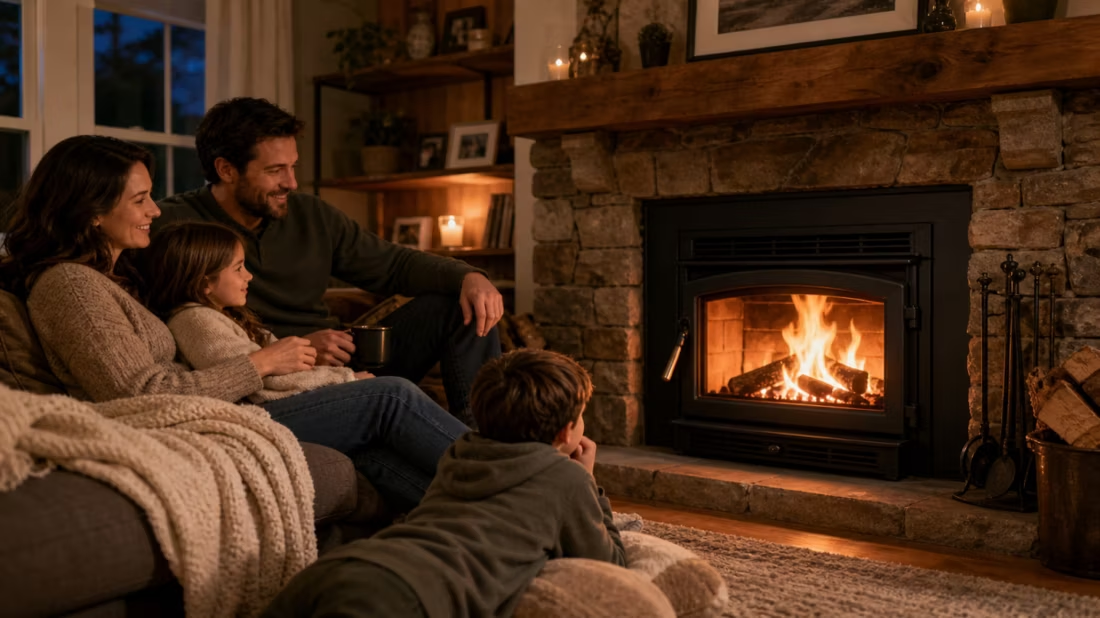
Four fuels. One honest answer for Columbia County.
Three steps. No salesperson until you're ready.
Tell us about your project
Your zip code, your situation, and the fuel you're leaning toward—or let the answers point you to one.
See what's actually available
The brands dealers within 100 miles genuinely carry—real options, never a catalog mirage.
Get your dealer & Project Guide
A trusted local dealer, plus the free Project Guide & Parts List that names every component of the job.
Frequently Asked Questions
Which fuel works best in Columbia County?
It depends on how you'll actually use it. With an average winter low around 31°F and just 2,848 heating degree days a year—less than half what a colder city like Duluth, Minnesota sees—most Columbia County homes don't need a fireplace as their sole heat source, so ambiance and backup heat matter as much as raw output. Wood remains popular thanks to abundant local oak and hickory, and a wood stove or insert is genuinely useful during ice-storm power outages, which do happen in south Arkansas. Gas fireplaces and stoves are the convenience choice, typically run on propane in this rural stretch of the county, and give instant heat without hauling firewood. Pellet stoves are a middle ground, with Lignetics and Indeck Energy Services both distributing into the region. Electric units work well for supplemental warmth in bedrooms or sunrooms, but given the mild climate here, many households use them as the primary hearth feature in rooms that don't need much extra BTU output at all.
Do I need a permit to install a fireplace in Columbia County?
In most cases, yes. New wood stoves, wood inserts, gas fireplaces, gas inserts, gas stoves, and pellet stoves typically require a building permit through your local jurisdiction—within Magnolia city limits that means the city building office, and in unincorporated Columbia County it runs through the county building official. Gas installations also call for a separate gas line permit and a licensed installer for the propane or gas connection work. Electric fireplaces usually skip the permit process unless you're doing a built-in installation with new wiring or a dedicated circuit. Most hearth retailers serving Magnolia and the surrounding towns handle the permitting as part of the installation, so you generally don't have to navigate it alone.
Are there any air quality or burn restrictions in Columbia County?
No, Columbia County doesn't currently have the kind of winter inversion or non-attainment air quality issues you'd see in a basin community out West. There's no formal burn-curtailment program tied to daily air quality advisories here. That said, seasonal courtesy still applies—many rural residents avoid burning brush or debris piles on especially still, humid days, and it's worth checking with the county for any temporary burn bans during extended dry spells, since south Arkansas does see periodic drought conditions that increase wildfire risk. For wood stove installations specifically, sticking with an EPA-certified unit still means cleaner burns, less creosote buildup, and better performance from oak and hickory firewood.
Can one local hearth retailer handle all four fuel types?
Many hearth retailers serving a county this size carry more than one fuel type, since the customer base is small enough that specializing in just one fuel doesn't always support a business. It's common to find a single Magnolia-area dealer stocking wood stoves alongside gas inserts and a pellet option or two, with electric units as an easier add-on line since they don't require venting expertise. If you're in Waldo, Emerson, or McNeil and want to compare fuels side by side, it's worth asking a local retailer directly which lines they carry as floor displays versus special order—rural dealers often keep a leaner in-stock selection than you'd find in a larger market like El Dorado or Shreveport.
How does service work in the rural parts of Columbia County?
Most chimney sweeps and hearth technicians covering Columbia County are based in or near Magnolia, with some homeowners also served by techs traveling out of El Dorado in neighboring Union County. For outlying communities like Taylor, McNeil, or the rural roads outside Waldo, expect a modest travel charge for service calls, and plan to book annual chimney sweeping or gas inspection appointments in early fall before the first cold snap—scheduling gets tighter once temperatures actually drop into the 30s. Because wood heat here often serves as storm backup rather than daily primary heat, it's easy to let annual sweeping slide; doing it every fall regardless of how much you burned the previous winter keeps a wood stove or insert ready for the next ice storm outage.
What's the typical cost range for fireplace installation across fuel types in Columbia County?
Ranges vary by fuel and by how much venting or gas line work is involved. Wood stove or insert installation: roughly $4,000–$8,500 for a typical job using an existing chimney, higher if new flue liner or masonry work is needed. Gas fireplace, insert, or stove: roughly $4,000–$10,000 depending on propane line runs and venting, with conversions into an existing masonry fireplace on the lower end. Pellet stove or insert: roughly $4,000–$7,000 for a standard install. Electric fireplace: $200–$3,000 for the unit itself, plus $300–$1,000 in labor for anything beyond a simple plug-in placement, such as a built-in wall unit. Given the mild climate here, many homeowners choose smaller-BTU units than they might in a colder region, which can also trim installation cost.
How much should I budget for a fireplace?
For an average home—covering the fireplace, the vent pipe, and basic installation—a budget between $3,900 and $5,500 gives you a lot of options across wood, gas, and pellet. By the time you add finish work, gas line, and electrical, the average complete installation lands between $5,000 and $12,000 all-in. In a remodel or new build, a good rule is to put about 2.5% of the total project cost toward the fireplace.
Wood, gas, pellet, or electric—how do I choose?
Match the fuel to your life, not the other way around. Wood: lowest fuel cost and total power-outage independence, but you're hauling and stacking. Gas: press a button, set a thermostat, no maintenance to speak of. Pellet: wood economics with automatic feeding, in exchange for weekly cleaning and a need for electricity. Electric: plugs in anywhere with honest supplemental heat. Nobody regrets the fuel that fits how they actually live.
I know I want a fireplace—where do I actually start?
Do two things today: snap a photo of the wall or fireplace you want to transform, and take a tape measure to the space—width, height, depth. Those two artifacts answer most of a hearth professional's first questions. Then settle fuel (wood, gas, pellet, or electric) and set a realistic budget: $3,900–$5,500 covers fireplace, vent, and basic install for most homes.
What is an in-home preview and do I need one?
It's a visit where a hearth professional measures your space, confirms the model you picked actually works in your home, and walks the specs—framing, gas line, venting, finish work—before anything is ordered. Some details you just can't know until you see the house. Never make a down payment without one; it's the single most-skipped step that burns buyers.
Stove and Fireplace Dealers in Columbia County
Listings include WhyFire partner dealers, dealers we have verified as authorized for the brands we recommend, and established local businesses that carry hearth products. Every listing shows which one it is. The ones marked Preferred run on WhyFire's software, so they can show you real pricing and book your appointment right here. No manufacturer pays for placement. How we verify dealers →
Lucky Chimney Sweep
Pro Sweeps
LaGrone Williams Hardware
O'Neal Gas Inc.
O'Neal Gas Inc.
Get Matched With a Columbia County Hearth Dealer.
Tell us about your project and we'll match you with a trusted local dealer serving Columbia County, plus a free Project Guide & Parts List—the exact parts, including the vent kit, and the local pro who can install it right.
Find Your Fireplace →