
Find the right pellet stove for your Chicot County home.
Clean, thermostat-controlled heat for the Delta towns of Lake Village, Dermott, and Eudora. Find the right pellet stove or insert, and connect with a trusted local dealer.
Every Project Starts From One of These Five Situations
Consistent warmth without the woodpile hassle.
Chicot County sits at the southeastern tip of Arkansas, bordered by the Mississippi River and the Louisiana line, with Lake Village as the county seat and Dermott and Eudora rounding out the county's small population of roughly 6,900. This is Climate Zone 3A—hot, humid summers and short winters, with an average low around 34°F and a mild, brief heating season overall. Compare that to a place like Duluth or International Falls, where sub-zero nights are routine all winter; in Chicot County, real cold is more of an occasional cold snap than a season-long fact of life. That changes how homeowners here think about heat.
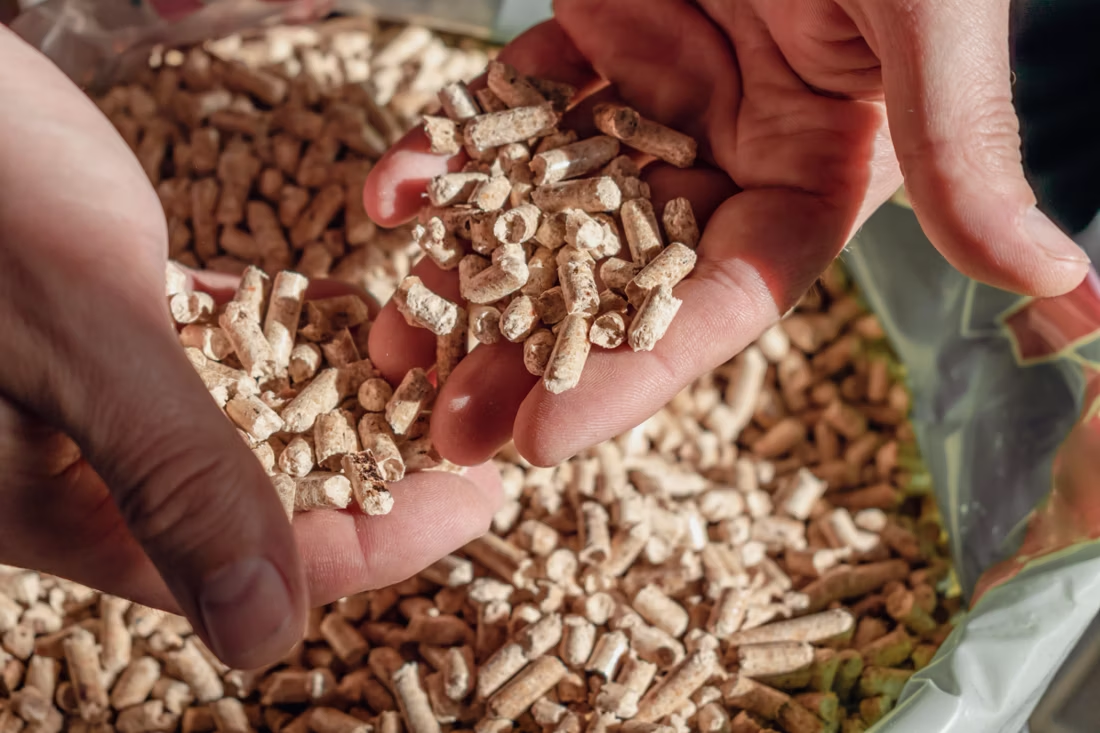
For a county where oak, hickory, and pine are the local firewood species and burning wood is a long tradition, pellet stoves have carved out a real niche—especially for homeowners who want supplemental heat during the cold snaps that do roll through the Delta without hauling and stacking cordwood. Pellet stoves load from a hopper, run on a thermostat, and burn far cleaner than an open wood fire, with no local air quality restrictions to worry about since Chicot County has none of the non-attainment or inversion issues found elsewhere. Bagged pellets from brands like Lignetics and Indeck Energy Services are available through regional dealers and ag-supply outlets that already serve the county's farming economy.
Three steps. No salesperson until you're ready.
Tell us about your project
Your zip code, your situation, and the fuel you're leaning toward—or let the answers point you to one.
See what's actually available
The brands dealers within 100 miles genuinely carry—real options, never a catalog mirage.
Get your dealer & Project Guide
A trusted local dealer, plus the free Project Guide & Parts List that names every component of the job.
Frequently Asked Questions
How much does a pellet stove installation cost in Chicot County?
Most pellet stove and insert installations run in the $3,000 to $6,000 range, depending on the unit, whether it vents through an existing chimney or needs new wall venting, and any electrical work needed for the hopper and blower. Because Chicot County's winters rarely demand a whole-home heating system, most homeowners here install a mid-size unit sized for a single large living area rather than a house-wide system, which keeps costs toward the lower end of that range. A local dealer can give you a firm number after seeing your home.
What size pellet stove do I need for a Chicot County home?
With an average winter low around 34°F and only a light overall heating need each year, most homes in Lake Village, Dermott, and Eudora don't need a stove sized for extreme cold—a small to mid-size unit (rated for 1,000 to 1,800 square feet) is usually plenty for supplemental heat in a main living area. Homeowners using a pellet stove as their only heat source, or those in older, less-insulated farmhouses common throughout the county, should size up slightly. A local dealer can walk your space and recommend the right BTU output.
Do I need a permit to install a pellet stove in Chicot County?
Yes—a building permit is typically required for a new pellet stove installation, issued through the Chicot County building department at the courthouse in Lake Village for unincorporated areas, or through the relevant town office if you're inside city limits of Lake Village, Dermott, or Eudora. Most local installers handle the permit paperwork as part of the job. Since Chicot County has no air quality non-attainment designation, there are no burn curtailment periods or emissions restrictions to navigate—unlike some parts of the country where certified stoves are required to operate during specific advisory days.
Where can I buy pellets in Chicot County?
Bagged pellets from brands like Lignetics and Indeck Energy Services are typically available through regional hearth dealers and farm and agricultural supply stores that already serve Chicot County's row-crop and catfish farming economy. Because the county is small and rural, it's worth asking your installer about setting up a standing delivery order each fall—many Delta homeowners buy a season's supply at once rather than making repeat trips for a few bags at a time.
Pellet stove vs. wood stove—which is right for Chicot County?
Wood is deeply rooted here—oak, hickory, and pine are all common and easy to source locally, and a wood stove works without electricity, which matters in a Delta county where thunderstorms and occasional ice events can knock out power. Pellet stoves trade that off for convenience: load the hopper, set the thermostat, and get a steady, low-ash burn without splitting or stacking cordwood. Because Chicot County's winters are mild and short, many homeowners here choose pellet for the ease of use during the handful of genuinely cold weeks each year, while keeping a wood-burning option or generator on hand for extended outages.
Will my pellet stove work if the power goes out?
Not without a backup power source. Pellet stoves rely on an electric auger to feed fuel and a blower to circulate heat, so a power outage stops the stove even with a full hopper. This is worth planning around in Chicot County, where severe thunderstorms and occasional ice can cause multi-day outages along the Delta. Homeowners who want heat during outages often pair a pellet stove with a small backup generator, or keep a wood-burning stove or fireplace as a no-electricity fallback. Ask your local dealer about battery backup options for the stove's control board and auger if outage resilience is a priority.
What's the best pellet stove for Chicot County's climate?
Because winter lows here average around 34°F rather than the deep-freeze conditions found further north, Chicot County homeowners generally don't need the largest, highest-BTU catalytic-style units built for places like Fargo or Bismarck. A mid-size, EPA-certified pellet stove or insert in the 40,000 to 50,000 BTU range is usually enough to comfortably heat a main living area or supplement a central system during cold snaps. Local dealers carrying regional pellet supply lines, including Lignetics-compatible models, can match a unit to your specific square footage and insulation level.
How much maintenance does a pellet stove need?
Pellet stoves need more routine attention than a gas unit but far less than a wood stove's chimney sweep. Plan on emptying the ash pan every few days during regular use, cleaning the burn pot weekly to keep it from clogging, and a full professional cleaning and inspection once a year—including the exhaust venting and hopper mechanism. Because Chicot County's burn season is relatively short, a single annual service ahead of the first cold snap is usually enough to keep a stove running reliably all winter.
Pellet stove vs. electric fireplace—which makes more sense here?
Both are electricity-dependent, but they solve different problems. A pellet stove produces real, sustained heat output—enough to warm a room or supplement central heat during the cold snaps that hit the Delta in January and February. An electric fireplace produces limited heat (most are rated around 1,500 watts, similar to a space heater) and is better suited to ambiance or a home without any solid-fuel venting option at all. For Chicot County homeowners who want genuine backup or supplemental warmth for the coldest stretches, pellet is the stronger choice; for a low-commitment, no-venting upgrade to a living room or bedroom, electric is simpler to install.
How often does a pellet stove need cleaning?
A clean pellet stove is a happy pellet stove. Plan on cleaning the burn pot about once a week when you're burning regularly—ash and clinkers gum up the air holes just like a pellet barbecue. Most pellet stove problems trace back to skipped cleaning that nobody explained up front. Some designs make it easy with a trapdoor burn pot: pull a lever and the gunk drops into the ash pan.
What's the difference between an insert and a zero-clearance fireplace?
An insert is a fireplace that slides into a pre-existing wood-burning fireplace—if you don't have one, there's nothing to insert it into. A zero-clearance fireplace is built into a framed wall, which makes it the answer for remodels and new construction. Simple test: existing masonry fireplace means insert; blank or framed wall means zero-clearance.
How much should I budget for a fireplace?
For an average home—covering the fireplace, the vent pipe, and basic installation—a budget between $3,900 and $5,500 gives you a lot of options across wood, gas, and pellet. By the time you add finish work, gas line, and electrical, the average complete installation lands between $5,000 and $12,000 all-in. In a remodel or new build, a good rule is to put about 2.5% of the total project cost toward the fireplace.
Does a fireplace add value to my home?
On average, a fireplace adds back to the home about the same amount you spent installing it. Add the monthly savings from heating the rooms you actually use instead of the whole house—often hundreds of dollars a year—and the value case is strong before you even count what a fire does for how your family uses the room.
Pellet Brands Stocked Around Chicot County
Manufacturers will point you to the nearest stocking dealer.
Find your pellet stove in Chicot County.
Tell us a bit about your home and we'll match you with the right pellet stove or insert—plus a free Project Guide & Parts List with the exact parts, vent kit, and your recommended local Chicot County dealer.
Find Your Fireplace →