
Simple electric warmth for Chicot County's mild Delta winters.
From Lake Village to Dermott and Eudora, Chicot County winters rarely demand serious heating—which makes electric fireplaces and inserts an easy, no-venting way to add real supplemental warmth and ambiance to any room. Get matched with a local dealer who can walk you through the options.
Every Project Starts From One of These Five Situations
A climate that rarely asks a fireplace to do much heavy lifting.
Chicot County sits at the southern tip of the Arkansas Delta, bordered by the Mississippi River and Lake Chicot—the largest natural lake in the state. With around 6,900 residents spread across Lake Village, Dermott, Eudora, and the surrounding farmland, this is cotton and soybean country, not mountain country. Climate zone 3A and a mild winter climate mean winters here are short and mild—the average winter low sits around 34°F, and prolonged cold snaps are the exception rather than the rule. That's a very different heating picture than the northern climates where a wood or gas system has to run around the clock for months.
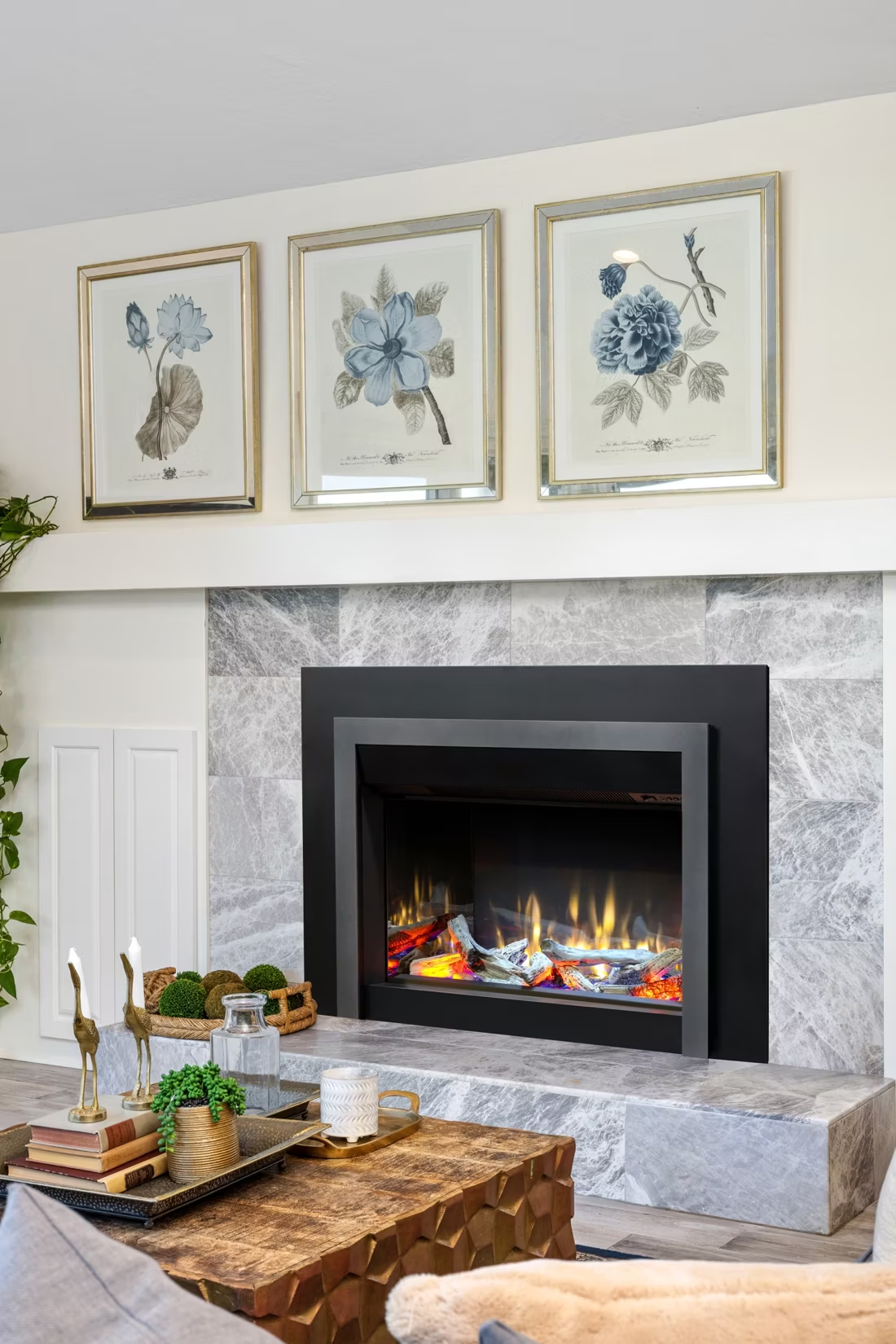
That mild profile is exactly why electric fireplaces and inserts do well here. There's no chimney to build, no gas line to run, and no need to size a system for sub-zero nights the way a homeowner in Fargo or Duluth would. A plug-in electric insert or wall-mount unit adds real supplemental warmth to a bedroom, sunroom, or living room on the occasional 20-degree morning, and the rest of the year it runs as pure ambiance—flame effect with no heat, if that's what you want. Electric service throughout the county comes primarily from Entergy Arkansas in and around Lake Village, with Ashley-Chicot Electric Cooperative serving much of the surrounding rural Delta—either way, running an electric fireplace is a matter of an outlet or a dedicated circuit, not a full mechanical install.
Three steps. No salesperson until you're ready.
Tell us about your project
Your zip code, your situation, and the fuel you're leaning toward—or let the answers point you to one.
See what's actually available
The brands dealers within 100 miles genuinely carry—real options, never a catalog mirage.
Get your dealer & Project Guide
A trusted local dealer, plus the free Project Guide & Parts List that names every component of the job.
Frequently Asked Questions
How much does an electric fireplace or insert cost to install in Chicot County?
Most projects in Chicot County fall into two categories. A plug-in freestanding or mantel-style electric fireplace typically runs $300 to $1,200 for the unit itself, with no professional installation required beyond plugging it into a standard outlet. A built-in electric insert or wall-mounted unit—the kind that replaces an old wood-burning fireplace opening or gets recessed into a wall—usually runs $1,200 to $2,500 including a licensed electrician setting up a dedicated circuit, since higher-output electric inserts often draw enough current to need one. Given the county's mild winters, most homeowners here are choosing units for supplemental heat and ambiance rather than a whole-home heating replacement, which keeps most projects on the lower end of that range.
Do I need a permit to install an electric fireplace in Chicot County?
For a plug-in unit, no—it's no different than plugging in any other appliance. For a hardwired built-in insert that requires a new dedicated circuit, the electrical work itself needs to be done by a licensed electrician and should meet the National Electrical Code as applied in Arkansas. Chicot County doesn't run a dedicated fireplace permitting office the way a larger jurisdiction would, but if you're inside Lake Village, Dermott, or Eudora city limits, it's worth a quick call to the city office to confirm whether an electrical permit is required for the circuit work. Most licensed electricians in the area already know the local requirements and will pull any needed permit as part of the job.
What size electric fireplace do I need for my home?
Because Chicot County's heating season is short and mild, most homeowners aren't sizing an electric fireplace to carry a whole house—they're sizing it for a specific room. A 1,500-watt insert or wall unit comfortably supplements a bedroom or den in the 200-400 square foot range, while a larger great room or open living/dining space in a newer Lake Village home may call for a wider unit or a second heat source. Since nearly every electric fireplace on the market tops out around 1,500 watts (roughly 5,000 BTU) regardless of price, the real sizing question is usually about the unit's physical width matching your wall or mantel opening, not raw heat output.
What's the difference between an electric insert, a wall-mount, and a mantel-style electric fireplace?
An electric insert is built to slide into an existing fireplace opening—a common choice for Chicot County homes with an old wood-burning masonry fireplace that's no longer used. A wall-mount unit hangs flush against a wall like a piece of art and typically needs a dedicated outlet or circuit behind it. A mantel-style or freestanding unit is essentially furniture—it plugs into any standard outlet and can be moved from room to room, which makes it a popular, no-commitment option for renters and for the manufactured and modular homes common throughout the Delta.
Will an electric fireplace actually heat my room, or is it just for looks?
Both, depending on the model and how you use it. Most electric fireplaces include a built-in fan heater rated around 1,500 watts, enough to noticeably warm a closed room of 300 to 400 square feet on a cold Delta morning. Given Chicot County's average winter low of 34°F and a relatively short heating season, that output is usually plenty for supplemental heat—you're not trying to replace a furnace, you're taking the edge off a specific room or extending comfortable use of a sunroom or den into the cooler months. Every unit also lets you run the flame visual with the heater switched off, so it works as pure ambiance the rest of the year.
Electric vs. wood vs. gas—which fits Chicot County best?
Wood still has a strong following here—oak and hickory are abundant across the Delta, and a wood-burning insert or stove is a real, tested backup heat source if the power goes out. Gas is a solid option too, though most of the county outside town limits runs on propane rather than piped natural gas, which adds a tank into the equation. Electric is the simplest of the three: no venting, no fuel storage, no combustion byproducts to manage, and no permit headaches—which matters most in a climate where you're not counting on the fireplace to carry the house through a hard winter. For most Chicot County homeowners adding supplemental heat or ambiance to a single room, electric is the lowest-friction choice. For anyone wanting off-grid backup heat during a storm, wood is still worth pairing with it.
What does it cost to run an electric fireplace in Chicot County?
At typical Entergy Arkansas and Ashley-Chicot Electric Cooperative residential rates, running a 1,500-watt electric fireplace on its heat setting costs roughly 15 to 20 cents per hour of use. Running the flame effect alone, with the heater off, costs only a few cents an hour since it's just powering an LED display. Given the short heating season here—Chicot County has a winter heating load less than half that of a place like Bismarck, ND—most households use the heater setting on genuinely cold mornings and run flame-only mode for ambiance the rest of the time, keeping the annual electric cost modest.
Are electric fireplaces a good fit for manufactured or rental homes in Chicot County?
Yes, and it's one of the more common reasons homeowners here choose electric over wood or gas. Manufactured and modular homes are common throughout the Delta, and many have limitations on chimney or venting modifications that rule out a wood or gas installation. A plug-in electric fireplace sidesteps that entirely—no structural changes, no venting, and it can go with you if you move. For renters in Lake Village, Dermott, or Eudora, a freestanding electric unit is often the only realistic fireplace option, since it requires no landlord approval for structural work.
What's the best electric fireplace for Chicot County's climate?
Since the actual heating load here is light, the decision usually comes down to fit, style, and reliability rather than raw output—most reputable brands (Dimplex, Napoleon, Amantii, and similar) build inserts and wall units rated around 1,500 watts, which covers what a Chicot County home actually needs for supplemental heat. The bigger differentiator locally is flame realism and control features, since these units run in ambiance-only mode more months than not given the mild winters. A local dealer can show you the flame effect in person and help match the unit's width to your existing fireplace opening or wall space—worth doing before you buy, since photos rarely capture how a flame display actually looks in your own room.
Can I put a TV above my fireplace?
Yes—with an asterisk. Fireplaces are hot and TVs don't like heat. Either put a mantel between them to deflect rising warmth, or choose a fireplace with heat-management technology that creates a cool zone on the wall above—the wall stays around 125 degrees, barely warm, while the room still gets full heat. If you like clean lines and don't want a mantel, heat management is the answer.
Do electric fireplaces actually produce heat?
Yes—most put out around 4,800–5,000 BTUs from a standard outlet, which comfortably warms a bedroom, office, or den as a comfort-zone heater. What they won't do is carry a whole house the way wood, gas, or pellet can. Think of electric as ambiance-first with honest supplemental heat: flames on with no heat in July, flames plus warmth in January.
Can I install a fireplace myself?
If you're putting a fire in your house on purpose, it's best to work with an expert. Unless you're genuinely experienced in framing, gas line, vent pipe, and the national code on clearances to combustibles, have a professional do it—and ideally the same company that sells you the fireplace, so warranty, service, and liability all live under one roof.
Can a fireplace actually lower my heating bill?
Yes—by creating a comfort zone. A furnace heats every square foot of the house just to warm the one room you're in; a gas fireplace on low burns roughly a sixth of the gas a typical furnace does. Set the furnace around 55–60 degrees as a baseline, then heat the rooms your family actually uses. Families who heat this way commonly save $20–$60 a month.
Find your electric fireplace in Chicot County.
Tell us about your home and heating goals, and we'll match you with a trusted local dealer serving Chicot County—plus a free Project Guide & Parts List with the exact components for your electric fireplace or insert project.
Find Your Fireplace →