
Keep Your Family Warm and Safe—No Matter What
With winter lows averaging 38°F and one of the lightest winter heating loads around, Tempe homes rarely need wood heat to get through winter. If you still want a wood-burning fireplace or stove, here's what's actually realistic—and what a local dealer can install under Maricopa County's air quality rules.
Every Project Starts From One of These Five Situations
The Sonoran Desert Doesn't Need a Wood Stove to Stay Warm.
Tempe sits at 1,176 feet in the Sonoran Desert, where winter nights average a mild 38°F and the city has a very light overall winter heating load. Compare that to a cold-climate city like Duluth, Minnesota, which has roughly eight times Tempe's heating load. In a climate this warm, a wood stove or wood-burning fireplace isn't solving a heating problem; at most it's solving an ambiance problem a few nights a year.
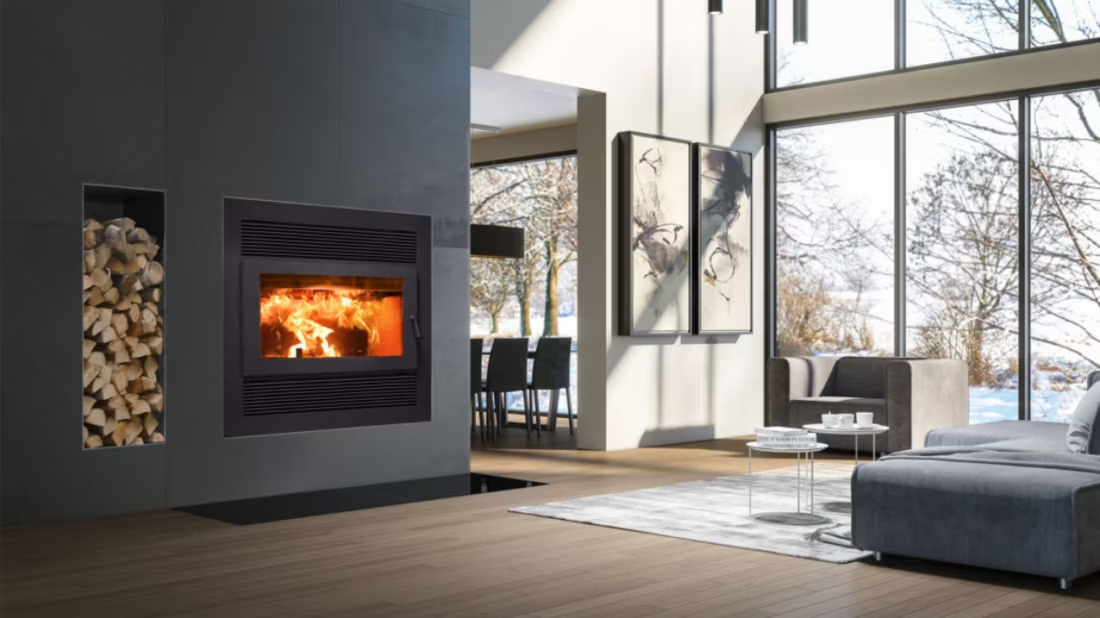
There's also a real air quality constraint. Maricopa County is a federal non-attainment area for particulate matter, and the county's Air Quality Department issues mandatory No-Burn Day advisories on high-pollution winter days—when wood burning in any fireplace or stove is prohibited countywide. County air quality rules also make new wood-burning fireplace and stove installations difficult to permit in new residential construction. Most existing wood-burning fireplaces in Tempe are older, builder-grade masonry units from homes built in the 1970s and '80s, and the more common project today is converting one of those to a gas insert rather than installing a new wood-burning appliance.
Firewood Cutting Permits Near Tempe
Three steps. No salesperson until you're ready.
Tell us about your project
Your zip code, your situation, and the fuel you're leaning toward—or let the answers point you to one.
See what's actually available
The brands dealers within 100 miles genuinely carry—real options, never a catalog mirage.
Get your dealer & Project Guide
A trusted local dealer, plus the free Project Guide & Parts List that names every component of the job.
Frequently Asked Questions
How much does it cost to install a wood-burning fireplace or stove in Tempe?
Very few Tempe dealers will install a brand-new wood-burning fireplace or freestanding stove, because Maricopa County's air quality rules make new wood-burning installations difficult to permit in residential construction. If you have an existing masonry wood fireplace and want to restore or reline it, that work typically runs $2,500 to $5,000 for a chimney liner and firebox refresh. If you're comparing options, most local dealers will steer you toward a gas insert instead, which runs $4,500 to $9,000 installed and doesn't carry the same permitting hurdles.
Is it legal to burn wood in a fireplace in Tempe?
Yes, existing wood-burning fireplaces can generally be used, but Maricopa County Air Quality Department issues mandatory No-Burn Day advisories on days when winter inversions trap particulate pollution in the valley—and burning wood, including in fireplaces and stoves, is prohibited on those days. Advisories are issued through ADEQ and county alerts during the cooler months (roughly November through February) and are taken seriously; violations can carry fines. If you burn wood in Tempe, checking the daily air quality status before lighting a fire is a real step, not a formality.
Can I get a permit for a new wood stove or wood fireplace in Tempe?
It's difficult. Maricopa County's air quality rules restrict new wood-burning fireplace and stove installations in residential construction across the county, and the City of Tempe Building Safety Division follows those county restrictions when reviewing permits. Some EPA-certified wood stoves may still qualify for permitting in specific remodel situations, but most local hearth dealers will tell you upfront that gas or electric is the more permittable path for a new install. Talk to a local dealer before assuming a wood-burning unit is an option for new construction.
What firewood species are available near Tempe if I do burn wood?
Mesquite is the wood most associated with the Phoenix valley, though it's used far more often for grilling and smoking than home heating. If you're looking to cut your own wood for an existing fireplace, pinyon and juniper permits are available through the Tonto National Forest and Prescott National Forest, both roughly one to two hours from Tempe at higher elevation, for $5 to $20 per cord during the May-to-October cutting season. There's no significant firewood supply chain built around home heating in Tempe the way there is in colder parts of Arizona.
Why don't more homes in Tempe have wood-burning fireplaces?
Tempe's climate zone (2B) is cooling-dominated, not heating-dominated—winter lows average 38°F and the heating season is short and mild. A wood stove sized for real heat output would be dramatically oversized for Tempe's actual heating load, and running one regularly would mean fighting both the climate and the county's air quality restrictions. Most Tempe homes that want supplemental warmth or a real flame use a gas fireplace or insert instead, which delivers instant heat without wood storage, ash cleanup, or No-Burn Day restrictions.
What are the alternatives to a wood-burning fireplace in Tempe?
Gas and electric are both standard, well-supported options in Tempe. A direct-vent gas fireplace or insert gives you real flame and heat output on demand, typically $4,500 to $11,000 installed, and works whether you're on natural gas or propane. Electric fireplaces are the simplest option—$400 to $1,200 installed, no venting or gas line required, and they run on standard household power through utilities like the City of Mesa, Electrical District No. 8, or GRICUA depending on your service area. For a climate as mild as Tempe's, both outperform a wood-burning unit on cost, convenience, and compliance.
I have an old wood-burning fireplace in my Tempe home—can I still use it?
Many Tempe homes built in the 1970s and '80s came with a builder-grade masonry wood-burning fireplace, and those can still be used legally except on Maricopa County No-Burn Days. Because these fireplaces often sit unused for years at a time in a climate that doesn't require them, it's worth having a CSIA-certified chimney sweep inspect the flue before lighting a fire—creosote buildup, cracked liners, and even animal nests are common in fireplaces that only get occasional use. A basic inspection and sweep typically runs $150 to $300.
Should I convert my existing wood fireplace to gas in Tempe?
It's the most common upgrade local dealers see in Tempe. A gas insert drops into your existing masonry firebox and uses the existing chimney with a liner, typically running $4,500 to $8,500 depending on whether you're on natural gas or propane and whether new gas line work is needed. The conversion keeps the look of your fireplace, sidesteps No-Burn Day restrictions entirely, and gives you instant heat and flame without wood storage or ash cleanup—a natural fit for Tempe's climate and air quality rules.
Wood stove vs. gas or electric fireplace—which makes sense for a Tempe home?
For Tempe specifically, wood rarely wins. A wood stove offers off-grid heat during power outages, but Tempe's mild winters (38°F average low, with a very light overall winter heating load) mean that advantage almost never gets used, and Maricopa County's No-Burn Day restrictions add a compliance burden wood doesn't carry elsewhere. Gas delivers instant, reliable heat and ambiance without permitting headaches. Electric is the simplest and cheapest to install, ideal for supplemental warmth or pure ambiance in a home that already relies on central HVAC. Most Tempe homeowners land on gas or electric—wood is really only worth pursuing if you have a specific attachment to an existing masonry fireplace and plan to use it sparingly.
Why won't my new wood stove get going like my old one?
New wood stoves are 70%+ efficient, so far less heat goes up the flue—which also means less draft to get a fire established. The rule: build a genuinely hot fire for about 45 minutes before you choke it down. Skip that and you get smoke in the room, creosote in the chimney, and a fire that never takes off. Most performance complaints trace straight back to this.
What do I measure to size a fireplace insert?
Four numbers tell you what fits: the front width, the front height, the back width, and the overall depth of your existing fireplace opening. Grab a tape measure, jot those down, and snap a photo of the wall—those two things do more to move your project forward than anything else you can do today.
Does a fireplace add value to my home?
On average, a fireplace adds back to the home about the same amount you spent installing it. Add the monthly savings from heating the rooms you actually use instead of the whole house—often hundreds of dollars a year—and the value case is strong before you even count what a fire does for how your family uses the room.
Can a fireplace actually lower my heating bill?
Yes—by creating a comfort zone. A furnace heats every square foot of the house just to warm the one room you're in; a gas fireplace on low burns roughly a sixth of the gas a typical furnace does. Set the furnace around 55–60 degrees as a baseline, then heat the rooms your family actually uses. Families who heat this way commonly save $20–$60 a month.
Nearby Dealers
Hearth shops serving Tempe and the surrounding area. Every listing shows whether it is a WhyFire partner, a dealer we have verified as authorized for the brands we recommend, or a local business carrying hearth products. No manufacturer pays for placement. How we verify dealers →
Bbq Island
Fire By James
Valley Stone
All American Outdoor Living
Diversified Builder Supply
Gilbert Fireplaces & BBQ’s
Brooksies Propane
Arizona Fire Features
Southwest Builders & Design, LLC
Best BBQ’s & Islands
Green Goddess
Apache Stone - Phoenix
EarthCore Industries
All American Outdoor Living
Carefree Outdoor Living
Find the right fireplace for your Tempe home.
Tell us about your home and whether wood is a must-have, and we'll match you with a trusted local dealer who knows what Maricopa County will actually permit—plus a free Project Guide & Parts List with the exact parts, including venting, and a recommended installer for your project.
Find Your Fireplace →