
Pellet stoves are rare in Sells—here's how it still works.
With winter lows averaging 34°F and a mild, short winter heating season, most Sells homes don't need a dedicated wood-pellet appliance. For the few that want one, here's what's realistic.
Every Project Starts From One of These Five Situations
Sells doesn't get cold enough for pellet heat to be the default.
Sells sits at 2,388 feet in the Sonoran Desert, seat of the Tohono O'odham Nation in Pima County. Winters here mean cool desert nights in the 30s and 40s, not the sustained sub-freezing stretches that drive pellet-stove adoption in places like Bozeman, MT or Duluth, MN. With a heating season only about a third as demanding as a serious cold-climate market, Sells logs mild winter heating needs overall, and the vast majority of local homes heat with standard electric resistance or heat pump systems through Trico Electric Cooperative, Ajo Improvement Company, or the Tohono O'odham Utility Authority.
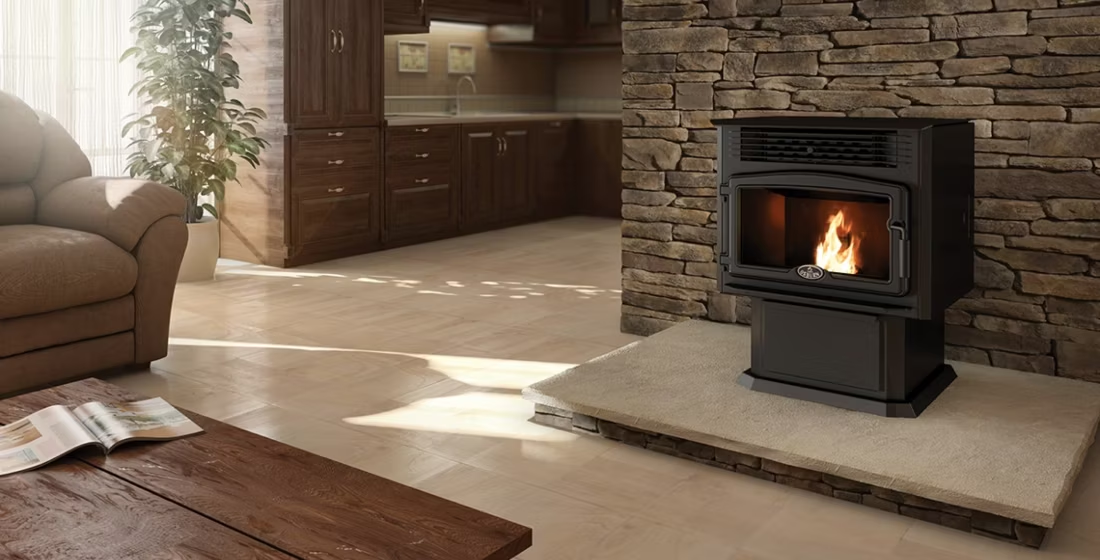
That's why there's no built-out pellet-stove dealer network in Sells itself—no local retailer stocking Forest Energy or Lignetics pellets on a pallet, no installer who does this work every week. A small number of homeowners still install a pellet stove anyway, usually for the ambiance of a real flame during the cooler December-through-February stretch, as a backup heat source during monsoon-season power interruptions, or at a ranch or vacation property where the appeal is more lifestyle than necessity. If that's your situation, sourcing the stove and pellets typically means working with a regional dealer out of Tucson, about 70 miles northeast, and planning your pellet supply ahead of the season rather than picking bags up locally.
Three steps. No salesperson until you're ready.
Tell us about your project
Your zip code, your situation, and the fuel you're leaning toward—or let the answers point you to one.
See what's actually available
The brands dealers within 100 miles genuinely carry—real options, never a catalog mirage.
Get your dealer & Project Guide
A trusted local dealer, plus the free Project Guide & Parts List that names every component of the job.
Frequently Asked Questions
How much does a pellet stove installation cost in Sells?
There's no established local install cost range because pellet stoves are installed infrequently in Sells—most jobs are one-offs handled by a Tucson-area dealer willing to make the drive. Regionally, a pellet stove with a simple wall-thimble vent (no masonry chimney required) typically runs $3,500 to $6,500 installed, on the lower end compared to wood or gas because the venting is far less involved. Get a firm number from a dealer who's actually seen your home—freight and travel time from Tucson can move the estimate more than the stove itself does.
Why don't more homes in Sells have pellet stoves?
Mostly climate and infrastructure. With winter lows averaging 34°F and a mild, short winter heating season, most Sells households get through winter fine on the electric heat pump or resistance heat already tied to their home through Trico Electric or the Tohono O'odham Utility Authority—residential rates in the 12.5 to 14 cent per kWh range make electric heat cheap enough that there's little financial case for adding a pellet appliance and its fuel logistics on top.
Can I even buy pellets locally in Sells?
Not reliably. Forest Energy and Lignetics are the regional pellet brands available in southern Arizona, but they're stocked at feed stores and hardware retailers in Tucson rather than in Sells or the smaller Tohono O'odham Nation communities. If you install a pellet stove here, plan to buy pellets by the pallet (roughly 50 forty-pound bags) on trips into Tucson rather than counting on picking up a bag or two as needed.
Does the area's air quality non-attainment status affect a pellet stove decision?
Pima County includes areas flagged for winter inversion and wildfire smoke concerns, and pellet stoves do burn noticeably cleaner than open wood fires or uncertified wood stoves—the auger-fed pellet feed and forced combustion air produce far less particulate. That said, the air quality question is largely moot in Sells specifically, since wood-burning appliances are almost nonexistent here to begin with. A pellet stove wouldn't be solving a local air quality problem so much as offering a cleaner alternative to the rare wood stove that does get installed.
Is a pellet stove a good fit for a vacation or ranch property near Sells?
It can work well for that use case—occasional-use properties near Kitt Peak or out on Nation land often want a real-flame heat source without a full HVAC retrofit, and a pellet stove delivers that with less mess than cordwood and no chimney sweep needed. The tradeoff to plan for: pellet stoves need electricity to run the auger and blower, so during a monsoon-season outage the stove goes cold along with everything else. If backup heat during power loss is the goal, a propane fireplace or wood stove is more dependable in Sells; if ambiance and occasional cool-weather warmth is the goal, pellet works fine.
Should I get a gas fireplace instead of a pellet stove in Sells?
For most Sells homes, yes. Gas is the standard hearth fuel here—propane service is common throughout the area since natural gas mains don't reach most of Pima County's outlying communities, and a propane fireplace or stove gives you instant, thermostat-controlled heat without sourcing fuel from Tucson. Pellet makes more sense only if you specifically want the look and feel of a solid-fuel fire and don't mind hauling pellets in periodically. Most homeowners here who want supplemental heat end up on propane; pellet is the exception, not the rule.
How does pellet heat compare to the electric heat most Sells homes already have?
Electric heat pumps and resistance heat through Trico Electric Cooperative, Ajo Improvement Company, or the Tohono O'odham Utility Authority are simple, require no fuel deliveries, and at 12.5 to 14 cents per kWh are inexpensive to run given how mild Sells winters actually are. A pellet stove adds real-flame ambiance and a wood-adjacent heating experience, but it also adds fuel logistics, an annual cleaning routine, and upfront installation cost that most homes here don't need for basic comfort. It's a lifestyle choice in this climate, not a cost-saving one.
What permits do I need to install a pellet stove in Sells?
This depends on which jurisdiction your property falls under. Land within the Tohono O'odham Nation is typically permitted through the Nation's own building authority rather than standard Pima County permitting, while properties outside Nation boundaries go through Pima County Development Services. A regional installer who's worked in the area before can tell you quickly which applies to your address and handle the paperwork as part of the install—this is one area where local (or at least regional) experience genuinely matters, since the permitting path isn't the same as a typical Arizona county job.
What's the best pellet stove for occasional, mild-climate use like Sells?
Skip the big continuous-burn units built for sub-zero climates—you don't need a stove sized to run 24/7 for months. Smaller-capacity models from brands like Harman or Lopi, in the 40,000-50,000 BTU range, are easier to cycle on for an evening or a cold snap and easier to keep fed without a large hopper. A regional dealer can size this correctly based on the room you're heating rather than the whole house, since in Sells a pellet stove is almost always supplemental rather than primary heat.
Why is a fireplace insert so efficient?
An insert does two things: it seals the chimney completely, so you stop losing air you already paid to heat, and it radiates warmth into the room through the firebox and glass. Most add a heat-exchange fan that pulls cool room air underneath, wraps it around the hot firebox, and pushes it back out warm. Your home is more efficient before you've even lit the first fire.
Are pellet stoves loud?
They make some noise—there are two fans running plus an auger motor that turns as it feeds pellets. But there's a real range: premium models are engineered quiet, and the best offer a whisper-quiet mode you can comfortably watch TV next to. If noise matters in your room, ask to hear a stove running before you buy—it's a five-minute test that saves years of annoyance.
How much should I budget for a fireplace?
For an average home—covering the fireplace, the vent pipe, and basic installation—a budget between $3,900 and $5,500 gives you a lot of options across wood, gas, and pellet. By the time you add finish work, gas line, and electrical, the average complete installation lands between $5,000 and $12,000 all-in. In a remodel or new build, a good rule is to put about 2.5% of the total project cost toward the fireplace.
Can a fireplace actually lower my heating bill?
Yes—by creating a comfort zone. A furnace heats every square foot of the house just to warm the one room you're in; a gas fireplace on low burns roughly a sixth of the gas a typical furnace does. Set the furnace around 55–60 degrees as a baseline, then heat the rooms your family actually uses. Families who heat this way commonly save $20–$60 a month.
Nearby Dealers
Hearth shops serving Sells and the surrounding area. Every listing shows whether it is a WhyFire partner, a dealer we have verified as authorized for the brands we recommend, or a local business carrying hearth products. No manufacturer pays for placement. How we verify dealers →
Earth Energy's Hearth & Patio
Pellet Brands Stocked Around Sells
Manufacturers will point you to the nearest stocking dealer.
Find your pellet stove option in Sells.
Tell us about your home and how you'd use it, and we'll give you an honest read on whether pellet makes sense here—plus a free Project Guide & Parts List with the exact parts, vent kit, and a trusted regional dealer who can actually get it installed.
Find Your Fireplace →