
Pellet stoves are rare in Queen Creek's desert climate.
With winter lows averaging 41°F and barely 1,382 heating degree days a year, most Queen Creek homes don't need a pellet stove to stay warm. If you still want one—for ambiance, a casita, or a guest suite—we'll connect you with a dealer who can source and install it right.
Every Project Starts From One of These Five Situations
Why pellet heat rarely makes sense here—and when it still does.
Queen Creek sits at 1,416 feet in the East Valley of the Sonoran Desert, where the average winter low is 41°F and the annual heating load—about 1,382 heating degree days—is a fraction of what a place like Duluth, MN sees in a single cold month. Pellet stoves are built to hold a slow, steady burn through long, punishing winters. That's not the problem Queen Creek homeowners are solving for most of the year, which is why pellet fuel is genuinely uncommon here.
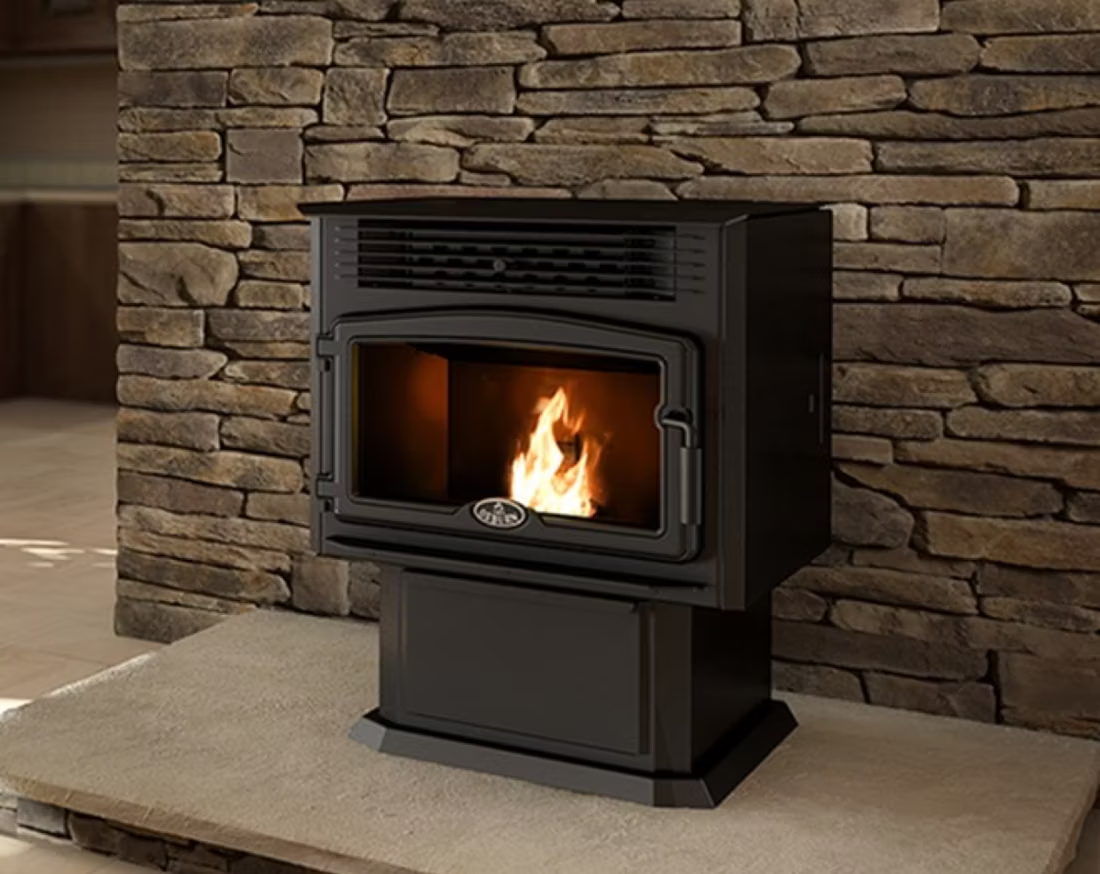
That said, a handful of local homeowners do install pellet stoves—usually in a casita, a converted garage, or a guest room where they want visible flame and dry heat without running a wood chimney, and without the appliance repair calls that come with older electric units. Because demand is thin, pellet stoves and fuel (regional brands like Forest Energy and Lignetics do reach Arizona distributors) are typically special-ordered rather than stocked on showroom floors, so working with a dealer who knows how to source and vent one correctly matters more here than in a place where pellet stoves are the default choice.
Three steps. No salesperson until you're ready.
Tell us about your project
Your zip code, your situation, and the fuel you're leaning toward—or let the answers point you to one.
See what's actually available
The brands dealers within 100 miles genuinely carry—real options, never a catalog mirage.
Get your dealer & Project Guide
A trusted local dealer, plus the free Project Guide & Parts List that names every component of the job.
Frequently Asked Questions
Does a pellet stove make sense for a Queen Creek home?
For most Queen Creek homes, no—not as a primary heat source. With winter lows averaging 41°F and only about 1,382 heating degree days a year, the existing HVAC or electric heat pump already handles the handful of genuinely cold nights each winter. Where a pellet stove does make sense is as a secondary, ambiance-driven heat source: a casita, a converted patio room, or a bonus space where you want visible flame and dry radiant heat without running gas or a masonry chimney. If that's your goal, a local dealer can tell you honestly whether it's worth the investment for your specific space.
How much does a pellet stove installation cost in Queen Creek?
Because pellet stoves are special-order items in this market rather than stock inventory, expect a typical freestanding pellet stove installation to run in the $3,500–$6,500 range nationally, with the final number depending on venting complexity, whether you need a new electrical circuit for the auger and blower, and shipping on the unit itself. Since few Queen Creek dealers keep pellet stoves on the floor, get a firm, itemized quote before committing—sourcing lead time is often the bigger factor than the install labor.
Where can I buy pellet fuel in Queen Creek?
Pellet fuel isn't sold on every corner in the East Valley the way it is in colder states, but bagged pellets from brands like Forest Energy and Lignetics do move through regional farm-and-ranch supply stores and online delivery from Phoenix-area distributors, usually sold by the ton or in 40-pound bags. Because local demand is seasonal and light, it's worth confirming stock before winter rather than assuming a nearby retailer carries it year-round.
Do Maricopa County's air quality rules affect pellet stoves?
Maricopa County is a designated non-attainment area for ozone and particulate matter, and the Phoenix-area valley (Queen Creek included) does see winter temperature inversions that trap pollution close to the ground, sometimes triggering high pollution advisory burn restrictions. Those restrictions are aimed mainly at open wood burning; EPA-certified pellet stoves burn cleanly enough that they're typically exempt from curtailment on advisory days, which is one of the few practical advantages pellet heat has in this market.
Will a pellet stove work during a power outage?
No—this is worth knowing before you buy. Pellet stoves rely on an electric auger to feed fuel and a blower to circulate heat, so they shut down when the power does. In a mild climate like Queen Creek's, that's rarely a life-safety issue, but if backup heat during an outage is actually your goal, a gas fireplace or stove with battery-backed ignition is a more reliable choice given how standard natural gas and propane service already is here.
What size pellet stove do I need for a Queen Creek home?
Given the mild climate, most Queen Creek installs are small to mid-size units rated for 800–1,500 square feet, sized for a single room, casita, or bonus space rather than whole-home heating. Oversizing is a common mistake—a pellet stove rated for a 2,000-square-foot cold-climate home will run far too hot and cycle constantly in an East Valley living room. A local dealer can size the unit correctly based on the specific room, not the whole house.
What's the difference between a pellet stove and a pellet insert?
A pellet stove is a freestanding appliance that sits on its own hearth pad and vents through a wall or roof—it can go almost anywhere with the right clearances, which is why it's the more common choice for a Queen Creek casita or bonus room. A pellet insert is built to slide into an existing masonry fireplace opening, which is a less common project here simply because traditional wood-burning masonry fireplaces are rare in newer Queen Creek construction to begin with.
Why don't more homes in Queen Creek have pellet stoves?
It comes down to climate math: with an average winter low of 41°F and roughly 1,382 heating degree days a year, most homes here simply don't carry enough heating load to justify a dedicated solid-fuel appliance. Newer Queen Creek construction is built around efficient electric heat pump systems and, where gas service is available, gas fireplaces for ambiance—both of which cover the occasional cold snap with far less maintenance than a pellet stove's hopper, auger, and ash pan.
Pellet vs. gas—which is right for my Queen Creek home?
Gas is the standard choice here for a reason: natural gas and propane infrastructure already serve most Queen Creek neighborhoods, gas fireplaces light instantly with no fuel storage, and many models keep working through a power outage on battery-backed ignition. Pellet stoves require buying and storing bags of fuel, loading a hopper, and running on electricity that isn't optional—a real tradeoff in a climate that rarely demands sustained heat. Pellet still has appeal if you specifically want the look and feel of a solid-fuel fire without wood smoke or chimney maintenance; for straightforward warmth and convenience, gas is the more practical fit for most homes in this market.
How often does a pellet stove need cleaning?
A clean pellet stove is a happy pellet stove. Plan on cleaning the burn pot about once a week when you're burning regularly—ash and clinkers gum up the air holes just like a pellet barbecue. Most pellet stove problems trace back to skipped cleaning that nobody explained up front. Some designs make it easy with a trapdoor burn pot: pull a lever and the gunk drops into the ash pan.
What's the difference between an insert and a zero-clearance fireplace?
An insert is a fireplace that slides into a pre-existing wood-burning fireplace—if you don't have one, there's nothing to insert it into. A zero-clearance fireplace is built into a framed wall, which makes it the answer for remodels and new construction. Simple test: existing masonry fireplace means insert; blank or framed wall means zero-clearance.
Can a fireplace actually lower my heating bill?
Yes—by creating a comfort zone. A furnace heats every square foot of the house just to warm the one room you're in; a gas fireplace on low burns roughly a sixth of the gas a typical furnace does. Set the furnace around 55–60 degrees as a baseline, then heat the rooms your family actually uses. Families who heat this way commonly save $20–$60 a month.
How much should I budget for a fireplace?
For an average home—covering the fireplace, the vent pipe, and basic installation—a budget between $3,900 and $5,500 gives you a lot of options across wood, gas, and pellet. By the time you add finish work, gas line, and electrical, the average complete installation lands between $5,000 and $12,000 all-in. In a remodel or new build, a good rule is to put about 2.5% of the total project cost toward the fireplace.
Nearby Dealers
Hearth shops serving Queen Creek and the surrounding area. Every listing shows whether it is a WhyFire partner, a dealer we have verified as authorized for the brands we recommend, or a local business carrying hearth products. No manufacturer pays for placement. How we verify dealers →
Gilbert Fireplaces & BBQ’s
Brooksies Propane
Diversified Builder Supply
Valley Stone
All American Outdoor Living
Bbq Island
Fire By James
Southwest Builders & Design, LLC
Best BBQ’s & Islands
Green Goddess
Arizona Fire Features
Apache Stone - Phoenix
EarthCore Industries
All American Outdoor Living
Carefree Outdoor Living
Pellet Brands Stocked Around Queen Creek
Manufacturers will point you to the nearest stocking dealer.
Find your pellet stove in Queen Creek.
Tell us about your space—and whether it's a casita, a bonus room, or something else entirely—and we'll give you a straight answer on whether pellet is the right fit, then match you with a trusted local dealer and a free Project Guide & Parts List for your project.
Find Your Fireplace →