
Add Real Warmth to Queen Creek's Cool Desert Evenings.
Winters in Queen Creek rarely bite, but the December-through-February evenings still call for a real flame. Find the right gas fireplace or insert and connect with a trusted local dealer.
Every Project Starts From One of These Five Situations
Built for ambiance first, warmth second—and that's exactly the point.
At 1,416 feet in the East Valley, Queen Creek logs an average winter low around 41°F and a mild heating season overall—just a fraction of the heating load a place like Fargo, ND racks up in a single January. Wood heat never took hold here the way it does in colder climates, and it's genuinely uncommon: the mesquite, pinyon, and juniper that grow in the surrounding high desert see far more use in smokers and grills than in home heating. Gas is where the real demand lives, especially in Queen Creek's wave of new-construction subdivisions, where builders routinely stub in a gas line for a great room fireplace as a standard selling feature.
Maricopa County is a federal non-attainment area for particulate matter, and the Phoenix basin does see winter temperature inversions that trap pollution close to the ground—which is part of why the county's voluntary and mandatory No-Burn Day program targets wood smoke, not gas appliances. A direct-vent gas fireplace runs clean, burns on demand during the cool snaps that push overnight lows into the 30s, and stays usable even on a No-Burn Day. Southwest Gas serves natural gas to most of incorporated Queen Creek, while some of the town's outlying, more rural parcels still run on propane tanks—either way, a local installer will know which fuel your address is set up for before they ever quote the job.
Three steps. No salesperson until you're ready.
Tell us about your project
Your zip code, your situation, and the fuel you're leaning toward—or let the answers point you to one.
See what's actually available
The brands dealers within 100 miles genuinely carry—real options, never a catalog mirage.
Get your dealer & Project Guide
A trusted local dealer, plus the free Project Guide & Parts List that names every component of the job.
Frequently Asked Questions
How much does a gas fireplace installation cost in Queen Creek?
Most gas fireplace installations in Queen Creek run somewhere between $3,500 and $9,000, with the spread driven mainly by whether a gas line is already in place. Because so much of Queen Creek is newer construction, a lot of installs are simple: the builder already stubbed a gas line to the great room, and the job is really just setting the unit and finishing the surround. Older or custom homes without an existing line cost more once trenching and a licensed gas-fitter's time are added. Retrofitting an existing wood-burning fireplace with a direct-vent gas insert typically lands in the same range, depending on chimney condition and liner length.
Does a gas fireplace actually make sense in a climate this warm?
It's a fair question—Queen Creek doesn't have the kind of cold that demands a heat source to survive winter. Most homeowners here choose a gas fireplace for ambiance, resale value, and the handful of genuinely chilly evenings each year when the desert dry cold settles in after sunset. Used as a zone heater, a gas fireplace can also take the edge off a great room on those nights without running the central HVAC, which some Queen Creek homeowners like for the lower utility bill during shoulder-season cold snaps in December and January.
Should I go with natural gas or propane?
If your home is inside incorporated Queen Creek, you're most likely on Southwest Gas's natural gas mains already, and it's usually the simpler, cheaper route since the utility connection already exists. If your property sits on one of the town's more rural or recently-annexed parcels without a gas main nearby, propane from a local supplier with an above-ground or buried tank is the standard workaround, and nearly every gas fireplace model can be configured to run on either fuel with the correct orifice. A local dealer will check your address against the gas main map before recommending either path.
Will my gas fireplace still work if the power goes out?
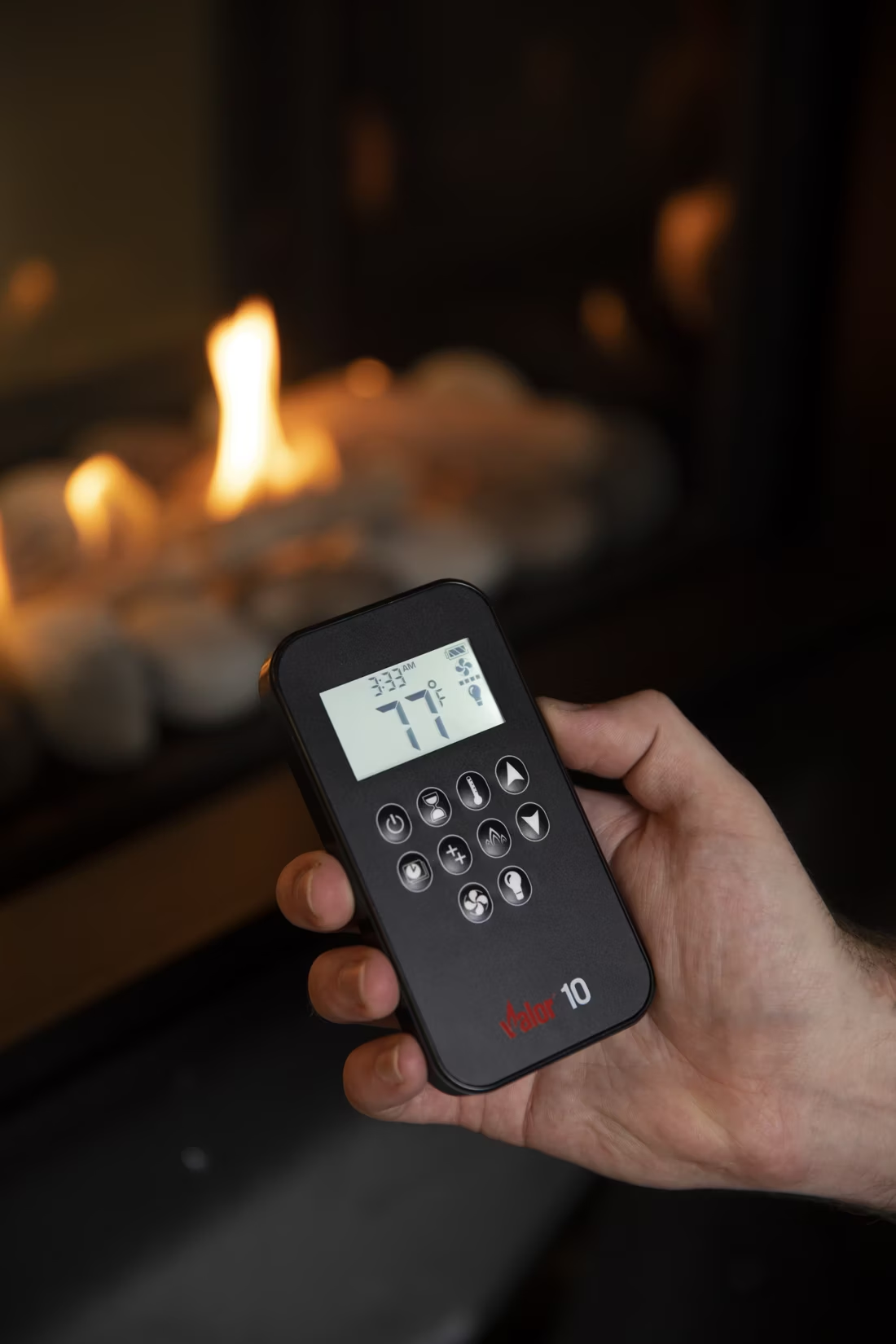
Most will, with the right ignition system. Units with IPI (intermittent pilot ignition) include a battery backup that kicks in automatically when the grid drops, so the fireplace still lights and runs on demand. Arizona's summer monsoon storms cause more Queen Creek outages than winter weather does, but the same battery backup covers you either way. Valor fireplaces take a different approach—they generate their own electricity through the pilot's thermocouple, so there's no battery to remember to replace. Ask your local dealer which ignition system is on any unit you're considering.
What's the difference between a gas fireplace, gas insert, and gas stove?
A gas fireplace is a fully built-in unit framed into a wall—the standard choice for Queen Creek's new-construction great rooms. A gas insert is sized to drop into an existing masonry or wood-burning firebox, sealing it up and venting through the existing chimney; this is the common route for homeowners in Queen Creek's older neighborhoods who inherited a wood-burning fireplace they never use. A gas stove is a freestanding, cast-iron-look unit that sits on the floor and doesn't require a framed opening at all, which works well in a casita or a room without an existing fireplace footprint.
Do I need a permit to install a gas fireplace in Queen Creek?
Yes. New gas fireplace installations and any new gas line work require a building permit and a mechanical/gas permit through the Town of Queen Creek Building Safety Division, or through Maricopa County's Planning and Development Department for unincorporated county-island properties near town. The gas line itself has to be run or tied into by a licensed gas-fitter. Most established hearth dealers in the area pull these permits as part of the installation and schedule the required inspection, so you're not coordinating separate trades yourself.
Are vent-free gas fireplaces allowed in Arizona?
Yes—Arizona doesn't restrict vent-free (unvented) gas fireplaces the way California or Colorado do, so both vented and vent-free units are legal options in Queen Creek. Direct-vent units draw combustion air from outside and exhaust it back outside through a sealed pipe, and they're the more common choice in new-construction great rooms where a vent run to an exterior wall is easy to plan for. Vent-free units skip the venting entirely, which can be useful in an interior room, but they come with strict room-sizing rules and an oxygen depletion sensor requirement. Check with your HOA too—some master-planned Queen Creek communities have their own restrictions on vent-free appliances.
How often does a gas fireplace need to be serviced?
Plan on an annual inspection, ideally in early fall before the fireplace sees regular use through the cooler months. A technician will check the burner, pilot assembly, gas connections, and venting, and clean the glass and interior—Queen Creek's dust, which is a real factor given Maricopa County's particulate non-attainment status, can build up inside a unit faster than in less dusty climates. Annual service typically runs $150 to $250 and is far less involved than wood-stove chimney sweeping, but skipping it is still the most common cause of pilot and ignition problems down the road.
Gas vs. electric fireplace—which fits a Queen Creek home better?
Gas delivers real, radiant heat and a live flame, and it's the standard choice for a primary great-room fireplace in Queen Creek's new subdivisions where a gas line is already available. Electric fireplaces skip the venting and gas line entirely—they plug into a standard outlet, cost far less to install (often $400 to $1,500), and are popular for bedrooms, casitas, or rentals where running new gas isn't worth it. With local electric rates from providers like the City of Mesa and Electrical District No. 8 running in the mid-teens per kWh, electric units cost more to operate for heat output than gas, but most Queen Creek buyers choosing electric are after the flame-effect ambiance rather than a heat source anyway. A local dealer can walk through both once they know the room and whether a gas line is realistic to run.
Does a gas fireplace work when the power is out?
Yes—modern gas fireplaces have a battery backup for the ignition system that lasts for weeks, so no power equals no problem. Your furnace can't say that: no electricity, no blower, no heat. It's one of the most common reasons families add a fireplace, and worth confirming on any model you're considering.
What do I measure to size a fireplace insert?
Four numbers tell you what fits: the front width, the front height, the back width, and the overall depth of your existing fireplace opening. Grab a tape measure, jot those down, and snap a photo of the wall—those two things do more to move your project forward than anything else you can do today.
What is an in-home preview and do I need one?
It's a visit where a hearth professional measures your space, confirms the model you picked actually works in your home, and walks the specs—framing, gas line, venting, finish work—before anything is ordered. Some details you just can't know until you see the house. Never make a down payment without one; it's the single most-skipped step that burns buyers.
Can I install a fireplace myself?
If you're putting a fire in your house on purpose, it's best to work with an expert. Unless you're genuinely experienced in framing, gas line, vent pipe, and the national code on clearances to combustibles, have a professional do it—and ideally the same company that sells you the fireplace, so warranty, service, and liability all live under one roof.
Nearby Dealers
Hearth shops serving Queen Creek and the surrounding area. Every listing shows whether it is a WhyFire partner, a dealer we have verified as authorized for the brands we recommend, or a local business carrying hearth products. No manufacturer pays for placement. How we verify dealers →
Gilbert Fireplaces & BBQ’s
Brooksies Propane
Diversified Builder Supply
Valley Stone
All American Outdoor Living
Bbq Island
Fire By James
Southwest Builders & Design, LLC
Best BBQ’s & Islands
Green Goddess
Arizona Fire Features
Apache Stone - Phoenix
EarthCore Industries
All American Outdoor Living
Carefree Outdoor Living
Find your gas fireplace in Queen Creek.
Tell us a bit about your home and we'll put together a free Project Guide & Parts List—the right gas fireplace or insert, the vent kit it needs, and a trusted local Queen Creek dealer to install it.
Find Your Fireplace →