
Ambiance and comfort—built for Pinal County's mild winters.
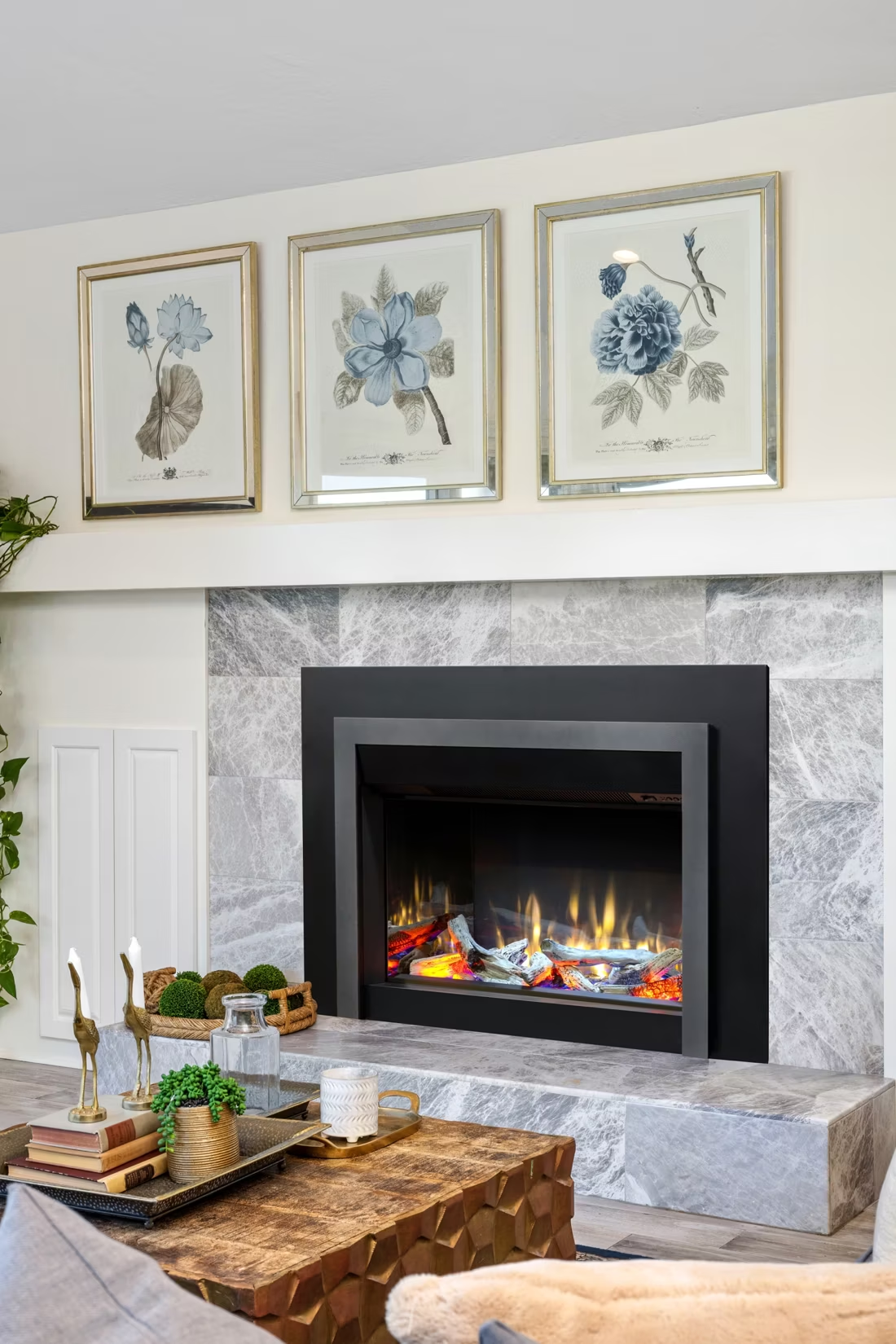
From Casa Grande and Maricopa to San Tan Valley and Apache Junction, Pinal County winters rarely call for a furnace overhaul. Electric fireplaces deliver the look and warmth homeowners want here—no chimney, no gas line, no venting. We'll match you with a trusted local dealer who installs it right.
Every Project Starts From One of These Five Situations
Just 1,382 heating degree days—electric is plenty.
Pinal County stretches from the low desert floor around Casa Grande, Eloy, and Maricopa (roughly 1,400 to 2,000 feet) up to the high desert grasslands near Oracle and Superior, where elevation climbs past 4,000 feet. Even at the county's higher elevations, winter is short: average lows sit around 41°F and the county logs only about 1,382 heating degree days a year—a fraction of what a place like Bismarck, ND runs through in January alone. That's the backdrop for one of the fastest-growing counties in the country, with new subdivisions in San Tan Valley, Maricopa, and Queen Creek's Pinal County edge going up every year, plus established active-adult communities like SaddleBrooke and Robson Ranch.
With heating loads this light, wood and pellet appliances don't make practical sense here—Pinal County sits in a designated non-attainment area with winter inversion and wildfire-smoke concerns, and there's little demand for a fuel that solves a cold-climate problem the county doesn't really have. Electric fireplaces fill the gap that's actually relevant: instant ambiance, supplemental warmth on the occasional cold desert night, zero clearance requirements that work in stucco new-builds, and no restrictions from HOA fire codes common in San Tan Valley and Maricopa developments. Electric service across the county runs through a mix of providers—Arizona Public Service (APS), Electrical District No. 3, and Trico Electric Cooperative depending on where you live—and any of them supports a standard electric fireplace circuit without issue.
Three steps. No salesperson until you're ready.
Tell us about your project
Your zip code, your situation, and the fuel you're leaning toward—or let the answers point you to one.
See what's actually available
The brands dealers within 100 miles genuinely carry—real options, never a catalog mirage.
Get your dealer & Project Guide
A trusted local dealer, plus the free Project Guide & Parts List that names every component of the job.
Frequently Asked Questions
How much does an electric fireplace installation cost in Pinal County?
A plug-in electric insert or freestanding unit typically runs $300 to $900 installed, since it just needs an existing outlet and a properly sized opening. A built-in wall unit or a full mantel surround with a new dedicated 20-amp circuit runs higher, usually $1,000 to $2,500, depending on how much electrical work and framing is involved. Because Pinal County's building stock skews newer—much of San Tan Valley, Maricopa, and Casa Grande's growth has happened in the last two decades—most homes already have modern panel capacity, which keeps electrical upgrade costs lower than in older housing stock.
Can an electric fireplace actually heat a room in Pinal County, or is it just for looks?
Most units genuinely supplement heat—a typical 1,500-watt electric fireplace puts out roughly 5,000 BTU, enough to take the edge off a great room on one of the county's rare 30-degree mornings, particularly at higher elevation around Oracle or the Superstition foothills near Apache Junction. But with average winter lows around 41°F and only about 1,382 heating degree days a year countywide, almost nobody is relying on an electric fireplace as their primary heat source the way a cold-climate homeowner would. It's there for the occasional cold snap and for the ambiance the rest of the year.
Do I need a permit to install an electric fireplace in Pinal County?
A plug-in electric insert that uses an existing outlet generally doesn't require a permit. A built-in wall unit that needs a new dedicated circuit does require an electrical permit, issued either through the Pinal County Building Safety Department for unincorporated areas or through the local building department in incorporated cities like Casa Grande, Maricopa, or Apache Junction. Most local dealers pull this permit as part of the installation, so it's rarely something the homeowner has to manage directly.
What's the best electric fireplace option for HOA communities like San Tan Valley or Robson Ranch?
Zero-clearance electric inserts and built-in wall units are the easiest fit for HOA-restricted communities across Pinal County, since there's no chimney, no exterior venting, and no open flame to run afoul of fire-code covenants that many newer developments enforce. Freestanding electric stoves work too and offer more flexibility if you move, since there's no permanent electrical or structural modification required. Local dealers serving San Tan Valley and the Robson Ranch communities generally carry both styles and can walk through what a specific HOA typically approves.
Electric vs. gas—which fits my Pinal County home better?
Gas fireplaces are common here too and deliver more real heat output plus the look of an actual flame, which matters to some homeowners in Florence and Coolidge who want a traditional hearth centerpiece. Electric skips the gas line or propane tank entirely, costs less to install, and works in any room without venting restrictions—a real advantage in newer Maricopa or San Tan Valley subdivisions built without gas infrastructure. Given how mild Pinal County winters run, the choice usually comes down to whether you want the visual realism of a gas flame or the simplicity and lower upfront cost of electric, rather than which one actually keeps the house warm.
What electrical circuit does an electric fireplace need?
Most electric fireplaces draw around 1,500 watts, which works out to roughly 12.5 amps on a standard 120-volt circuit. Plug-in units can typically run on an existing 15-amp household outlet as long as nothing else heavy is sharing that circuit. Built-in units are usually wired to their own dedicated 20-amp circuit to avoid tripping breakers, particularly if the unit includes a blower or supplemental heater function. A local dealer or licensed electrician can confirm what your home's panel supports before installation.
Why don't more Pinal County homes use wood stoves?
Wood heat just doesn't solve a problem that exists here. With only about 1,382 heating degree days a year and winter lows averaging 41°F, there's minimal demand for a fuel built around sustained cold-weather heating. Pinal County is also a designated non-attainment area with winter inversion and periodic wildfire-smoke concerns, which makes adding a wood-burning appliance a harder sell on air quality grounds alone. A small number of rural properties near Oracle or Superior still burn mesquite or juniper for a campfire-style feature, but it's a niche choice rather than a mainstream heating option—electric and gas cover the vast majority of hearth installs countywide.
Where should an electric fireplace be placed in a Pinal County home?
Because electric units generate no combustion byproducts and need zero clearance to combustibles, placement is flexible—a common choice in newer Maricopa and Casa Grande floor plans is an interior accent wall in the great room, since electric units don't require proximity to an exterior wall for venting the way a gas or wood appliance would. Built-in wall units set into a framed niche are popular in open-concept new construction, while freestanding stoves work well in secondary living spaces, casitas, or bonus rooms common in the county's larger lot developments.
Are there rebates available for efficient electric heating appliances in Pinal County?
There's no dedicated statewide rebate specifically for electric fireplaces, but APS and other regional utilities serving Pinal County periodically run efficiency incentive programs for ENERGY STAR-rated electric appliances, and it's worth checking current offers before purchase. Since electric fireplaces used for supplemental or ambiance heat draw relatively little power compared to central HVAC, the bigger cost consideration for most Pinal County homeowners is usually the install itself rather than ongoing operating cost—a local dealer can walk through realistic monthly usage based on your model and habits.
Does an electric fireplace need a vent or chimney?
No—that's its superpower. An electric fireplace needs a wall and an outlet, period. No vent pipe, no gas line, no clearances to design around, which is why it works in bedrooms, offices, apartments, and walls where venting a gas or wood unit would be impractical or impossible. Installation is typically the simplest and least expensive of any fireplace type.
Can I put a TV above my fireplace?
Yes—with an asterisk. Fireplaces are hot and TVs don't like heat. Either put a mantel between them to deflect rising warmth, or choose a fireplace with heat-management technology that creates a cool zone on the wall above—the wall stays around 125 degrees, barely warm, while the room still gets full heat. If you like clean lines and don't want a mantel, heat management is the answer.
How much should I budget for a fireplace?
For an average home—covering the fireplace, the vent pipe, and basic installation—a budget between $3,900 and $5,500 gives you a lot of options across wood, gas, and pellet. By the time you add finish work, gas line, and electrical, the average complete installation lands between $5,000 and $12,000 all-in. In a remodel or new build, a good rule is to put about 2.5% of the total project cost toward the fireplace.
Can I install a fireplace myself?
If you're putting a fire in your house on purpose, it's best to work with an expert. Unless you're genuinely experienced in framing, gas line, vent pipe, and the national code on clearances to combustibles, have a professional do it—and ideally the same company that sells you the fireplace, so warranty, service, and liability all live under one roof.
Stove and Fireplace Dealers in Pinal County
Listings include WhyFire partner dealers, dealers we have verified as authorized for the brands we recommend, and established local businesses that carry hearth products. Every listing shows which one it is. The ones marked Preferred run on WhyFire's software, so they can show you real pricing and book your appointment right here. No manufacturer pays for placement. How we verify dealers →
Brooksies Propane
Gilbert Fireplaces & BBQ’s
Diversified Builder Supply
All American Outdoor Living
Valley Stone
Find your electric fireplace in Pinal County.
Tell us a bit about your home and we'll match you with the right electric fireplace or insert, plus a free Project Guide & Parts List and a trusted local dealer to install it.
Find Your Fireplace →