
Warmth on demand for a valley where winter barely dips below 41°F.
With such a light winter heating load, San Tan Valley doesn't need a heating system so much as a good-looking one. I'll match you with a trusted local dealer who can tell you exactly what's installable in your home, no gas line or venting required.
Every Project Starts From One of These Five Situations
A climate built for ambiance, not survival heat.
San Tan Valley sits in the Sonoran Desert at 1,491 feet, and its climate profile—a 41°F average winter low and a very light winter heating load overall—puts it near the mild end of anything Find My Fireplace covers. For comparison, a place like Fargo, ND logs that same heat-load number in about six weeks. Mesquite, pinyon, and juniper grow in the surrounding foothills and washes, but almost nobody here is cutting them for home heat; wood stoves and pellet stoves are effectively absent from this market, since there's rarely a night cold enough to justify the chimney, the fuel storage, or the smoke. Electric is the fuel that actually matches how people here use a fireplace: for the look and the occasional chilly evening, not for keeping a house alive through winter.
Electric service across San Tan Valley's zip codes runs through a mix of providers—Gila River Indian Utility Authority (GRICUA), Electrical District No. 2, and Electrical District No. 3 of Pinal County—with residential rates in the 13.3 to 14.25 cents per kWh range depending on which district serves your address. That's a minor line item for a fireplace that's typically run a few hours in the evening rather than around the clock. Plenty of the newer master-planned communities that make up San Tan Valley's fast growth were built without natural gas infrastructure at all, which makes a plug-in or built-in electric unit the simplest path to a working fireplace without trenching a gas line or setting a propane tank.
Three steps. No salesperson until you're ready.
Tell us about your project
Your zip code, your situation, and the fuel you're leaning toward—or let the answers point you to one.
See what's actually available
The brands dealers within 100 miles genuinely carry—real options, never a catalog mirage.
Get your dealer & Project Guide
A trusted local dealer, plus the free Project Guide & Parts List that names every component of the job.
Frequently Asked Questions
How much does an electric fireplace installation cost in San Tan Valley?
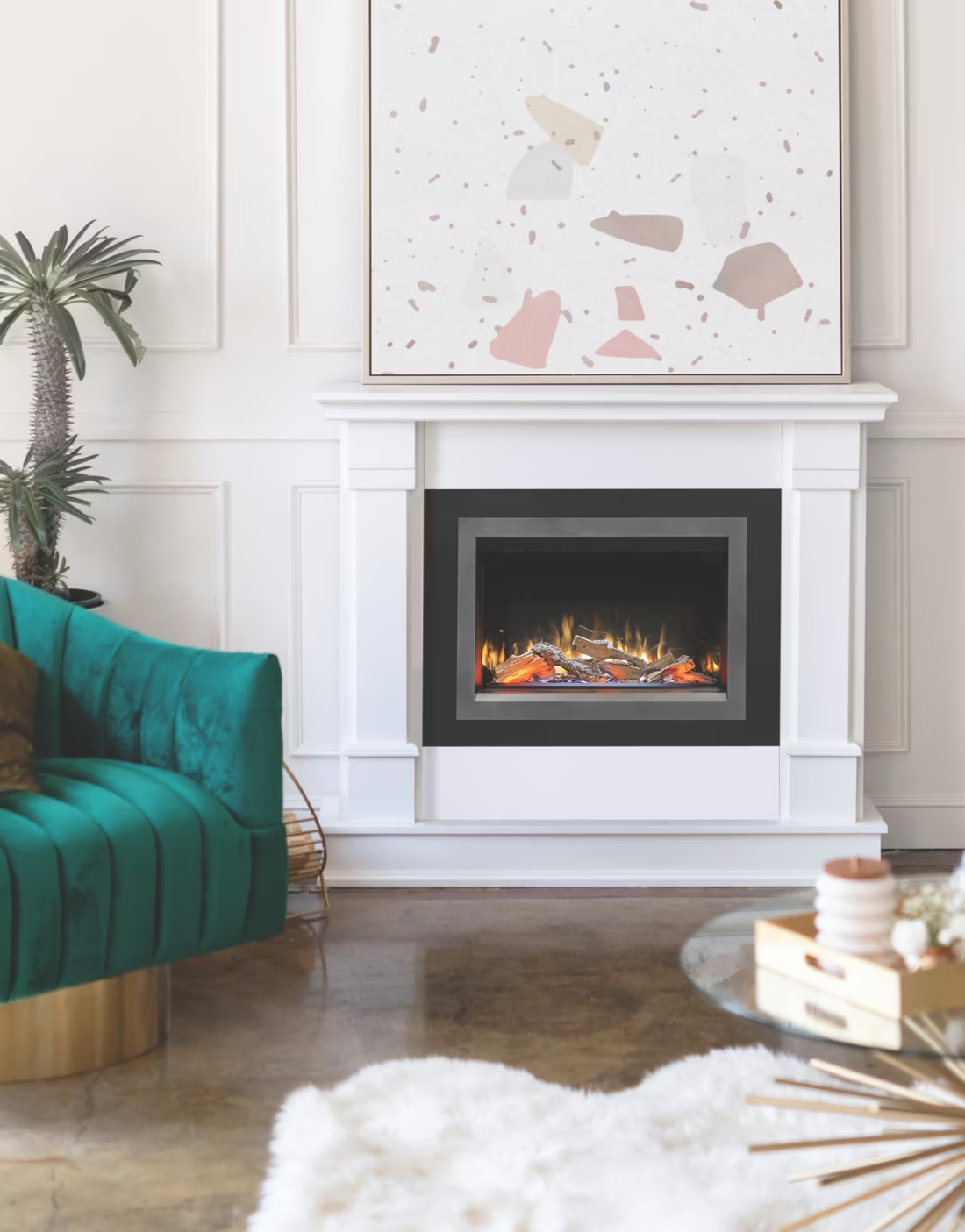
Most projects run $500 to $2,500. A plug-in insert that drops into an existing wall opening or media console sits at the low end and typically needs no electrical work beyond an existing outlet. A built-in linear electric fireplace with custom framing, a dedicated 20-amp circuit, and a finished surround runs toward the top of that range. Because there's no chimney, no gas line, and no venting to size, electric installs here are usually the fastest and least invasive fireplace project a San Tan Valley homeowner can take on.
Does an electric fireplace even make sense in a climate this mild?
Yes, but expectations should be set correctly. With an average winter low of 41°F and a winter heating load that's about as light as it gets, most San Tan Valley households aren't heating a room so much as taking the edge off a handful of genuinely cool nights and adding a visual focal point the rest of the year. A 1,500-watt electric insert covers that use case well. Nobody here needs the overnight-burn capacity a Bozeman or Duluth homeowner would require; the appeal is the flame effect and light supplemental warmth, not survival heat.
Which electric utility serves my home, and does it affect my fireplace choice?
Depending on your exact address within the 85143, 85142, 85140, or 85144 zip codes, you'll likely be served by Gila River Indian Utility Authority (GRICUA), Electrical District No. 2, or Electrical District No. 3 of Pinal County. Rates run 13.26 to 14.25 cents per kWh across the three. Running a standard 1,500-watt electric fireplace costs roughly 20 cents an hour on any of them—a negligible add to a monthly bill given most units here get used for a few hours in the evening rather than as a primary heat source.
Do I need a permit to install an electric fireplace in San Tan Valley?
A simple plug-in unit that uses an existing outlet typically doesn't require a permit. If your project involves a built-in unit needing a new dedicated circuit, an electrician will need to pull an electrical permit through Pinal County Building Safety, since San Tan Valley is unincorporated and falls under county jurisdiction rather than a city building department. Most local dealers coordinate this as part of the install so you're not tracking down the paperwork yourself.
What about wood or pellet stoves—are those an option in San Tan Valley?
Not really, and it's worth being upfront about that. Mesquite, pinyon, and juniper grow in the region and Tonto and Coronado National Forest do issue cutting permits at $5 to $20 per cord, but that wood is cut for campfires and mesquite grilling, not home heating—there's rarely a cold stretch long enough to justify a wood or pellet appliance here. The Phoenix-Pinal County area is also a non-attainment zone for air quality, which adds another reason combustion heating appliances haven't taken hold locally. Electric sidesteps that issue entirely: no emissions, no smoke, no permit complications tied to burning anything.
Is gas or electric the better fit for a new San Tan Valley home?
It depends on what's already run to your house. A number of San Tan Valley's newer master-planned subdivisions were built all-electric, with no natural gas line to the meter, which makes a gas fireplace a bigger project—either a propane tank and line or an unavailable hookup. Electric avoids that problem entirely and installs in an afternoon. If your home does have gas service, a direct-vent gas fireplace throws more real heat, which matters if you're using the room during the occasional 30s-and-40s cold snap; for most San Tan Valley living rooms used mainly for ambiance, electric is the simpler and cheaper call.
What size or wattage electric fireplace do I need?
Because San Tan Valley's heating load is so light, sizing here is driven more by the room and the visual you want than by BTU output. A standard 1,500-watt insert or built-in unit comfortably takes the chill off a great room or converted den in the 400 to 1,000 square foot range on the coldest nights of the year. Larger linear units are usually chosen for width and flame presentation across a wall rather than for additional heat, since almost nobody here is asking a fireplace to carry a whole house through winter.
How much does it cost to actually run an electric fireplace in San Tan Valley?
At the area's typical residential rates of roughly 13.3 to 14.25 cents per kWh, a standard 1,500-watt unit costs about 20 to 21 cents an hour to run, or roughly 60 to 65 cents for a typical three-hour evening. That's a fraction of what running auxiliary heat strips on a heat pump would cost on the rare night San Tan Valley actually needs it, which is part of why electric fireplaces here get used liberally for ambiance without homeowners worrying much about the utility bill.
Electric fireplace vs. gas fireplace—which should I choose in San Tan Valley?
Gas fireplaces put out more real heat and give you the sound and movement of an actual flame, but they require either an existing natural gas line or a propane tank, direct-vent installation, and a typical install cost of $3,500 to $8,000—a bigger project in a market where plenty of newer subdivisions were built without gas service at all. Electric skips all of that: no venting, no gas permit, install cost usually under $2,500, and it works in HOA-governed communities where exterior venting changes can be a hassle to get approved. For a climate that rarely demands real heat output, electric covers what most San Tan Valley homeowners are actually after.
Can I put a TV above my fireplace?
Yes—with an asterisk. Fireplaces are hot and TVs don't like heat. Either put a mantel between them to deflect rising warmth, or choose a fireplace with heat-management technology that creates a cool zone on the wall above—the wall stays around 125 degrees, barely warm, while the room still gets full heat. If you like clean lines and don't want a mantel, heat management is the answer.
Does an electric fireplace need a vent or chimney?
No—that's its superpower. An electric fireplace needs a wall and an outlet, period. No vent pipe, no gas line, no clearances to design around, which is why it works in bedrooms, offices, apartments, and walls where venting a gas or wood unit would be impractical or impossible. Installation is typically the simplest and least expensive of any fireplace type.
What is an in-home preview and do I need one?
It's a visit where a hearth professional measures your space, confirms the model you picked actually works in your home, and walks the specs—framing, gas line, venting, finish work—before anything is ordered. Some details you just can't know until you see the house. Never make a down payment without one; it's the single most-skipped step that burns buyers.
Can I install a fireplace myself?
If you're putting a fire in your house on purpose, it's best to work with an expert. Unless you're genuinely experienced in framing, gas line, vent pipe, and the national code on clearances to combustibles, have a professional do it—and ideally the same company that sells you the fireplace, so warranty, service, and liability all live under one roof.
Nearby Dealers
Hearth shops serving San Tan Valley and the surrounding area. Every listing shows whether it is a WhyFire partner, a dealer we have verified as authorized for the brands we recommend, or a local business carrying hearth products. No manufacturer pays for placement. How we verify dealers →
Gilbert Fireplaces & BBQ’s
Brooksies Propane
Diversified Builder Supply
All American Outdoor Living
Valley Stone
Electric Service in San Tan Valley
An electric fireplace's heater draws about 1,500 watts—pennies per hour at local rates.
Gila River Indian Utility Authority (Gricua)
Electrical Dist No2 Pinal County
Electrical Dist No3 Pinal County
Get your free Project Guide & Parts List for a San Tan Valley electric fireplace.
Tell me about your home and which electric utility serves your address—GRICUA, Electrical District No. 2, or Electrical District No. 3—and I'll match you with a trusted local dealer and send a free Project Guide & Parts List sized to your room, with the exact unit and circuit requirements spelled out.
Find Your Fireplace →