
Fireplace ambiance for a desert that rarely needs the heat.
No chimney, no gas line, no venting—just real flame-effect warmth for the occasional cool Superstition Mountains evening. Find the right unit and connect with a trusted local dealer.
Every Project Starts From One of These Five Situations
Electric heat fits a climate that barely dips below 40.
Gold Canyon sits in the Sonoran Desert foothills at the base of the Superstition Mountains, just under 1,900 feet in elevation, where winter lows average a mild 43°F and the town has a very short, mild heating season each year. Compare that to Fargo, North Dakota, which faces a long, brutal winter heating season most years, and it's clear this isn't a climate where anyone needs a fireplace to survive January. Homeowners here install one for the glow, the architectural focal point, and the handful of desert evenings each winter when temperatures actually drop into the 30s.
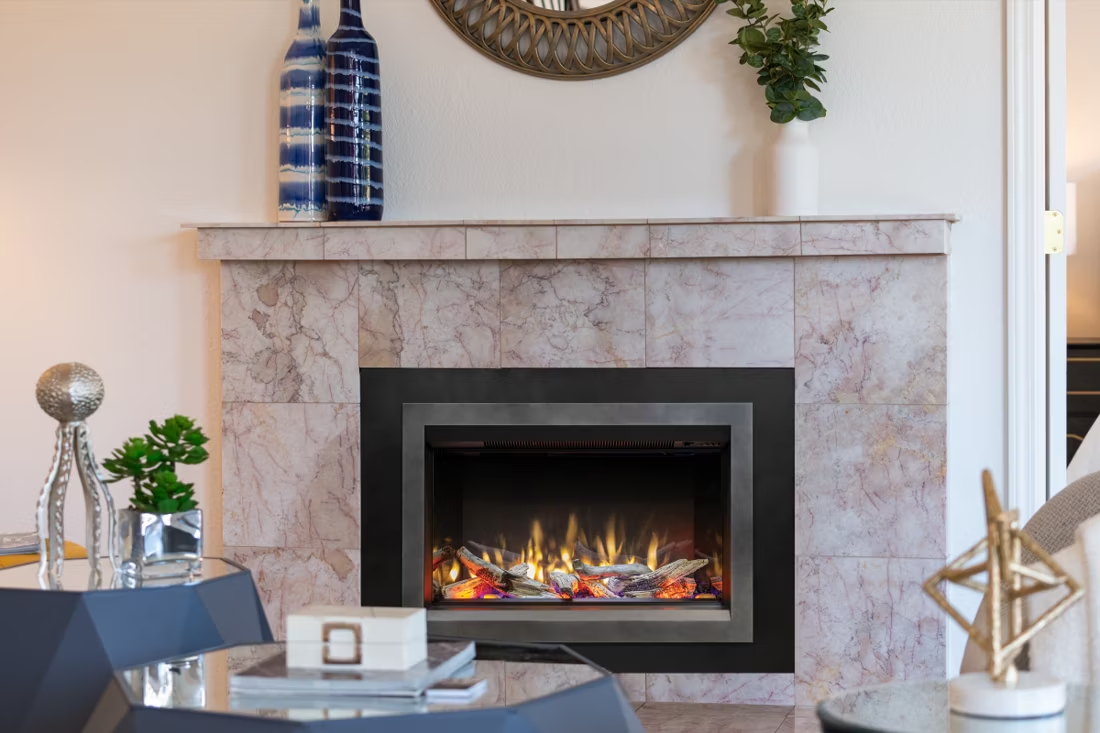
That's the situation electric fireplaces are built for. There's no chimney, no gas line, no wood storage, and no exterior venting to route through stucco walls—a unit plugs in or wires into a dedicated circuit and delivers real flame-effect ambiance with supplemental heat when you actually want it. In Gold Canyon's golf-course and retirement communities, where many streets fall under HOA design covenants, that's a real advantage: no exterior venting changes to get approved, no masonry alterations to a home's facade. Power comes through Gila River Indian Utility Authority, Electrical District No. 2, or Electrical District No. 3 of Pinal County depending on your exact address, with residential rates running roughly 13 to 14 cents per kWh—low enough that running a fireplace for evening ambiance costs pennies.
Three steps. No salesperson until you're ready.
Tell us about your project
Your zip code, your situation, and the fuel you're leaning toward—or let the answers point you to one.
See what's actually available
The brands dealers within 100 miles genuinely carry—real options, never a catalog mirage.
Get your dealer & Project Guide
A trusted local dealer, plus the free Project Guide & Parts List that names every component of the job.
Frequently Asked Questions
How much does it cost to install an electric fireplace in Gold Canyon?
Costs vary widely by type. A plug-in insert or freestanding unit that runs off an existing outlet can be installed for $400 to $800, essentially the price of the unit plus mounting. A built-in wall unit or mantel package that requires a licensed electrician to run a new dedicated 120V or 240V circuit typically runs $1,500 to $3,000, depending on wall type (stucco and block construction common in Gold Canyon can add labor) and how far the unit sits from the panel. Converting an existing masonry fireplace shell to an electric insert usually lands in the middle of that range.
Do I need a permit to install an electric fireplace in Gold Canyon?
Gold Canyon is unincorporated, so electrical permitting runs through Pinal County Development Services. A simple plug-in unit on an existing circuit generally doesn't require a permit. If your installer needs to add a new dedicated circuit or breaker for a built-in wall unit, that electrical work does require a permit, and it should be pulled by a licensed electrician—most local hearth and electrical contractors handle this as part of the installation quote.
What does it actually cost to run an electric fireplace here?
With residential rates in the 13 to 14 cent per kWh range across GRICUA, Electrical District No. 2, and Electrical District No. 3, a typical electric fireplace on its heat setting (about 1,500 watts) costs roughly 20 cents an hour to run. Most units also have a flame-only mode with the heater switched off, which draws well under 100 watts—a few cents an hour just for the visual effect. Given Gold Canyon's mild winters, many owners run flame-only most nights and only switch on heat during the occasional cold front.
Do I need a heating model, or just flame effect?
With such a short, mild heating season each year, most Gold Canyon homes don't need an electric fireplace to carry real heating load—central HVAC handles the rare cold stretch fine. A flame-only or low-heat model covers the ambiance most people are after. The exception is a casita, guest house, or garage conversion without its own HVAC zone, where a higher-output electric heater insert can genuinely take the edge off on the coldest nights without running ductwork.
Electric vs. gas—which fits my Gold Canyon home better?
Gas fireplaces are common here too, but natural gas service is limited around Gold Canyon, so most gas installations run on propane, which means a tank and a delivery contract. Electric skips all of that—no fuel storage, no gas line, no combustion venting through the wall. Gas gives you a more authentic flame and higher heat output if you actually need it on a cold night; electric gives you simpler installation, lower upfront cost, and zero ongoing fuel logistics. For a climate this mild, where the fireplace is mostly for atmosphere, electric is often the lower-hassle choice—though plenty of homeowners still choose gas for the look and feel of a real flame.
Does it matter which electric utility serves my home?
It can affect your running cost slightly. Depending on the exact parcel, Gold Canyon homes are served by Gila River Indian Utility Authority (around 14.25 cents per kWh), Electrical District No. 2 of Pinal County (around 13.26 cents), or Electrical District No. 3 of Pinal County (around 13.93 cents). The difference is a few cents per kWh, not enough to change which fireplace you buy, but worth checking your bill before an electrician sizes a new circuit, since some districts have different service capacity and hookup procedures.
What types of electric fireplaces are available through local dealers?
Local hearth dealers carry three main formats: built-in wall units that recess into a framed wall for a clean, linear look popular in newer Gold Canyon builds; mantel packages that pair a freestanding or semi-recessed unit with a surround, good for great rooms; and inserts sized to slide into an existing masonry fireplace opening, which is common in older homes near Apache Junction that have an unused wood-burning firebox. All three skip venting entirely, so the main decision is really about look and where the unit sits in the room.
How much maintenance does an electric fireplace need?
Very little compared to gas or wood. There's no annual chimney sweep or gas line inspection required. Maintenance is mostly dusting the unit, occasionally replacing an LED light strip or heating element after several years of use, and making sure the fan and vents on the back stay free of dust—relevant in a dusty desert environment like Gold Canyon. Built-in units with hardwired circuits don't need a professional check unless something stops working; there's no combustion byproduct to monitor.
Will my HOA have a problem with an electric fireplace installation?
Generally no, and that's one of the practical reasons electric is popular in Gold Canyon's golf-course and retirement communities. Because there's no chimney, no vent termination on an exterior wall, and no gas line penetration, most HOA architectural review committees treat an electric fireplace as an interior modification rather than an exterior change requiring approval. It's still worth checking your community's specific covenants before work begins, but electric installations rarely trigger the kind of design review that a masonry addition or gas vent termination would.
Can I put a TV above my fireplace?
Yes—with an asterisk. Fireplaces are hot and TVs don't like heat. Either put a mantel between them to deflect rising warmth, or choose a fireplace with heat-management technology that creates a cool zone on the wall above—the wall stays around 125 degrees, barely warm, while the room still gets full heat. If you like clean lines and don't want a mantel, heat management is the answer.
Do electric fireplaces actually produce heat?
Yes—most put out around 4,800–5,000 BTUs from a standard outlet, which comfortably warms a bedroom, office, or den as a comfort-zone heater. What they won't do is carry a whole house the way wood, gas, or pellet can. Think of electric as ambiance-first with honest supplemental heat: flames on with no heat in July, flames plus warmth in January.
How much should I budget for a fireplace?
For an average home—covering the fireplace, the vent pipe, and basic installation—a budget between $3,900 and $5,500 gives you a lot of options across wood, gas, and pellet. By the time you add finish work, gas line, and electrical, the average complete installation lands between $5,000 and $12,000 all-in. In a remodel or new build, a good rule is to put about 2.5% of the total project cost toward the fireplace.
Does a fireplace add value to my home?
On average, a fireplace adds back to the home about the same amount you spent installing it. Add the monthly savings from heating the rooms you actually use instead of the whole house—often hundreds of dollars a year—and the value case is strong before you even count what a fire does for how your family uses the room.
Nearby Dealers
Hearth shops serving Gold Canyon and the surrounding area. Every listing shows whether it is a WhyFire partner, a dealer we have verified as authorized for the brands we recommend, or a local business carrying hearth products. No manufacturer pays for placement. How we verify dealers →
Gilbert Fireplaces & BBQ’s
Diversified Builder Supply
Valley Stone
Brooksies Propane
Electric Service in Gold Canyon
An electric fireplace's heater draws about 1,500 watts—pennies per hour at local rates.
Gila River Indian Utility Authority (Gricua)
Electrical Dist No2 Pinal County
Electrical Dist No3 Pinal County
Find your electric fireplace in Gold Canyon.
Tell us a bit about your home and we'll match you with the right electric fireplace or insert, plus a free Project Guide & Parts List and a trusted local dealer to install it.
Find Your Fireplace →