
Comfortable heat for La Paz County's short, mild winters.
From Parker to Quartzsite to Salome, La Paz County doesn't need a furnace running all winter—it needs a clean, easy-to-manage heat source for the cool desert nights and the snowbird season. Find the right pellet stove and get matched with a trusted local dealer.
Every Project Starts From One of These Five Situations
A short cold season that still calls for real heat.
La Paz County sits along the lower Colorado River in Arizona's climate zone 2B—hot desert, with Parker as the county seat and Quartzsite swelling each winter with tens of thousands of seasonal RV residents. Average winter lows hover around 42°F, and the county's overall winter heating need is light—just a small fraction of what a place like Duluth or Bismarck sees. That's not a county built around all-winter heating. But nights in Salome, Bouse, and the higher desert stretches away from the river regularly dip into the 30s from December through February, and a lot of homeowners and part-time residents want something more targeted than a space heater for those months.
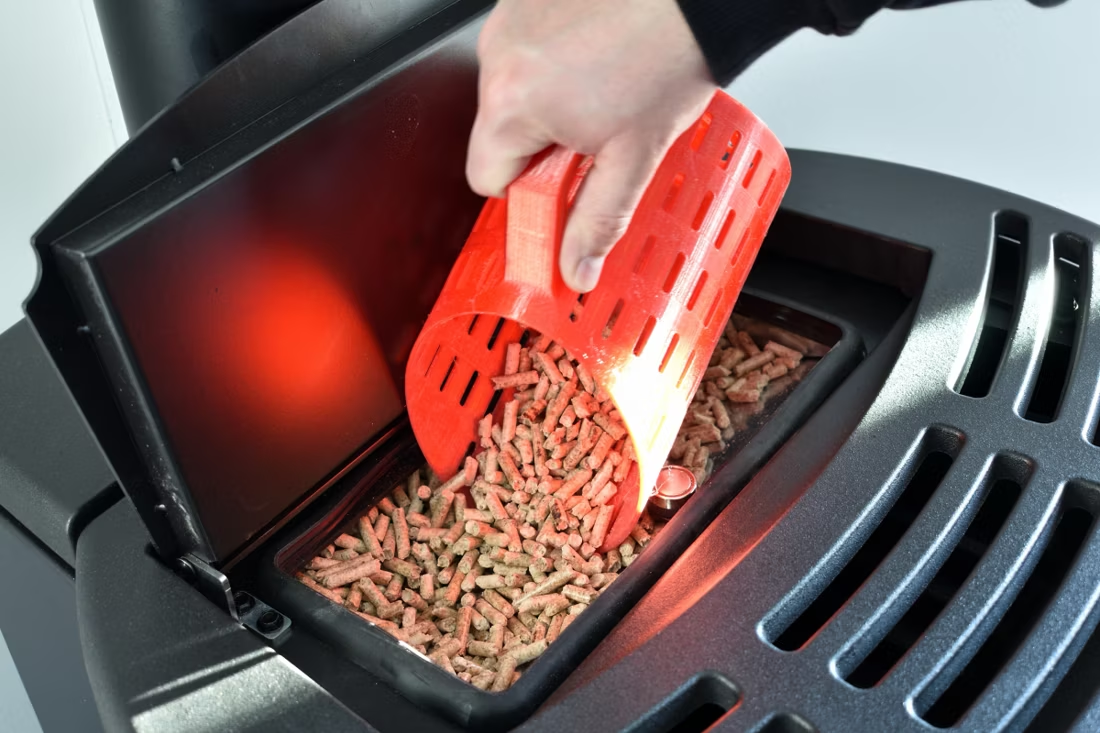
That's where pellet stoves fit. They're clean-burning—a real advantage in a county where wildfire smoke is already a seasonal air quality concern and open burning is watched closely during dry stretches—and they don't require the woodpile management that mesquite, pinyon, or juniper cordwood does. For Quartzsite's seasonal residents in particular, a pellet stove that runs on a thermostat and shuts off cleanly when the RV lot empties out each spring is often a better fit than a wood-burning setup. Pellets from regional suppliers like Forest Energy and Lignetics are typically stocked through local hardware and farm supply stores, though rural residents should expect to plan ahead rather than rely on same-day pickup.
Three steps. No salesperson until you're ready.
Tell us about your project
Your zip code, your situation, and the fuel you're leaning toward—or let the answers point you to one.
See what's actually available
The brands dealers within 100 miles genuinely carry—real options, never a catalog mirage.
Get your dealer & Project Guide
A trusted local dealer, plus the free Project Guide & Parts List that names every component of the job.
Frequently Asked Questions
How much does a pellet stove installation cost in La Paz County?
Pellet stove installations generally run less than wood or gas installs because there's no masonry chimney or gas line involved—most of the cost is the unit itself, a dedicated electrical outlet, a vent pipe through an exterior wall, and a hearth pad if code requires one. In a rural county like La Paz, where a lot of homes are single-story with straightforward wall venting, installs tend to land on the simpler end of the national range for pellet appliances. Costs run higher if you're installing in a park model or manufactured home in Quartzsite's winter RV community, where wall configurations and electrical panel capacity can require extra work. A local dealer can give you a firm number after seeing your home.
What size pellet stove do I need in a low-heating-demand climate like this?
With such a light winter heating need overall, most La Paz County homes don't need a large-capacity pellet stove sized for whole-house heating the way a home in a cold-winter state would. A small to mid-size unit is usually enough to comfortably heat a main living area in Parker or Salome, and it'll often run well below its maximum output setting on most winter evenings. The exception is larger or poorly insulated homes out toward Bouse and Wenden, where desert nights get colder away from the river and a mid-size stove sized with some margin makes sense. A local dealer can walk through your square footage and layout to avoid oversizing a stove for a climate this mild.
Will my pellet stove work if the power goes out?
No—pellet stoves depend on electricity to run the auger that feeds pellets and the blower that pushes heat into the room, so a power outage shuts them down. This matters in La Paz County because rural stretches served by the area's electric cooperatives and utilities can see outages during summer monsoon storms, and occasionally in winter. If backup heat during an outage is a priority—especially for full-time residents in more remote parts of the county—a battery backup unit or small generator sized for the stove's draw is worth discussing with your installer. Homeowners who want heat that works with zero electricity typically pair a pellet stove with a wood-burning option as backup.
Where can I buy pellet fuel in La Paz County?
Forest Energy and Lignetics are the regional brands most commonly stocked at hardware and farm supply outlets serving Parker and the surrounding county, though supply can be tighter in smaller communities like Salome and Bouse. Because La Paz County is rural, it's worth buying a season's worth of pellets early rather than waiting for a cold snap—some stores sell through their stock quickly once temperatures drop and don't always restock mid-winter. Quartzsite's seasonal population adds extra demand from November through March, which is another reason to buy ahead rather than wait.
Do I need a permit to install a pellet stove in La Paz County?
Most pellet stove installations require a building permit through the La Paz County Planning and Building Department, covering the venting and electrical work even though there's no gas line or masonry chimney involved. Most local dealers handle the permit application as part of the installation, so you typically don't have to navigate it yourself. If you're in a manufactured home or park model—common in Quartzsite's winter community—let your installer know up front, since venting through a mobile home wall sometimes has additional requirements.
Are pellet stoves affected by wildfire smoke or burn restrictions in La Paz County?
Wildfire smoke is a real seasonal concern in La Paz County's desert terrain, and open burning is sometimes restricted during dry, high-wind periods. Pellet stoves burn far cleaner than open wood fires—the compressed, low-moisture pellets produce a fraction of the particulate output—so they're generally not the target of the kind of curtailment rules that apply to unregulated open burning. That said, always confirm current restrictions with the county if you're burning anything, including pellets, during an active fire-weather advisory.
What's the best pellet stove for La Paz County's climate?
Because heating demand here is light compared to most of the country, you don't need a stove built for 20-hour burns in sub-zero weather—you need something reliable, easy to operate, and simple to shut down when a Quartzsite snowbird heads north for the summer. Auto-ignition models with a basic thermostat control are popular for exactly that reason: set it, use it on cold nights, and walk away from it for months without maintenance headaches. Ask a local dealer which models they stock and service locally—support and parts availability matter more here than raw BTU output.
Pellet stove vs. wood stove—which makes more sense in La Paz County?
Wood is part of the local heating tradition here, with mesquite, pinyon, and juniper all burned regionally, and a wood stove works without electricity—a real advantage during monsoon-season outages. But wood means managing a woodpile, dealing with more smoke output (a bigger concern given the county's wildfire-smoke air quality profile), and more hands-on tending. A pellet stove trades that off for cleaner burning, easier operation, and a footprint that suits a part-time or seasonal home well. For most La Paz County homeowners without a strong wood-burning tradition already in the family, pellet is the lower-maintenance choice; for those who want heat that works with the power out, wood stays the more resilient option.
Pellet vs. propane heat—which is right for my La Paz County home?
Propane is common in La Paz County's rural areas where natural gas service isn't available, and a propane heater or fireplace gives you instant, thermostat-controlled heat without any fuel handling. A pellet stove asks more of you—loading the hopper, buying bagged fuel, occasional ash cleanup—but it runs on a fuel that's typically cheaper per BTU than propane and doesn't depend on tank deliveries to a remote property. For a primary residence where convenience matters most, propane often wins. For a seasonal home or casita where fuel cost and independence from delivery schedules matter more, pellet is worth serious consideration.
Why is a fireplace insert so efficient?
An insert does two things: it seals the chimney completely, so you stop losing air you already paid to heat, and it radiates warmth into the room through the firebox and glass. Most add a heat-exchange fan that pulls cool room air underneath, wraps it around the hot firebox, and pushes it back out warm. Your home is more efficient before you've even lit the first fire.
What's the difference between an insert and a zero-clearance fireplace?
An insert is a fireplace that slides into a pre-existing wood-burning fireplace—if you don't have one, there's nothing to insert it into. A zero-clearance fireplace is built into a framed wall, which makes it the answer for remodels and new construction. Simple test: existing masonry fireplace means insert; blank or framed wall means zero-clearance.
How much should I budget for a fireplace?
For an average home—covering the fireplace, the vent pipe, and basic installation—a budget between $3,900 and $5,500 gives you a lot of options across wood, gas, and pellet. By the time you add finish work, gas line, and electrical, the average complete installation lands between $5,000 and $12,000 all-in. In a remodel or new build, a good rule is to put about 2.5% of the total project cost toward the fireplace.
Does a fireplace add value to my home?
On average, a fireplace adds back to the home about the same amount you spent installing it. Add the monthly savings from heating the rooms you actually use instead of the whole house—often hundreds of dollars a year—and the value case is strong before you even count what a fire does for how your family uses the room.
Pellet Brands Stocked Around La Paz County
Manufacturers will point you to the nearest stocking dealer.
Find your pellet stove in La Paz County.
Tell us a bit about your home in La Paz County and we'll match you with a trusted local dealer and send over a free Project Guide & Parts List—the exact pellet stove setup, vent kit, and installer recommendation for your project.
Find Your Fireplace →