
Ambiance heat for a county where winter lows barely reach 42.
With an average winter low of 42°F and just 1,049 heating degree days a year, La Paz County doesn't need a furnace-grade fireplace—it needs one that looks good in a Parker great room or a Quartzsite manufactured home and adds warmth on the handful of genuinely cold nights. I'll match you with a trusted local dealer who knows what actually installs cleanly in this county's housing stock.
Every Project Starts From One of These Five Situations
Built for warmth on demand, not survival heat.
La Paz County sits in the Sonoran Desert along the Colorado River, and its climate zone (2B) and 1,049 heating degree days put it near the mild end of the national spectrum—compare that to a place like Fargo, ND, which runs closer to 9,000 HDD in a typical winter. Housing here skews heavily toward manufactured and mobile homes, especially around Quartzsite's seasonal RV and rock-hound communities and the Parker Valley's year-round residents, where a masonry chimney or a solid-fuel appliance often isn't a practical fit for the structure or the park's rules. An electric fireplace sidesteps that entirely: no venting, no combustion, no roof penetration, and a straightforward install whether you're in a site-built home or a single-wide near Salome.
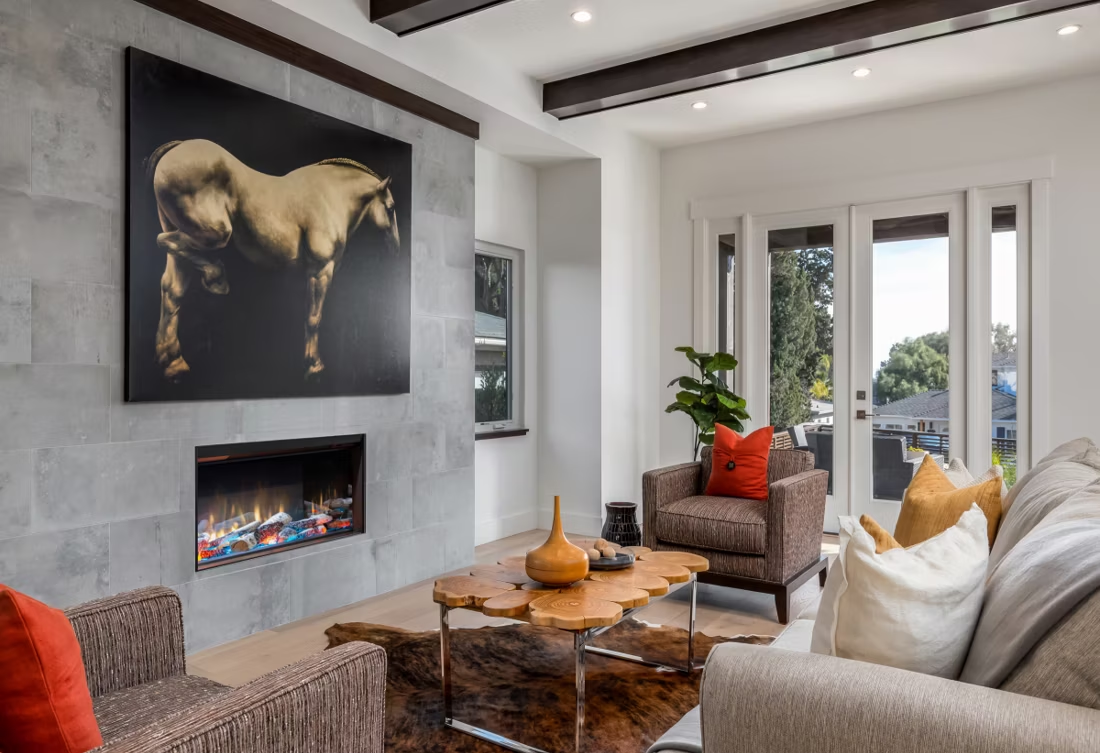
Electric also solves a real seasonal problem: La Paz County's population swells every winter as snowbirds arrive in Quartzsite and along the river, and a lot of that housing is temporary or leased, where a permanent wood or gas installation doesn't make sense. A plug-in insert or a wall-mounted linear unit gives instant ambiance and supplemental warmth for the occasional cold desert night without any combustion byproducts—which matters on the summer and fall days when wildfire smoke drifts into the county and outdoor air quality already takes a hit. Local dealers serving Parker and the surrounding county typically stock both plug-in units for renters and manufactured homes and hardwired built-in models for remodels, coordinated through Arizona Public Service or, in some rural stretches, Mohave Electric Cooperative service territory.
Three steps. No salesperson until you're ready.
Tell us about your project
Your zip code, your situation, and the fuel you're leaning toward—or let the answers point you to one.
See what's actually available
The brands dealers within 100 miles genuinely carry—real options, never a catalog mirage.
Get your dealer & Project Guide
A trusted local dealer, plus the free Project Guide & Parts List that names every component of the job.
Frequently Asked Questions
How much does an electric fireplace cost to install in La Paz County?
A basic plug-in electric insert or freestanding unit typically runs $300 to $900 installed, since there's no venting or gas line to add—most of that cost is the unit itself and a standard outlet. A hardwired built-in or wall-mounted linear fireplace, which needs an electrician to run a dedicated circuit, runs closer to $1,200 to $2,500 depending on the wall opening and finish work. Manufactured homes around Quartzsite and Salome usually land on the lower end since a plug-in model avoids any modification to the home's existing wiring.
Will an electric fireplace actually provide enough heat for La Paz County winters?
For this county, yes. With an average winter low around 42°F and only 1,049 heating degree days a year, most homes here rely on a heat pump or standard HVAC for the handful of genuinely cold nights, and an electric fireplace's 1,500-watt heater is plenty to take the edge off a single room in December or January. This isn't a Duluth, MN situation where a fireplace needs to carry a house through a multi-week cold stretch—in La Paz County, the fireplace is mostly there for ambiance, with real supplemental heat as a bonus.
Are electric fireplaces a good fit for manufactured and mobile homes in Quartzsite?
Yes, and it's one of the most common installs local dealers handle in the Quartzsite and Parker Valley area. Wood stoves and gas fireplaces often require structural or venting modifications that many manufactured homes and RV parks don't allow, but a plug-in electric unit needs nothing more than a grounded outlet, and a hardwired wall unit needs only a licensed electrician to add a circuit—no chimney, no roof penetration, no gas line. That makes electric the practical choice for a lot of the county's seasonal and manufactured housing.
Do I need a permit to install an electric fireplace in La Paz County?
A simple plug-in electric fireplace generally doesn't require a permit since it's no different from plugging in any other appliance. A built-in unit that needs new wiring or a dedicated circuit does require an electrical permit through La Paz County Development Services, and the work should be done by a licensed electrician. Most local dealers who sell built-in units will coordinate that permit and inspection as part of the installation.
Does an electric fireplace help on days when wildfire smoke affects air quality?
It does. La Paz County sees occasional wildfire smoke drift into the region, and on those days county or state air quality advisories sometimes discourage additional wood burning. An electric fireplace produces zero smoke or particulate emissions regardless of outdoor conditions, so it's a way to keep ambiance and supplemental heat running in the house without adding to indoor or outdoor air quality concerns during a smoke event.
I'm a seasonal resident in Quartzsite—does an electric fireplace make sense for a winter-only stay?
For the RV and manufactured-home crowd that arrives in Quartzsite each winter, a plug-in electric fireplace is usually the most sensible option: it needs no installation beyond an outlet, it can be unplugged and stored or taken with you at season's end, and it adds real ambiance for the cooler desert evenings without any commitment to permanent venting or gas infrastructure in a home you may not own year-round. Built-in units make more sense for full-time residents planning to stay put.
What utility serves La Paz County, and how much does an electric fireplace cost to run?
Most of La Paz County, including Parker, is served by Arizona Public Service (APS), with Mohave Electric Cooperative serving some outlying rural areas. A typical 1,500-watt electric fireplace costs roughly 15 to 25 cents an hour to run at APS's standard residential rates, which is inexpensive enough that most homeowners run theirs for ambiance most evenings rather than rationing use—a very different calculation than sizing a wood stove for all-winter heat load.
Should I consider wood instead of electric, given mesquite and pinyon are available locally?
Mesquite, pinyon, and juniper are all available around La Paz County and burn well in a wood stove if you want that option, but given the county's mild winters—average lows around 42°F and just 1,049 heating degree days—most homeowners here choose wood for the campfire aesthetic on patios rather than as a primary indoor heat source. Indoors, electric is generally the simpler call: no wood storage, no chimney maintenance, and no smoke to manage during wildfire smoke advisories, while still giving you a real flame-effect fireplace in the living room.
Where should I install an electric fireplace in my La Paz County home?
Since heating load isn't the driving factor here, placement usually comes down to where you spend evening time—a living room facing the Colorado River, a great room in a Parker Valley home, or the main living area of a manufactured home in Quartzsite. A local dealer can walk you through wall-mounted linear units for a modern remodel versus a freestanding or insert-style unit for a more traditional look, and confirm the circuit or outlet requirements for your specific unit before you buy.
Can I put a TV above my fireplace?
Yes—with an asterisk. Fireplaces are hot and TVs don't like heat. Either put a mantel between them to deflect rising warmth, or choose a fireplace with heat-management technology that creates a cool zone on the wall above—the wall stays around 125 degrees, barely warm, while the room still gets full heat. If you like clean lines and don't want a mantel, heat management is the answer.
Does an electric fireplace need a vent or chimney?
No—that's its superpower. An electric fireplace needs a wall and an outlet, period. No vent pipe, no gas line, no clearances to design around, which is why it works in bedrooms, offices, apartments, and walls where venting a gas or wood unit would be impractical or impossible. Installation is typically the simplest and least expensive of any fireplace type.
How much should I budget for a fireplace?
For an average home—covering the fireplace, the vent pipe, and basic installation—a budget between $3,900 and $5,500 gives you a lot of options across wood, gas, and pellet. By the time you add finish work, gas line, and electrical, the average complete installation lands between $5,000 and $12,000 all-in. In a remodel or new build, a good rule is to put about 2.5% of the total project cost toward the fireplace.
Should the dealer who sells my fireplace also install it?
Ideally, yes. A fireplace project involves vent pipe, gas line, electrical, and often tile or stone. Hire three or four separate trades and you own the liability and the game of telephone between them. One company selling and installing means one accountable party, start to finish—ask about factory training, on-time completion records, and what happens if an inspection fails.
Get your free Project Guide & Parts List for an electric fireplace in La Paz County.
Tell us about your home—manufactured, site-built, or seasonal—and we'll match you with a trusted local La Paz County dealer and send a free Project Guide & Parts List, with the exact unit, wiring needs, and recommended installer for your electric fireplace project.
Find Your Fireplace →