
Find your pellet stove in Greenlee County.
Clean, low-maintenance heat for Clifton, Duncan, and the ranch and mountain country around them. Find the right pellet stove or insert for your home, and connect with a trusted local dealer.
Every Project Starts From One of These Five Situations
Steady, clean heat for Arizona's smallest county.
Greenlee County is the least populous county in Arizona, with roughly 6,783 residents spread across a landscape that runs from the Gila River valley at Duncan up through Clifton's copper-mining canyon and into the high country bordering the Gila National Forest. Winters here are mild by Arizona mountain standards—average lows around 35°F and a light overall winter heating load puts the county in Climate Zone 3B, closer in feel to a Southern California foothill town than a true cold-winter climate. Homes at elevation near the forest boundary see real cold snaps, but most Greenlee homes need supplemental heat rather than a furnace-replacing primary system.
That mix of mild valley winters and remote, service-light geography is exactly where pellet appliances earn their keep. A pellet stove burns cleaner than an open wood fire, which matters in a county where wildfire smoke is a recognized air quality concern during dry seasons, and it doesn't require the propane tank or gas line work that a Duncan or Clifton homeowner would otherwise need to arrange from Safford or further out. Regional pellet brands like Forest Energy and Lignetics are already stocked by dealers serving this corner of southeastern Arizona, so getting fuel isn't the obstacle it can be in more isolated mountain counties.
Three steps. No salesperson until you're ready.
Tell us about your project
Your zip code, your situation, and the fuel you're leaning toward—or let the answers point you to one.
See what's actually available
The brands dealers within 100 miles genuinely carry—real options, never a catalog mirage.
Get your dealer & Project Guide
A trusted local dealer, plus the free Project Guide & Parts List that names every component of the job.
Frequently Asked Questions
How much does a pellet stove installation cost in Greenlee County?
Most pellet stove installations in Greenlee County run roughly $3,500 to $6,500, depending on the stove model, whether you're venting through an existing wall or need new penetration through masonry, and whether you're placing it as a freestanding unit versus converting an existing wood fireplace into a pellet insert. Because Greenlee is a low-population county with limited retail presence in Clifton and Duncan, some installers travel in from Safford or Silver City, NM, which can add a modest trip charge—worth asking about upfront when you get a quote.
What size pellet stove do I need for my home in Greenlee County?
With average winter lows around 35°F and a light overall winter heating load, most valley homes in Duncan or Clifton don't need a stove sized for round-the-clock primary heat—a small to mid-size unit (1,000 to 1,800 square feet of rated coverage) is usually enough to comfortably heat a main living area with the furnace or electric heat handling the rest. Homes at higher elevation toward the Gila National Forest boundary or up canyon roads see colder overnight temperatures and benefit from sizing a step larger. A local dealer can walk your square footage, ceiling height, and elevation to land on the right hopper size and BTU output.
Where can I find a certified pellet stove installer near me in Greenlee County?
Greenlee County itself has very little retail hearth presence given its small population, so most homeowners in Clifton, Duncan, or Morenci end up working with a dealer based in Safford or across the New Mexico line near Silver City. Look for NFI (National Fireplace Institute) certification, which confirms training specific to pellet-burning appliances and venting. A qualified installer will also coordinate the required building permit through the county rather than leave that step to you.
Pellet stove vs. wood stove—which makes more sense in Greenlee County?
Wood is deeply practical here: mesquite, pinyon, and juniper are all common locally, and Forest Service cutting permits through the Gila National Forest run just $5 to $20 per cord during the May-to-October season, which keeps fuel costs low for anyone willing to cut and haul their own. A wood stove also keeps working during a power outage, which matters on rural lines outside Clifton and Duncan. A pellet stove trades that self-sufficiency for convenience—no splitting, no chimney creosote buildup, and a thermostat-controlled burn—but it does need electricity to run the auger and blower, so it won't help during an outage unless you have a battery backup or generator. For a low-maintenance secondary heat source in a mild-winter home, pellet usually wins; for true off-grid backup heat, wood still has the edge.
Do I need a permit to install a pellet stove in Greenlee County?
Yes—a new pellet stove installation typically requires a building permit through the county, covering the venting penetration and hearth clearances. Most local installers handle this paperwork as part of the job. Because wildfire smoke is a recognized air quality concern in this part of southeastern Arizona during dry months, pellet appliances are generally viewed favorably compared to open wood burning since they produce far less visible smoke and particulate output—worth knowing if you're weighing a pellet stove against a traditional wood-burning unit for a property near fire-prone forest land.
What's a good pellet stove brand for Greenlee County's climate?
Because winters here are mild—average lows around 35°F rather than the deep-cold nights you'd see farther north—you don't need to prioritize the largest hopper or highest BTU output on the market. A mid-size unit that burns Forest Energy or Lignetics pellets, both distributed regionally, will comfortably handle supplemental heating for most Duncan or Clifton homes. If your property sits at higher elevation near the Gila National Forest boundary, ask your dealer about a larger hopper capacity so you're not reloading multiple times a night during the county's colder stretches.
How often does a pellet stove need to be serviced?
Plan on an annual cleaning and inspection, ideally before the winter heating season starts. This covers the burn pot, auger, exhaust venting, and glass, and it's a lighter job than a wood chimney sweep since there's no creosote buildup to remove. Given how few dealers are based directly in Greenlee County, it's worth scheduling service early in the fall before technicians from Safford or the surrounding area get booked up for the season.
Where can I buy pellet fuel in Greenlee County?
Pellet fuel isn't widely stocked directly in Clifton or Duncan given the county's small population, so most homeowners either buy in bulk when passing through Safford or arrange seasonal delivery ahead of winter. Forest Energy and Lignetics are the two regional brands most commonly carried by dealers serving this part of southeastern Arizona—buying a season's supply at once is the practical move here rather than counting on restocking mid-winter.
Pellet stove vs. electric heater—which is right for my Greenlee County home?
An electric space heater or wall unit is simpler to install and cheaper upfront, and it works well for the mild, short heating season Greenlee County sees at valley elevations. A pellet stove costs more to install but delivers a real fire, more consistent whole-room heat, and lower operating cost per BTU than electric resistance heat once you're running it regularly. Neither one keeps working without grid power unless you add a battery backup, so if outage resilience on a rural line near Duncan or Clifton is your top priority, that's a conversation to have with your installer regardless of which fuel you choose.
Why is my open fireplace making my house colder?
Open fireplaces suck—literally. As the fire burns, it consumes air your furnace already paid to heat and pulls it out through the chimney, so the house is actually colder after the fire goes out than before you lit it. An insert fixes this: it seals the chimney, puts fixed glass across the front, and turns that hole in your house into a real heat source.
How often does a pellet stove need cleaning?
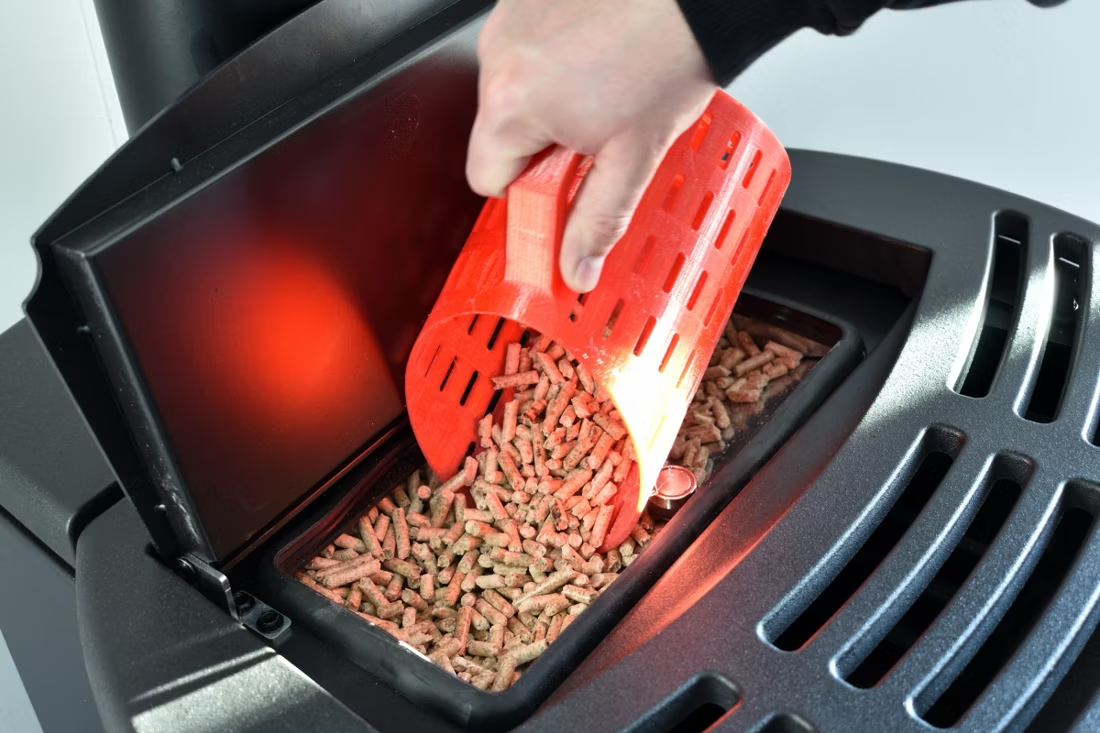
A clean pellet stove is a happy pellet stove. Plan on cleaning the burn pot about once a week when you're burning regularly—ash and clinkers gum up the air holes just like a pellet barbecue. Most pellet stove problems trace back to skipped cleaning that nobody explained up front. Some designs make it easy with a trapdoor burn pot: pull a lever and the gunk drops into the ash pan.
How much should I budget for a fireplace?
For an average home—covering the fireplace, the vent pipe, and basic installation—a budget between $3,900 and $5,500 gives you a lot of options across wood, gas, and pellet. By the time you add finish work, gas line, and electrical, the average complete installation lands between $5,000 and $12,000 all-in. In a remodel or new build, a good rule is to put about 2.5% of the total project cost toward the fireplace.
Can a fireplace actually lower my heating bill?
Yes—by creating a comfort zone. A furnace heats every square foot of the house just to warm the one room you're in; a gas fireplace on low burns roughly a sixth of the gas a typical furnace does. Set the furnace around 55–60 degrees as a baseline, then heat the rooms your family actually uses. Families who heat this way commonly save $20–$60 a month.
Pellet Brands Stocked Around Greenlee County
Manufacturers will point you to the nearest stocking dealer.
Find your pellet stove in Greenlee County.
Tell us about your home and we'll match you with a trusted local dealer and put together your free Project Guide & Parts List—the exact stove, vent kit, and parts recommended for your Greenlee County project.
Find Your Fireplace →