
Find dependable gas heat for Greenlee County's high-desert winters.
Mild winters with cold nights in the Gila River valley and colder ones up toward the Blue Range—from Clifton and Morenci to Duncan. Find the right propane fireplace or insert, and connect with a trusted local dealer.
Every Project Starts From One of These Five Situations
Convenient heat for a county without natural gas lines.
Greenlee County is Arizona's smallest and least populous county—about 6,800 people spread across the Gila River valley towns of Clifton and Duncan and the Freeport-McMoRan copper mining community of Morenci, with elevation climbing from roughly 3,500 feet along the river to over 9,000 feet toward the Blue Range to the east. Climate zone 3B keeps winters mild by national standards: average lows around 35°F and just 2,026 heating degree days a year, less than a third of what a place like Bozeman, Montana sees in an average winter. Even so, copper country nights get cold enough that most homes want a real secondary heat source, and a growing number of Clifton, Morenci, and Duncan homeowners are choosing gas over the mesquite, pinyon, and juniper their neighbors have burned for generations.
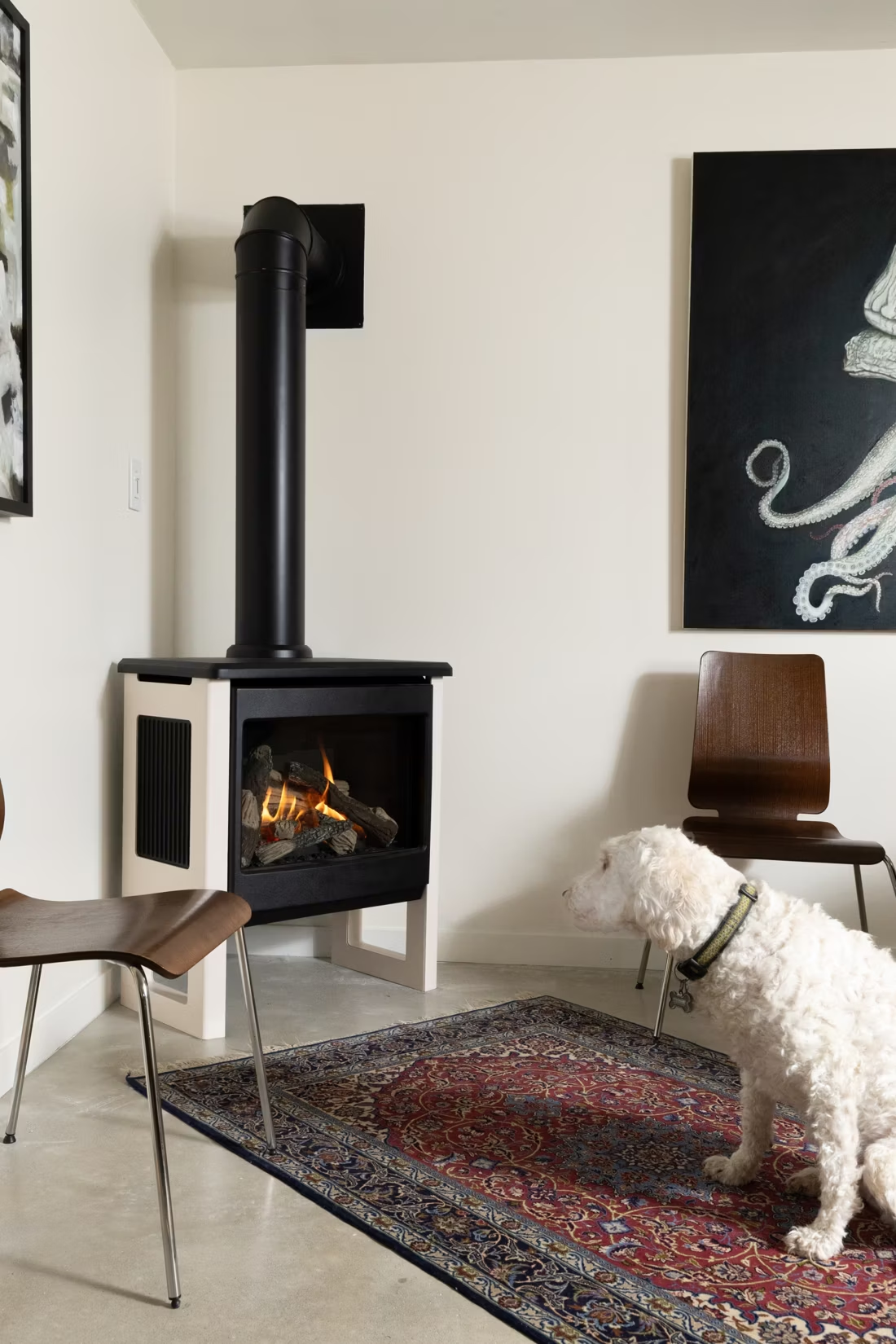
There's no piped natural gas utility serving Greenlee County, so nearly every gas fireplace or insert installed here runs on propane, supplied by regional propane companies that also fill tanks for water heaters and ranges throughout the county. That makes gas a practical fit for rural properties without wood storage space, for older homes in Clifton and Duncan wanting to retire a smoky masonry fireplace, and for anyone who'd rather not deal with wildfire-season burn restrictions or the seasonal cutting-permit hassle that comes with sourcing wood off the nearby Gila National Forest. A propane fireplace lights instantly, holds a steady temperature overnight, and—with the right ignition system—keeps working during the power interruptions that occasionally follow summer monsoon storms in this part of the state.
Three steps. No salesperson until you're ready.
Tell us about your project
Your zip code, your situation, and the fuel you're leaning toward—or let the answers point you to one.
See what's actually available
The brands dealers within 100 miles genuinely carry—real options, never a catalog mirage.
Get your dealer & Project Guide
A trusted local dealer, plus the free Project Guide & Parts List that names every component of the job.
Frequently Asked Questions
How much does a gas fireplace installation cost in Greenlee County?
Most gas fireplace installations in Greenlee County run between $3,500 and $9,000, and where you land in that range depends heavily on whether you already have a propane tank in place. A direct-vent propane insert going into an existing Clifton or Duncan masonry fireplace, with a tank and gas line already serving the house, sits toward the lower end. A new built-in fireplace for a remodel or new construction—including a new propane tank installation, buried gas line, and full venting—runs toward the higher end. Because there's no natural gas main to tap into anywhere in the county, budgeting for propane tank and line work is almost always part of the conversation with a local installer.
Can I convert my existing wood fireplace to gas?
Yes, and it's a common upgrade in the county's older housing stock—plenty of homes in Clifton and Duncan still have the original masonry fireplace that's been burning mesquite or juniper for decades. A propane insert typically drops into that existing firebox, using a stainless liner run through the current chimney as the vent path, so you keep the look of the original hearth while gaining instant, ash-free heat. The main added cost beyond the insert itself is usually the propane supply—either extending an existing tank line or having a regional propane company set a new tank if the home doesn't already have one.
Do I need natural gas, or does propane work for a gas fireplace here?
Propane is the standard, since Greenlee County has no natural gas utility infrastructure—not in Clifton, not in Morenci, not in Duncan. Nearly every gas fireplace, insert, or stove installed in the county runs on propane from a tank set on the property, typically 250 to 500 gallons depending on what else in the house runs on gas. If you already have a propane tank for a water heater, range, or furnace, adding a fireplace to that line is usually straightforward. If not, a local propane supplier can quote a new tank installation alongside your fireplace project.
Will my gas fireplace work during a power outage?
Most modern propane fireplaces will, which matters in a rural county where outages can follow monsoon storms or high-wind events along the Gila River corridor. Units with IPI (intermittent pilot ignition) run on a small battery backup inside the unit that keeps the fireplace lighting on demand even with the power out. Valor fireplaces take a different approach—their pilot generates its own electricity through the thermocouple, so there's no battery to remember to replace. Either way, ask your local dealer which ignition system is on the model you're considering before you buy.
What's the difference between a gas fireplace, gas insert, and gas stove?
A gas fireplace is a fully built-in unit framed into a wall, typically chosen for new construction or a major remodel. A gas insert is sized to slide into an existing masonry firebox—the more common choice for the older mining-era homes around Clifton and Duncan that already have a chimney to work with. A gas stove is a freestanding cabinet-style unit that sits on the floor and vents through a wall or roof, a good option for a mobile home or a room with no existing fireplace at all. A local dealer can tell you which fits your specific house after seeing the space.
Do I need a permit to install a gas fireplace in Greenlee County?
Yes—a building permit is required for new gas fireplace and insert installations through Greenlee County's building department, and any new or relocated propane tank typically needs sign-off from your propane supplier and the local fire authority as well. Most established hearth dealers coordinate the building permit, the gas line work, and the propane tank placement together, so you're not left managing separate trades and inspections yourself.
What's the difference between vented and vent-free gas fireplaces?
Vented (direct-vent) gas fireplaces draw combustion air from outside and exhaust it back outside through sealed venting—they're the cleanest option and the one most dealers in the region default to. Vent-free units burn propane directly into the room without external venting; they're legal in Arizona but come with strict room-size and ventilation requirements, and in Greenlee County's dry high-desert air, added indoor humidity from a vent-free unit is something worth discussing with your installer. For most homes here, a direct-vent unit is the more straightforward, worry-free choice.
How often should my gas fireplace be serviced?
Plan on an annual inspection—a technician checking the burner, pilot assembly, gas connections, and venting, plus a glass and interior cleaning. This matters more than it might seem in a county where wildfire smoke can keep people indoors for stretches during fire season and the fireplace sees heavier use as a result. Local propane and hearth service providers typically charge $150 to $250 for a standard annual visit.
Gas vs. wood—which makes more sense for a Greenlee County home?
Wood has deep roots here—mesquite, pinyon, and juniper are all locally available, and a Gila National Forest cutting permit runs just $5 to $20 per cord during the May-to-October season. But wildfire smoke is a real air quality concern in this part of Arizona, and outdoor burning or wood-smoke advisories can complicate wood heat during dry, high-fire-risk stretches. Propane sidesteps that entirely—no smoke, no cutting season, no stacked woodpile—at the cost of an ongoing propane bill instead of a one-time cord purchase. Many households in the county end up with both: wood for backup and ambiance, propane for the fireplace they actually rely on day to day.
Can I put a TV above my fireplace?
Yes—with an asterisk. Fireplaces are hot and TVs don't like heat. Either put a mantel between them to deflect rising warmth, or choose a fireplace with heat-management technology that creates a cool zone on the wall above—the wall stays around 125 degrees, barely warm, while the room still gets full heat. If you like clean lines and don't want a mantel, heat management is the answer.
Why is my open fireplace making my house colder?
Open fireplaces suck—literally. As the fire burns, it consumes air your furnace already paid to heat and pulls it out through the chimney, so the house is actually colder after the fire goes out than before you lit it. An insert fixes this: it seals the chimney, puts fixed glass across the front, and turns that hole in your house into a real heat source.
How much should I budget for a fireplace?
For an average home—covering the fireplace, the vent pipe, and basic installation—a budget between $3,900 and $5,500 gives you a lot of options across wood, gas, and pellet. By the time you add finish work, gas line, and electrical, the average complete installation lands between $5,000 and $12,000 all-in. In a remodel or new build, a good rule is to put about 2.5% of the total project cost toward the fireplace.
Can I install a fireplace myself?
If you're putting a fire in your house on purpose, it's best to work with an expert. Unless you're genuinely experienced in framing, gas line, vent pipe, and the national code on clearances to combustibles, have a professional do it—and ideally the same company that sells you the fireplace, so warranty, service, and liability all live under one roof.
Start your gas fireplace project in Greenlee County.
Tell us a bit about your home and we'll put together a free Project Guide & Parts List—the right propane fireplace or insert, the vent kit and parts it needs, and a trusted local dealer in Greenlee County to install it.
Find Your Fireplace →