
Keep Your Family Warm and Safe—No Matter What
With mild desert winters and strict air-quality rules, wood-burning fireplaces are a niche choice in Glendale. We'll help you figure out if it's the right one for your home, and connect you with a local dealer who actually carries it.
Every Project Starts From One of These Five Situations
In the Valley of the Sun, wood heat is ambiance, not necessity.
Glendale sits in the Sonoran Desert at about 1,145 feet elevation, in climate zone 2B—one of the mildest, driest zones in the country. Winters here average a low of just 41°F, and the entire heating season is short and mild, only a fraction of the heating load a cold-climate city like Fargo, North Dakota (which can run over six times higher) racks up in a single winter. In practical terms, most Glendale homes get by on a heat pump or a few weeks of light furnace use, and radiant wood heat simply isn't something the climate demands.
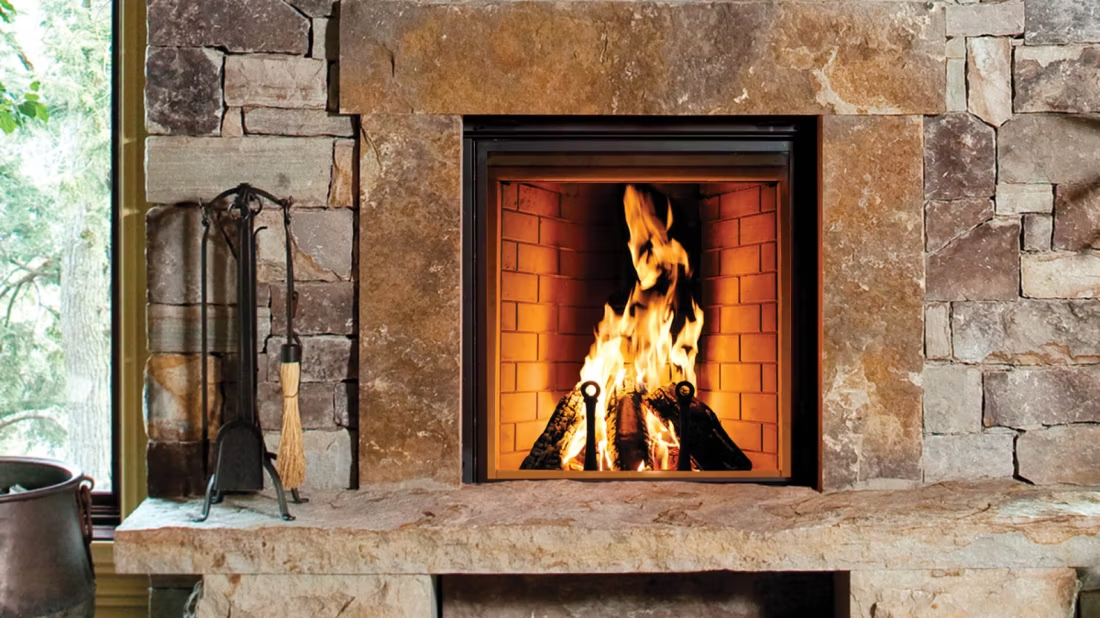
That's why wood is rated not-applicable for most Glendale households in our matching engine—not because wood fireplaces don't exist here, but because they serve a different purpose than they do in colder states. A handful of homeowners install a wood-burning fireplace or stove for ambiance, for a second property up in Prescott or Payson where the elevation actually gets cold, or because they inherited a masonry fireplace in an older Glendale home and want to keep it functional. Common regional species like mesquite, pinyon, and juniper are split at least as often for backyard grilling and smoking as for home heating. Maricopa County's air quality rules add another wrinkle: the county is a federal non-attainment area for particulate matter, and the Maricopa County Air Quality Department calls occasional winter 'No-Burn Days' when inversions trap smoke over the Valley—restrictions that apply directly to wood-burning fireplaces and stoves.
Firewood Cutting Permits Near Glendale
Three steps. No salesperson until you're ready.
Tell us about your project
Your zip code, your situation, and the fuel you're leaning toward—or let the answers point you to one.
See what's actually available
The brands dealers within 100 miles genuinely carry—real options, never a catalog mirage.
Get your dealer & Project Guide
A trusted local dealer, plus the free Project Guide & Parts List that names every component of the job.
Frequently Asked Questions
Does it make sense to install a wood stove or fireplace in Glendale?
For most homes, no—not as a primary heat source. With a short, mild heating season and average winter lows around 41°F, Glendale's heating season is short and mild; a week or two of a space heater covers what a wood stove would in a place like Duluth or Buffalo. Where it does make sense: a masonry fireplace you already have and want to keep functional, a decorative unit for ambiance on the rare 30-degree night, or a stove destined for a second property at higher elevation—Prescott, Payson, Flagstaff—where wood heat is genuinely useful. If your goal is functional winter heat inside city limits, a gas or electric fireplace is almost always the better-performing, lower-hassle choice, and it's what most local hearth dealers steer Glendale customers toward.
What does a wood stove or fireplace installation cost in Glendale?
Because wood heat is a niche request here, pricing isn't as standardized as it is in colder markets, but expect a range similar to national averages: roughly $3,500 to $8,000 for a freestanding EPA-certified wood stove with Class A chimney pipe, or $4,000 to $9,000 for an insert into an existing masonry fireplace, depending on venting complexity. Most Phoenix-metro hearth dealers stock only one or two wood-burning lines and focus their floor space on gas and electric units, so plan on a longer lead time and a smaller pool of experienced installers than you'd find for a gas conversion.
Are there burn restrictions on wood fireplaces in Glendale?
Yes. Maricopa County is a federal non-attainment area for fine particulate pollution, and the Maricopa County Air Quality Department issues mandatory 'No-Burn Day' restrictions on high-pollution winter days when a temperature inversion traps smoke over the Valley—Glendale falls squarely within that jurisdiction. On a No-Burn Day, wood-burning fireplaces and stoves cannot legally be used, while pellet stoves and gas appliances are generally exempt. If you install a wood-burning unit here, plan on checking the county's daily burn status through the winter, especially November through February when inversions are most common.
Where would I even get firewood in Glendale?
Firewood isn't sold on nearly every corner the way it is in wood-heat-dependent regions, but a few Phoenix-metro landscape supply yards and seasonal roadside vendors carry mesquite, and to a lesser extent pinyon and juniper—species used at least as often for grilling and smoking as for home heating. If you'd rather cut your own, the Tonto National Forest and Prescott National Forest both sell personal-use cutting permits for roughly $5 to $20 per cord during the May-through-October season, but that means a drive up out of the Valley to elevation, since there's no meaningful standing timber to cut within Glendale itself.
I have a cabin near Payson or Prescott—do the same rules apply there?
No, and it's worth separating from your Glendale home entirely. Higher-elevation communities in Gila and Yavapai counties see real winter cold and genuinely benefit from wood heat, and the Tonto and Prescott National Forests both issue cutting permits for roughly $5 to $20 per cord during the May-through-October season for exactly that use. If you're outfitting a second property up there, treat it as its own project—stove sizing, chimney height, and available species will look different from anything installed at Glendale's 1,145 feet.
What's the better choice for heating my Glendale home—gas or wood?
Gas, in almost every case. Glendale's mild winters—a 41°F average low and only a short, light heating season overall—don't generate enough sustained cold to justify the maintenance, ash cleanup, and burn-day restrictions that come with a wood-burning unit. A direct-vent gas fireplace or insert gives you instant, adjustable heat on the handful of genuinely cold nights each winter without any air-quality complications, and it's the fuel type most local hearth dealers actively stock and service. Wood remains a defensible choice mainly if ambiance, an existing masonry fireplace, or a cold-climate second home is driving the decision.
Can I still get a permit to install a wood stove inside Glendale city limits?
Yes—it's legal, just uncommon. New wood-burning appliance installations go through the City of Glendale Building Safety Division, which requires the unit to meet current EPA New Source Performance Standards and follow standard clearance-to-combustible and hearth-pad code requirements, the same as anywhere else in Arizona. The permit process itself isn't the obstacle; the practical hurdle is finding a local installer who regularly works with wood-burning units rather than the gas and electric lines most Valley hearth companies specialize in.
What about a pellet stove instead of wood—is that a better fit for Glendale?
Not really, for the same reason wood isn't: pellet stoves are a heating solution, and Glendale's short, mild heating season doesn't create much demand for one. Regional pellet brands like Forest Energy and Lignetics do reach Arizona dealers, but you'll find far fewer local stocking dealers and service technicians here than in a market like Flagstaff or the Colorado Rockies. If you want supplemental radiant heat with minimal upkeep, an electric fireplace insert is usually the more practical, more readily serviced option in the Valley.
If wood heat doesn't make sense, what should I actually install in Glendale?
For year-round comfort and resale value, most Glendale homeowners are better served by a gas fireplace or insert—standard and well-supported by local dealers, with natural gas service common throughout the metro—or an electric fireplace, which needs no venting or permit complications and runs on typical Valley residential electric rates in the $0.14 to $0.17 per kWh range through utilities like Electrical District No. 8. Reserve wood-burning equipment for the specific cases where it genuinely fits: an existing masonry fireplace, a strong preference for real-flame ambiance, or a second property at elevation where winters are actually cold.
Why is a fireplace insert so efficient?
An insert does two things: it seals the chimney completely, so you stop losing air you already paid to heat, and it radiates warmth into the room through the firebox and glass. Most add a heat-exchange fan that pulls cool room air underneath, wraps it around the hot firebox, and pushes it back out warm. Your home is more efficient before you've even lit the first fire.
Why won't my new wood stove get going like my old one?
New wood stoves are 70%+ efficient, so far less heat goes up the flue—which also means less draft to get a fire established. The rule: build a genuinely hot fire for about 45 minutes before you choke it down. Skip that and you get smoke in the room, creosote in the chimney, and a fire that never takes off. Most performance complaints trace straight back to this.
What is an in-home preview and do I need one?
It's a visit where a hearth professional measures your space, confirms the model you picked actually works in your home, and walks the specs—framing, gas line, venting, finish work—before anything is ordered. Some details you just can't know until you see the house. Never make a down payment without one; it's the single most-skipped step that burns buyers.
Does a fireplace add value to my home?
On average, a fireplace adds back to the home about the same amount you spent installing it. Add the monthly savings from heating the rooms you actually use instead of the whole house—often hundreds of dollars a year—and the value case is strong before you even count what a fire does for how your family uses the room.
Nearby Dealers
Hearth shops serving Glendale and the surrounding area. Every listing shows whether it is a WhyFire partner, a dealer we have verified as authorized for the brands we recommend, or a local business carrying hearth products. No manufacturer pays for placement. How we verify dealers →
Arizona Fire Features
Apache Stone - Phoenix
EarthCore Industries
All American Outdoor Living
Green Goddess
Best BBQ’s & Islands
Southwest Builders & Design, LLC
Bbq Island
Fire By James
Carefree Outdoor Living
Valley Stone
All American Outdoor Living
Diversified Builder Supply
Gilbert Fireplaces & BBQ’s
Brooksies Propane
Find your wood fireplace in Glendale.
Tell us about your home and your reason for wanting wood heat—ambiance, an existing masonry fireplace, or a second property at elevation—and we'll match you with a local dealer who can tell you honestly whether wood, gas, or electric is the right call, plus a free Project Guide & Parts List for whichever project you move forward with.
Find Your Fireplace →