
Steady Heat for Flagstaff's High-Country Winters.
Clean-burning, thermostat-controlled heat for Flagstaff's 6,800-foot elevation and long ponderosa-pine winters. Find the right pellet stove or insert, and connect with a trusted local dealer.
Every Project Starts From One of These Five Situations
Consistent warmth without the woodpile.
Flagstaff sits at 6,823 feet inside the largest contiguous ponderosa pine forest in the world, where winter lows average 18°F and the winter heating season is long and demanding—a heating season on par with Bozeman, Montana. Snow is common from November through April, and many homes here run a secondary heat source for weeks at a time when temperatures drop overnight.
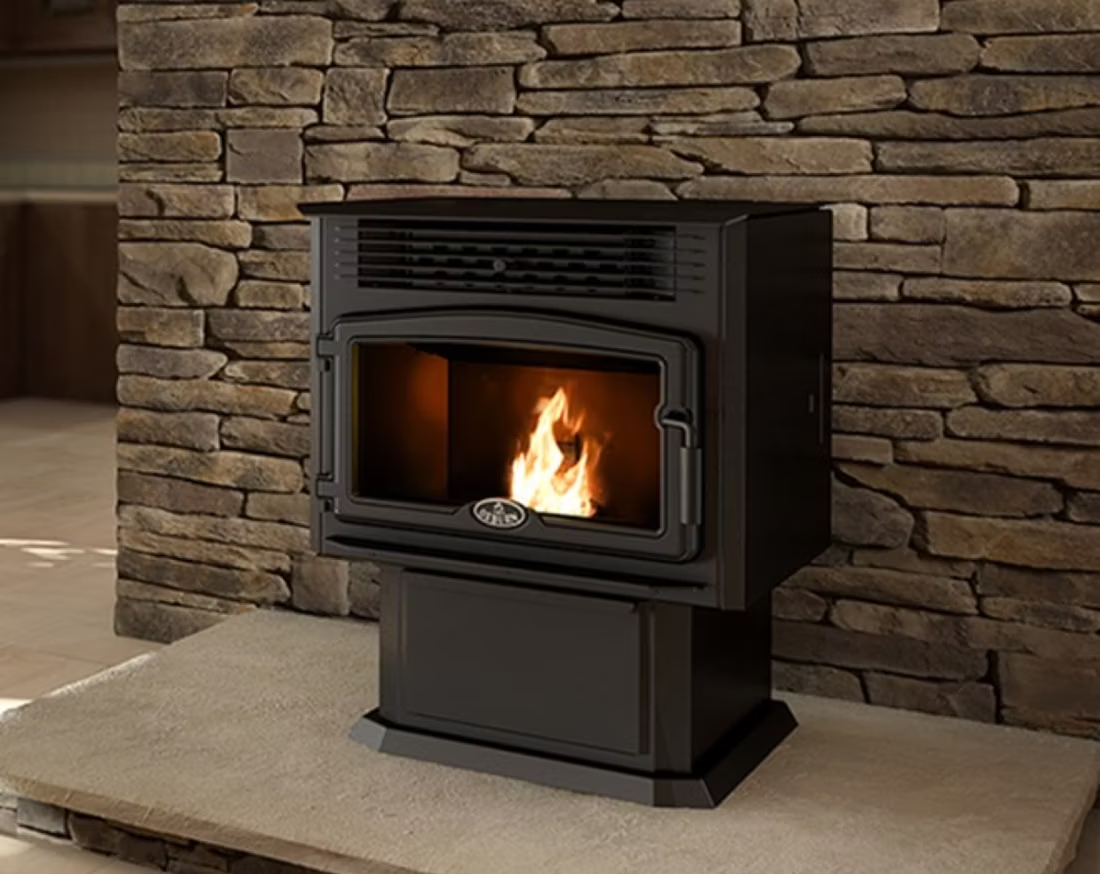
Pellet stoves have found a solid following in Flagstaff among homeowners who want the radiant heat of a wood fire without cutting, splitting, or hauling cordwood—and without adding to the wood smoke that already builds up locally during wildfire season. Regional pellet brands like Forest Energy and Lignetics are widely stocked at hearth retailers here, and a hopper-fed stove can run 24 to 72 hours unattended on a thermostat, which matters when Flagstaff's overnight temperatures swing hard between sun-warmed afternoons and single-digit lows at elevation.
Three steps. No salesperson until you're ready.
Tell us about your project
Your zip code, your situation, and the fuel you're leaning toward—or let the answers point you to one.
See what's actually available
The brands dealers within 100 miles genuinely carry—real options, never a catalog mirage.
Get your dealer & Project Guide
A trusted local dealer, plus the free Project Guide & Parts List that names every component of the job.
Frequently Asked Questions
How much does a pellet stove installation cost in Flagstaff?
Pellet stove installations typically run $3,000 to $6,500 nationally, and Flagstaff installs generally fall in that range—the biggest cost swings come from whether the stove vents through an existing masonry chimney (lower end) or requires a new wall-through or roof penetration for PL-vent pipe (higher end). Because Flagstaff sits at 6,823 feet, a good installer will also confirm the appliance's blower and combustion-air settings are calibrated for elevation, which affects burn efficiency more than it does at sea level. Ask any local dealer for a firm, in-home quote before you commit.
Where do I buy pellets in Flagstaff, and how much do they cost?
Hearth retailers around Flagstaff typically stock Forest Energy and Lignetics bags, along with other regional brands trucked in seasonally. Pellet pricing moves with demand, so it's worth buying a season's supply—usually 2 to 4 tons for an average home—in late summer or early fall before cold weather drives prices up and supply gets tight. Ask your dealer whether they offer season-ahead pricing or delivery, since a pallet of forty-pound bags is heavy to move yourself.
What size pellet stove do I need for my Flagstaff home?
Sizing depends on square footage, ceiling height, and how well-insulated the home is—older Flagstaff homes near downtown with single-pane windows lose heat faster than newer construction out toward Fort Valley or the Ponderosa Trails area. As a rough guide: stoves rated for 1,000 to 1,500 square feet handle a single zone or smaller home, while units rated 1,500 to 2,500+ square feet can serve as a primary heat source in a well-sealed home. Given Flagstaff's long, cold winter season, most local dealers will size toward the upper end of your square footage rather than the low end, since the stove will be working through a long, cold season.
Freestanding pellet stove or pellet insert—which is right for my home?
A freestanding pellet stove sits on a hearth pad and vents through a wall or existing chimney chase, so it works in homes without a fireplace. A pellet insert slides into an existing masonry or factory-built fireplace opening, using the chimney as a vent chase for a smaller PL-vent liner. For Flagstaff homes with an existing open wood fireplace that's rarely used, an insert is often the more cost-effective upgrade since it reuses the opening and chimney chase you already have. Homes without an existing fireplace, or newer construction, typically go freestanding.
Do I need a permit to install a pellet stove in Flagstaff?
Yes—a building permit is generally required for a new pellet stove installation through the City of Flagstaff Building Safety Division, or Coconino County Community Development if you're outside city limits. Because pellet stoves need a dedicated electrical outlet for the auger, igniter, and blower, some installs also require an electrical inspection. Most local hearth retailers pull the permit and schedule inspections as part of the installation, so this is rarely something homeowners have to manage themselves.
What's the best pellet stove for Flagstaff's climate?
Look for a stove with a large hopper capacity and a reliable auto-feed system rated for continuous burns of 24 hours or more—brands like Harman, Lopi, and Quadra-Fire are commonly stocked by hearth retailers serving northern Arizona and hold up well through a full Flagstaff winter. A thermostat-controlled model is worth the extra cost here, since it can automatically ramp output up during the hard overnight cold and back down during Flagstaff's sun-warmed afternoons, saving pellets without you having to babysit the settings.
How much maintenance does a pellet stove need?
Pellet stoves need more frequent attention than a wood stove, but each task is quick: the ash pan should be emptied every few days during regular use, the burn pot scraped weekly to keep the auto-feed running clean, and the glass wiped as needed. Plan on a full professional cleaning and venting inspection once a year, ideally before Flagstaff's cold season starts in October. Because pellet exhaust runs cooler than wood smoke, the venting doesn't build creosote the way a wood chimney does, but it can still accumulate fine ash that restricts airflow if it's never serviced.
Will my pellet stove work during a power outage?
Not without a backup power source. Pellet stoves rely on an electric auger to feed fuel and a blower to circulate heat, so a power outage stops the stove even with a full hopper. This is worth thinking through in Flagstaff, where winter storms occasionally knock out power for a few hours at elevation. Some homeowners pair a pellet stove with a small battery backup or generator sized for the stove's low draw, typically under 100 watts, which is enough to keep it running through a short outage. If unattended backup heat during multi-day outages is a priority, a wood stove is worth considering alongside or instead of pellet.
Pellet stove vs. wood stove—which makes more sense in Flagstaff?
Flagstaff sits inside Coconino National Forest, and cutting permits from Coconino, Kaibab, or Prescott National Forest run about $5 to $20 per cord during the May-to-October season—so wood is genuinely cheap here if you're willing to cut, split, and haul ponderosa pine, pinyon, or juniper yourself. A pellet stove trades that labor for convenience: load the hopper, set the thermostat, and let the auto-feed do the work, with a cleaner burn that doesn't add to wood smoke during wildfire-season air quality concerns. If self-sufficiency during outages and low fuel cost matter most, wood wins. If convenience, consistent output, and easier daily operation matter more, pellet is usually the better fit.
How often does a pellet stove need cleaning?
A clean pellet stove is a happy pellet stove. Plan on cleaning the burn pot about once a week when you're burning regularly—ash and clinkers gum up the air holes just like a pellet barbecue. Most pellet stove problems trace back to skipped cleaning that nobody explained up front. Some designs make it easy with a trapdoor burn pot: pull a lever and the gunk drops into the ash pan.
What's the difference between an insert and a zero-clearance fireplace?
An insert is a fireplace that slides into a pre-existing wood-burning fireplace—if you don't have one, there's nothing to insert it into. A zero-clearance fireplace is built into a framed wall, which makes it the answer for remodels and new construction. Simple test: existing masonry fireplace means insert; blank or framed wall means zero-clearance.
Can a fireplace actually lower my heating bill?
Yes—by creating a comfort zone. A furnace heats every square foot of the house just to warm the one room you're in; a gas fireplace on low burns roughly a sixth of the gas a typical furnace does. Set the furnace around 55–60 degrees as a baseline, then heat the rooms your family actually uses. Families who heat this way commonly save $20–$60 a month.
What is an in-home preview and do I need one?
It's a visit where a hearth professional measures your space, confirms the model you picked actually works in your home, and walks the specs—framing, gas line, venting, finish work—before anything is ordered. Some details you just can't know until you see the house. Never make a down payment without one; it's the single most-skipped step that burns buyers.
Nearby Dealers
Hearth shops serving Flagstaff and the surrounding area. Every listing shows whether it is a WhyFire partner, a dealer we have verified as authorized for the brands we recommend, or a local business carrying hearth products. No manufacturer pays for placement. How we verify dealers →
HomCo
Flagstaff Hearth & Home
Banker Insulation - Flagstaff
Wizard's Hearth & Home
Red Rock Fireplace & Bbq
Page Fast Glass
Pellet Brands Stocked Around Flagstaff
Manufacturers will point you to the nearest stocking dealer.
Find your pellet stove in Flagstaff.
Tell us about your home and heating goals, and we'll match you with a trusted local Flagstaff dealer and send over a free Project Guide & Parts List—the exact parts, including the vent kit, for your pellet project.
Find Your Fireplace →