
Warmth without the woodpile—even at 6,800 feet.
Flagstaff winters mean 18-degree nights and 6,700+ heating degree days, but not every room needs a chimney or a gas line. Find the right electric fireplace for a condo, addition, or bedroom, and connect with a trusted local dealer.
Every Project Starts From One of These Five Situations
The zero-smoke option in a smoke-conscious town.
Flagstaff sits at 6,823 feet in the foothills of the San Francisco Peaks, with 6,746 heating degree days and average winter lows around 18°F—cold enough to put it in the same league as Bozeman, Montana, for annual heating load. Most homes here still lean on wood or propane for serious winter heat, and the culture backs that up: Coconino, Kaibab, and Prescott National Forest all sell cutting permits for ponderosa pine, pinyon, and juniper, and plenty of Flagstaff households split and stack their own firewood every fall. Electric fireplaces play a different, narrower role in this market. They show up in NAU-adjacent rentals and condos where a chimney or gas line was never an option, in primary bedrooms and home offices that need supplemental zone heat, and in additions where running venting through an existing roofline isn't practical.
Flagstaff's one listed air quality concern is wildfire smoke, and during dry, smoky summers and fall inversion periods, an electric unit adds real ambiance with zero particulate output—no chimney, no smoke, no burn-ban conflict. Power comes from Arizona Public Service (APS) at roughly 16.45 cents per kWh, which makes running costs predictable and easy to budget compared to firewood or propane deliveries. Plug-in units need nothing more than a standard outlet; built-in models on a dedicated circuit typically call for a licensed electrician and, in some cases, a permit through the City of Flagstaff or Coconino County building department depending on where the home sits.
Three steps. No salesperson until you're ready.
Tell us about your project
Your zip code, your situation, and the fuel you're leaning toward—or let the answers point you to one.
See what's actually available
The brands dealers within 100 miles genuinely carry—real options, never a catalog mirage.
Get your dealer & Project Guide
A trusted local dealer, plus the free Project Guide & Parts List that names every component of the job.
Frequently Asked Questions
How much does an electric fireplace cost to install in Flagstaff?
Plug-in electric inserts and wall-mount units generally run $300 to $1,500 for the unit itself, with no professional installation required beyond hanging it and plugging it in. Built-in electric fireplaces wired to a dedicated 20-amp circuit run higher—typically $800 to $2,500 once you factor in a licensed electrician, wall framing or trim work, and any drywall patching. Because electric units need no chimney, no gas line, and no venting, they're consistently the least expensive hearth option to add to an existing Flagstaff home, especially compared to running new gas line to a propane-fed insert.
Will an electric fireplace actually heat a room in Flagstaff's winters?
Not as primary heat—not at 18°F average winter lows and nearly 6,750 heating degree days a year. A typical 1,500-watt electric fireplace puts out roughly 5,000 BTU, enough to take the chill off a bedroom, home office, or small addition, but it won't carry a whole house through a Flagstaff winter the way a wood stove or gas furnace will. Most local buyers treat electric as zone heat for one room they use often, paired with whatever handles the rest of the house—often a wood stove burning local ponderosa pine or a propane furnace.
Do I need a permit for an electric fireplace in Flagstaff?
A plug-in electric insert or wall-mount unit that simply plugs into an existing outlet needs no permit at all—it's treated like any other appliance. If you're installing a built-in unit that requires a new dedicated circuit, a permit is typically required through the City of Flagstaff or Coconino County building department, depending on your address, and the wiring should be done by a licensed electrician familiar with APS service requirements. This is a much lighter process than the building and gas-line permits required for wood or gas installations in the county.
Electric vs. wood—which makes more sense for a Flagstaff home?
Given Flagstaff's proximity to Coconino, Kaibab, and Prescott National Forest, wood remains a genuinely practical choice here—cutting permits run $5 to $20 per cord in season, and ponderosa pine, pinyon, and juniper are all locally abundant. Wood also keeps working during a power outage, which matters at 6,800 feet in winter. Electric fireplaces make more sense for renters and condo owners near NAU who can't install a chimney, for supplemental heat in a room that already has central heat, or for anyone who wants fireplace ambiance during wildfire smoke season without adding to the smoke load. Many Flagstaff homes end up with both: wood or gas for real heat, electric for a bedroom or basement.
How much does an electric fireplace cost to run on APS power?
At Arizona Public Service's residential rate of about 16.45 cents per kWh, a 1,500-watt electric fireplace running on high for 5 hours a day costs roughly $12 to $13 a month, or about 8 cents an hour. Most units let you run the flame effect alone without the heater engaged, which draws only a few watts—useful if you want the look during smoke advisories or shoulder-season evenings without adding meaningful cost to your APS bill.
What type of electric fireplace works best for a Flagstaff home?
For condos and apartments near NAU with no existing hearth, a wall-mount unit is usually the easiest retrofit—no floor space lost, no venting to plan around. For homes with an existing but unused masonry fireplace, an electric insert slides into the firebox and gives you the look of a fire without touching the chimney. Freestanding electric stoves work well in additions or converted garages where you want a stove-shaped heat source without running gas or wood venting. A local dealer can walk you through model options and BTU output based on the actual room you're heating.
Are electric fireplaces safer than wood or gas in Flagstaff?
Electric units produce no combustion, so there's no carbon monoxide risk, no open flame, and no smoke—a real advantage during Flagstaff's wildfire smoke season when outdoor air quality is already compromised and you don't want to add indoor particulates. They also skip the creosote buildup and chimney fire risk that come with wood-burning appliances. The tradeoff is that they're not a backup heat source during a power outage, unlike a wood stove—something worth weighing given how common winter outages can be at this elevation.
How long do electric fireplaces last, and what maintenance do they need?
Most electric fireplaces last 8 to 15 years with basic care—occasionally replacing the LED flame bulbs or the heating element's blower fan, and keeping dust out of the vents. There's no annual chimney sweep, no creosote to manage, and no gas line to inspect, which makes electric the lowest-maintenance option of any fuel type covered here. A quick vacuum of the vents once or twice a year is typically all that's needed.
Electric vs. gas—which is the simpler install in Flagstaff?
Electric wins on simplicity almost every time. A gas fireplace in Flagstaff generally means either tapping into an existing natural gas line where it's available or installing and maintaining a propane tank, plus venting work handled by a licensed installer. An electric fireplace needs only a standard outlet or, for built-ins, a dedicated circuit run by an electrician—no fuel delivery, no venting, no annual gas appliance inspection. Gas still delivers more real heat output and works during a power outage if the ignition system allows it, so the right choice comes down to whether you need supplemental warmth or just want a flame effect without the infrastructure.
Can I put a TV above my fireplace?
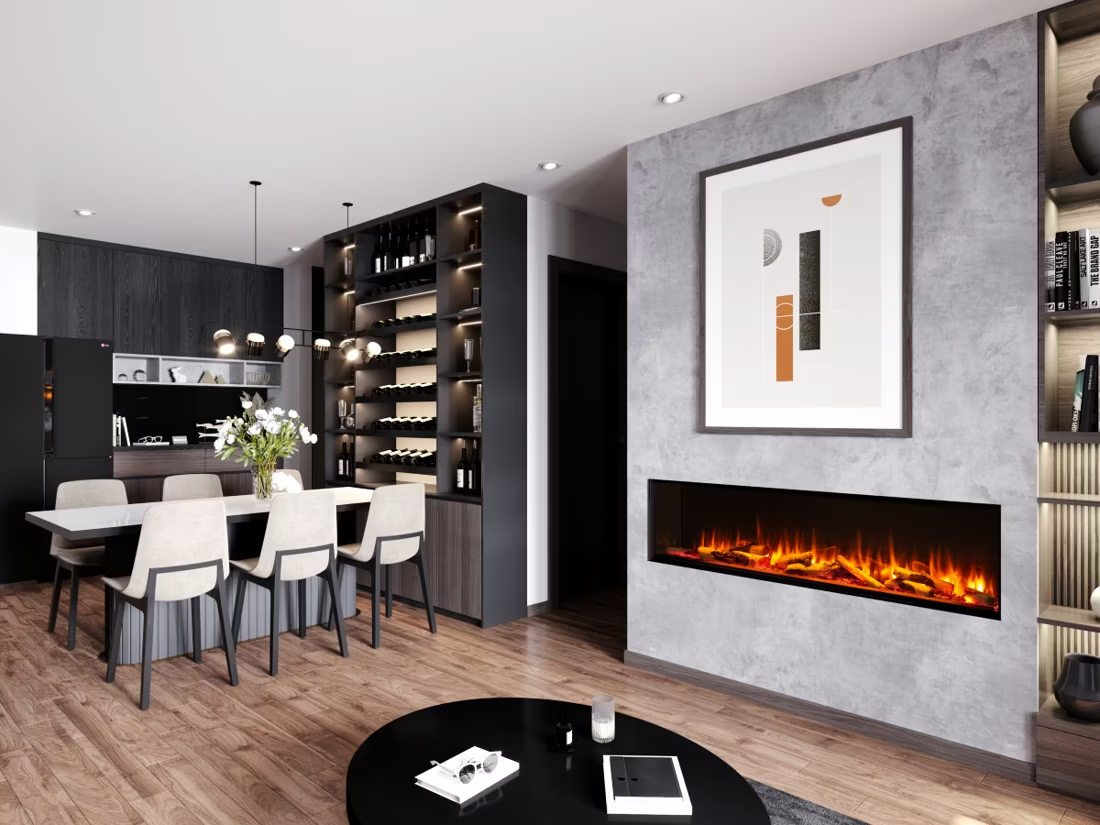
Yes—with an asterisk. Fireplaces are hot and TVs don't like heat. Either put a mantel between them to deflect rising warmth, or choose a fireplace with heat-management technology that creates a cool zone on the wall above—the wall stays around 125 degrees, barely warm, while the room still gets full heat. If you like clean lines and don't want a mantel, heat management is the answer.
Does an electric fireplace need a vent or chimney?
No—that's its superpower. An electric fireplace needs a wall and an outlet, period. No vent pipe, no gas line, no clearances to design around, which is why it works in bedrooms, offices, apartments, and walls where venting a gas or wood unit would be impractical or impossible. Installation is typically the simplest and least expensive of any fireplace type.
What is an in-home preview and do I need one?
It's a visit where a hearth professional measures your space, confirms the model you picked actually works in your home, and walks the specs—framing, gas line, venting, finish work—before anything is ordered. Some details you just can't know until you see the house. Never make a down payment without one; it's the single most-skipped step that burns buyers.
Can I install a fireplace myself?
If you're putting a fire in your house on purpose, it's best to work with an expert. Unless you're genuinely experienced in framing, gas line, vent pipe, and the national code on clearances to combustibles, have a professional do it—and ideally the same company that sells you the fireplace, so warranty, service, and liability all live under one roof.
Nearby Dealers
Hearth shops serving Flagstaff and the surrounding area. Every listing shows whether it is a WhyFire partner, a dealer we have verified as authorized for the brands we recommend, or a local business carrying hearth products. No manufacturer pays for placement. How we verify dealers →
HomCo
Flagstaff Hearth & Home
Banker Insulation - Flagstaff
Wizard's Hearth & Home
Red Rock Fireplace & Bbq
Page Fast Glass
Electric Service in Flagstaff
An electric fireplace's heater draws about 1,500 watts—pennies per hour at local rates.
Arizona Public Service Co
Find your electric fireplace in Flagstaff.
Tell us about your room and how you plan to use it, and we'll match you with a trusted local dealer and send over a free Project Guide & Parts List—sized right for your space, with no big-box guesswork.
Find Your Fireplace →