
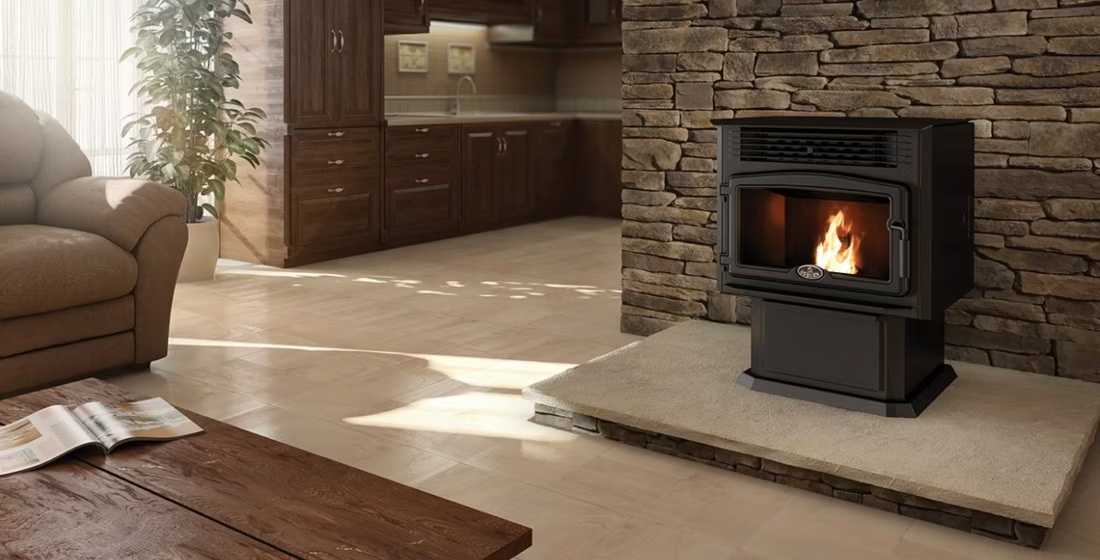
Pellet stoves are uncommon in Catalina, but not unheard of.
With winter lows averaging 31°F and only 2,180 heating degree days a year, most Catalina homes don't need supplemental solid-fuel heat—but some homeowners still want one for ambiance, cool-night backup, or a cabin up toward Mount Lemmon.
Every Project Starts From One of These Five Situations
Catalina's desert winters rarely call for it.
Catalina sits at roughly 3,032 feet in the foothills of the Santa Catalina Mountains, in a climate zone (2B) built for cooling load, not heating load. Winter lows average around 31°F and the heating season is short—2,180 heating degree days is a fraction of what a place like Bismarck, ND or Duluth, MN racks up in a single hard month. Central electric heat pumps and gas furnaces handle the handful of cold mornings each winter without much trouble, which is exactly why pellet appliances never became a fixture here the way they did in the Mountain West or upper Midwest.
That said, I still hear from a small number of Catalina homeowners each year who want one anyway—usually for the look and feel of a real flame, for a sunroom or casita that runs cold at night, or for a second property at higher elevation where pellet stoves make more sense. Pima County's air quality status (non-attainment, with winter inversion and wildfire smoke concerns layered on top in the Tucson basin) actually cuts in favor of pellet over cordwood for anyone set on solid fuel—pellet appliances burn dramatically cleaner than an open wood fire. If that's you, a trusted local dealer can tell you honestly whether it's worth it for your specific space, rather than talking you into a product that doesn't fit the climate.
Three steps. No salesperson until you're ready.
Tell us about your project
Your zip code, your situation, and the fuel you're leaning toward—or let the answers point you to one.
See what's actually available
The brands dealers within 100 miles genuinely carry—real options, never a catalog mirage.
Get your dealer & Project Guide
A trusted local dealer, plus the free Project Guide & Parts List that names every component of the job.
Frequently Asked Questions
How much does a pellet stove installation cost near Catalina?
Because pellet demand is low in Catalina and the surrounding Tucson metro, there isn't a deep local market of installers competing on price the way there is in cold-climate towns. Expect a range closer to $3,500–$7,000 installed, depending on whether it's a freestanding stove with a simple through-wall vent or a full insert requiring venting work through an existing chimney. Most homeowners here end up working with a Tucson-area hearth dealer rather than a Catalina-based one, since the volume just isn't there to support a dedicated local shop.
Why isn't pellet heat more common in Catalina?
Pellet stoves are built to solve a problem Catalina mostly doesn't have: long, hard winters where you need a steady, unattended heat source for weeks at a time. At 2,180 heating degree days and a 31°F average winter low, most homes here get by fine on the heat pump or gas furnace already installed, supplemented by nothing more than a sunny afternoon. Compare that to a place like Helena, MT or Fargo, ND, where pellet stoves are a genuine cold-weather utility appliance—in Catalina, it's almost always a lifestyle choice rather than a heating necessity.
Where can I actually get a pellet stove installed if I want one in Catalina?
You'll generally need to work with a dealer based in the greater Tucson area, since Catalina itself doesn't support a dedicated hearth retailer for a niche appliance. The good news is that regional pellet brands like Forest Energy and Lignetics are distributed throughout southern Arizona, so parts, service, and fuel supply aren't a problem once the unit is in—it's really just the initial installer search that takes a bit more legwork than it would in a cold-climate market. A matched local dealer can confirm who's actually doing this work near you rather than you cold-calling around.
Do I need a permit to install a pellet stove in Catalina?
Yes—new installations require a building permit through Pima County Development Services, which covers venting, clearances, and the electrical circuit the unit's auger and blower need to run. Because Pima County is a non-attainment area for air quality and the Tucson basin sees winter inversions, there's understandably more regulatory attention on solid-fuel burning here than in a place with cleaner air. The upside for pellet specifically: pellet appliances burn far cleaner than cordwood and are typically exempt from the kind of high-pollution burn curtailments that can apply to wood stoves and fireplaces during inversion events.
Pellet stove vs. wood stove—does either make sense for a Catalina home?
Both are genuinely uncommon here, and for the same underlying reason: Catalina's mild winters don't generate enough heating demand to justify either as a primary heat source. If you're choosing between them anyway, pellet has the edge for most Catalina homeowners—it burns cleaner in a basin that already deals with wildfire smoke and inversion days, doesn't require sourcing or storing cordwood, and runs on regionally available Forest Energy or Lignetics pellets rather than mesquite, pinyon, or juniper cut under a Coronado National Forest permit. The tradeoff is that a pellet stove needs electricity from Tucson Electric Power to run its auger and blower—not a real concern in a desert climate where multi-day outages are rare, but worth knowing.
Are pellets easy to find in the Catalina area?
You won't find the kind of dedicated pellet retail turnover you'd see in a high-volume cold-climate market, but Forest Energy and Lignetics—both regional Southwest brands—are stocked at hearth and farm-supply retailers around Tucson. Expect to pay somewhere in the $250–$320 per ton range, and plan to buy a season's worth at once rather than counting on frequent local restocking, since Catalina's low demand means shelves move slower than they would in, say, Bozeman, MT.
Would a pellet stove actually keep my Catalina home warm?
For the handful of cold mornings and evenings Catalina sees each winter, yes—easily. A mid-size pellet stove can comfortably heat an open living area or casita on the coldest nights the Santa Catalina foothills produce. What it won't do is replace central heat as your primary system, nor should it need to; with a 31°F average winter low, most Catalina homeowners who install one use it a handful of evenings a month from December through February, more for the fire and the warmth in one room than as a whole-house solution.
With wildfire smoke and inversion concerns in the Tucson basin, wouldn't a pellet stove make air quality worse?
Less than you'd think, and considerably less than a wood-burning fireplace would. Pellet appliances burn dense, low-moisture compressed fuel with a controlled auger feed, which produces a fraction of the particulate matter that open wood combustion does. In a Pima County non-attainment area already dealing with winter inversion and seasonal wildfire smoke, that's actually the strongest practical argument for pellet over cordwood if you're set on a real-flame appliance—it's the cleaner-burning option of the two, even though neither is a major factor at Catalina's low usage levels.
Should I just get a gas fireplace instead of a pellet stove in Catalina?
For most Catalina homeowners, yes. Natural gas and propane fireplaces are a standard, well-supported option here—instant on-off operation, no fuel storage, and a deep bench of local Tucson-area installers who work on gas appliances every week. Pellet only tends to win out for a specific reason: you want the visual and radiant feel of a solid-fuel fire, you're bothered by open flame or vent-free gas units, or you've got a second property at higher elevation where a pellet stove earns its keep. If that's your situation, it's worth talking to a dealer directly rather than assuming gas is automatically right for you.
What's the difference between an insert and a zero-clearance fireplace?
An insert is a fireplace that slides into a pre-existing wood-burning fireplace—if you don't have one, there's nothing to insert it into. A zero-clearance fireplace is built into a framed wall, which makes it the answer for remodels and new construction. Simple test: existing masonry fireplace means insert; blank or framed wall means zero-clearance.
How often does a pellet stove need cleaning?
A clean pellet stove is a happy pellet stove. Plan on cleaning the burn pot about once a week when you're burning regularly—ash and clinkers gum up the air holes just like a pellet barbecue. Most pellet stove problems trace back to skipped cleaning that nobody explained up front. Some designs make it easy with a trapdoor burn pot: pull a lever and the gunk drops into the ash pan.
What is an in-home preview and do I need one?
It's a visit where a hearth professional measures your space, confirms the model you picked actually works in your home, and walks the specs—framing, gas line, venting, finish work—before anything is ordered. Some details you just can't know until you see the house. Never make a down payment without one; it's the single most-skipped step that burns buyers.
Does a fireplace add value to my home?
On average, a fireplace adds back to the home about the same amount you spent installing it. Add the monthly savings from heating the rooms you actually use instead of the whole house—often hundreds of dollars a year—and the value case is strong before you even count what a fire does for how your family uses the room.
Nearby Dealers
Hearth shops serving Catalina and the surrounding area. Every listing shows whether it is a WhyFire partner, a dealer we have verified as authorized for the brands we recommend, or a local business carrying hearth products. No manufacturer pays for placement. How we verify dealers →
Earth Energy's Hearth & Patio
Pellet Brands Stocked Around Catalina
Manufacturers will point you to the nearest stocking dealer.
Find your pellet stove option in Catalina.
Tell us about your home and we'll put together a free Project Guide & Parts List—the exact unit, vent kit, and parts your project needs—and match you with a trusted local dealer who actually installs pellet appliances in the Tucson area.
Find Your Fireplace →