
Steady heat for Yakutat's long, wet, wind-driven winters.
Yakutat gets more rain than almost anywhere else in Alaska, and everything—fuel, parts, technicians—arrives by air or ferry. Find a pellet stove sized for a Zone 7 climate and a dealer who understands what it takes to keep one running out here.
Every Project Starts From One of These Five Situations
A dry, consistent fuel for a famously wet town.
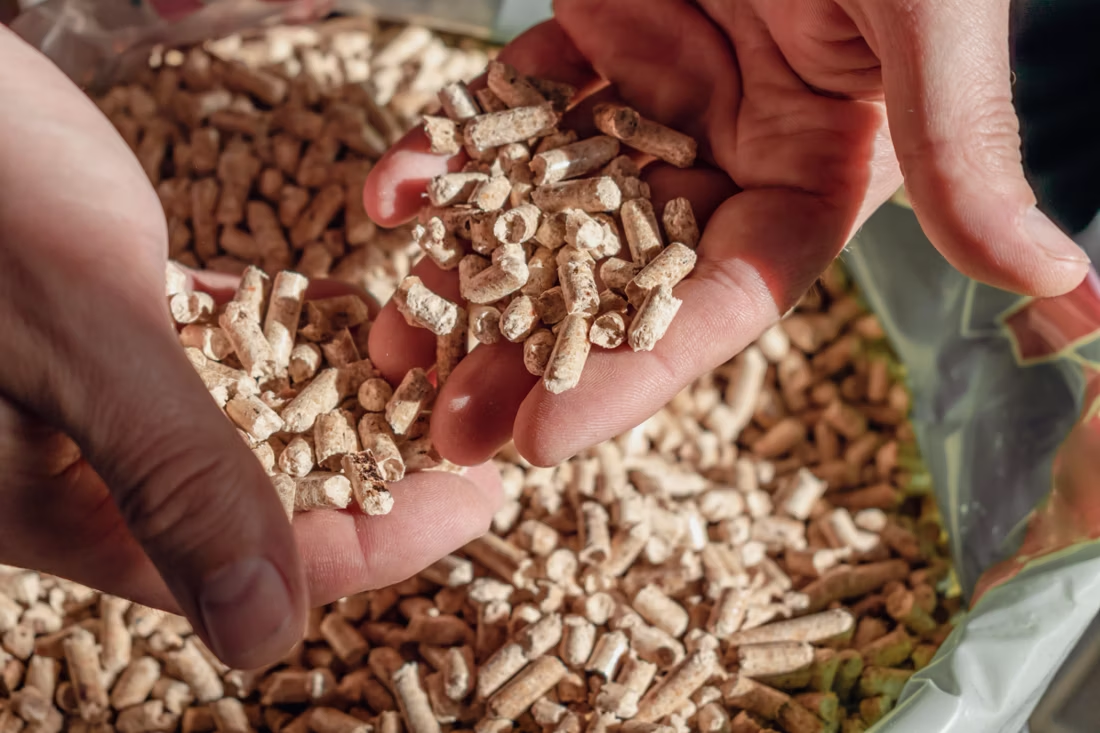
Yakutat sits on the Gulf of Alaska coast in climate zone 7, with no road connection to the rest of the state—everything moves in by Alaska Airlines cargo or the Alaska Marine Highway ferry, on a schedule that can be disrupted for days by weather. The town also gets an extraordinary amount of rain, which makes seasoning firewood cut from local birch, spruce, or cottonwood genuinely difficult; wood that isn't bone dry burns cold, smoky, and inefficient. Bagged pellets sidestep that problem entirely—they arrive at a fixed moisture content and stay that way as long as they're kept dry in storage.
Pellet stoves also burn cleaner and more consistently than wet cordwood, which matters in a small, tightly built coastal community where good air quality inside the home is worth protecting. Brands like Superior Pellet Fuels and Lignetics are the ones most commonly freighted into Southeast Alaska communities like Yakutat, and stocking up ahead of winter—rather than ordering as you run low—is standard practice here given how ferry and cargo schedules can slip.
Three steps. No salesperson until you're ready.
Tell us about your project
Your zip code, your situation, and the fuel you're leaning toward—or let the answers point you to one.
See what's actually available
The brands dealers within 100 miles genuinely carry—real options, never a catalog mirage.
Get your dealer & Project Guide
A trusted local dealer, plus the free Project Guide & Parts List that names every component of the job.
Frequently Asked Questions
How much does a pellet stove installation cost in Yakutat?
Expect installation costs in Yakutat to run higher than typical Lower 48 pricing, mainly because of freight. The stove itself has to be flown or barged in, and if the job needs a technician who isn't already local, that person's travel and lodging get built into the quote. Homeowners who plan the install around a scheduled ferry run or combine it with other freight often save meaningfully versus a rush order. Ask any dealer serving Yakutat for a clear breakdown of equipment cost versus shipping and labor before you commit—the freight line item is usually the biggest variable.
What size pellet stove do I need for a Yakutat home?
Zone 7 winters here are long, cold, and driven by wind and near-constant moisture off the Gulf of Alaska, so undersizing is the more common mistake. Small, well-insulated homes or single rooms can often get by with a compact unit, but most full-time Yakutat residences do better with a mid-to-large pellet stove rated for continuous heavy use rather than occasional supplemental heat. Older homes with less insulation and higher infiltration—common in a lot of Yakutat's housing stock—should size up rather than down. A local or regional dealer familiar with Southeast Alaska homes can walk through square footage, ceiling height, and insulation with you before recommending a model.
How do I get pellet fuel delivered to Yakutat?
Pellets reach Yakutat the same way most goods do—by air cargo or on the Alaska Marine Highway ferry, which does not run daily. Superior Pellet Fuels and Lignetics are the two brands most commonly available through Southeast Alaska suppliers who serve communities like Yakutat. Because shipments are infrequent, most residents buy pellets by the pallet or ton ahead of winter rather than a bag or two at a time, and building in a buffer of a few extra bags is common practice in case a ferry sailing gets cancelled for weather—which happens more than a few times a season here.
Will my pellet stove work if the power goes out?
No—pellet stoves rely on electricity to run the auger that feeds fuel and the blower that distributes heat, so a power outage stops the stove regardless of how much fuel is loaded. This matters in Yakutat, where the local grid is small and isolated, and outages tend to run longer than they would in a larger, interconnected system. If you're relying on a pellet stove as a primary heat source, pairing it with a small backup generator sized to run the stove's electronics is worth discussing with your dealer—it's a common setup in remote Alaska communities for exactly this reason.
Do I need a permit to install a pellet stove in Yakutat?
Yakutat is a small, unified City and Borough, and permitting requirements for solid-fuel appliances in remote Alaska communities of this size are often lighter than what you'd find in a larger city—but rules do vary and change, so it's worth a direct call to the borough office before installing rather than assuming. Even where a formal permit isn't required, following the manufacturer's clearance and venting specifications is non-negotiable for safety and insurance purposes. A dealer who has installed pellet units in Southeast Alaska before will know what documentation, if any, the borough expects.
What's the best pellet stove for Yakutat's climate?
Look for a unit built for continuous, heavy-duty operation rather than occasional weekend use—Yakutat's winters don't let up for months at a time. Cold-start reliability matters too, since indoor temperatures in an unheated cabin or seasonal home can drop low enough between visits to affect ignition. Ask your dealer specifically about how a given model performs after being shut down cold for several days, since that's a realistic scenario here, whether from a trip off-island or a stretch without fuel on hand. Hopper capacity is also worth prioritizing—larger hoppers mean less frequent reloading during Yakutat's longest, coldest stretches.
How often does a pellet stove need to be serviced in Yakutat?
Annual cleaning and inspection is the standard recommendation for any pellet stove, covering the burn pot, auger, exhaust venting, and hopper. In Yakutat, the practical challenge is less about the work itself and more about scheduling—if you need a technician flown or ferried in, it's worth booking that visit well ahead of winter rather than waiting until a problem shows up. Many Yakutat owners learn to handle routine ash removal and burn pot cleaning themselves between professional visits, since that upkeep doesn't require a specialist and keeps the unit running efficiently between service trips.
Pellet stove vs. wood stove—which makes more sense in Yakutat?
Wood is locally available—birch, spruce, and cottonwood all grow in the area—and a wood stove works without electricity, which is a real advantage during grid outages. But Yakutat's rainfall makes it genuinely hard to season firewood properly; wet wood burns cold and dirty, and drying space is limited in a lot of local housing. Pellets solve that moisture problem outright, burn more efficiently, and are easier to store in bulk if you have dry space for them—but they require electricity to operate and depend on fuel shipped in by air or ferry. Many households here end up with a pellet stove for daily convenience and a wood-burning option or generator as backup for outages.
How should I store pellet fuel in Yakutat?
Given how much rain Yakutat gets, dry, covered, off-the-ground storage isn't optional—pellets that absorb moisture swell, jam augers, and lose most of their heat value. A dedicated shed, garage bay, or indoor storage area works better than a tarp-covered pallet outdoors, even for short-term storage between uses. Because shipments arrive infrequently by air or ferry, most residents buy enough pellets to cover the bulk of the season in one delivery, which means storage capacity is worth planning for before the fuel arrives, not after.
Why is my open fireplace making my house colder?
Open fireplaces suck—literally. As the fire burns, it consumes air your furnace already paid to heat and pulls it out through the chimney, so the house is actually colder after the fire goes out than before you lit it. An insert fixes this: it seals the chimney, puts fixed glass across the front, and turns that hole in your house into a real heat source.
How often does a pellet stove need cleaning?
A clean pellet stove is a happy pellet stove. Plan on cleaning the burn pot about once a week when you're burning regularly—ash and clinkers gum up the air holes just like a pellet barbecue. Most pellet stove problems trace back to skipped cleaning that nobody explained up front. Some designs make it easy with a trapdoor burn pot: pull a lever and the gunk drops into the ash pan.
What is an in-home preview and do I need one?
It's a visit where a hearth professional measures your space, confirms the model you picked actually works in your home, and walks the specs—framing, gas line, venting, finish work—before anything is ordered. Some details you just can't know until you see the house. Never make a down payment without one; it's the single most-skipped step that burns buyers.
Can a fireplace actually lower my heating bill?
Yes—by creating a comfort zone. A furnace heats every square foot of the house just to warm the one room you're in; a gas fireplace on low burns roughly a sixth of the gas a typical furnace does. Set the furnace around 55–60 degrees as a baseline, then heat the rooms your family actually uses. Families who heat this way commonly save $20–$60 a month.
Pellet Brands Stocked Around Yakutat County
Manufacturers will point you to the nearest stocking dealer.
Get matched with a pellet stove dealer for Yakutat.
Tell us about your home and we'll put together a free Project Guide & Parts List—sized to Yakutat's climate and freight realities, with a recommended local dealer who can get the right parts and vent kit here.
Find Your Fireplace →