
Heat That Holds Up on the Gulf of Alaska Coast.
Wood, gas, pellet, and electric fireplace resources for Yakutat's 564 residents—a Zone 7 climate softened by Gulf moisture, heated for generations on birch, spruce, and cottonwood. Get matched with a dealer who actually knows how to get a stove and vent kit to this fly-in, ferry-in borough.
Every Project Starts From One of These Five Situations
Heating a Fly-In, Ferry-In Community on Alaska's Lost Coast.
Yakutat sits alone on Alaska's Lost Coast between the Gulf of Alaska and the St. Elias Mountains, with no road connection to the rest of the state highway system—you get here by Alaska Airlines jet or the Alaska Marine Highway ferry. The City and Borough of Yakutat counts just 564 residents, making it one of the smallest incorporated boroughs in Alaska. It's rated Climate Zone 7, but the Gulf's maritime influence keeps temperatures milder than interior towns like Fairbanks even as the region racks up some of the heaviest annual precipitation in North America. Locals heat with birch, spruce, and cottonwood cut from the coastal rainforest surrounding the Situk River and the Yakutat Forelands—timber that's abundant, if wet, and needs a full season to season properly before it burns clean.
This hub rounds up hearth retailers, service technicians, and fuel suppliers with experience getting equipment into Yakutat—whether that means a stove crated onto the ferry, a vent kit flown in as air cargo, or a technician who schedules service around the boat and flight schedule. Because there's no big-box hearth store in a town this size, most of what you'll find here is based in Juneau or Anchorage but regularly ships and installs in Yakutat. Pick your fuel below for local dealer matches, realistic freight-adjusted costs, and unit recommendations suited to Southeast Alaska's wet cold.
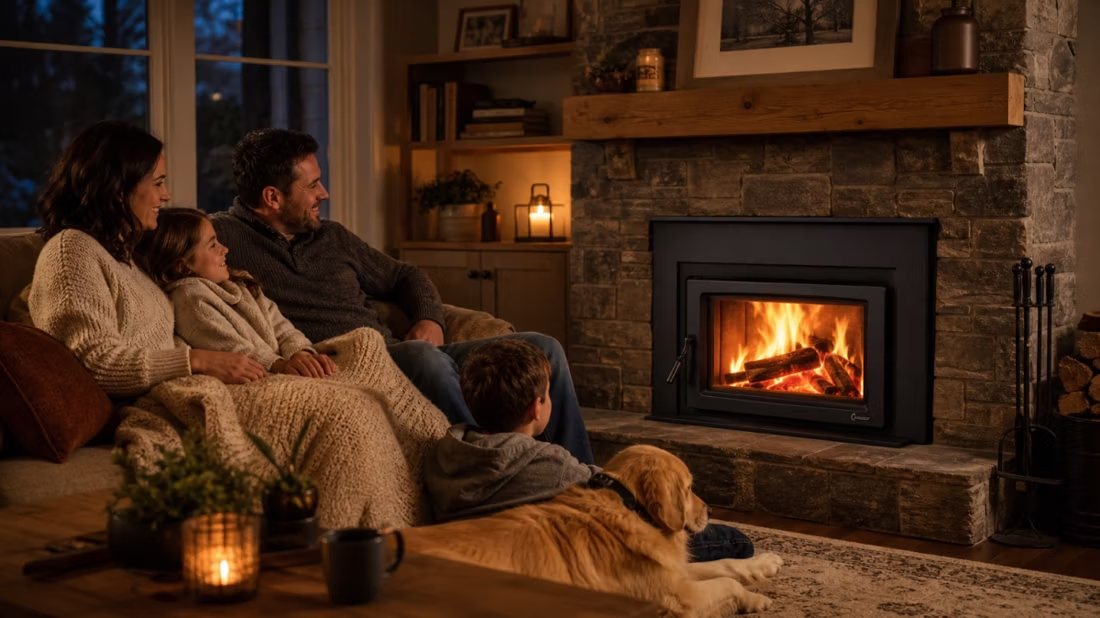
Four fuels. One honest answer for Yakutat County.
Three steps. No salesperson until you're ready.
Tell us about your project
Your zip code, your situation, and the fuel you're leaning toward—or let the answers point you to one.
See what's actually available
The brands dealers within 100 miles genuinely carry—real options, never a catalog mirage.
Get your dealer & Project Guide
A trusted local dealer, plus the free Project Guide & Parts List that names every component of the job.
Frequently Asked Questions
Which fuel works best in Yakutat's climate?
It depends on your setup, but here's how it breaks down locally. Wood is the traditional backbone—birch, spruce, and cottonwood are cut right from the coastal forest around the Situk River, and a well-seasoned catalytic stove handles Yakutat's damp, Zone 7 winters better than a non-cat unit because it burns cleaner through wet fuel. Propane is the practical convenience fuel since there's no natural gas pipeline this far up the Lost Coast—most gas fireplaces and inserts here run on propane delivered by barge or truck off the ferry. Pellet stoves work well if you can plan ahead on shipping; Superior Pellet Fuels and Lignetics bags come in on the same freight runs as everything else, so a full-season supply needs to be ordered in advance rather than picked up locally. Electric is genuinely viable here too—Yakutat's hydro-based utility (AP&T) provides steady power for supplemental units, though it's not typically anyone's sole heat source given occasional outages during Gulf storms.
Do I need a permit to install a wood stove or fireplace in Yakutat?
Yes, in most cases. The City and Borough of Yakutat issues building permits for new wood stoves, inserts, propane fireplaces, and pellet stoves, and any propane line work should go through a licensed propane technician for the gas connection itself. Because freight to Yakutat is expensive, most homeowners here choose an EPA-certified unit from the start—not because of a local nonattainment designation, but because a cleaner-burning stove gets more heat out of every cord of birch or spruce that had to be cut, split, and hauled in. Electric fireplaces generally skip the permit process unless you're hardwiring a built-in unit into a new circuit, which the borough treats as standard electrical work.
Are there air quality restrictions on wood burning in Yakutat?
No—unlike interior Alaska communities such as Fairbanks or North Pole, which deal with severe winter inversion advisories, Yakutat isn't a designated nonattainment area and doesn't currently see wood-smoke curtailment days. The Gulf of Alaska's near-constant wind and heavy precipitation disperse smoke quickly rather than letting it settle over town. That said, well-seasoned wood still matters here more than most places—birch and spruce cut in this wet coastal climate need a full year under cover to dry out, and burning green wood in a cold stove produces far more visible smoke and creosote than the same wood properly seasoned.
Can one local retailer supply all four fuel types in Yakutat?
Not from inside Yakutat itself—a town of 564 people doesn't support a standalone hearth showroom. The realistic path is a regional dealer out of Juneau or Anchorage who carries wood, propane, pellet, and electric lines and has actually shipped equipment into Yakutat before, whether by Alaska Marine Highway ferry or Alaska Airlines air cargo. Local hardware and fuel outlets in town may stock basic propane heaters or firewood, but for a properly vented stove or insert with a matched vent kit, you want a dealer who's coordinated freight to the Lost Coast before and knows what customs and cargo restrictions apply.
How does installation and service actually work in a community this remote?
Plan around the schedule, not the calendar. Technicians serving Yakutat typically batch several jobs into one trip—flying or riding the ferry in, then working through a list of installs, sweeps, and inspections over a few days before heading back. That means booking well ahead of heating season (ideally by late summer) gets you a far better slot than trying to schedule an emergency mid-winter visit when a storm has already closed the ferry run. Given occasional outages tied to Gulf storms hitting the hydro system, many Yakutat homes keep a wood stove as backup heat even if propane or electric is the primary system—it's the one fuel source that doesn't depend on freight arriving on time or the power staying on.
What's the typical cost range for fireplace installation across fuel types in Yakutat, factoring in shipping?
Costs run noticeably higher than the Lower 48 once freight is added in. Wood stove or insert: roughly $6,000–$12,000, with the top end reflecting full chimney work and barge freight on a cast-iron unit. Propane fireplace, insert, or stove: about $6,000–$14,000 depending on line work and whether an existing propane tank and delivery service are already in place. Pellet stove or insert: around $6,000–$9,500 for the unit and install, plus the ongoing cost of shipping in Superior Pellet Fuels or Lignetics bags a season's supply at a time. Electric fireplace: the unit itself runs $300–$3,500, with installation labor often lower than other fuels since no venting is required—though freight can still be the single biggest line item on the invoice for a larger built-in model.
How much should I budget for a fireplace?
For an average home—covering the fireplace, the vent pipe, and basic installation—a budget between $3,900 and $5,500 gives you a lot of options across wood, gas, and pellet. By the time you add finish work, gas line, and electrical, the average complete installation lands between $5,000 and $12,000 all-in. In a remodel or new build, a good rule is to put about 2.5% of the total project cost toward the fireplace.
What is an in-home preview and do I need one?
It's a visit where a hearth professional measures your space, confirms the model you picked actually works in your home, and walks the specs—framing, gas line, venting, finish work—before anything is ordered. Some details you just can't know until you see the house. Never make a down payment without one; it's the single most-skipped step that burns buyers.
Does a fireplace add value to my home?
On average, a fireplace adds back to the home about the same amount you spent installing it. Add the monthly savings from heating the rooms you actually use instead of the whole house—often hundreds of dollars a year—and the value case is strong before you even count what a fire does for how your family uses the room.
I know I want a fireplace—where do I actually start?
Do two things today: snap a photo of the wall or fireplace you want to transform, and take a tape measure to the space—width, height, depth. Those two artifacts answer most of a hearth professional's first questions. Then settle fuel (wood, gas, pellet, or electric) and set a realistic budget: $3,900–$5,500 covers fireplace, vent, and basic install for most homes.
Get Matched With a Dealer Who Ships to Yakutat.
Tell us about your Yakutat home and we'll match you with a trusted regional dealer who's actually shipped equipment onto the Lost Coast before—then send you a free Project Guide & Parts List with the exact stove, vent kit, and installation plan for your fuel and your climate.
Find Your Fireplace →