
Ambient heat that keeps up with off-grid village life.
No chimney, no hauled wood, no vent pipe through the roof—just clean supplemental warmth for homes across the Yukon-Kuskokwim Delta. Find the right unit for your village home and get matched with a trusted local installer.
Every Project Starts From One of These Five Situations
Reliable warmth without hauling fuel.
Kusilvak Census Area covers roughly 8,262 residents spread across a string of Yup'ik villages along the Yukon and Kuskokwim rivers—Mountain Village, Emmonak, Alakanuk, Hooper Bay, Chevak, Scammon Bay, St. Mary's, Marshall, Pilot Station, and Russian Mission among them. None of these communities are connected by road. Everything arrives by small aircraft year-round, by barge during the short open-water season, or over river ice in the depths of winter. The region sits in climate zone 8, the harshest tier in the national energy code, with a heating season that stretches from October into May and stretches of deep cold that keep rivers frozen solid for months. Wood—birch, spruce, and cottonwood cut along the riverbanks and hauled home by snowmachine—remains the backbone of home heating here, and pellet stoves running Superior Pellet Fuels or Lignetics bags shipped in by barge are a standard secondary option. Electric fireplaces have carved out a real role too: as a clean, no-hauling, no-venting way to add warmth and light to a living room already heated primarily by wood.
Most Kusilvak villages get their power from small diesel-generator microgrids operated by the Alaska Village Electric Cooperative (AVEC), and running a whole house on electric resistance heat rarely makes financial sense once diesel-driven per-kWh rates are factored in—even with the state's Power Cost Equalization (PCE) program subsidizing the first block of residential usage each month. What does make sense for a lot of homes here is a single electric fireplace or insert used as zone heat in the main living space: plug it in or wire it to a dedicated circuit, run it for a few hours in the evening alongside the wood stove doing the heavy lifting, and get real ambiance and supplemental warmth without adding another wood run or leaning harder on the generator.
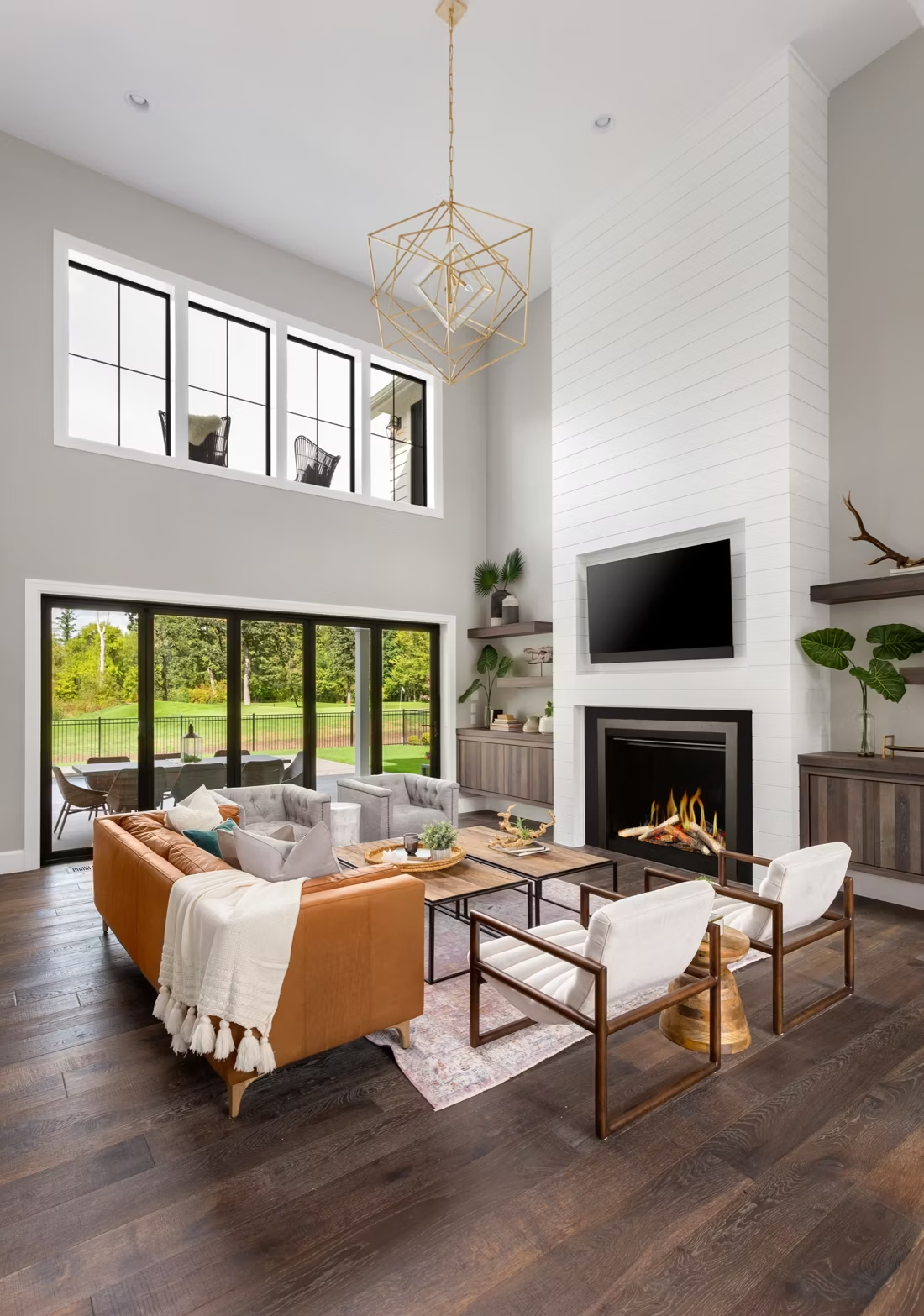
Three steps. No salesperson until you're ready.
Tell us about your project
Your zip code, your situation, and the fuel you're leaning toward—or let the answers point you to one.
See what's actually available
The brands dealers within 100 miles genuinely carry—real options, never a catalog mirage.
Get your dealer & Project Guide
A trusted local dealer, plus the free Project Guide & Parts List that names every component of the job.
Frequently Asked Questions
How much does an electric fireplace cost to install in a Kusilvak village home?
Electric fireplaces are the least expensive hearth appliance to get into a home here, largely because there's no chimney, no vent pipe, and no gas line to run. A plug-in freestanding or wall-mount unit needs nothing more than a standard outlet. A built-in insert or mantel unit typically calls for a dedicated 120V or 240V circuit, which means an electrician's time on top of the unit itself. The bigger cost driver in Kusilvak is freight: appliances have to come in by barge during the summer season or air cargo the rest of the year, and air freight on a bulky box adds meaningfully to the total compared to a road-accessible community. Ordering ahead of barge season, when it's an option, is the cheapest way to get a unit into most of these villages.
Can an electric fireplace be my primary heat source out here?
Generally no, and I'd rather be straight about that than oversell it. With diesel-generated power through AVEC's village microgrids, the per-kWh cost of running electric resistance heat around the clock through a zone 8 winter is steep, even with PCE covering the first block of monthly residential usage. Electric fireplaces in Kusilvak homes work best as supplemental zone heat—warming the living room in the evening while a wood stove or oil boiler carries the bulk of the heating load. If you're weighing electric against wood or pellet for whole-home heat, wood remains the standard here for a reason: birch and spruce are locally available, and burning them doesn't add another line item to an already high power bill.
Do I need a permit to install an electric fireplace in Kusilvak Census Area?
Kusilvak is an unorganized census area with no borough-wide building code, so there's typically no county permit process to navigate for a hearth appliance install. That said, most villages here are governed by a federally recognized tribal council or city office, and some—Emmonak and Hooper Bay among them—have their own local ordinances or IRA review for home construction work, so it's worth a quick check with your village office before wiring in a built-in unit. Regardless of local permitting, any dedicated circuit work should still be done to National Electrical Code standards by a licensed electrician—it matters for safety and for keeping your homeowner's insurance intact.
What will an electric fireplace actually cost to run on AVEC power?
Most Kusilvak villages are served by the Alaska Village Electric Cooperative, whose diesel-generated microgrid power runs well above Lower 48 utility rates before subsidy. The state's Power Cost Equalization program discounts the first 500 kWh of residential usage each month, but usage beyond that block reverts to the full diesel-driven rate. A 1,500-watt electric fireplace run for three or four hours a night adds a modest but real amount to a monthly bill—enough that most homeowners here treat it as an evening comfort feature in one room rather than a heating strategy for the whole house.
How long does it take to get an electric fireplace shipped into a village like Mountain Village or Chevak?
Timing depends entirely on the season. During the summer barge window, freight companies serving the lower Yukon and coastal Bering Sea communities can bring in bulkier items—like a full mantel-style electric fireplace—at a fraction of air freight cost, but barge schedules run on a fixed rotation, so ordering early in the season matters. Outside the open-water months, everything moves by air cargo through carriers serving the region's village airstrips, which is faster but adds significantly to the total delivered cost of a larger unit. Smaller wall-mount units ship more easily by air year-round since they pack flat.
What kind of electric fireplace works best in a Kusilvak home?
Wall-mount and built-in insert units tend to be the better fit for the tight, well-sealed homes common in these villages—many built on pilings over permafrost, where an airtight envelope matters for keeping heat in. Because electric units produce zero combustion byproducts, they don't need makeup air or venting, which is a real advantage in a home that's already sealed tight against wind off the Bering Sea. Look for a unit with an LED flame effect that can run without the heater engaged—useful for the long dark stretch of winter when you want light and ambiance in a room without adding to the electric bill.
Will my electric fireplace still work if the village power goes out?
No—an electric fireplace is entirely dependent on grid power, and it will go dark the moment the local diesel microgrid does, whether that's a generator maintenance outage or a fuel delivery delay. This is exactly why electric works best in Kusilvak as a supplement rather than a primary system: a wood stove burning birch or spruce keeps a home warm regardless of what the village grid is doing, while the electric fireplace handles the easy, low-effort evenings when the power's reliably on.
How much maintenance does an electric fireplace need?
Very little, which is part of the appeal in a region where getting a technician out to a village isn't always simple. There's no chimney to sweep and no venting to inspect. Basic upkeep is dusting the unit, occasionally cleaning the glass front, and replacing an LED module every several years if the flame effect dims—something most handy homeowners can do themselves with a part ordered in on the next barge or flight. Compare that to the annual chimney inspection a wood stove needs, and the electric unit's low-maintenance profile is a real selling point for a second heat source in the house.
Electric fireplace vs. wood stove—which makes more sense for my home?
Wood, cut locally from birch, spruce, or cottonwood, remains the practical choice for whole-home heat in Kusilvak—it works without grid power, and fuel can be self-harvested rather than bought at diesel-driven electric rates. An electric fireplace can't replace that, but it fills a different need: instant, no-mess ambiance and supplemental warmth in a living room, with none of the ash, creosote, or chimney upkeep a wood stove requires. Most homes here that add an electric unit are pairing it with an existing wood stove or oil furnace rather than choosing one over the other—wood for the heavy lifting through the cold months, electric for the easy evenings when the grid's up and running.
Can I put a TV above my fireplace?
Yes—with an asterisk. Fireplaces are hot and TVs don't like heat. Either put a mantel between them to deflect rising warmth, or choose a fireplace with heat-management technology that creates a cool zone on the wall above—the wall stays around 125 degrees, barely warm, while the room still gets full heat. If you like clean lines and don't want a mantel, heat management is the answer.
Do electric fireplaces actually produce heat?
Yes—most put out around 4,800–5,000 BTUs from a standard outlet, which comfortably warms a bedroom, office, or den as a comfort-zone heater. What they won't do is carry a whole house the way wood, gas, or pellet can. Think of electric as ambiance-first with honest supplemental heat: flames on with no heat in July, flames plus warmth in January.
Does a fireplace add value to my home?
On average, a fireplace adds back to the home about the same amount you spent installing it. Add the monthly savings from heating the rooms you actually use instead of the whole house—often hundreds of dollars a year—and the value case is strong before you even count what a fire does for how your family uses the room.
Can a fireplace actually lower my heating bill?
Yes—by creating a comfort zone. A furnace heats every square foot of the house just to warm the one room you're in; a gas fireplace on low burns roughly a sixth of the gas a typical furnace does. Set the furnace around 55–60 degrees as a baseline, then heat the rooms your family actually uses. Families who heat this way commonly save $20–$60 a month.
Find your electric fireplace in Kusilvak Census Area.
Tell us about your village, your power setup, and how you heat now, and we'll match you with a trusted local installer and put together a free Project Guide & Parts List—the exact unit, circuit and mounting requirements, and freight timing for getting it into your home.
Find Your Fireplace →