
Reliable heat for Alaska's coldest, most remote communities.
Fireplace resources for every village in Kusilvak Census Area—Emmonak, Alakanuk, Hooper Bay, Mountain Village, St. Mary's, Pilot Station, Russian Mission, Scammon Bay, Kotlik, Marshall, and Nunam Iqua. Get matched with a regional dealer who already knows how to get equipment to your community.
Every Project Starts From One of These Five Situations
Subarctic heating along the Yukon-Kuskokwim Delta.
Kusilvak Census Area sits along the lower Yukon River and Bering Sea coast in western Alaska—an unorganized census area with no road system connecting its Yup'ik villages, including Emmonak, Alakanuk, Hooper Bay, Mountain Village, St. Mary's, Pilot Station, Russian Mission, Scammon Bay, Kotlik, Marshall, and Nunam Iqua. The region falls entirely within IECC Climate Zone 8, the coldest classification in the U.S. building code—long, dark winters where cutting and hauling birch, spruce, or driftwood cottonwood by boat or snowmachine remains a core part of staying warm. Nearly every home relies on diesel-generated electricity through village utilities and cooperatives such as AVEC, with per-kilowatt-hour rates running several times higher than the Lower 48 even after the state's Power Cost Equalization subsidy is applied.
There's no natural gas pipeline serving Kusilvak, and propane has to be barged in during the short ice-free season (roughly June through October) or flown in year-round at a premium—so gas fireplaces are essentially absent here. What you'll find on this hub instead: wood stoves and inserts built for subsistence-cut birch and spruce, pellet stoves stocked by suppliers like Superior Pellet Fuels and Lignetics that ship in on the same barge and air-cargo routes as groceries, and electric units sized for homes on diesel-fed village grids. Pick your fuel below for the specifics—freight timing, regional dealer contacts, and what actually holds up through a Yukon-Kuskokwim Delta winter.
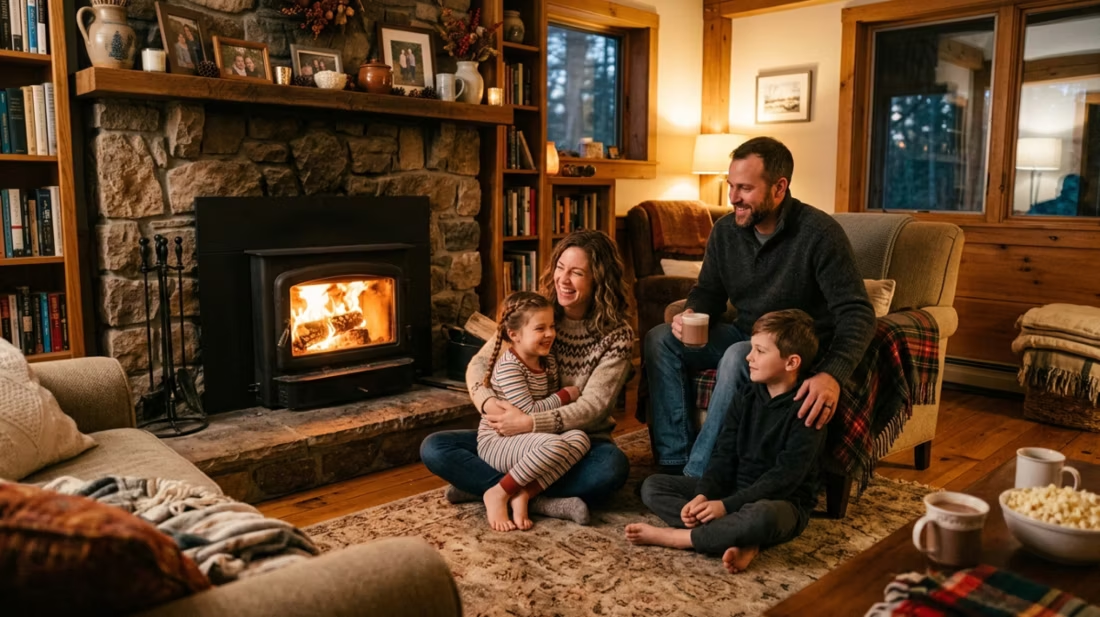
Four fuels. One honest answer for Kusilvak County.
Three steps. No salesperson until you're ready.
Tell us about your project
Your zip code, your situation, and the fuel you're leaning toward—or let the answers point you to one.
See what's actually available
The brands dealers within 100 miles genuinely carry—real options, never a catalog mirage.
Get your dealer & Project Guide
A trusted local dealer, plus the free Project Guide & Parts List that names every component of the job.
Frequently Asked Questions
Which heating fuel actually works in Kusilvak's villages?
It depends on what can physically get to your village and what your household can maintain without road access. Wood is the backbone fuel across the census area—birch and spruce cut along the Yukon and its tributaries, plus driftwood cottonwood collected on the coast, have heated Yup'ik homes for generations, and a wood stove keeps working when diesel generators go down, which matters in a region with no road to call for backup power. Pellet stoves are a realistic secondary option where a household can plan around barge season—Superior Pellet Fuels and Lignetics both ship into the region, but supply is seasonal and storage space matters since you're often buying a winter's worth at once. Electric fireplaces work as supplemental heat in homes on the village diesel grid, though per-kWh rates run high enough that most residents use electric heat sparingly even with the state's Power Cost Equalization subsidy. Gas fireplaces are essentially not an option—there's no pipeline into Kusilvak, and propane has to be flown or barged in, so it's used for cooking far more often than for a hearth.
Do I need a permit to install a wood or pellet stove in Kusilvak Census Area?
Kusilvak is an unorganized census area—there's no borough-level building department issuing residential permits the way an organized county would. Most homes here sit on tribal, village-corporation, or state and federal housing land, so the practical first stop is your village council or, for HUD/AHFC-assisted housing, the regional housing authority overseeing your unit. The Alaska State Fire Marshal's office has authority over certain public and multi-family buildings statewide. If your home was weatherized or built through a regional program like AVCP's housing or weatherization initiatives, check with them first—stove installation often needs to be coordinated with existing ventilation and insulation work rather than treated as a standalone project.
Are there air quality rules on wood burning in Kusilvak?
No—unlike Fairbanks or the Matanuska-Susitna Valley, Kusilvak Census Area currently has no formal wood-smoke restrictions or non-attainment designation. That said, standing timber is limited this far out on the delta, and most firewood is birch or spruce hauled in from stands well upriver, so a lot of households care more about burning efficiently than burning legally—an EPA-certified stove stretches a winter's wood supply further than an old airtight box stove, which matters when every cord represents real boat or snowmachine time.
Can one local dealer handle wood, pellet, and electric installs?
There isn't a multi-fuel hearth showroom inside Kusilvak Census Area itself—the nearest hearth retailers with display floors are typically in Bethel, the regional hub for the Yukon-Kuskokwim Delta, and larger distributors ship in from Anchorage. What that means in practice: a dealer serving your village usually coordinates the freight, barge in summer or air cargo the rest of the year, rather than you picking a unit off a shelf. Find My Fireplace's job is to match you with a trusted regional dealer who already knows the logistics for your community—Emmonak, Alakanuk, Hooper Bay, wherever you are—instead of leaving you to guess at shipping costs and lead times on your own.
How does installation and service actually work without road access?
Technicians generally fly in from Bethel or another regional hub and try to batch several villages into one trip, so scheduling around their travel windows matters more than it would in a road-connected county. Booking before freeze-up in the fall gets you a much better shot at a technician than trying to schedule a mid-winter emergency repair. A fair number of households also handle basic maintenance themselves, using skills passed down locally or picked up through programs like AVCP's weatherization initiative. If you're planning a new install, expect the freight timeline—barge season roughly June through October, air cargo year-round at a higher cost—to matter as much as the technician's calendar.
What does fireplace or stove installation cost in Kusilvak, factoring in freight?
Costs run higher here than in road-connected parts of Alaska because freight is baked into nearly every project. A wood stove or insert typically lands in the $6,000–$12,000 range once air cargo or barge shipping and installer travel time are added on top of the unit and labor. Pellet stoves run similarly, roughly $6,000–$9,000, plus the ongoing cost of getting pellet bags from Superior Pellet Fuels or Lignetics onto a barge or plane each season. Electric fireplaces are the cheapest to land—often $300–$1,500 for the unit shipped in—but the ongoing cost to run one is higher than in the Lower 48 given diesel-generated electric rates, even with Power Cost Equalization applied. Gas isn't really priced as an option here since there's no reliable propane delivery for a hearth appliance.
Does a fireplace add value to my home?
On average, a fireplace adds back to the home about the same amount you spent installing it. Add the monthly savings from heating the rooms you actually use instead of the whole house—often hundreds of dollars a year—and the value case is strong before you even count what a fire does for how your family uses the room.
Can a fireplace actually lower my heating bill?
Yes—by creating a comfort zone. A furnace heats every square foot of the house just to warm the one room you're in; a gas fireplace on low burns roughly a sixth of the gas a typical furnace does. Set the furnace around 55–60 degrees as a baseline, then heat the rooms your family actually uses. Families who heat this way commonly save $20–$60 a month.
How much should I budget for a fireplace?
For an average home—covering the fireplace, the vent pipe, and basic installation—a budget between $3,900 and $5,500 gives you a lot of options across wood, gas, and pellet. By the time you add finish work, gas line, and electrical, the average complete installation lands between $5,000 and $12,000 all-in. In a remodel or new build, a good rule is to put about 2.5% of the total project cost toward the fireplace.
Should the dealer who sells my fireplace also install it?
Ideally, yes. A fireplace project involves vent pipe, gas line, electrical, and often tile or stone. Hire three or four separate trades and you own the liability and the game of telephone between them. One company selling and installing means one accountable party, start to finish—ask about factory training, on-time completion records, and what happens if an inspection fails.
Find your fireplace or stove match in Kusilvak Census Area.
Tell us your village and your fuel—wood, pellet, or electric—and we'll match you with a trusted regional dealer and send a free Project Guide & Parts List: the exact parts, including the vent kit, and a realistic freight and installation plan for getting it to your home.
Find Your Fireplace →