
Built for a village where every kilowatt counts.
Hooper Bay faces one of the longest, coldest heating seasons in the country, on a diesel microgrid billing residential power near 70 cents a kilowatt-hour. An electric fireplace has a real role here, just not the one it plays in the Lower 48—we'll help you find a trusted local dealer who knows exactly what that role is.
Every Project Starts From One of These Five Situations
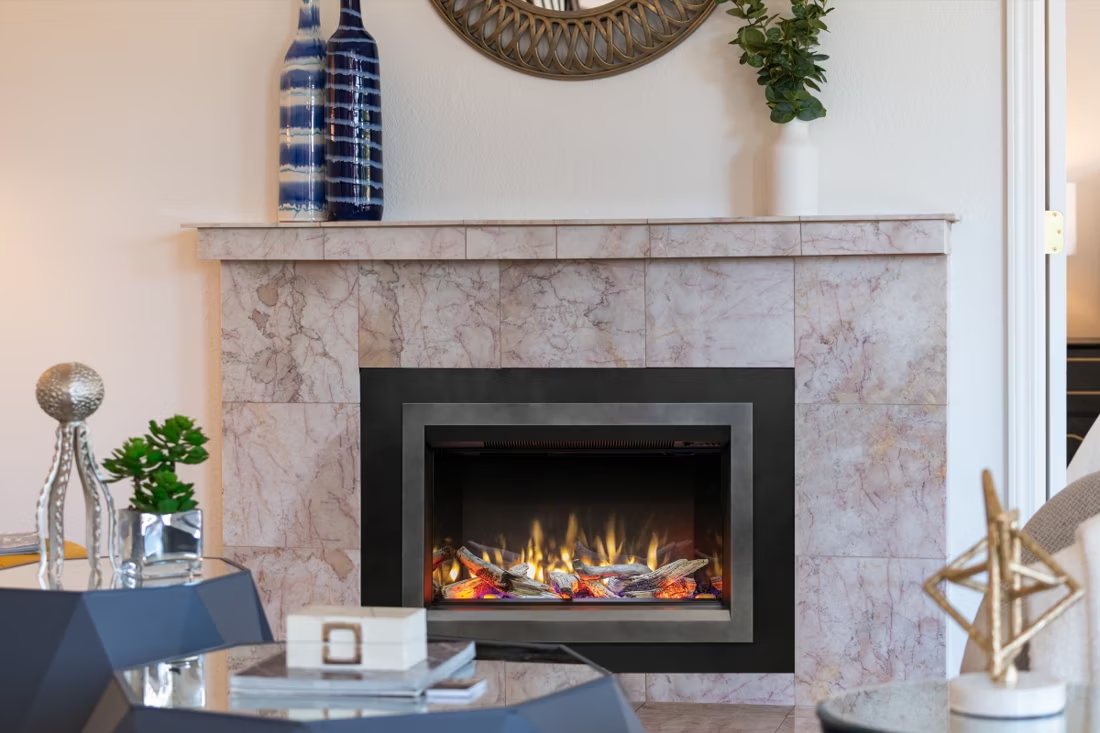
Electric fireplaces earn their place as backup, not as the furnace.
Hooper Bay sits on the flat, treeless tundra of the Bering Sea coast at just 8 feet of elevation, in a Climate Zone 8 that doesn't show up on most maps of the Lower 48. An average winter low around 1°F and a heating season even longer and colder than International Falls, Minnesota's puts it well past that benchmark—this is Yup'ik homeland dealing with a heating load most of the country never sees. There's no wildfire smoke or inversion problem to manage, which is unusual for a village this reliant on wood heat, but the cold itself is the whole story.
Power here comes from Alaska Village Electric Cooperative's local diesel generators, a stand-alone microgrid not tied to Hooper Bay's neighbors—Tuntutuliak Community Services Assn and Akiachak Native Community Electric run their own separate systems for their own villages, which is normal in the Kusilvak Census Area where every community keeps its own plant. Residential power runs close to $0.70 per kilowatt-hour before the state's Power Cost Equalization subsidy is applied, which is why almost no Hooper Bay home heats primarily on electricity. Most households burn driftwood—birch, spruce, and cottonwood collected along the coast and river rather than cut under a forest permit, since there's no standing timber on this stretch of tundra—supplemented by heating oil or a pellet stove using Superior Pellet Fuels or Lignetics bags freighted in. An electric fireplace fits in as a clean, no-chimney supplemental unit: fast ambient heat in a bedroom, a safe option in rental or village housing where a wood stove isn't permitted, or a stopgap when oil delivery is delayed by weather.
Three steps. No salesperson until you're ready.
Tell us about your project
Your zip code, your situation, and the fuel you're leaning toward—or let the answers point you to one.
See what's actually available
The brands dealers within 100 miles genuinely carry—real options, never a catalog mirage.
Get your dealer & Project Guide
A trusted local dealer, plus the free Project Guide & Parts List that names every component of the job.
Frequently Asked Questions
What does it cost to install an electric fireplace in Hooper Bay?
The unit itself is usually the smaller line item—most electric fireplaces and inserts sold for Alaska Bush installs run a few hundred to a couple thousand dollars before freight. The bigger cost driver here is logistics: appliances typically arrive by barge during the summer shipping season or by small aircraft the rest of the year, and both add real freight cost and lead time compared to a Lower 48 install. A plug-in freestanding unit needs no electrical work beyond an outlet. A hardwired built-in insert needs a licensed electrician, which in a village this size usually means scheduling around when one is next in town rather than next-day service.
Will an electric fireplace actually heat my whole house here?
Not at Hooper Bay's rates, and most people don't ask it to. At close to $0.70 per kilowatt-hour before the state's Power Cost Equalization subsidy kicks in on the first block of residential usage, running electric resistance heat as a primary source for a home facing one of the longest, coldest heating seasons in the country gets expensive fast. Electric fireplaces here mostly do zone duty—heating the room you're in without running the oil furnace or waking up the wood stove—rather than carrying the whole house through an arctic winter.
Who provides electricity in Hooper Bay, and is the grid reliable?
Alaska Village Electric Cooperative runs Hooper Bay's local diesel power plant, a stand-alone microgrid serving just this community—it isn't interconnected with the grids run by Tuntutuliak Community Services Assn or Akiachak Native Community Electric in neighboring villages. That isolation means a plant issue or fuel delivery delay can affect the whole village at once, which is the main reason an electric-only heating plan is risky here. Pairing an electric fireplace with a wood stove or oil-fired backup is the common-sense setup for most households.
Do I need a permit to install an electric fireplace in Hooper Bay?
There's no dedicated building department issuing hearth permits the way a Lower 48 city would—permitting in a community this size runs through the city of Hooper Bay or the Kusilvak Census Area on an informal, case-by-case basis. A plug-in unit generally doesn't trigger anything. A hardwired built-in insert should still be wired by a licensed electrician to code, both for safety and because insurance carriers covering rural Alaska homes will ask about it if there's ever a claim.
Will an electric fireplace work as backup heat during an outage?
No—that's the one thing it can't do, since it needs the same grid power that goes down in a storm. Given that AVEC's plant is a single, stand-alone system with no outside grid to lean on, an electric-only heating plan leaves you cold exactly when the village loses power. Most Hooper Bay households keep a wood stove burning driftwood birch or spruce as the true outage backup, and use the electric fireplace for everyday supplemental warmth when the grid is up.
How do I get an electric fireplace shipped out to Hooper Bay?
Barge service during the open-water months, roughly June through September, is the cheapest way to move a larger unit, but it means ordering months ahead of the season you actually want it installed. Outside that window, freight comes in on small aircraft serving the village, which works for most electric fireplace models but costs more per pound. A local dealer who's shipped hearth products into the Kusilvak region before will know current freight windows and can plan your order around them rather than leaving you waiting on a grounded shipment in January.
Electric, wood, or pellet—what actually makes sense as primary heat in Hooper Bay?
Wood is still the backbone for most homes, but it's collected driftwood—birch, spruce, cottonwood that washes up along the coast and river—rather than cut under a forest permit, since the surrounding land is open tundra with no timber stands. Pellet stoves running Superior Pellet Fuels or Lignetics bags are a cleaner, more controllable option but depend on the same barge and air freight schedule as everything else shipped into the village. Electric, at close to $0.70 per kilowatt-hour, is the most expensive of the three for whole-home heat and works best as the supplemental or zone-heating piece rather than the main system.
How much maintenance does an electric fireplace need in a place like Hooper Bay?
Very little, which is part of its appeal here—no chimney to sweep, no driftwood to haul and split, no creosote to manage. An occasional filter or vent cleaning and a check that the unit's seals are holding up against the salt air common on this stretch of Bering Sea coast is about it. For renters or households in village housing who can't install a wood stove, that low-maintenance profile is often the deciding factor.
Are there any programs that help with heating costs in Hooper Bay?
The state's Power Cost Equalization program subsidizes the first block of residential electric usage in rural communities like Hooper Bay, which takes some of the sting out of AVEC's otherwise steep rates and is worth confirming you're enrolled in if you haven't checked recently. There isn't a local wood or pellet rebate program the way some Lower 48 states run—this region doesn't have the air quality non-attainment issues that usually drive those programs—so the main savings lever for an electric fireplace purchase here is simply sizing it right so it's doing supplemental work, not trying to replace the furnace.
Can I put a TV above my fireplace?
Yes—with an asterisk. Fireplaces are hot and TVs don't like heat. Either put a mantel between them to deflect rising warmth, or choose a fireplace with heat-management technology that creates a cool zone on the wall above—the wall stays around 125 degrees, barely warm, while the room still gets full heat. If you like clean lines and don't want a mantel, heat management is the answer.
Does an electric fireplace need a vent or chimney?
No—that's its superpower. An electric fireplace needs a wall and an outlet, period. No vent pipe, no gas line, no clearances to design around, which is why it works in bedrooms, offices, apartments, and walls where venting a gas or wood unit would be impractical or impossible. Installation is typically the simplest and least expensive of any fireplace type.
How much should I budget for a fireplace?
For an average home—covering the fireplace, the vent pipe, and basic installation—a budget between $3,900 and $5,500 gives you a lot of options across wood, gas, and pellet. By the time you add finish work, gas line, and electrical, the average complete installation lands between $5,000 and $12,000 all-in. In a remodel or new build, a good rule is to put about 2.5% of the total project cost toward the fireplace.
Can a fireplace actually lower my heating bill?
Yes—by creating a comfort zone. A furnace heats every square foot of the house just to warm the one room you're in; a gas fireplace on low burns roughly a sixth of the gas a typical furnace does. Set the furnace around 55–60 degrees as a baseline, then heat the rooms your family actually uses. Families who heat this way commonly save $20–$60 a month.
Popular Electric Brands
Where each brand came from, what's inside it today, and every current model. No brand pays to be here. Not every dealer carries every brand, so enter your zip code to see what's sold near Hooper Bay.
Fireplace Xtrordinair
Fireplace Xtrordinair, now often called FireplaceX, is the fireplace brand of Travis Industries, Inc., of Mukilteo, Washington.
5 electric models →DaVinci
DaVinci Custom Fireplaces is a brand of Travis Industries, Inc., of Mukilteo, Washington, the company behind Lopi and Fireplace Xtrordinair.
5 electric models →Kozy Heat
Kozy Heat was founded in 1976 by Dudley Hussong in Lakefield, Minnesota, and incorporated as Hussong Manufacturing Co., Inc. in 1978.
3 electric models →Forge & Flame
Forge & Flame is the stove brand Hearth & Home Technologies introduced in August 2023 to bring Vermont Castings, Harman, and Quadra-Fire under one name.
1 electric model →Electric Service in Hooper Bay
An electric fireplace's heater draws about 1,500 watts—pennies per hour at local rates.
Alaska Village Elec Coop, Inc
Tuntutuliak Comm Services Assn
Akiachak Native Community Electric
Get your free Project Guide & Parts List for an electric fireplace in Hooper Bay.
Tell us about your home, your backup heat setup, and when you need the unit on-site, and we'll help you find a trusted local dealer experienced with Kusilvak-region freight and send a free Project Guide & Parts List with the exact unit and wiring specified.
Find Your Fireplace →