
Steady heat through Kodiak's long, wet winters.
There's no natural gas pipeline out here—propane is what keeps a gas fireplace running in Kodiak Station. Find the right unit and get matched with a local dealer who installs and services it.
Every Project Starts From One of These Five Situations
No pipeline reaches the island, so propane does the job.
Kodiak Station sits at 465 feet on Kodiak Island in the Gulf of Alaska, in climate zone 7 with 8,316 heating degree days a year—more than International Falls, Minnesota logs in a typical winter, even though the maritime air here keeps average winter lows around a relatively mild 26°F. It's not brutal cold so much as it is cold that never really lets up, month after damp month, which is exactly the kind of load a gas appliance handles well as steady, on-demand heat.
There's no natural gas utility serving Kodiak Island—everything runs on propane delivered and stored in on-site tanks, with fuel and equipment freighted in by barge, which affects both lead times and installed cost. Most of the city is served by Kodiak Electric Association's hydro-powered grid at a reasonable 18.8 cents per kWh, but outlying areas on the Alaska Village Electric Cooperative system pay closer to 70 cents per kWh for diesel-generated power. In either case, a propane fireplace with battery-backup ignition gives a household reliable heat that doesn't depend on the grid staying up during a winter storm.
Three steps. No salesperson until you're ready.
Tell us about your project
Your zip code, your situation, and the fuel you're leaning toward—or let the answers point you to one.
See what's actually available
The brands dealers within 100 miles genuinely carry—real options, never a catalog mirage.
Get your dealer & Project Guide
A trusted local dealer, plus the free Project Guide & Parts List that names every component of the job.
Frequently Asked Questions
What does it cost to install a propane fireplace in Kodiak Station?
Expect somewhere between $5,500 and $13,000 for a full propane fireplace or insert installation here, which runs higher than comparable Lower 48 installs mostly because of freight—the unit, venting, and often the propane tank itself have to come in by barge or air cargo. A straightforward insert into an existing masonry fireplace with a tank already on the property sits at the lower end; a new built-in unit requiring a fresh tank installation, gas line run, and through-wall venting in a remodel sits at the higher end. Local installers can give you a firm number once they've seen the site and confirmed tank placement.
Is this natural gas or propane, and does it matter which one I ask for?
It's propane. Kodiak Island has no natural gas pipeline infrastructure, so every gas fireplace, insert, or stove on the island runs on propane delivered to an on-site tank rather than piped utility gas. The good news is that most gas fireplace models sold today are propane-ready or convertible, so you're not giving up product selection—you just need a dealer who sets the correct orifice and regulator for propane from the start rather than assuming natural gas hookup.
Will a propane fireplace keep working if the power goes out?
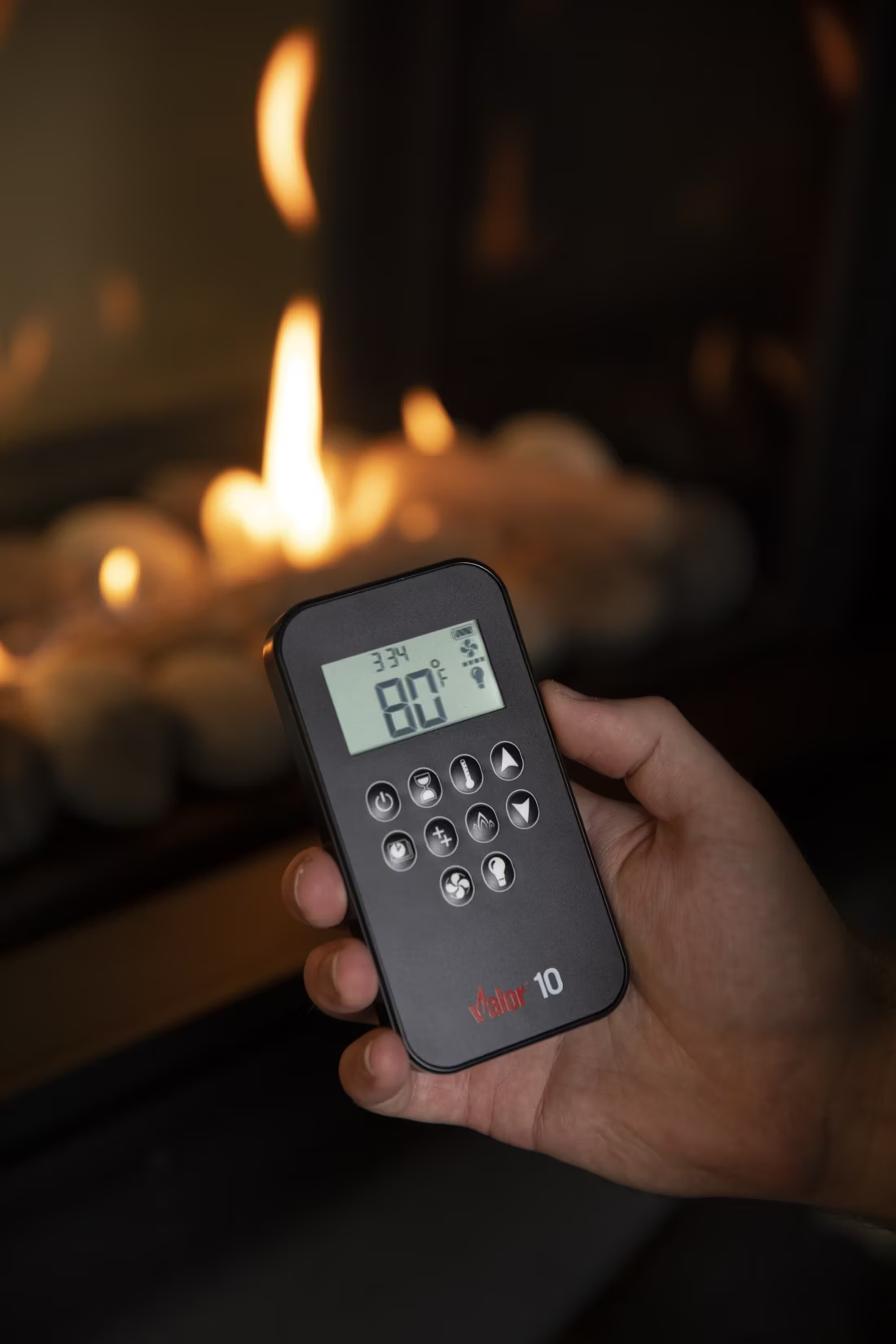
Yes, with the right ignition system. Units with IPI (intermittent pilot ignition) run on battery backup and will light on demand even with no grid power, which matters most for households on the Alaska Village Electric Cooperative system, where diesel generation outages can stretch longer than what Kodiak Electric Association's hydro-powered grid typically sees in town. Valor fireplaces take a different approach—their pilot generates its own electricity through a thermocouple, so there are no batteries to remember at all. Either way, ask your installer which ignition system is on the model you're considering before you commit.
Do I need a permit to install a gas fireplace in Kodiak Station?
Yes—new installations typically require a building permit through the Kodiak Island Borough Community Development Department, and propane tank placement is generally reviewed for clearance to structures and property lines as well. Most local installers coordinate the permitting and tank siting as part of the job, since they're already dealing with the barge logistics of getting the tank and unit to the property. If you're adding a new tank rather than using an existing one, budget extra lead time for that piece specifically.
How big of a propane tank do I need for a fireplace?
For a single fireplace as supplemental heat, a 100 to 250 gallon tank is usually sufficient, refilled a few times over an 8,300-heating-degree-day winter. Households using propane more heavily—running a fireplace as a primary heat source in a room, or pairing it with a propane range or water heater—often step up to a 500 gallon tank to reduce refill frequency, which matters on an island where delivery scheduling depends on barge and truck routes rather than a same-day propane company visit. Your dealer will size the tank based on the appliance's BTU rating and how you plan to use it.
Should I get a vented or vent-free propane fireplace given Kodiak's damp climate?
Vented, direct-vent units are the better call here. Kodiak's maritime air is persistently damp, and vent-free appliances release combustion byproducts—including water vapor—directly into the room, which is the last thing a home already fighting condensation and moisture needs. A direct-vent unit draws combustion air from outside and exhausts it back outside through sealed venting, so it doesn't add humidity load to the house. Local dealers installing on the island default to direct-vent for this reason.
What size fireplace do I need to actually heat a room here?
With 8,316 heating degree days a year, undersizing is the more common mistake than oversizing. A small direct-vent unit (around 20,000–26,000 BTU) works for a single room as supplemental heat; homes looking to offset a meaningful share of oil-furnace load in a main living space usually want something in the 30,000–40,000 BTU range. Because Kodiak's cold is more about duration than depth—lows average a mild 26°F but the heating season runs long—a mid-size unit run steadily tends to outperform an oversized unit cycled on and off. A local installer can size this against your square footage and existing furnace during a site visit.
How often does a propane fireplace need to be serviced?
Plan on an annual inspection, same as anywhere else—a technician checks the burner, pilot assembly, gas connections, and venting, and cleans the glass and interior. On Kodiak Island, it's worth also having them inspect the tank, regulator, and exterior gas line connections for salt-air corrosion, which is a real factor for outdoor equipment this close to the water. Scheduling service before the fall barge backlog picks up is generally easier than trying to get a technician out mid-winter.
Should I go with gas or electric for supplemental heat in Kodiak Station?
It depends heavily on which electric utility serves your address. In town, Kodiak Electric Association's hydro-powered grid runs at a competitive 18.8 cents per kWh, making an electric fireplace or heater a genuinely cheap, no-venting option for supplemental warmth. Out on the Alaska Village Electric Cooperative system, diesel-generated power runs closer to 70 cents per kWh, which changes the math considerably—a propane fireplace often ends up cheaper to run and, with battery-backup ignition, keeps working through the generator outages that diesel-dependent grids are more prone to. Wood isn't really a factor for most households here despite birch and spruce being locally available, since heating oil and propane dominate the fuel mix on the island.
Why is a fireplace insert so efficient?
An insert does two things: it seals the chimney completely, so you stop losing air you already paid to heat, and it radiates warmth into the room through the firebox and glass. Most add a heat-exchange fan that pulls cool room air underneath, wraps it around the hot firebox, and pushes it back out warm. Your home is more efficient before you've even lit the first fire.
Can I put a TV above my fireplace?
Yes—with an asterisk. Fireplaces are hot and TVs don't like heat. Either put a mantel between them to deflect rising warmth, or choose a fireplace with heat-management technology that creates a cool zone on the wall above—the wall stays around 125 degrees, barely warm, while the room still gets full heat. If you like clean lines and don't want a mantel, heat management is the answer.
How much should I budget for a fireplace?
For an average home—covering the fireplace, the vent pipe, and basic installation—a budget between $3,900 and $5,500 gives you a lot of options across wood, gas, and pellet. By the time you add finish work, gas line, and electrical, the average complete installation lands between $5,000 and $12,000 all-in. In a remodel or new build, a good rule is to put about 2.5% of the total project cost toward the fireplace.
Can I install a fireplace myself?
If you're putting a fire in your house on purpose, it's best to work with an expert. Unless you're genuinely experienced in framing, gas line, vent pipe, and the national code on clearances to combustibles, have a professional do it—and ideally the same company that sells you the fireplace, so warranty, service, and liability all live under one roof.
Nearby Dealers
Hearth shops serving Kodiak Station and the surrounding area. Every listing shows whether it is a WhyFire partner, a dealer we have verified as authorized for the brands we recommend, or a local business carrying hearth products. No manufacturer pays for placement. How we verify dealers →
Find your propane fireplace in Kodiak Station.
Tell us about your home and we'll put together a free Project Guide & Parts List—sized right for Kodiak's climate, with the vent kit and tank setup you'll need—and match you with a trusted local dealer who installs on the island.
Find Your Fireplace →