
Pellet stoves are the exception, not the rule, on Kodiak Island.
Bagged pellets have to ride a barge to reach Kodiak Station. Here's an honest look at whether that still makes sense for your home, and what most of your neighbors burn instead.
Every Project Starts From One of These Five Situations
Why wood and hydropower beat bagged pellets here.
Kodiak Station sits on an island with no road connection to the North American highway system, so nearly everything—groceries, lumber, heating fuel—arrives by barge or air freight. The climate itself, Zone 7 with a long, nearly eight-month heating season, demands a long heating season, but it's a damp, windy chill rather than the deep subzero snaps you'd see in Duluth, MN or Fargo, ND. Winter lows average around 26°F, which is manageable, but the season is long, running well into spring.
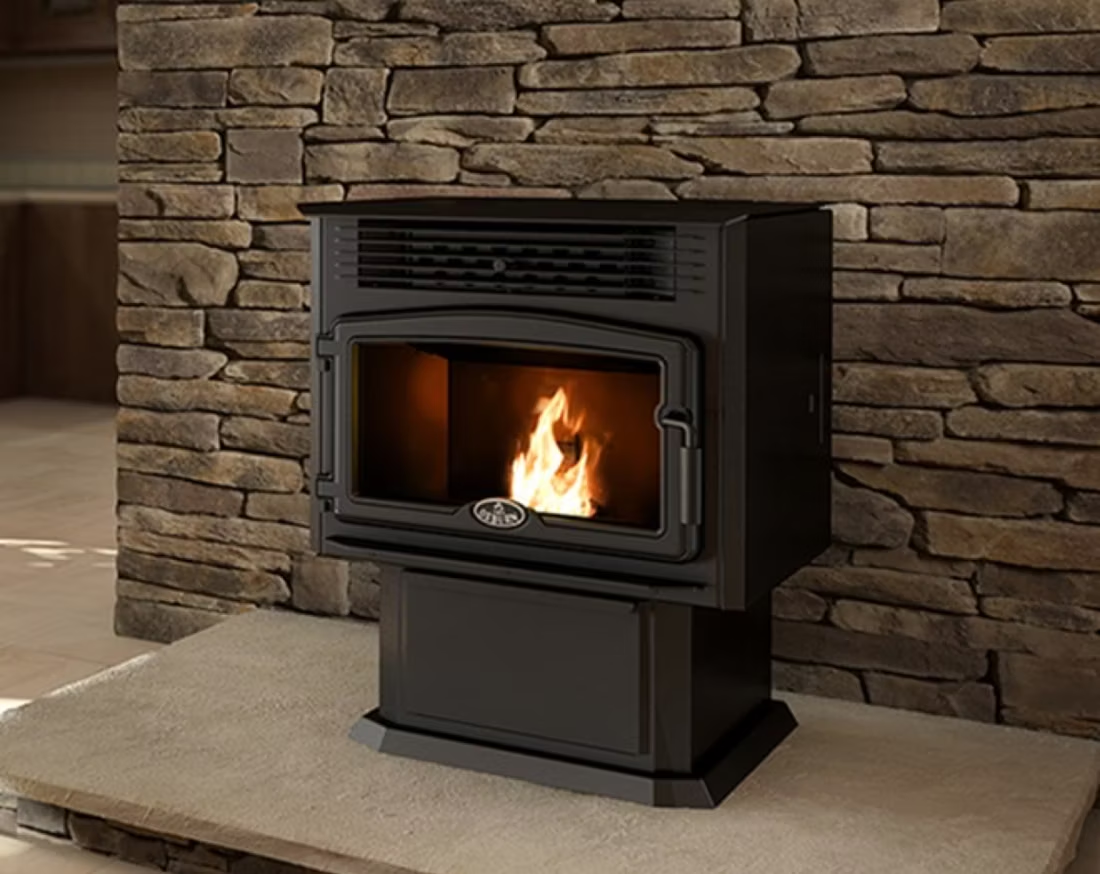
That combination of a long heating season and total dependence on shipped supplies is exactly why pellet stoves haven't caught on locally. Brands like Superior Pellet Fuels and Lignetics are the regional standards elsewhere in Alaska, but on Kodiak Island every ton has to travel by barge alongside everything else the island imports, which adds real cost and real risk if a shipment is delayed by weather. Most households instead burn locally available birch, spruce, or cottonwood, or lean on Kodiak Electric Association's grid—one of the cleanest in the country, powered mostly by the Terror Lake hydro project and the Pillar Mountain wind farm—for baseline electric heat. Pellet appliances aren't off the table entirely, but they're a genuine niche choice here, not a mainstream one.
Three steps. No salesperson until you're ready.
Tell us about your project
Your zip code, your situation, and the fuel you're leaning toward—or let the answers point you to one.
See what's actually available
The brands dealers within 100 miles genuinely carry—real options, never a catalog mirage.
Get your dealer & Project Guide
A trusted local dealer, plus the free Project Guide & Parts List that names every component of the job.
Frequently Asked Questions
Does anyone actually use a pellet stove in Kodiak Station?
A small number do, mostly in vacation cabins, workshops, or homes where the owner moved up from the Lower 48 and already owned pellet equipment. It's not a common setup on Kodiak Island the way it is in the Pacific Northwest, largely because the fuel itself isn't produced anywhere nearby. If you already have a strong reason to want one—familiarity, a specific stove you love, a well-insulated small space—it can work, but you should go in knowing you're the exception rather than following a well-worn local path.
Why isn't pellet heat more common in Kodiak compared to mainland Alaska or the Lower 48?
It comes down to freight. Kodiak Island has no road link to the mainland, so pellet bags from suppliers like Superior Pellet Fuels or Lignetics have to be barged in along with everything else the island consumes. That adds meaningful cost on top of the base price and, more importantly, adds risk: if winter weather delays a barge run, you could be waiting on fuel during the coldest stretch of the year. Firewood, by contrast, is standing right on the island in the form of birch, spruce, and cottonwood, and electricity comes from a local hydro-and-wind grid that doesn't depend on a shipping schedule.
If I still want a pellet stove, what will fuel actually cost me here?
Mainland Pacific Northwest pellet pricing typically runs $300 to $425 per ton, and that's before Kodiak's added barge freight is factored in. Expect to pay meaningfully more once shipping is included, and expect to order well ahead of the season rather than counting on picking up bags as needed—local retailers who carry pellets in any quantity tend to bring in a batch once or twice a year, not a rolling supply. A local dealer can tell you what's realistically available and when the next shipment is expected.
What do most homes in Kodiak Station heat with instead of pellets?
The two most common choices are wood and electric. Birch, spruce, and cottonwood are all harvested locally, either self-cut or bought from island sellers, and wood stoves double as reliable backup heat when a storm knocks out power. On the electric side, Kodiak Electric Association's grid runs on hydro and wind power at a residential rate around $0.19/kWh—low enough that electric heat, including heat pumps, is a practical primary or supplemental option for many households in town. Oil-fired heating is also common in older Kodiak homes.
Is electric heat a good option given Kodiak's power source?
For homes served by Kodiak Electric Association, yes—the utility runs close to 99 percent renewable power from the Terror Lake hydro plant and the Pillar Mountain wind farm, and the residential rate of roughly $0.1883/kWh is genuinely favorable for an island grid. That makes electric heat, including electric fireplaces and heat pumps, a clean and reasonably affordable choice inside town limits. It's a different story in the more remote parts of Kodiak Island served by Alaska Village Electric Cooperative, where diesel-dependent microgrids push residential rates as high as $0.70/kWh—in those areas, wood is usually the more sensible primary heat source.
Can a local dealer even install a pellet stove in Kodiak Station?
Yes—the appliance itself ships as freight just like any other hearth product, and a trusted local dealer can order it, install it, and vent it correctly. The harder question isn't installation, it's the ongoing fuel supply. Anyone going this route should plan around barge schedules for pellet deliveries and typically keep a backup heat source, such as a wood stove or oil heater, for stretches when a shipment is delayed.
What permits or codes apply to installing a heating appliance in Kodiak Station?
New hearth appliance installations generally go through the Kodiak Island Borough building department for permitting and clearance inspection, regardless of fuel type. Kodiak has no air quality non-attainment designation and no winter burn-curtailment program, so there aren't the wood-smoke restrictions you'd find in a place like Klamath Falls or the Willamette Valley—wood stoves are permitted here without the added air-quality hoops. A local installer can confirm current permit requirements and clearance rules for whatever appliance you choose.
Pellet vs. wood stove—which makes more sense on Kodiak Island?
Wood is the clear local favorite. Birch, spruce, and cottonwood are available right on the island, a wood stove needs no electricity to run, and it keeps working through both power outages and barge delays. A pellet stove, by comparison, is vulnerable on two fronts at once: it needs electricity to run its auger and blower, and it needs a fuel supply that has to arrive by boat. For a household without a strong existing reason to prefer pellet, wood is the more resilient choice for Kodiak's long, damp heating season.
Can a pellet stove serve as backup heat during a power outage in Kodiak?
Not on its own. Pellet stoves rely on electric augers and blowers to feed fuel and circulate air, so a power outage shuts them down unless you have a generator or substantial battery backup running the unit. Combine that with the possibility of a barge delay affecting your pellet supply, and you've got two points of failure stacked on top of each other during the exact kind of winter storm when you need heat most. A wood stove, or a dual-fuel oil stove with a battery-free ignition, is the more dependable backup option for Kodiak Station homes.
Why is my open fireplace making my house colder?
Open fireplaces suck—literally. As the fire burns, it consumes air your furnace already paid to heat and pulls it out through the chimney, so the house is actually colder after the fire goes out than before you lit it. An insert fixes this: it seals the chimney, puts fixed glass across the front, and turns that hole in your house into a real heat source.
Why is a fireplace insert so efficient?
An insert does two things: it seals the chimney completely, so you stop losing air you already paid to heat, and it radiates warmth into the room through the firebox and glass. Most add a heat-exchange fan that pulls cool room air underneath, wraps it around the hot firebox, and pushes it back out warm. Your home is more efficient before you've even lit the first fire.
How much should I budget for a fireplace?
For an average home—covering the fireplace, the vent pipe, and basic installation—a budget between $3,900 and $5,500 gives you a lot of options across wood, gas, and pellet. By the time you add finish work, gas line, and electrical, the average complete installation lands between $5,000 and $12,000 all-in. In a remodel or new build, a good rule is to put about 2.5% of the total project cost toward the fireplace.
Can I install a fireplace myself?
If you're putting a fire in your house on purpose, it's best to work with an expert. Unless you're genuinely experienced in framing, gas line, vent pipe, and the national code on clearances to combustibles, have a professional do it—and ideally the same company that sells you the fireplace, so warranty, service, and liability all live under one roof.
Nearby Dealers
Hearth shops serving Kodiak Station and the surrounding area. Every listing shows whether it is a WhyFire partner, a dealer we have verified as authorized for the brands we recommend, or a local business carrying hearth products. No manufacturer pays for placement. How we verify dealers →
Pellet Brands Stocked Around Kodiak Station
Manufacturers will point you to the nearest stocking dealer.
Get a straight answer on pellet stoves in Kodiak Station.
Tell us about your home, and if a pellet stove genuinely fits, we'll match you with a trusted local dealer and send a free Project Guide & Parts List—including the vent kit—built around Kodiak's freight realities. If wood or electric heat is the smarter call for your situation, we'll tell you that instead.
Find Your Fireplace →