
Electric Heat That Fits Kodiak's Island Grid.
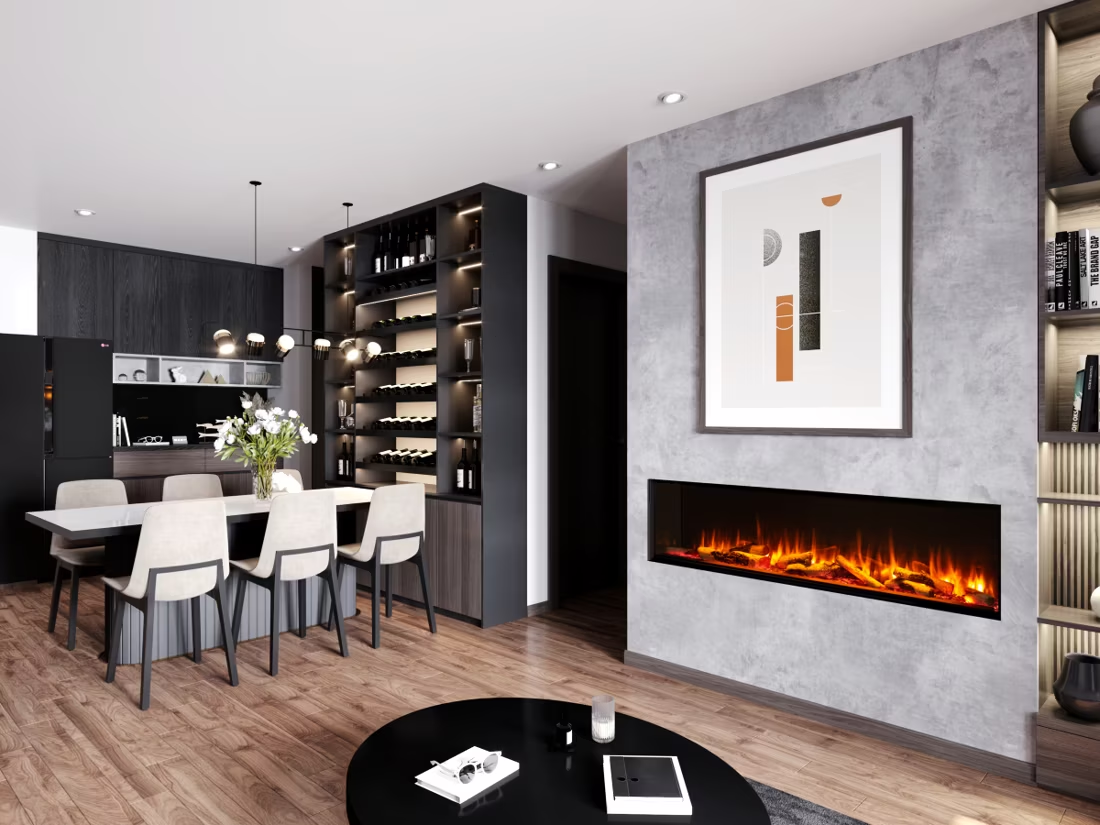
In a Coast Guard town running on hydro and wind power, an electric fireplace pairs zone heat and ambiance with some of the most stable electric rates in coastal Alaska. Find the right unit and connect with a trusted local dealer.
Every Project Starts From One of These Five Situations
Cheap, Clean Hydropower Changes the Math.
Kodiak Station sits on the road system side of Kodiak Island at 465 feet, home to the Coast Guard's largest base and a small year-round population of about 2,100. The climate is technically Zone 7 with 8,316 heating degree days a year—on par with Fargo, ND, or International Falls, MN, on paper—but the maritime setting keeps winter lows milder than the interior, averaging around 26°F. That combination of long heating seasons and moderate temperatures makes steady, low-drama heat sources more practical here than extreme-output ones.
Kodiak Electric Association serves the road-system communities, including Kodiak Station, with power drawn almost entirely from the Terror Lake hydroelectric project and the Pillar Mountain wind turbines—residential rates run about $0.1883/kWh, remarkably low for Alaska. Contrast that with Alaska Village Electric Cooperative, which serves more remote parts of Kodiak Island Borough on diesel generation at roughly $0.6995/kWh—nearly four times as much. For homes on the KEA grid, that pricing gap is exactly why electric fireplaces and heaters make more financial sense here than in most of rural Alaska: you get clean, budget-predictable heat without a fuel tank, a woodpile, or a barge delivery schedule.
Three steps. No salesperson until you're ready.
Tell us about your project
Your zip code, your situation, and the fuel you're leaning toward—or let the answers point you to one.
See what's actually available
The brands dealers within 100 miles genuinely carry—real options, never a catalog mirage.
Get your dealer & Project Guide
A trusted local dealer, plus the free Project Guide & Parts List that names every component of the job.
Frequently Asked Questions
How much does an electric fireplace installation cost in Kodiak Station?
Plug-in electric inserts and freestanding units are the cheapest path—often $500 to $1,200 including a local dealer's setup, since they run on a standard 120V outlet and need no venting or gas line. Built-in linear electric fireplaces that require a dedicated 240V circuit and a licensed electrician typically run $1,500 to $2,500 once wiring and trim-out are included. Because most hardware and finish materials arrive by barge, expect freight to add a bit more to material costs than you'd see in Anchorage or the Lower 48—your local dealer can tell you what's currently in stock versus what needs to be ordered in.
Why don't more Kodiak Station homes burn wood, even with birch and spruce nearby?
Birch, spruce, and cottonwood do grow on Kodiak Island, but wood heat never became the local default the way it has in interior Alaska towns. A large share of the island is Kodiak National Wildlife Refuge or Coast Guard property, which limits where residents can legally cut firewood, and most housing on base doesn't allow solid-fuel appliances at all. Between restricted land access and housing rules, wood stoves are genuinely uncommon here—electric and gas-fired appliances fill the role that wood plays elsewhere in the state.
Is electric heat reliable given Kodiak's remote location?
Kodiak Electric Association runs a well-maintained hydro-and-wind grid that's considered one of the most stable in rural Alaska, and outages are relatively infrequent compared to diesel-dependent grids elsewhere in the state. That said, an electric fireplace has no flame and no battery backup by default—if the power goes out, it goes out. If backup heat during outages matters to your household, ask your local dealer about units with battery-backed remotes for restart convenience, though the heating element itself will still need grid power to run.
Do I need a permit to install an electric fireplace in Kodiak Station?
A plug-in electric fireplace that uses an existing outlet typically requires no permit at all—it's treated like any other appliance. A built-in unit that needs a new dedicated circuit does require an electrical permit through the Kodiak Island Borough, and the wiring itself needs to be pulled by a licensed electrician. Most local dealers coordinate this as part of the installation, so homeowners usually aren't dealing with the borough directly.
What's the best electric fireplace for a Coast Guard housing unit or small apartment?
For base housing and smaller Kodiak Station homes, low-profile wall-mount units from brands like Touchstone, Dimplex, or Napoleon are the most practical choice—they mount flush to a wall, run on a standard outlet, and don't require any structural changes, which matters if you're in rental or government housing with restrictions on modifications. For a more built-in look, a linear electric insert set into an existing mantel surround gives a fireplace-like focal point without any venting requirements.
Electric vs. propane fireplace—which makes more sense in Kodiak Station?
There's no natural gas utility serving Kodiak Island, so a gas fireplace here means propane, delivered and stored in a tank that's ultimately filled from barge-supplied fuel. Propane pricing on the island can swing with shipping schedules and season. Electric heat, by contrast, runs on Kodiak Electric Association's hydro-and-wind grid at a flat, predictable residential rate—for homes already on the KEA system, that stability is a real advantage over a fuel that has to arrive by boat.
How much does it cost to run an electric fireplace in Kodiak Station?
Most electric fireplaces draw around 1,500 watts on the heat setting. At KEA's residential rate of about $0.1883/kWh, that works out to roughly 28 cents an hour of heater use—a few dollars for an evening of supplemental warmth in the living room. That's a fraction of what the same unit would cost to run on Alaska Village Electric Cooperative's diesel-generated rate of nearly 70 cents/kWh in more remote parts of the borough, which is part of why electric heat is a much easier call for homes on the Kodiak road system.
What's the difference between an electric fireplace, insert, and stove?
An electric fireplace is typically a built-in unit set into a wall or mantel surround, meant to be the visual focal point of a room. An electric insert is sized to slide into an existing masonry or wood-burning firebox, letting you repurpose an old fireplace opening without any venting work. An electric stove is a freestanding cabinet-style unit that can sit anywhere near an outlet, which makes it a flexible option for smaller Kodiak Station homes or rental units where permanent installation isn't practical.
Why isn't pellet heat more common in Kodiak Station?
Pellet stoves need a steady, dry supply of bagged fuel, and getting pellets from suppliers like Superior Pellet Fuels or Lignetics onto the island means barge freight on top of already-tight local demand—supply can be inconsistent, and Kodiak's damp maritime air makes storing bagged pellets without moisture problems harder than in drier interior climates. Between the logistics and the storage challenges, pellet appliances haven't caught on here the way they have in parts of the Lower 48 with local pellet mills nearby.
Can I put a TV above my fireplace?
Yes—with an asterisk. Fireplaces are hot and TVs don't like heat. Either put a mantel between them to deflect rising warmth, or choose a fireplace with heat-management technology that creates a cool zone on the wall above—the wall stays around 125 degrees, barely warm, while the room still gets full heat. If you like clean lines and don't want a mantel, heat management is the answer.
Does an electric fireplace need a vent or chimney?
No—that's its superpower. An electric fireplace needs a wall and an outlet, period. No vent pipe, no gas line, no clearances to design around, which is why it works in bedrooms, offices, apartments, and walls where venting a gas or wood unit would be impractical or impossible. Installation is typically the simplest and least expensive of any fireplace type.
Can I install a fireplace myself?
If you're putting a fire in your house on purpose, it's best to work with an expert. Unless you're genuinely experienced in framing, gas line, vent pipe, and the national code on clearances to combustibles, have a professional do it—and ideally the same company that sells you the fireplace, so warranty, service, and liability all live under one roof.
Does a fireplace add value to my home?
On average, a fireplace adds back to the home about the same amount you spent installing it. Add the monthly savings from heating the rooms you actually use instead of the whole house—often hundreds of dollars a year—and the value case is strong before you even count what a fire does for how your family uses the room.
Nearby Dealers
Hearth shops serving Kodiak Station and the surrounding area. Every listing shows whether it is a WhyFire partner, a dealer we have verified as authorized for the brands we recommend, or a local business carrying hearth products. No manufacturer pays for placement. How we verify dealers →
Electric Service in Kodiak Station
An electric fireplace's heater draws about 1,500 watts—pennies per hour at local rates.
Kodiak Electric Assn Inc
Alaska Village Elec Coop, Inc
Find your electric fireplace in Kodiak Station.
Tell us a bit about your home and we'll put together a free Project Guide & Parts List for your electric fireplace project—matched to a trusted local Kodiak Station dealer who knows what's actually available and installable on the island.
Find Your Fireplace →