
Reliable gas heat for Kodiak Island's long, wet winters.
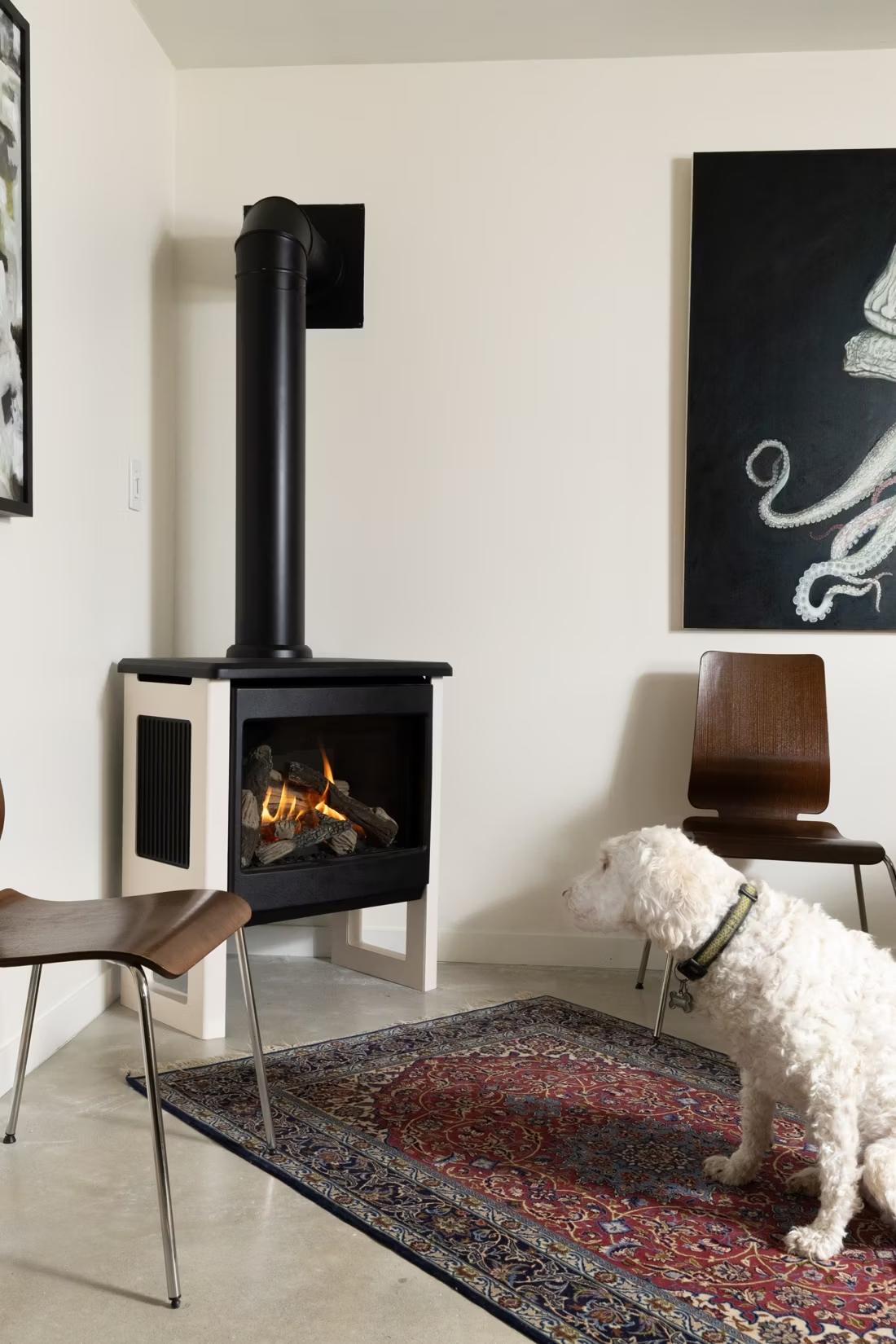
With no natural gas pipeline reaching the island, propane is the standard gas fuel here—and the right unit gives you instant, dependable heat when Gulf of Alaska storms knock out power. Find the right fireplace and connect with a trusted local dealer.
Every Project Starts From One of These Five Situations
Propane heat for an island with no gas pipeline.
Kodiak Island sits out in the Gulf of Alaska, accessible only by ferry and air, home to one of the largest fishing fleets in the country and Coast Guard Base Kodiak. The climate here is subarctic maritime—classified Zone 7—with roughly 8,430 heating degree days a year but a milder average winter low near 27°F than the HDD number suggests. That's the nature of island weather: fewer deep-freeze nights than interior Alaska, but persistent, damp cold and heavy wind for months on end, driven by the same Pacific systems that bring nearly 80 inches of rain and snow annually.
There's no natural gas utility or pipeline serving Kodiak Island, so propane fills the role gas plays elsewhere—delivered by barge and stored in tanks at the home. Kodiak Electric Association runs one of the cleanest grids in the country, powered mostly by hydro and wind, which makes electric heat viable too. But a propane fireplace with a battery-backed ignition system still matters here: when a winter storm takes down power lines on an island with no backup interconnection to the mainland grid, a gas fireplace with standing pilot or IPI ignition keeps working when the furnace and baseboard heat don't.
Three steps. No salesperson until you're ready.
Tell us about your project
Your zip code, your situation, and the fuel you're leaning toward—or let the answers point you to one.
See what's actually available
The brands dealers within 100 miles genuinely carry—real options, never a catalog mirage.
Get your dealer & Project Guide
A trusted local dealer, plus the free Project Guide & Parts List that names every component of the job.
Frequently Asked Questions
How much does a gas fireplace installation cost on Kodiak Island?
Expect a wider range than you'd see in the Lower 48—typically $6,000 to $14,000—because most materials, propane tanks, and venting components have to be shipped by barge or air freight to the island. A direct-vent propane insert into an existing masonry fireplace sits on the lower end if a propane line or tank is already in place. New propane tank installation, longer gas line runs, or venting through thick exterior walls built for Kodiak's wind and moisture push costs toward the higher end. Local installers who regularly order parts for island jobs can often bundle freight more efficiently than a one-off order.
Is there natural gas service on Kodiak Island, or is it all propane?
It's propane. Kodiak Island has no natural gas utility or pipeline—that's true of nearly all of coastal Alaska outside the Anchorage-to-Fairbanks Railbelt. Homes here run propane fireplaces, stoves, and appliances off tanks filled by barge-delivered propane suppliers serving the City of Kodiak and outlying communities like Chiniak, Bells Flats, and Womens Bay. If a listing or manufacturer spec calls out 'natural gas,' your local dealer will need to convert or select a propane-configured unit instead.
Do I need a permit to install a gas fireplace on Kodiak Island?
Yes. Inside city limits, permits go through the City of Kodiak Building Department; outside the city—including most of the island's outlying road system and remote villages—the Kodiak Island Borough handles building permits. Propane line work also needs to be done by a licensed gas-fitter, and most established hearth dealers on the island coordinate the gas hookup, venting, and inspection together so you're not managing separate trades yourself.
Will my gas fireplace still work if the power goes out?
Most modern propane fireplaces are built for exactly this. Units with IPI (intermittent pilot ignition) run on AA battery backup that kicks in the moment power drops, so the fireplace lights on demand just like normal. Some Valor models go a step further and generate their own electricity from the pilot's thermocouple, needing no batteries at all. Given how exposed Kodiak Island is to Gulf of Alaska storms—and that there's no backup tie-line to a mainland grid if Kodiak Electric Association's system takes damage—a fireplace that doesn't depend on grid power is a real advantage, not a luxury.
What's the difference between a gas fireplace, gas insert, and gas stove?
A gas fireplace is a fully built-in unit framed into a wall, typical for new construction. A gas insert slides into an existing masonry fireplace opening and uses the existing chimney as its vent path—a common upgrade for older Kodiak homes with an unused wood fireplace. A gas stove is a freestanding cabinet-style unit that sits on the floor with its own vent kit, useful where there's no existing fireplace opening at all. For most island homes with a fireplace already in place, an insert is the simplest and most cost-effective route.
Should I get a vented or vent-free gas fireplace on Kodiak Island?
Go vented. Vent-free (ventless) units burn propane directly into the room, releasing water vapor along with the heat—and Kodiak's maritime climate already runs damp for most of the year, with rain and condensation an ongoing issue in coastal homes. Adding an unvented combustion appliance's moisture load on top of that is asking for window condensation and mold problems. Direct-vent units exhaust combustion byproducts outside through a sealed pipe, which is the standard recommendation local dealers give for anywhere on the island.
How often should a propane fireplace be serviced on Kodiak Island?
Plan on an annual inspection, ideally before the fall storm season sets in. A technician checks the burner, pilot assembly, gas connections, and venting, and cleans the glass and interior—all more important here given the salt air and near-constant humidity that can accelerate corrosion on fittings and venting components faster than in a drier climate.
Can I get propane delivered to outlying Kodiak Island communities?
Yes, though logistics and cost scale with remoteness. Propane suppliers regularly serve the City of Kodiak and nearby road-connected areas, while villages only reachable by boat or small plane—Ouzinkie, Port Lions, Larsen Bay, Old Harbor—typically receive propane via barge on a scheduled basis, with tank exchange or bulk fill arranged well ahead of winter. If you're in one of these communities, ask your dealer about lead time on both the initial tank setup and ongoing refills before committing to an install timeline.
Gas vs. wood—which makes more sense for a Kodiak Island home?
Wood is available locally—birch, spruce, and cottonwood are the common species on the island—and offers heat that doesn't rely on propane deliveries or grid power at all, which appeals to homeowners who want maximum self-sufficiency. But usable timber on Kodiak's muskeg-heavy terrain is less abundant than in interior Alaska, so most wood-burning households supplement with purchased or barged-in cordwood. Propane fireplaces, by contrast, need no fuel gathering, produce consistent heat at the flip of a switch, and with battery-backed ignition still function through a power outage. Many island homes end up running both: a propane unit for daily convenience and backup, wood as a secondary option when it's available.
What's the difference between an insert and a zero-clearance fireplace?
An insert is a fireplace that slides into a pre-existing wood-burning fireplace—if you don't have one, there's nothing to insert it into. A zero-clearance fireplace is built into a framed wall, which makes it the answer for remodels and new construction. Simple test: existing masonry fireplace means insert; blank or framed wall means zero-clearance.
Can I put a TV above my fireplace?
Yes—with an asterisk. Fireplaces are hot and TVs don't like heat. Either put a mantel between them to deflect rising warmth, or choose a fireplace with heat-management technology that creates a cool zone on the wall above—the wall stays around 125 degrees, barely warm, while the room still gets full heat. If you like clean lines and don't want a mantel, heat management is the answer.
Can I install a fireplace myself?
If you're putting a fire in your house on purpose, it's best to work with an expert. Unless you're genuinely experienced in framing, gas line, vent pipe, and the national code on clearances to combustibles, have a professional do it—and ideally the same company that sells you the fireplace, so warranty, service, and liability all live under one roof.
Can a fireplace actually lower my heating bill?
Yes—by creating a comfort zone. A furnace heats every square foot of the house just to warm the one room you're in; a gas fireplace on low burns roughly a sixth of the gas a typical furnace does. Set the furnace around 55–60 degrees as a baseline, then heat the rooms your family actually uses. Families who heat this way commonly save $20–$60 a month.
Stove and Fireplace Dealers in Kodiak Island County
Listings include WhyFire partner dealers, dealers we have verified as authorized for the brands we recommend, and established local businesses that carry hearth products. Every listing shows which one it is. The ones marked Preferred run on WhyFire's software, so they can show you real pricing and book your appointment right here. No manufacturer pays for placement. How we verify dealers →
Find your gas fireplace on Kodiak Island.
Tell us about your home and we'll match you with a trusted local dealer and send over your free Project Guide & Parts List—the exact parts, including the vent kit, for a propane fireplace project built for Kodiak Island's weather.
Find Your Fireplace →