
Automated heat built for interior Alaska winters.
Set-and-forget warmth for the Copper Basin—from Glennallen to Chitina and the homesteads in between. We'll match you with a local dealer who knows how pellet heat actually holds up out here.
Every Project Starts From One of These Five Situations
Set-it heat for a subarctic that doesn't quit.
Copper River Census Area's roughly 2,600 residents are spread across a vast stretch of interior Alaska along the Richardson and Glenn Highways—Glennallen, Copper Center, Chitina, Kenny Lake, Gakona, and Tazlina among them. This is subarctic country: birch, spruce, and cottonwood forest surrounding every community, winters that settle in for months at a time, and cold snaps that can run colder, and longer, than a rough January in Fargo, ND. It's a place where heating isn't optional and where the fuel you choose has to work when the power lines are down and the highway is drifted shut.
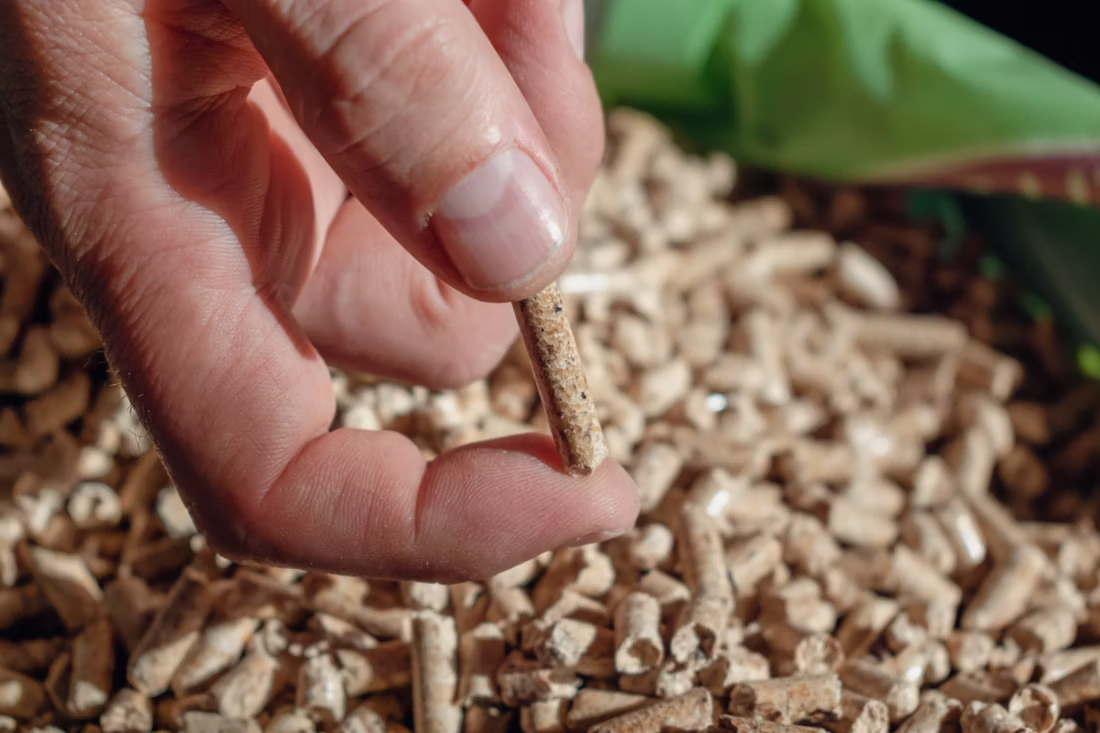
Pellet stoves have earned a real place in that mix because they trade the cutting-and-splitting labor of cordwood for a hopper and a thermostat, while still burning a fuel that's sourced close to home—Superior Pellet Fuels presses its pellets from Alaska timber, and Lignetics bags are stocked at dealers serving the Glennallen corridor, which helps blunt some of the freight costs that hit almost everything shipped into the Copper Basin. The one honest tradeoff: a pellet stove needs continuous electricity to run its auger and blower. Copper Valley Electric Association keeps the lights on for most of the region, but ice storms and line damage do cause outages, which is why a lot of Copper Basin households run a pellet stove for daily convenience and keep a wood stove on standby for the nights the grid goes down.
Three steps. No salesperson until you're ready.
Tell us about your project
Your zip code, your situation, and the fuel you're leaning toward—or let the answers point you to one.
See what's actually available
The brands dealers within 100 miles genuinely carry—real options, never a catalog mirage.
Get your dealer & Project Guide
A trusted local dealer, plus the free Project Guide & Parts List that names every component of the job.
Frequently Asked Questions
How much does a pellet stove installation cost in Copper River County?
Freestanding pellet stove installs in the Copper Basin typically run in the $3,500 to $7,500 range, with pellet inserts into an existing masonry fireplace landing a bit higher once venting and a liner are factored in. The biggest swing factor out here isn't the stove itself—it's freight and travel. Dealers serving Glennallen, Copper Center, and Chitina often build in a mileage charge for installs further down the Edgerton Cutoff or out toward McCarthy, so get a firm quote that accounts for your specific location before you commit.
Where do Copper Basin pellet fuel supplies actually come from?
Most local dealers stock Superior Pellet Fuels, which mills its pellets from Alaska timber and ships them down the road system rather than in from the Lower 48—that in-state sourcing helps keep pricing more stable than a lot of other heating fuels here. Lignetics is the other common regional brand you'll see on dealer shelves. Because trucking pellets up the Richardson or Glenn Highway isn't cheap or guaranteed in every storm, most Copper Basin households buy their season's supply in bulk in late summer or early fall rather than restocking bag by bag through winter.
What happens to my pellet stove during a power outage?
It stops running. Pellet stoves depend on electricity to feed the auger and run the combustion blower, so when Copper Valley Electric Association service drops during an ice storm or line fault, the stove goes cold along with everything else. Some homeowners run a small generator or battery backup sized specifically to keep a pellet stove online through a short outage, but the more common approach in the Copper Basin is pairing a pellet stove for everyday convenience with a wood stove—burning local birch or spruce—as the fallback heat source when the grid is down for an extended stretch.
What size pellet stove do I need for a Copper Basin cabin versus a year-round home?
A well-insulated seasonal cabin in the 600–1,000 sq ft range can often get by on a smaller pellet stove rated for that footprint, since it's not fighting sustained sub-zero stretches around the clock. A year-round home in Glennallen, Copper Center, or Gakona that needs to hold steady heat through weeks of hard cold generally needs to size up from what a similar-square-footage home would need in a milder climate—undersizing is the most common mistake homeowners make when they buy based on square footage alone rather than accounting for how long and how deep the cold actually runs here. A local dealer sizing your specific home and insulation level will get this right.
Do I need a permit to install a pellet stove in Copper River County?
Copper River Census Area is part of Alaska's Unorganized Borough, which means there's no county-wide building code enforcement the way there would be in a more populated borough—permitting and inspection requirements vary by individual community and are often minimal or nonexistent outside city limits. That said, your insurance carrier will almost always want documentation that the installation meets NFPA 211 clearance and venting standards, so it's worth having a certified installer handle the work and provide that paperwork even where no formal permit is required.
What's the best pellet stove for Copper Basin winters?
Look for a model with a larger hopper capacity—60+ pounds—so it can run longer between refills during the long, dark stretches of a Copper Basin winter, plus a stove with a rated heating output built for sustained sub-zero operation rather than a light-duty unit meant for occasional supplemental use. Brands that build for harsh-climate performance and have parts support reaching interior Alaska dealers are worth prioritizing over a big-box model that looks similar on paper but wasn't engineered for weeks of continuous hard-cold burning.
How often does a pellet stove need cleaning and service in this climate?
Ash pan emptying is typically a weekly task during heavy winter use, and the glass and burn pot benefit from a quick cleaning every few days to keep combustion efficient. Plan on a full professional service—checking the auger, blower motor, and exhaust venting—once a year, ideally before the season starts, since a mid-winter service call in the Copper Basin can mean a long wait for a technician to make the drive out from Glennallen or Valdez. Keeping up with the simple weekly maintenance yourself goes a long way toward avoiding that mid-season breakdown.
Pellet stove or wood stove—which makes more sense for a Copper Basin property?
Wood is free or nearly free if you're cutting your own birch, spruce, or cottonwood, works with zero electricity, and is the fallback most locals already rely on when the power goes out. Pellet stoves trade that self-sufficiency for real convenience—no splitting, no hauling, consistent thermostat-controlled heat—but only as long as the power stays on. Plenty of Copper Basin homes run both: pellet for the day-to-day ease of it, wood stacked and ready for the outages that come with an interior Alaska winter.
Are there rebates or assistance programs for pellet stove installs in rural Alaska?
Alaska Housing Finance Corporation's Weatherization Assistance Program has, in past cycles, covered efficient heating equipment including pellet stoves for qualifying low-income households in rural areas like the Copper Basin—availability and terms shift by funding cycle, so check current eligibility directly with AHFC before you budget around it. Outside of that program, most pellet stove purchases here are paid out of pocket or financed through the dealer, so it's worth asking your local installer directly what, if anything, currently applies to your situation.
Why is my open fireplace making my house colder?
Open fireplaces suck—literally. As the fire burns, it consumes air your furnace already paid to heat and pulls it out through the chimney, so the house is actually colder after the fire goes out than before you lit it. An insert fixes this: it seals the chimney, puts fixed glass across the front, and turns that hole in your house into a real heat source.
What's the difference between an insert and a zero-clearance fireplace?
An insert is a fireplace that slides into a pre-existing wood-burning fireplace—if you don't have one, there's nothing to insert it into. A zero-clearance fireplace is built into a framed wall, which makes it the answer for remodels and new construction. Simple test: existing masonry fireplace means insert; blank or framed wall means zero-clearance.
How much should I budget for a fireplace?
For an average home—covering the fireplace, the vent pipe, and basic installation—a budget between $3,900 and $5,500 gives you a lot of options across wood, gas, and pellet. By the time you add finish work, gas line, and electrical, the average complete installation lands between $5,000 and $12,000 all-in. In a remodel or new build, a good rule is to put about 2.5% of the total project cost toward the fireplace.
Does a fireplace add value to my home?
On average, a fireplace adds back to the home about the same amount you spent installing it. Add the monthly savings from heating the rooms you actually use instead of the whole house—often hundreds of dollars a year—and the value case is strong before you even count what a fire does for how your family uses the room.
Pellet Brands Stocked Around Copper River County
Manufacturers will point you to the nearest stocking dealer.
Find your pellet stove in Copper River County.
Tell us about your home or cabin and we'll match you with a trusted local dealer serving the Copper Basin, plus a free Project Guide & Parts List—the exact stove, vent kit, and install plan for your property.
Find Your Fireplace →