
Find Your Fireplace for the Copper Basin's Coldest Nights.
Wood, propane, pellet, and electric fireplace resources for Glennallen, Copper Center, Chitina, Gakona, Kenny Lake, and the smaller communities strung along the Richardson and Edgerton Highways. Get matched with a trusted local dealer and a free project plan built for your home.
Every Project Starts From One of These Five Situations
Subarctic heating across the Copper River Basin.
Copper River Census Area covers roughly 24,000 square miles of interior and south-central Alaska, bounded by the Wrangell-St. Elias high country to the east and the Chugach and Talkeetna Mountains elsewhere—home to just under 2,600 year-round residents spread thin across Glennallen, Copper Center, Chitina, Gakona, Gulkana, Kenny Lake, Slana, and Mentasta Lake. Ice fog settles into the basin on the coldest nights, and stretches at -30°F to -40°F are routine most winters—colder, more often, than International Falls, Minnesota ever sees. Birch, spruce, and cottonwood cut under BLM Glennallen Field Office and Alaska Division of Forestry permits have heated homes here for generations, and for a lot of Copper Basin households, a wood stove isn't a backup plan—it's the plan.
This hub rolls up hearth retailers, service technicians, and fuel suppliers covering the whole census area—most based out of Glennallen, the closest thing the basin has to a hub, with technicians running the Richardson and Edgerton Highways to reach outlying homes. There's no natural gas pipeline into the Copper Basin, so "gas" here means propane, delivered and stored on-site. Electric service comes from Copper Valley Electric Association's hydro system out of Solomon Gulch and Allison Creek—solid power, but not a substitute for real heat on a -40°F night. Pick your fuel below for local dealers, install costs, and the specifics for your project.
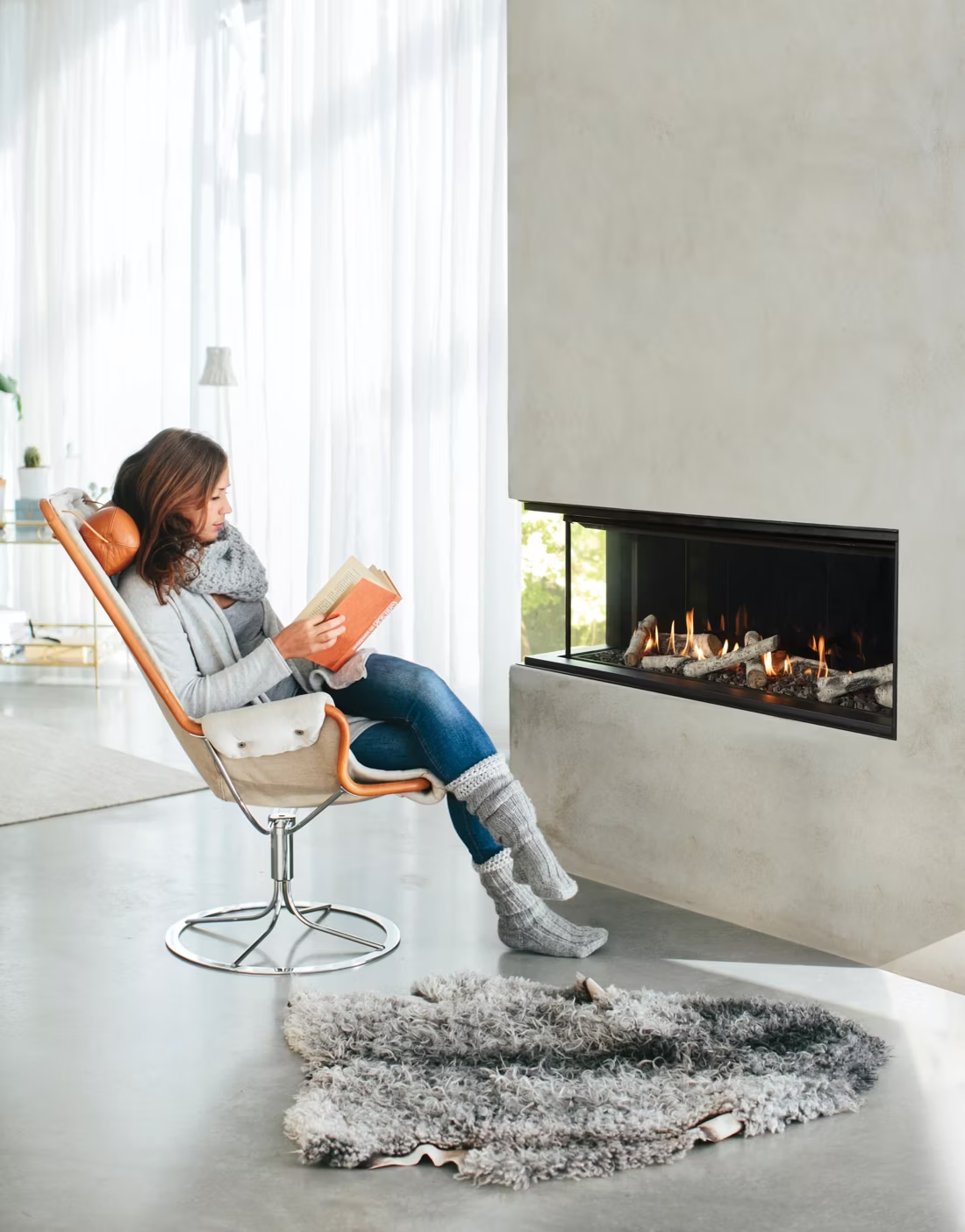
Four fuels. One honest answer for Copper River County.
Wood
See what's available near Copper River County.
Find your wood stove →Gas
See what's available near Copper River County.
Find your gas fireplace →Pellet
See what's available near Copper River County.
Find your pellet stove →Electric
See what's available near Copper River County.
Find your electric fireplace →Three steps. No salesperson until you're ready.
Tell us about your project
Your zip code, your situation, and the fuel you're leaning toward—or let the answers point you to one.
See what's actually available
The brands dealers within 100 miles genuinely carry—real options, never a catalog mirage.
Get your dealer & Project Guide
A trusted local dealer, plus the free Project Guide & Parts List that names every component of the job.
Frequently Asked Questions
Which fuel works best in Copper River Census Area?
Wood is the working backbone of heat here. Birch, spruce, and cottonwood are cut locally under BLM Glennallen Field Office and Alaska Division of Forestry permits, and catalytic wood stoves are what keep a lot of Copper Basin homes livable through -40°F stretches without burning through a cord a week. Propane is the standard "gas" fuel—there's no pipeline into the basin—and it's popular for the instant, no-hassle heat it offers when you're away from home or need backup during a stove-flue issue. Pellet stoves work well as a secondary heater, though supply has to be trucked in (Superior Pellet Fuels, Lignetics), so stocking up before winter matters more here than in a town with a local pellet mill. Electric, powered by Copper Valley Electric Association's hydro system, is reliable but supplemental—nobody's running electric as sole heat through a Copper Basin winter. Most homes here run wood or propane as primary heat with a second fuel as backup, which matters more in a place where losing your only heat source isn't an inconvenience, it's a real problem.
Do I need a permit to install a fireplace or stove in Copper River Census Area?
Usually not, at least not a local building permit—Copper River Census Area is part of Alaska's unorganized borough, meaning there's no local government issuing building permits the way Glennallen's neighbors in organized boroughs like Fairbanks would require. That said, propane installations still need to follow the National Fuel Gas Code and should be done by a licensed gas fitter, and any new electrical circuit for a built-in electric fireplace should meet Alaska State Electrical Board licensing standards. It's also worth checking with your homeowners insurance carrier directly—many require proof of certified installation for wood stoves and propane appliances regardless of whether a local permit exists.
Are there air quality restrictions on wood burning in Copper River Census Area?
No—unlike Fairbanks or the Matanuska-Susitna Valley, the Copper Basin has no EPA nonattainment designation and no burn curtailment program. With fewer than 2,600 residents spread across roughly 24,000 square miles, wood smoke rarely concentrates enough to be a community health issue. That said, an EPA 2020 NSPS-certified catalytic stove still makes practical sense here—not for compliance, but because it burns birch and spruce more efficiently, which means fewer cords cut and hauled per winter and a longer burn on a -40°F night without reloading.
Can one local retailer handle all four fuel types?
Given how sparse the population is, most Copper Basin retailers carry wood stoves, propane units, and pellet stoves as their core lineup, with built-in electric fireplaces usually available as a special order rather than something sitting on a showroom floor. If you're set on an electric unit, ask up front about lead time—freight up the Glenn or Richardson Highway adds time that you won't run into shopping in Anchorage or Fairbanks. For wood, propane, and pellet, Glennallen-based dealers can generally show you working displays and talk through which fits your home and your backup-heat situation.
How does service work in remote parts of the census area, like Chitina, Slana, or McCarthy?
Technicians run out of Glennallen and travel the Richardson Highway to Copper Center and Gakona, and the Edgerton Highway toward Chitina, with a travel fee built into most remote service calls. McCarthy and the Kennicott area sit at the end of the McCarthy Road and can be effectively cut off by weather or breakup conditions, so anyone out that way should schedule chimney sweeping and stove service well before freeze-up rather than waiting for a mid-winter problem. If you're in Slana or Mentasta Lake, the same rule applies—book your annual service in late summer or early fall, because a technician making that drive in January is a much harder ask.
What's the typical cost range for fireplace or stove installation across fuel types in Copper River Census Area?
Expect costs somewhat above Anchorage or Fairbanks pricing, largely because parts and units get freighted up the Glenn or Richardson Highway. Wood stove or insert installation typically runs $5,000–$10,000, higher for new chimney construction given the extra masonry and venting work cold-climate installs require. Propane fireplace, insert, or stove installation runs roughly $5,000–$12,000 depending on tank setup and line work, since most homes here aren't on a shared distribution system. Pellet stove installation typically falls in the $5,000–$8,000 range. Electric fireplace units run $200–$3,000 for the unit itself, plus $400–$1,200 in labor for anything beyond a plug-and-play install—and add freight time if the unit has to be special-ordered.
Can a fireplace actually lower my heating bill?
Yes—by creating a comfort zone. A furnace heats every square foot of the house just to warm the one room you're in; a gas fireplace on low burns roughly a sixth of the gas a typical furnace does. Set the furnace around 55–60 degrees as a baseline, then heat the rooms your family actually uses. Families who heat this way commonly save $20–$60 a month.
How much should I budget for a fireplace?
For an average home—covering the fireplace, the vent pipe, and basic installation—a budget between $3,900 and $5,500 gives you a lot of options across wood, gas, and pellet. By the time you add finish work, gas line, and electrical, the average complete installation lands between $5,000 and $12,000 all-in. In a remodel or new build, a good rule is to put about 2.5% of the total project cost toward the fireplace.
Wood, gas, pellet, or electric—how do I choose?
Match the fuel to your life, not the other way around. Wood: lowest fuel cost and total power-outage independence, but you're hauling and stacking. Gas: press a button, set a thermostat, no maintenance to speak of. Pellet: wood economics with automatic feeding, in exchange for weekly cleaning and a need for electricity. Electric: plugs in anywhere with honest supplemental heat. Nobody regrets the fuel that fits how they actually live.
Can I install a fireplace myself?
If you're putting a fire in your house on purpose, it's best to work with an expert. Unless you're genuinely experienced in framing, gas line, vent pipe, and the national code on clearances to combustibles, have a professional do it—and ideally the same company that sells you the fireplace, so warranty, service, and liability all live under one roof.
Find your fireplace for the Copper Basin.
Tell us about your home and your fuel, and we'll match you with a trusted local dealer and send a free Project Guide & Parts List—the exact parts, including the vent kit, and the dealer we recommend for your Copper Basin project.
Find Your Fireplace →