
Clean-Burning Gas Heat for Anchorage's Coldest Nights.
With winter lows averaging 6°F and a long, demanding heating season that runs nearly year-round, Anchorage bowl homes lean on gas for steady, reliable warmth. ENSTAR Natural Gas reaches nearly every neighborhood from Eagle River to Girdwood—find the right fireplace or insert and get matched with a vetted local dealer.
Every Project Starts From One of These Five Situations
Abundant local gas, meet strict clean-air rules.
Anchorage sits in a bowl ringed by the Chugach Mountains and Cook Inlet, and that geography works against wood smoke. Winter temperature inversions trap cold air—and anything burned inside it—low against the ground for days at a time, which is a big reason the Anchorage bowl has struggled with PM2.5 non-attainment. Birch, spruce, and cottonwood are the wood species you'll find at any local yard, and plenty of cabins outside the bowl still burn them, but within the Municipality of Anchorage itself, the Building Safety Division actively runs a wood stove change-out program to get older, higher-emission stoves out of use. That regulatory reality, more than anything, is why gas has become the default heating-appliance choice inside city limits.
The upside is that Anchorage sits on top of some of the cheapest, most reliable natural gas in the country. Cook Inlet gas fields feed ENSTAR Natural Gas, which serves the vast majority of homes in the bowl—from Muldoon to Sand Lake to South Anchorage. A gas fireplace or insert here typically runs $5,500 to $12,000 installed, warms a room instantly at the flip of a switch, and—with the right ignition system—keeps working through the power outages that come with Southcentral windstorms and subzero cold snaps. For a climate zone 7 city with a long, demanding heating season that runs nearly year-round, on par with far colder Lower 48 spots like International Falls, MN, that reliability matters as much as the heat output itself.
Three steps. No salesperson until you're ready.
Tell us about your project
Your zip code, your situation, and the fuel you're leaning toward—or let the answers point you to one.
See what's actually available
The brands dealers within 100 miles genuinely carry—real options, never a catalog mirage.
Get your dealer & Project Guide
A trusted local dealer, plus the free Project Guide & Parts List that names every component of the job.
Frequently Asked Questions
How much does a gas fireplace installation cost in Anchorage?
Most gas fireplace and insert installations in the Anchorage bowl run $5,500 to $12,000, and where you land in that range depends mostly on whether ENSTAR gas service and a line are already run to the room. Homes with an existing gas line and a masonry fireplace to convert sit at the lower end; new construction, room additions, or homes needing a gas line extension from the street run higher. Add a bit more for installs in Eagle River, Girdwood, or other outlying parts of the municipality where technicians factor in drive time. Local dealers quote firm numbers after an in-home walkthrough, since venting path and gas line distance vary a lot house to house.
Can I convert an old wood stove to a gas fireplace or insert?
Yes, and it's one of the more common calls installers get inside the Anchorage bowl. Because the Municipality runs a wood stove change-out program tied to the area's PM2.5 non-attainment status, a lot of homeowners with older, uncertified wood stoves are switching to a direct-vent gas insert rather than upgrading to an EPA 2020 NSPS-compliant wood unit. The insert uses your existing chimney chase with a sealed liner, and since ENSTAR gas already reaches most of the bowl, the gas line work is often minor. Ask your installer whether your project qualifies for change-out program incentives before you book the job.
Do I need natural gas service, or should I use propane?
If you're inside the Anchorage bowl, you almost certainly have access to ENSTAR Natural Gas, which is fed by Cook Inlet gas fields and reaches the great majority of neighborhoods from downtown out to South Anchorage. That makes natural gas the default choice, and it's usually cheaper to run than propane. Propane still shows up in pockets of the municipality without ENSTAR mains—parts of Eagle River, Chugiak, and some outlying areas—where a local propane supplier delivers and services a tank. Most gas fireplace models can be set up for either fuel; your installer configures the orifice and regulator to match.
Will a gas fireplace still work if the power goes out?
Most direct-vent gas fireplaces will, which matters in Anchorage where windstorms and hard cold snaps periodically knock out power for hours at a time. Units with intermittent pilot ignition (IPI) run off small onboard batteries that kick in automatically, so the fireplace lights on command even with the grid down. Valor fireplaces go a step further—their pilot assembly generates its own electricity through the thermocouple, so there are no batteries to remember to replace. Given how cold a house can get during a multi-day outage at Anchorage's average winter low of 6°F, ask your local dealer about the ignition system before you settle on a model.
What's the difference between a gas fireplace, insert, and stove?
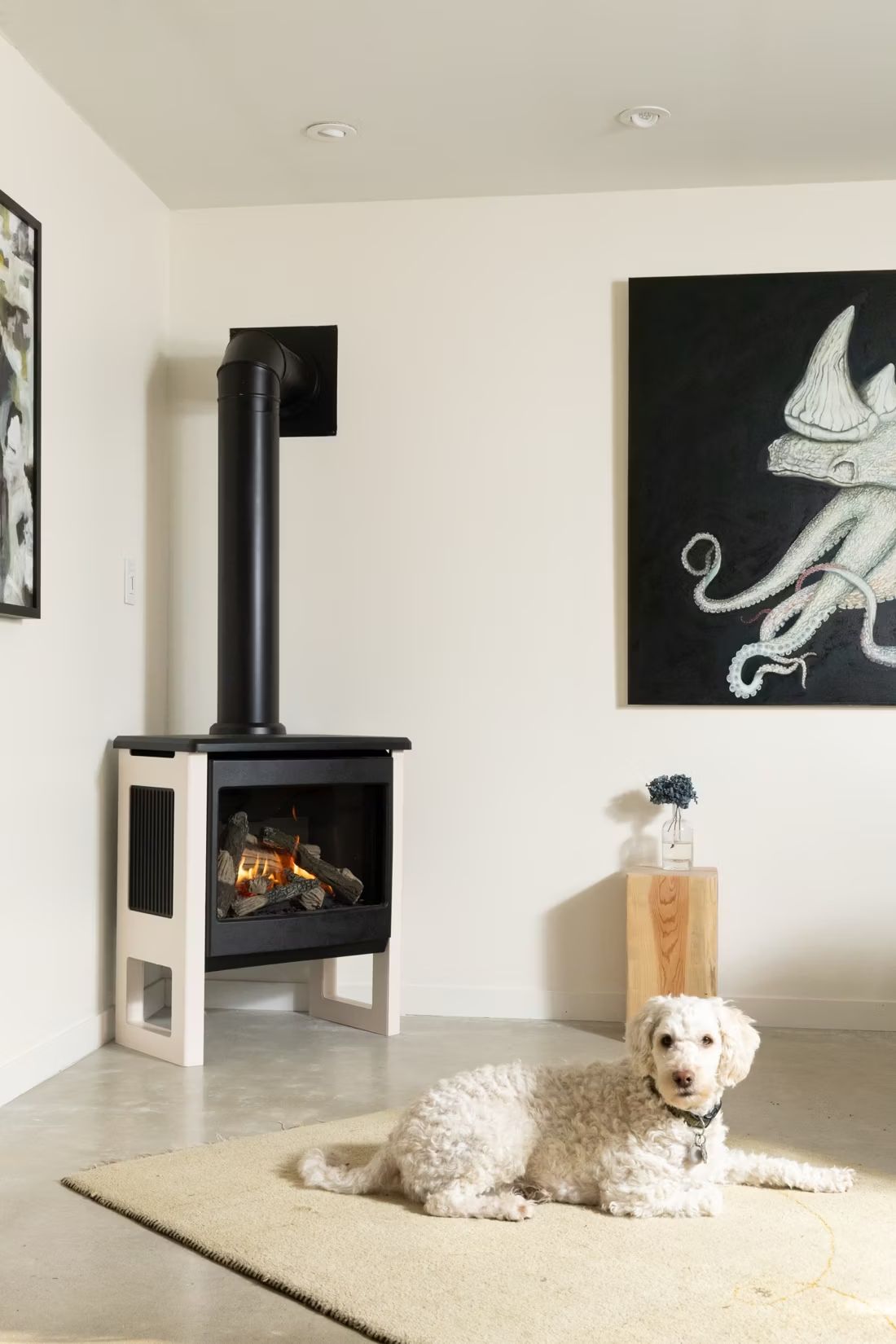
A gas fireplace is a built-in unit framed into a wall, usually chosen for new construction or a remodel. A gas insert drops into an existing masonry fireplace opening and uses the chimney as its vent chase, which makes it the natural fit for older Anchorage homes with a wood-burning fireplace they no longer want to feed. A gas stove is a freestanding cabinet-style unit that sits on the floor, similar in footprint to a wood stove but running on gas. For most bowl homes converting away from an old wood setup, an insert is the simplest and most cost-effective path.
What permits does the Municipality of Anchorage require for a gas fireplace?
Any new gas fireplace or insert install needs a building permit through the Municipality of Anchorage Building Safety Division, plus a mechanical/gas permit for the line work itself. The gas line has to be run and connected by a licensed gas-fitter, and ENSTAR requires its own inspection before turning on new service to a fixture. Most established hearth dealers coordinate the building permit, the gas-fitter, and the ENSTAR inspection together, so you're not left managing three separate trades on a winter timeline.
Should I choose a vented or vent-free gas fireplace?
In a climate zone 7 city with Anchorage's cold, direct-vent (sealed combustion) units are the strong recommendation, and most local dealers won't push vent-free at all. Vent-free fireplaces burn without exterior venting and release water vapor and combustion byproducts into the room—a real liability in a tightly sealed, well-insulated Anchorage house where that moisture has nowhere to go and can show up as window condensation or worse. Direct-vent units draw combustion air from outside and exhaust sealed through the wall or roof, which also holds up better against the ice and frost buildup that can affect venting in subzero weather.
How often does a gas fireplace need service in Anchorage?
Plan on an annual inspection, ideally in early fall before the heating season really kicks in. A technician checks the burner, pilot assembly, gas connections, and venting, and in Anchorage that venting check matters more than in milder climates—exterior vent caps can accumulate rime ice and snow load over a long winter, and a partially blocked vent is a safety issue, not just a performance one. Most local gas appliance service providers charge in the $150-$250 range for a standard annual visit.
Is wood heat still an option in Anchorage, or is gas really the only choice?
Wood heat is uncommon and actively discouraged inside the Anchorage bowl itself. Winter inversions trap wood smoke against the ground for days, the area carries a PM2.5 non-attainment designation, and the municipality's wood stove change-out program exists specifically to move households away from older wood stoves. Birch, spruce, and cottonwood are locally available if you're set on wood, and Chugach National Forest issues free cutting permits from May through September, but most of that wood ends up in cabins in the Mat-Su Valley or off-grid properties outside city limits rather than in bowl neighborhoods. For a full-time home inside the Municipality of Anchorage, gas—backed by cheap, plentiful ENSTAR service—is the far more practical and code-friendly choice.
Can I put a TV above my fireplace?
Yes—with an asterisk. Fireplaces are hot and TVs don't like heat. Either put a mantel between them to deflect rising warmth, or choose a fireplace with heat-management technology that creates a cool zone on the wall above—the wall stays around 125 degrees, barely warm, while the room still gets full heat. If you like clean lines and don't want a mantel, heat management is the answer.
Is my gas fireplace wasting gas?
If it was installed more than 15 years ago, probably. Older gas fireplaces keep a standing pilot light burning all the time, and that little flame can cost a couple hundred dollars a year. Newer models use pilot-on-demand ignition—the pilot lights only when you use the fireplace and goes out when you turn it off.
Can I install a fireplace myself?
If you're putting a fire in your house on purpose, it's best to work with an expert. Unless you're genuinely experienced in framing, gas line, vent pipe, and the national code on clearances to combustibles, have a professional do it—and ideally the same company that sells you the fireplace, so warranty, service, and liability all live under one roof.
Does a fireplace add value to my home?
On average, a fireplace adds back to the home about the same amount you spent installing it. Add the monthly savings from heating the rooms you actually use instead of the whole house—often hundreds of dollars a year—and the value case is strong before you even count what a fire does for how your family uses the room.
Stove and Fireplace Dealers in Anchorage County
Listings include WhyFire partner dealers, dealers we have verified as authorized for the brands we recommend, and established local businesses that carry hearth products. Every listing shows which one it is. The ones marked Preferred run on WhyFire's software, so they can show you real pricing and book your appointment right here. No manufacturer pays for placement. How we verify dealers →
Moore Heating & Air Cond
Alaska Stove & Fireplace
Central Plumbing & Htng - Ak
Natural Gas Service in Anchorage County
Confirm service at your address before planning a gas fireplace—a quick call settles it.
Enstar Natural Gas Company
Find your gas fireplace in Anchorage.
Tell us about your home and we'll put together a free Project Guide & Parts List—the right gas fireplace or insert, the exact venting and gas line parts needed, and a match with a trusted local Anchorage dealer who can pull the permits and get it installed.
Find Your Fireplace →