
Reliable heat for Anchorage's ten-month heating season.
Gas and electric fireplace resources for Anchorage, Eagle River, Chugiak, and Girdwood—plus straight answers on where wood and pellet heat stand under the bowl's air quality rules. Connect with a trusted local hearth retailer for your project.
Every Project Starts From One of These Five Situations
Subarctic heating demand meets strict air quality rules.
Anchorage sits in climate zone 7 with a winter heating load that's heavier than International Falls, Minnesota, the town famously nicknamed the icebox of the nation. The winter low average of 6°F understates how long the season runs; the heating months stretch from September into May. Birch, spruce, and cottonwood are the traditional local firewood species, cut for generations under Chugach National Forest permits. But the Anchorage bowl is a PM2.5 nonattainment area, and winter temperature inversions trap wood smoke against the ground for days at a time. That's why the Municipality runs an active wood stove change-out program, paying residents to remove older uncertified stoves rather than encouraging new wood installs.
What you'll find on this hub: gas and electric hearth retailers, service technicians, and fuel suppliers covering Anchorage proper, Eagle River, Chugiak, Girdwood, and the smaller communities along the Seward and Glenn Highways. Wood and pellet get honest treatment here too—where they still make sense, where the Municipality actively discourages them, and what the change-out program means for your existing stove. Pick your fuel below for local dealers, install costs, and next steps.
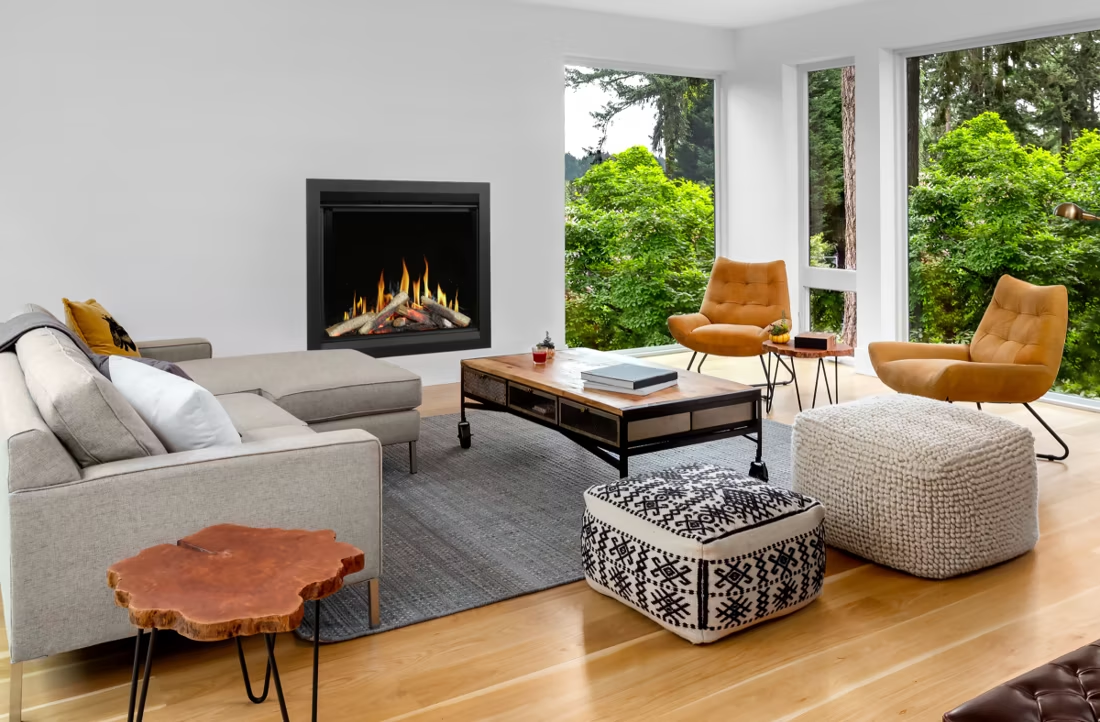
Four fuels. One honest answer for Anchorage County.
Three steps. No salesperson until you're ready.
Tell us about your project
Your zip code, your situation, and the fuel you're leaning toward—or let the answers point you to one.
See what's actually available
The brands dealers within 100 miles genuinely carry—real options, never a catalog mirage.
Get your dealer & Project Guide
A trusted local dealer, plus the free Project Guide & Parts List that names every component of the job.
Frequently Asked Questions
Which fuel works best in Anchorage?
Gas is the practical default for most Anchorage homes. Enstar Natural Gas reaches the majority of the bowl, and a gas fireplace or insert gives instant, thermostat-controlled heat through a heating season that runs from September into May. Electric is a strong secondary choice—the Chugach Electric Association grid is reliable enough that electric fireplaces work well for bedrooms, additions, and supplemental rooms. Wood is where things get honest: birch, spruce, and cottonwood have heated Anchorage homes for generations, but the bowl's PM2.5 nonattainment status and frequent winter inversions mean new uncertified wood stove installs are discouraged, and the Municipality actively pays residents to remove old units through its change-out program. Pellet sits in a similar spot—fuel is still available locally, but dealer support for new pellet stove installs has narrowed alongside the same air quality push. If you already burn wood or pellet, service and certified replacement are still very much available; if you're starting fresh, gas or electric is where most local retailers will steer you.
Do I need a permit to install a fireplace in Anchorage?
Yes, in nearly every case. The Municipality of Anchorage Building Safety Division issues permits for gas fireplaces, gas inserts, gas stoves, and any wood-burning appliance that meets current EPA 2020 NSPS emissions standards—uncertified wood stoves cannot be newly permitted here. Gas installs also require a separate line permit and licensed gas-fitter work tied into the Enstar Natural Gas system. Electric fireplaces generally don't need a permit unless they're hardwired built-ins requiring new circuit work, which does require electrical permitting. If you're removing an old wood stove through the municipal change-out program, that process has its own paperwork separate from a standard building permit. Most local hearth retailers handle the permit filing as part of the installation, so you're rarely doing this on your own.
Are there air quality restrictions on wood burning in Anchorage?
Yes, and they're significant here. The Anchorage bowl is a designated PM2.5 nonattainment area—the surrounding mountains trap cold air against the ground during winter inversions, holding wood smoke and other particulates close to the surface for days at a stretch. Because of this, the Municipality runs an active wood stove change-out program that pays homeowners to remove older, uncertified stoves, and new wood stove installations must meet EPA 2020 NSPS emissions standards at minimum—in practice, this makes new wood heat a much harder sell than it once was. There's no equivalent curtailment carve-out for pellet stoves here the way some Lower 48 jurisdictions offer; pellet appliances face the same general air quality scrutiny. If you're weighing wood heat in Anchorage, talk to Building Safety Division staff early and expect the conversation to lean toward gas or electric alternatives.
Can one local hearth retailer handle gas, electric, wood, and pellet?
Fewer than you'd expect, and that's a direct result of the air quality picture here. Most Anchorage-area retailers concentrate on gas and electric, since that's where the bulk of new installation demand sits. A smaller number of dealers still service legacy wood stoves—sweeping, parts, and certified replacement work tied to the change-out program—but very few are actively selling new wood units. Pellet stove sales follow a similar pattern: fuel itself is available through suppliers like Superior Pellet Fuels, but dealers who install and service pellet appliances are increasingly rare. If your project involves wood or pellet, it's worth calling ahead to confirm a dealer still supports that fuel before assuming they carry it.
How does service work in Eagle River, Chugiak, and Girdwood?
Most technicians are based in Anchorage proper and drive out to Eagle River, Chugiak, and Girdwood on scheduled routes rather than daily service calls—expect a modest travel fee, often in the $50–$125 range depending on distance and season. Booking ahead matters even more here than in milder climates: with a heating season that starts in September and runs into May, pre-season appointments in July and August fill up fast, and a mid-winter outage call can mean a multi-day wait. If you're in Girdwood or along Turnagain Arm, road conditions can add delays during heavy snow, so scheduling early and keeping a backup electric heater on hand for gas system outages is a reasonable precaution.
What's the typical cost range for fireplace work across fuel types in Anchorage?
Costs run higher here than in the Lower 48 due to shipping and labor. Gas fireplace, insert, or stove: roughly $5,500–$12,500 depending on how much new gas line work is needed to tie into the Enstar Natural Gas system. Electric fireplace: $250–$3,500 for the unit itself, plus $500–$1,500 in labor for anything beyond a plug-and-play install, such as a built-in with new wiring. Wood stove work is now mostly removal and replacement rather than new installation—the municipal change-out program typically offsets $500–$1,500 toward removing an old uncertified unit, with the replacement (often a certified stove, gas insert, or electric unit) priced separately. Pellet stove installs, where a dealer still offers them, tend to run $5,000–$8,000. See the fuel-specific pages above for retailer-level pricing detail.
Can I install a fireplace myself?
If you're putting a fire in your house on purpose, it's best to work with an expert. Unless you're genuinely experienced in framing, gas line, vent pipe, and the national code on clearances to combustibles, have a professional do it—and ideally the same company that sells you the fireplace, so warranty, service, and liability all live under one roof.
Can a fireplace actually lower my heating bill?
Yes—by creating a comfort zone. A furnace heats every square foot of the house just to warm the one room you're in; a gas fireplace on low burns roughly a sixth of the gas a typical furnace does. Set the furnace around 55–60 degrees as a baseline, then heat the rooms your family actually uses. Families who heat this way commonly save $20–$60 a month.
Wood, gas, pellet, or electric—how do I choose?
Match the fuel to your life, not the other way around. Wood: lowest fuel cost and total power-outage independence, but you're hauling and stacking. Gas: press a button, set a thermostat, no maintenance to speak of. Pellet: wood economics with automatic feeding, in exchange for weekly cleaning and a need for electricity. Electric: plugs in anywhere with honest supplemental heat. Nobody regrets the fuel that fits how they actually live.
Does a fireplace add value to my home?
On average, a fireplace adds back to the home about the same amount you spent installing it. Add the monthly savings from heating the rooms you actually use instead of the whole house—often hundreds of dollars a year—and the value case is strong before you even count what a fire does for how your family uses the room.
Stove and Fireplace Dealers in Anchorage County
Listings include WhyFire partner dealers, dealers we have verified as authorized for the brands we recommend, and established local businesses that carry hearth products. Every listing shows which one it is. The ones marked Preferred run on WhyFire's software, so they can show you real pricing and book your appointment right here. No manufacturer pays for placement. How we verify dealers →
North Country Stoves, Inc.
Moore Heating & Air Cond
Alaska Stove & Fireplace
Central Plumbing & Htng - Ak
Find your fireplace in Anchorage.
Tell us about your Anchorage project and we'll match you with a trusted local dealer, then send you a free Project Guide & Parts List—the exact parts, including the vent kit, and the dealer we recommend for your home.
Find Your Fireplace →