
Keep Your Family Warm and Safe—No Matter What
Triana's mild Tennessee Valley winters mean most homes heat with gas or an electric heat pump. For the homeowners who still want a wood stove—for a wooded lot, a workshop, or backup heat—we'll connect you with a dealer who serves the area honestly.
Every Project Starts From One of These Five Situations
Mild winters mean most Triana homes simply don't need it.
Triana sits along the Tennessee River in Madison County at just 603 feet of elevation, with an average winter low around 33°F and a short, mild heating season each year. That's a fraction of what a cold-climate market like Duluth, MN or Burlington, VT sees each winter, and it's the reason most homes here—including new construction near the Huntsville and Redstone Arsenal corridor—are built around electric heat pumps or gas furnaces rather than wood-burning primary heat. Wood is not a mainstream heating strategy in Triana, and it would be misleading to pretend otherwise.
That said, wood hasn't disappeared entirely. Some Triana homeowners on larger wooded parcels with mature oak, pine, and hickory install a stove or insert for ambiance, for the handful of nights each winter that dip into the 20s, or as backup heat during the ice storms that occasionally knock out power in the Tennessee Valley. Madison County has no wood-smoke non-attainment designation and no seasonal burn restrictions, so there's no regulatory hurdle for the homeowners who do want one—the limiting factor is simply that most people here don't need the BTU output a wood stove is built to deliver. A local dealer serving the Huntsville area can tell you plainly whether a smaller, supplemental-use unit fits your situation, rather than steering you toward equipment sized for a much colder climate.
Three steps. No salesperson until you're ready.
Tell us about your project
Your zip code, your situation, and the fuel you're leaning toward—or let the answers point you to one.
See what's actually available
The brands dealers within 100 miles genuinely carry—real options, never a catalog mirage.
Get your dealer & Project Guide
A trusted local dealer, plus the free Project Guide & Parts List that names every component of the job.
Frequently Asked Questions
Does a wood stove even make sense in Triana's climate?
For most homes, no—not as a primary heat source. With an average winter low around 33°F and just a short, mild heating season each year, Triana's heating season is short and mild compared to a market like International Falls, MN or Burlington, VT, where a stove might run daily for five months. Where a wood stove does make sense here is as supplemental heat for a drafty older farmhouse, ambiance in a living room, or backup heat for the ice storms that periodically knock out power in the Tennessee Valley. A local dealer will usually steer you toward a smaller unit sized for occasional use rather than a large cold-climate stove.
How much does a wood stove installation cost in Triana?
Because wood heat is a niche request here rather than the norm, most Triana installs are modest, supplemental-use setups: a small-to-mid-size stove, a code-compliant hearth pad, and Class A chimney pipe through the roof or an exterior wall. Regional dealers serving the Huntsville area typically price these jobs in the $3,500-$7,500 range, well below what a cold-climate primary-heat install would run, since the unit and venting scope are usually smaller. Homes with an existing masonry fireplace looking at an insert instead of a freestanding stove often land toward the lower end of that range.
What size wood stove do I need for occasional or backup heat?
Most Triana installs don't need to be sized for whole-home primary heat. A small stove (rated for 800-1,200 sq ft) is usually plenty for a single living area, den, or workshop, and it's the more common choice here given how few days a year actually call for wood heat. Oversizing is a real risk—a stove built for a cold-climate whole-home load will run too hot and smolder inefficiently on Triana's mild nights, leading to more creosote buildup, not less. A local dealer can walk your specific room and recommend a unit matched to occasional use rather than sell you cold-climate capacity you won't use.
Where can I get firewood in Triana?
There's no national forest land nearby with cutting permits the way there is out West, so most Triana firewood comes from local tree services, land-clearing operations, and private wooded lots. Oak and hickory are the most common hardwoods burned locally and both season well for high-heat, long-burning fires; pine is also plentiful but should be well-seasoned (at least 6-12 months split and stacked) before burning, since it's a softer, more resinous wood. Given the light burning season here, a single cord or two typically covers a household's annual wood use.
Do I need a permit to install a wood stove in Triana?
Yes—a new wood-burning appliance installation generally requires a building permit through Madison County's building department, and the stove should meet current EPA emissions standards. Most local installers fold the permitting into the job so you're not filing paperwork yourself. Unlike wood-smoke non-attainment areas out West, Madison County has no seasonal burn curtailment periods or air-quality advisories tied to wood smoke, so once installed you won't run into burn-ban restrictions during the winter.
Wood stove or electric heat pump—which makes more sense in Triana?
For whole-home heating, an electric heat pump almost always wins here. Triana's mild winters (just a short, mild heating season each year) are close to ideal heat-pump territory, and City of Huntsville Electric's residential rate of roughly $0.1145/kWh keeps operating costs reasonable for the handful of genuinely cold nights each year. Wood stoves make more sense as a secondary layer—ambiance, a wooded property with free fuel on hand, or backup heat if an ice storm takes down power lines, which does happen periodically in the Tennessee Valley. Very few Triana homes rely on wood as their only heat source.
What's the best type of wood stove for a mild climate like Triana's?
Skip the large catalytic stoves built for 20+ hour burns in sub-zero cold—they're overkill for Triana's short heating season and tend to run too hot and inefficiently at partial load. A smaller non-catalytic stove is usually the better fit: it lights and heats up quickly for occasional evening use and doesn't require the same long, steady burns a cold-climate primary-heat stove is optimized for. If you're converting an existing masonry fireplace instead, a mid-size insert accomplishes the same goal with less footprint. A regional dealer can match the unit to how often you actually expect to use it.
Wood insert or freestanding stove—which fits a Triana home better?
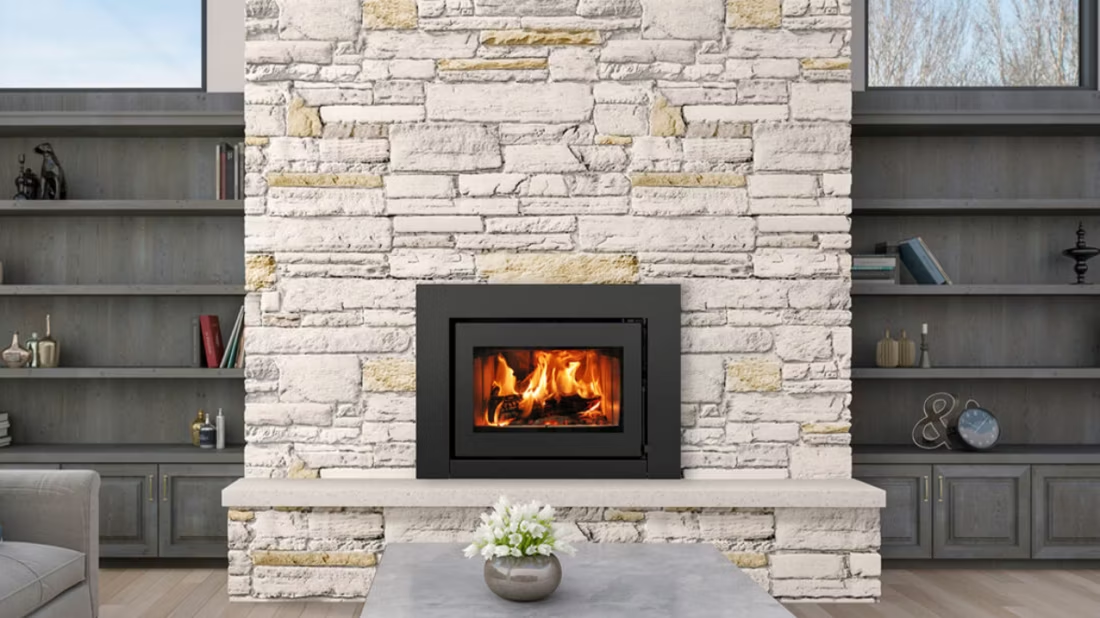
If your home already has a masonry fireplace, an insert is usually the simpler and more cost-effective route—it uses the chimney you already have and turns an inefficient open hearth into a real heat source for the occasional cold snap. A freestanding stove makes more sense in a workshop, addition, or home without an existing fireplace, but given how rarely most Triana homes actually run wood heat, the smaller upfront cost and simpler venting of an insert into an existing fireplace is often the more practical choice.
How often does a wood stove need chimney inspection if I only burn occasionally?
Even light or seasonal use warrants an annual inspection—the CSIA doesn't scale that recommendation down for occasional burners. Creosote can actually build up faster in stoves that run infrequently and at lower, cooler temperatures, since incomplete combustion deposits more residue per hour of burn than a hot, steady cold-climate fire. For a Triana home burning a stove mainly for ambiance or backup heat during winter storms, plan on a sweep and inspection each late summer or early fall before the first cool nights arrive.
Why is my open fireplace making my house colder?
Open fireplaces suck—literally. As the fire burns, it consumes air your furnace already paid to heat and pulls it out through the chimney, so the house is actually colder after the fire goes out than before you lit it. An insert fixes this: it seals the chimney, puts fixed glass across the front, and turns that hole in your house into a real heat source.
Why won't my new wood stove get going like my old one?
New wood stoves are 70%+ efficient, so far less heat goes up the flue—which also means less draft to get a fire established. The rule: build a genuinely hot fire for about 45 minutes before you choke it down. Skip that and you get smoke in the room, creosote in the chimney, and a fire that never takes off. Most performance complaints trace straight back to this.
What is an in-home preview and do I need one?
It's a visit where a hearth professional measures your space, confirms the model you picked actually works in your home, and walks the specs—framing, gas line, venting, finish work—before anything is ordered. Some details you just can't know until you see the house. Never make a down payment without one; it's the single most-skipped step that burns buyers.
How much should I budget for a fireplace?
For an average home—covering the fireplace, the vent pipe, and basic installation—a budget between $3,900 and $5,500 gives you a lot of options across wood, gas, and pellet. By the time you add finish work, gas line, and electrical, the average complete installation lands between $5,000 and $12,000 all-in. In a remodel or new build, a good rule is to put about 2.5% of the total project cost toward the fireplace.
Nearby Dealers
Hearth shops serving Triana and the surrounding area. Every listing shows whether it is a WhyFire partner, a dealer we have verified as authorized for the brands we recommend, or a local business carrying hearth products. No manufacturer pays for placement. How we verify dealers →
Alabama Fireplace & Construction Specialties
Higdon Service, Inc.
Allgas, Inc.
Atnip Design & Supply Center
Find your wood fireplace in Triana.
Tell us about your home and how you'd actually use a wood stove, and we'll match you with a regional dealer who serves Triana honestly—plus a free Project Guide & Parts List sized for your space, not a cold-climate load you'll never see.
Find Your Fireplace →