
Keep Your Family Warm and Safe—No Matter What
With winter lows averaging 33°F and just 2,831 heating degree days a year, Madison County doesn't need wood heat to get through winter. But for ice-storm backup, a converted fireplace, or a cabin outside Huntsville, a wood stove still earns its spot. We'll connect you with a real local dealer who can tell you honestly whether it makes sense for your home.
Every Project Starts From One of These Five Situations
Mild winters make wood heat a choice, not a necessity.
Madison County—home to Huntsville, Madison, and roughly 443,500 residents—sits in climate zone 3A, where winters are short and mild by national standards. Average winter lows hover around 33°F, and the county logs about 2,831 heating degree days a year, a fraction of what a place like Duluth, MN sees at over 10,000. Most homes here are built and heated around central HVAC, heat pumps, and gas—not cordwood. That's simply the honest starting point for anyone typing 'wood stove near me' in North Alabama: it's not a mainstream necessity, and the dealer network reflects that.
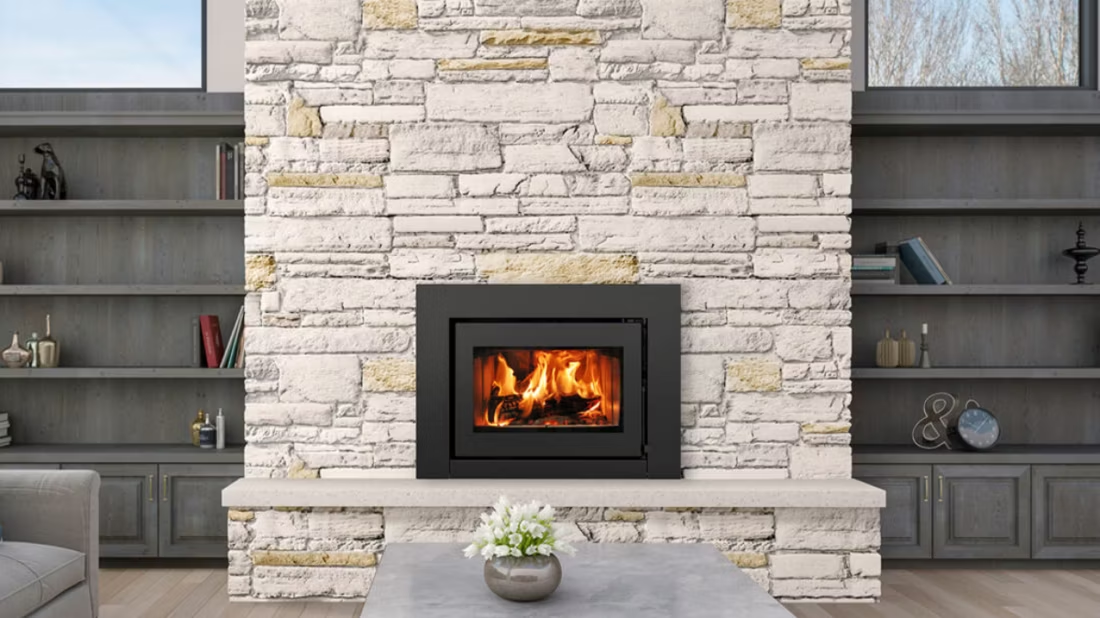
That said, wood heat hasn't disappeared from Madison County—it's just shifted purpose. Huntsville's occasional but memorable ice storms (the kind that have knocked out power across the Tennessee Valley for days at a stretch) make a wood stove or insert a genuine backup-heat option, especially in rural stretches like Gurley, New Hope, and Meridianville where outages tend to last longer. Others simply want the ambiance of a real fire in an existing masonry fireplace, or are heating a weekend cabin. Local hardwoods—oak and hickory especially, with pine for kindling—burn well and are widely available, so fuel supply isn't the obstacle. The obstacle is finding a dealer who still stocks and installs wood units in a market built around gas and electric.
Three steps. No salesperson until you're ready.
Tell us about your project
Your zip code, your situation, and the fuel you're leaning toward—or let the answers point you to one.
See what's actually available
The brands dealers within 100 miles genuinely carry—real options, never a catalog mirage.
Get your dealer & Project Guide
A trusted local dealer, plus the free Project Guide & Parts List that names every component of the job.
Frequently Asked Questions
Is a wood stove or fireplace even worth installing in Madison County?
For most Madison County homes, no—not as a primary heat source. With average winter lows around 33°F and only about 2,831 heating degree days a year, a gas or electric unit will cover your heating needs more efficiently and with far less maintenance. Where wood still makes sense is as backup heat during extended outages (the kind that follow the region's occasional ice storms), or for ambiance and character in a home with an existing masonry fireplace. A local dealer can tell you honestly which situation you're in before you spend money on venting and chimney work for a unit you'll rarely use for heat alone.
How much does a wood stove or insert installation cost in Madison County?
Because wood units are less common here than gas or electric, pricing tends to track a straightforward install: a freestanding stove with new Class A chimney and hearth pad typically runs in the $4,000–$8,000 range, while converting an existing masonry fireplace to a wood insert (using the chimney you already have) is usually less—often $3,000–$6,000—since it skips new venting from scratch. Expect the final number to depend heavily on whether your home already has a functioning masonry chimney, since building one from nothing is the biggest cost driver in a market with few wood-specific installers on the roster.
What firewood works best in Madison County?
Oak and hickory are the standout choices locally—both are dense hardwoods native to North Alabama forests that split well, season in six months to a year, and burn hot and long, which matters if you're using a stove for actual backup heat during an outage rather than just ambiance. Pine is abundant too but burns faster and sootier, so it's better suited to kindling or shoulder-season fires than a cold-night burn. Given the county's mild winters, most homeowners here don't need to stockpile the volume a colder climate would—a cord or two covers a typical season of occasional use.
Do I need a permit to install a wood stove in Madison County?
Yes—a building permit is required for new wood stove or insert installations, whether you're inside Huntsville city limits or in unincorporated Madison County, where the county building department handles permitting. Because wood installations are relatively uncommon locally, it pays to work with a dealer who installs them regularly and knows the inspection process cold, rather than a general contractor unfamiliar with clearance and venting requirements for wood-burning appliances specifically.
Are there any air quality or burn restrictions in Madison County?
No—Madison County has no air quality non-attainment designation and no winter inversion issues like some Western wood-heavy regions face, so there are no seasonal burn bans or curtailment periods to worry about. That's one less hurdle compared to places like the Pacific Northwest, but it also underscores why wood heat here is more of a personal choice than a regional necessity—there's no smoke-management culture built around it because so few homes depend on it.
Wood stove vs. gas insert—which makes more sense for my home?
For most Madison County homeowners, a gas insert is the more practical everyday choice—instant on-off heat, no wood handling, and a fuel network already built out across the region. Wood earns its place specifically as an outage-proof backup: it needs no electricity or gas line, which matters if you've been through one of Huntsville's multi-day ice storm outages and want a heat source that still works when the grid doesn't. If your household has never lost power for more than a few hours, gas will likely serve you better. If you've lived through the 2014-style ice events, a wood stove's independence from utilities may be worth the extra chimney work.
Wood vs. pellet—is either a good fit here?
Both are niche choices in Madison County given the mild climate, but they solve different problems. Pellet stoves from brands like Lignetics or Hamer Pellet Fuel burn cleaner and are easier to load, but they need electricity to run the auger and blower—which defeats the purpose if your goal is backup heat during a power outage. Wood stoves need no power at all, which is the real advantage for Madison County homeowners who want a fallback for ice-storm outages rather than a daily heat source. If ambiance and convenience are the goal rather than outage insurance, pellet is worth a look; if you want something that works when the lights are out, wood wins.
What's the difference between a wood stove and a wood fireplace insert?
A freestanding wood stove sits on a hearth pad and needs its own Class A chimney if one doesn't exist—the more involved and expensive route in a county without much existing wood-chimney infrastructure. A wood insert slides into an existing masonry fireplace and uses the chimney you already have, which is common in older Huntsville-area homes built with a traditional open hearth. For most Madison County homeowners with an existing fireplace, converting it to an insert is the simpler and less costly path to real wood heat, since it avoids building venting from the ground up.
How often does a wood stove need chimney service if I only use it occasionally?
Even with light or seasonal use—which is typical in Madison County, where a stove might only run during a cold snap or an outage—an annual inspection is still recommended by CSIA standards. Infrequent use doesn't eliminate creosote buildup, and chimneys that sit unused for long stretches are also more prone to animal nests and debris blocking the flue, which becomes a real hazard the one week a year you actually need the stove to work. A quick annual check keeps it reliable for the moment it matters most.
What's the difference between an insert and a zero-clearance fireplace?
An insert is a fireplace that slides into a pre-existing wood-burning fireplace—if you don't have one, there's nothing to insert it into. A zero-clearance fireplace is built into a framed wall, which makes it the answer for remodels and new construction. Simple test: existing masonry fireplace means insert; blank or framed wall means zero-clearance.
Can a wood stove burn all night?
The right one can. If waking up to a warm house and live coals matters to you, say exactly that when you're shopping—firebox size and burn-rate control determine overnight performance far more than any number on a spec sheet. It's a much more useful question than asking about BTUs.
What is an in-home preview and do I need one?
It's a visit where a hearth professional measures your space, confirms the model you picked actually works in your home, and walks the specs—framing, gas line, venting, finish work—before anything is ordered. Some details you just can't know until you see the house. Never make a down payment without one; it's the single most-skipped step that burns buyers.
Can a fireplace actually lower my heating bill?
Yes—by creating a comfort zone. A furnace heats every square foot of the house just to warm the one room you're in; a gas fireplace on low burns roughly a sixth of the gas a typical furnace does. Set the furnace around 55–60 degrees as a baseline, then heat the rooms your family actually uses. Families who heat this way commonly save $20–$60 a month.
Stove and Fireplace Dealers in Madison County
Listings include WhyFire partner dealers, dealers we have verified as authorized for the brands we recommend, and established local businesses that carry hearth products. Every listing shows which one it is. The ones marked Preferred run on WhyFire's software, so they can show you real pricing and book your appointment right here. No manufacturer pays for placement. How we verify dealers →
Allgas, Inc.
Atnip Design & Supply Center
Alabama Fireplace & Construction Specialties
Higdon Service, Inc.
Find your wood fireplace in Madison County.
Tell us about your home and how you'd actually use a wood stove or insert—ambiance, backup heat, or both—and we'll match you with a local dealer plus a free Project Guide & Parts List covering exactly what your project needs, vent kit included.
Find Your Fireplace →