
Keep Your Family Warm and Safe—No Matter What
Wood heat isn't the norm on the Gulf Coast, but it still has a place—for ambiance, hurricane-season backup, and homes that just want a real fire. Find the right unit and a trusted local dealer.
Every Project Starts From One of These Five Situations
An honest look at wood heat here.
Prichard sits at just 46 feet of elevation on Mobile Bay, in climate zone 2A, where the average winter low is 41°F and the city logs only about 1,616 heating degree days a year. Compare that to Duluth, Minnesota, which racks up nearly 10,000 heating degree days annually, and it's clear wood stoves aren't solving a heating problem here the way they do up north. Most Prichard homes rely on central air conditioning and heat pumps year-round, with only a handful of genuinely cold nights each winter.
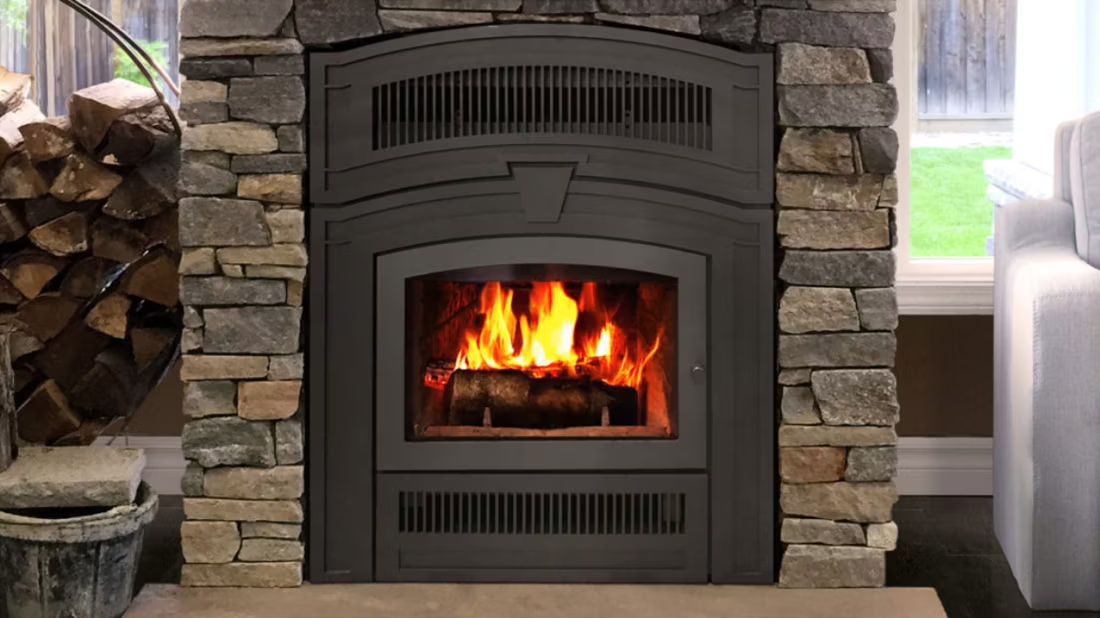
That said, wood stoves and fireplaces haven't disappeared from the area—they've just changed jobs. A small number of Prichard and Mobile County homeowners install a wood stove or insert for the look and feel of a real fire, for hunting camps and river properties outside the city, or as backup heat and a cooking option during hurricane-season power outages, which are a real concern along this stretch of the Gulf Coast. If that's your use case, local oak, pine, and hickory are all readily available, and a properly sized, EPA-certified stove can still do real work on the rare hard freeze.
Three steps. No salesperson until you're ready.
Tell us about your project
Your zip code, your situation, and the fuel you're leaning toward—or let the answers point you to one.
See what's actually available
The brands dealers within 100 miles genuinely carry—real options, never a catalog mirage.
Get your dealer & Project Guide
A trusted local dealer, plus the free Project Guide & Parts List that names every component of the job.
Frequently Asked Questions
How much does a wood stove installation cost in Prichard?
Because wood heat is a niche request here rather than a mainstream one, fewer local dealers stock and install wood stoves compared to gas units—but the ones who do typically price a straightforward freestanding stove installation between $3,500 and $7,000, including a hearth pad and Class A chimney pipe through the roof. Installing into an existing masonry fireplace with a liner can run somewhat less. Get a firm quote from a local hearth dealer since availability and labor costs vary more here than in markets where wood is the default heat source.
Does a wood stove even make sense in Prichard's climate?
For most homes, no—not as primary heat. With a winter low average of 41°F and only about 1,616 heating degree days a year, Prichard just doesn't have the sustained cold that makes a wood stove pay for itself the way it does in places like Duluth or Burlington, Vermont. Where it does make sense is as supplemental or backup heat: a small stove that can carry a room during an occasional hard freeze, or run off cordwood when a hurricane knocks out power to Alabama Power or Singing River Electric Cooperative's grid for days at a time. If that's the goal, a smaller stove sized for one or two rooms is usually the right call, not a whole-home unit.
What firewood species are available locally?
Oak and hickory are the most common hardwoods burned in this part of Mobile County, both of which season well and put out solid heat when properly dried. Pine is abundant too, but it's better suited to kindling and shoulder-season fires than as your main fuel, since it burns fast and leaves more creosote if not fully seasoned. Unlike western states with extensive national forest land, Mobile County doesn't have significant public land where residents can cut their own firewood cheaply—most Prichard homeowners buy split, seasoned wood by the truckload or cord from local suppliers rather than harvesting it themselves.
Do I need a permit to install a wood stove in Prichard?
Yes—any new wood-burning appliance install typically requires a building permit through the City of Prichard or Mobile County Building Department, depending on your address, along with proof the unit meets current EPA emissions standards. There's no air quality non-attainment designation or burn-curtailment program here the way there is in some western cities, so day-to-day burning isn't restricted. A local installer who regularly works in the area can confirm which jurisdiction covers your zip code and pull the permit as part of the install.
What's the difference between a wood stove and a wood insert?
A wood stove is a freestanding unit on its own hearth pad, vented through new Class A chimney pipe—it works in homes without an existing fireplace. A wood insert slides into an existing masonry fireplace and uses a stainless liner run up the existing chimney, which is the more common route in Prichard's older homes that already have a wood-burning fireplace built in. For those homes, an insert is usually the simpler and less expensive project since it reuses the chimney structure that's already there.
What's the best type of wood stove for occasional, backup-heat use?
For a home that only needs wood heat a handful of nights a year or as hurricane-season backup, a small to mid-size non-catalytic stove from a brand like Pacific Energy or Lopi is usually the better fit than a large catalytic unit built for 20-hour overnight burns in sub-zero climates—that kind of extended burn time simply isn't needed in Prichard's climate. What matters more here is a stove that lights easily, heats up fast, and can run without electricity if the power's out after a storm, since that's the scenario where a wood stove actually earns its keep in this area.
How often should my chimney be inspected in Prichard's climate?
Even with light seasonal use, an annual inspection before burning season is worth it—Prichard's humid Gulf Coast air can accelerate mortar deterioration and corrosion in metal chimney components between uses, on top of normal creosote buildup. Because usage tends to be occasional here rather than the 4-plus cords a season burned in colder climates, creosote accumulates more slowly, but a stove or chimney that sits unused for months between hurricanes or cold snaps still deserves a check before it's fired up again.
Where can I buy firewood in Prichard?
Local firewood suppliers around Mobile County sell seasoned oak, hickory, and pine by the truckload or cord, generally running $150 to $275 per cord depending on species and how well it's been dried—on the lower end nationally, since wood isn't in heavy seasonal demand here the way it is up north. Because self-cutting on public land isn't really an option in this part of Alabama, buying pre-split, seasoned wood from a local dealer is the standard approach, and it's worth asking specifically for wood that's been dried at least six months given the region's humidity.
Wood vs. gas—which makes more sense for a Prichard home?
For most Prichard homes, gas is the more practical everyday choice—natural gas and propane fireplaces provide instant, thermostat-controlled heat that suits a climate with only 1,616 heating degree days a year, without the wood handling, ash, and chimney maintenance a stove requires. Wood still has a role, but a narrower one: it's the choice for homeowners who want the look and ritual of a real fire, or who want a heat source that keeps working when Alabama Power or Singing River Electric Cooperative's lines go down in a storm. Plenty of homes here end up with a gas fireplace for daily use and treat wood, if they have it at all, as a backup or accent.
What's the difference between an insert and a zero-clearance fireplace?
An insert is a fireplace that slides into a pre-existing wood-burning fireplace—if you don't have one, there's nothing to insert it into. A zero-clearance fireplace is built into a framed wall, which makes it the answer for remodels and new construction. Simple test: existing masonry fireplace means insert; blank or framed wall means zero-clearance.
Why won't my new wood stove get going like my old one?
New wood stoves are 70%+ efficient, so far less heat goes up the flue—which also means less draft to get a fire established. The rule: build a genuinely hot fire for about 45 minutes before you choke it down. Skip that and you get smoke in the room, creosote in the chimney, and a fire that never takes off. Most performance complaints trace straight back to this.
How much should I budget for a fireplace?
For an average home—covering the fireplace, the vent pipe, and basic installation—a budget between $3,900 and $5,500 gives you a lot of options across wood, gas, and pellet. By the time you add finish work, gas line, and electrical, the average complete installation lands between $5,000 and $12,000 all-in. In a remodel or new build, a good rule is to put about 2.5% of the total project cost toward the fireplace.
Does a fireplace add value to my home?
On average, a fireplace adds back to the home about the same amount you spent installing it. Add the monthly savings from heating the rooms you actually use instead of the whole house—often hundreds of dollars a year—and the value case is strong before you even count what a fire does for how your family uses the room.
Nearby Dealers
Hearth shops serving Prichard and the surrounding area. Every listing shows whether it is a WhyFire partner, a dealer we have verified as authorized for the brands we recommend, or a local business carrying hearth products. No manufacturer pays for placement. How we verify dealers →
Sullivan Insullation Company
Blossman Gas - Mobile
Andrews Ace Hardware
Street'S Exquisite Plants
Coastal Insulation
Find your wood fireplace in Prichard.
Tell us a bit about your home and how you plan to use it, and we'll put together a free Project Guide & Parts List for your Prichard wood project—matched to a trusted local dealer who can size, permit, and install it right.
Find Your Fireplace →