
Warm, Reliable Comfort for Mild Gulf Coast Winters.
Prichard doesn't need heat around the clock, but when a cold snap rolls off Mobile Bay, a gas fireplace delivers instant warmth and real ambiance. Find the right unit and connect with a trusted local dealer.
Every Project Starts From One of These Five Situations
Ambiance and comfort for a mild coastal climate.
Prichard sits at just 46 feet of elevation along Mobile Bay, in a hot-humid climate zone (2A) where the average winter low hovers around 41 degrees and the city has a short, mild heating season—a fraction of the winter heating load a place like Duluth, MN sees in a single season. That's why wood-burning fireplaces and pellet stoves are rare here; the region simply doesn't demand sustained heat. Gas is a different story. It doesn't require a woodpile or daily tending, which makes it a natural fit for a climate where the fireplace is used for atmosphere most of the year and for real warmth on the handful of nights when temperatures dip toward freezing.
Many homes in Prichard and across Mobile County already have natural gas service running to the water heater or range, which makes adding a gas fireplace or insert a straightforward extension of existing lines. Homes without gas service typically rely on a propane tank instead, filled by regional suppliers. Either way, a gas fireplace gives you push-button heat during Gulf Coast cold snaps, a backup heat source during hurricane-season power outages, and a fireplace that looks good and lights instantly without soot, ash, or a chimney full of creosote you'll never actually need to manage here.
Three steps. No salesperson until you're ready.
Tell us about your project
Your zip code, your situation, and the fuel you're leaning toward—or let the answers point you to one.
See what's actually available
The brands dealers within 100 miles genuinely carry—real options, never a catalog mirage.
Get your dealer & Project Guide
A trusted local dealer, plus the free Project Guide & Parts List that names every component of the job.
Frequently Asked Questions
How much does a gas fireplace installation cost in Prichard?
Most gas fireplace installations in Prichard run between $3,500 and $8,500, with the final number depending on the unit, the venting path, and whether new gas line work is needed. A direct-vent insert going into an existing masonry fireplace with gas already run to the house sits at the lower end. A new built-in gas fireplace for a remodel or addition—with framing, venting, and a fresh gas line—lands in the middle to upper range. Homes needing a propane tank set or a longer gas line run from the meter will land toward the top. A local installer will confirm exact pricing after seeing your home.
Can I convert my existing wood fireplace to gas?
Yes, and it's a common project here. Plenty of older homes in Prichard have masonry fireplaces built with an assumption of wood heat—oak, pine, and hickory were the local standbys—but with winter lows averaging only around 41 degrees, those fireplaces often sit unused most of the year. Installing a gas insert into the existing masonry, using a stainless liner run through the current chimney, typically runs $4,000 to $7,500 and turns a fireplace you rarely light into one you'll actually use on cool Gulf Coast evenings, with zero wood hauling or ash cleanup.
Do I need natural gas, or can I use propane?
Either works, and it depends on your address. Much of Prichard and the surrounding Mobile County area already has natural gas lines run for water heaters, ranges, and dryers, which makes adding a fireplace simple if you're already a gas customer. Homes in newer subdivisions or areas without gas mains typically use a propane tank instead, filled by one of the regional propane suppliers serving Mobile County. Most gas fireplace models can be configured for either fuel—your installer sets the correct orifice and regulator for whichever you have.
Will my gas fireplace still work if the power goes out?
For most units, yes—which matters a lot on the Gulf Coast, where hurricane season regularly knocks out power for days at a time. Gas fireplaces with IPI (intermittent pilot ignition) run on AA battery backup, so they'll still light and heat the room even with the grid down, as long as the batteries are fresh. Valor fireplaces take it a step further: their pilot generates its own electricity through the thermocouple, so there's no battery to remember at all. If storm-season reliability is a priority for your Prichard home, ask your local dealer specifically about ignition type when comparing models.
What's the difference between a gas fireplace, gas insert, and gas stove?
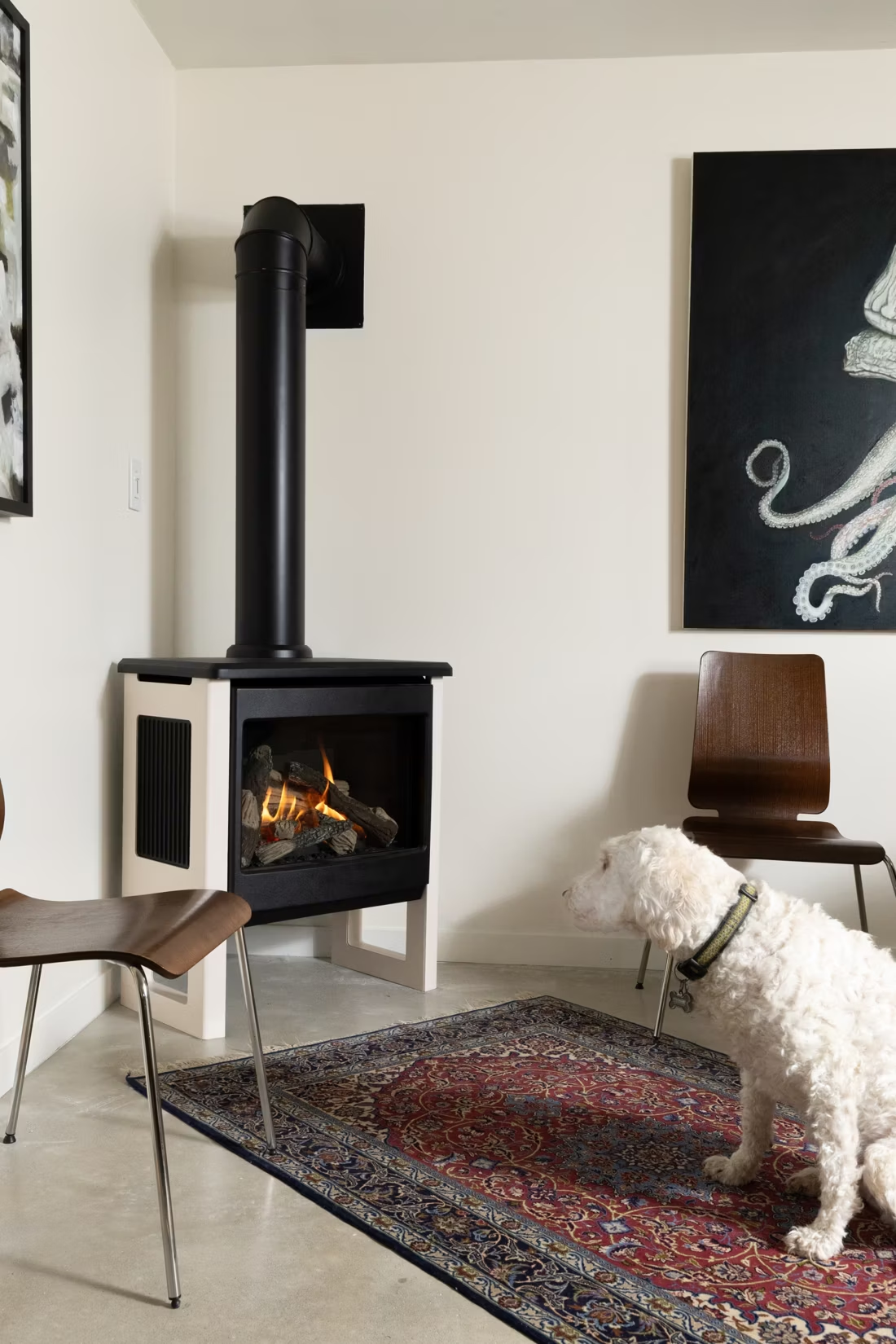
A gas fireplace is a fully built-in unit framed into a wall—the right call for new construction or a remodel where there's no existing fireplace. A gas insert slides into an existing masonry firebox and uses the current chimney as its vent path, which suits the many older Prichard homes with a wood-style fireplace that's rarely used. A gas stove is a freestanding cabinet-style unit that sits on the floor and vents through a wall or existing flue—a good option for a den or add-on room without a fireplace opening at all. A local retailer can tell you which fits your specific layout.
Do I need a permit to install a gas fireplace in Prichard?
Generally yes. New gas fireplace installations typically require both a building permit and a gas line permit, coordinated through the City of Prichard Building Department or, for unincorporated areas, Mobile County. The gas line portion has to be done by a licensed gas-fitter, which is one reason it pays to work with an established hearth dealer rather than a general handyman—they coordinate the gas connection, venting, and inspection as one job instead of leaving you to manage separate trades.
Should I choose a vented or vent-free gas fireplace?
Vented (direct-vent) units draw combustion air from outside and exhaust it back outside through sealed venting—they're the safer, most universally recommended choice and the type most dealers in the Mobile area install by default. Vent-free units burn fuel directly into the room and are legal in Alabama, but they release some water vapor and combustion byproducts indoors. In Prichard's already-humid, hot-humid climate (zone 2A), adding more indoor moisture from a vent-free unit is a real downside worth weighing, especially in a tightly sealed newer home. Most homeowners here end up happier with a direct-vent model, but ask your local dealer to walk through both.
How often should a gas fireplace be serviced?
Plan on an annual inspection, ideally before the fall cold snaps arrive. A certified technician checks the burner, pilot assembly, venting, and gas connections, and cleans the glass and interior—a much lighter job than chimney sweeping for a wood unit, but still important for safe operation. Local gas appliance service providers typically charge in the $125 to $200 range for a standard annual visit, and it's worth scheduling even on a fireplace you only run a few weeks a year.
Gas vs. electric fireplace—which makes more sense in Prichard?
Given Prichard's mild climate—a short, mild heating season and winter lows that rarely dip far below freezing—both are reasonable options, but they serve slightly different purposes. Electric fireplaces cost far less to install (often $400 to $1,200, with no venting required) and run on standard household power from Alabama Power or Singing River Electric Cooperative, at roughly 13 to 17 cents per kWh depending on your provider. They're great for ambiance and light supplemental warmth. Gas delivers a real flame and meaningfully more heat output for the handful of genuinely cold nights each winter, plus it keeps working during a power outage if you choose the right ignition system. Homes wanting a true backup heat source for storm season usually lean gas; homes purely after ambiance often do fine with electric.
Are new gas fireplaces really better than old ones?
Two ways, and they're both big. Looks: modern gas fireplaces are realistic enough that it's hard to believe they aren't burning wood. Cost: old units burn a standing pilot year-round (roughly $200 a year), while new ones use pilot-on-demand ignition and modern burners. Add remote controls and thermostat operation, and the day-to-day experience isn't close.
What's the difference between an insert and a zero-clearance fireplace?
An insert is a fireplace that slides into a pre-existing wood-burning fireplace—if you don't have one, there's nothing to insert it into. A zero-clearance fireplace is built into a framed wall, which makes it the answer for remodels and new construction. Simple test: existing masonry fireplace means insert; blank or framed wall means zero-clearance.
Does a fireplace add value to my home?
On average, a fireplace adds back to the home about the same amount you spent installing it. Add the monthly savings from heating the rooms you actually use instead of the whole house—often hundreds of dollars a year—and the value case is strong before you even count what a fire does for how your family uses the room.
What is an in-home preview and do I need one?
It's a visit where a hearth professional measures your space, confirms the model you picked actually works in your home, and walks the specs—framing, gas line, venting, finish work—before anything is ordered. Some details you just can't know until you see the house. Never make a down payment without one; it's the single most-skipped step that burns buyers.
Nearby Dealers
Hearth shops serving Prichard and the surrounding area. Every listing shows whether it is a WhyFire partner, a dealer we have verified as authorized for the brands we recommend, or a local business carrying hearth products. No manufacturer pays for placement. How we verify dealers →
Sullivan Insullation Company
Blossman Gas - Mobile
Andrews Ace Hardware
Street'S Exquisite Plants
Coastal Insulation
Find your gas fireplace in Prichard.
Tell us a bit about your home and we'll match you with a trusted local dealer and a free Project Guide & Parts List—the exact fireplace or insert, vent kit, and installation plan for your Prichard home.
Find Your Fireplace →