
Pellet Heat in a Place That Rarely Needs It.
Oneonta's mild winters mean most homes lean on heat pumps and gas, not pellet appliances. For the homeowners who still want one—a den, a rural farmhouse, a hunting camp—we'll connect you with a local dealer who actually stocks and installs them.
Every Project Starts From One of These Five Situations
Mild winters make pellet heat a specialty choice.
Oneonta sits in the Blount County foothills at 866 feet, in climate zone 3A, where the average winter low hovers around 33°F and the season logs roughly 2,862 heating degree days. Compare that to Duluth, MN, where annual heating degree days top 9,000, and it's clear why solid-fuel appliances aren't a household default here. Most Oneonta homes run on Alabama Power heat pumps or gas furnaces as primary heat, with a fireplace or stove serving as a supplemental or aesthetic feature rather than the backbone of a winter heating plan.
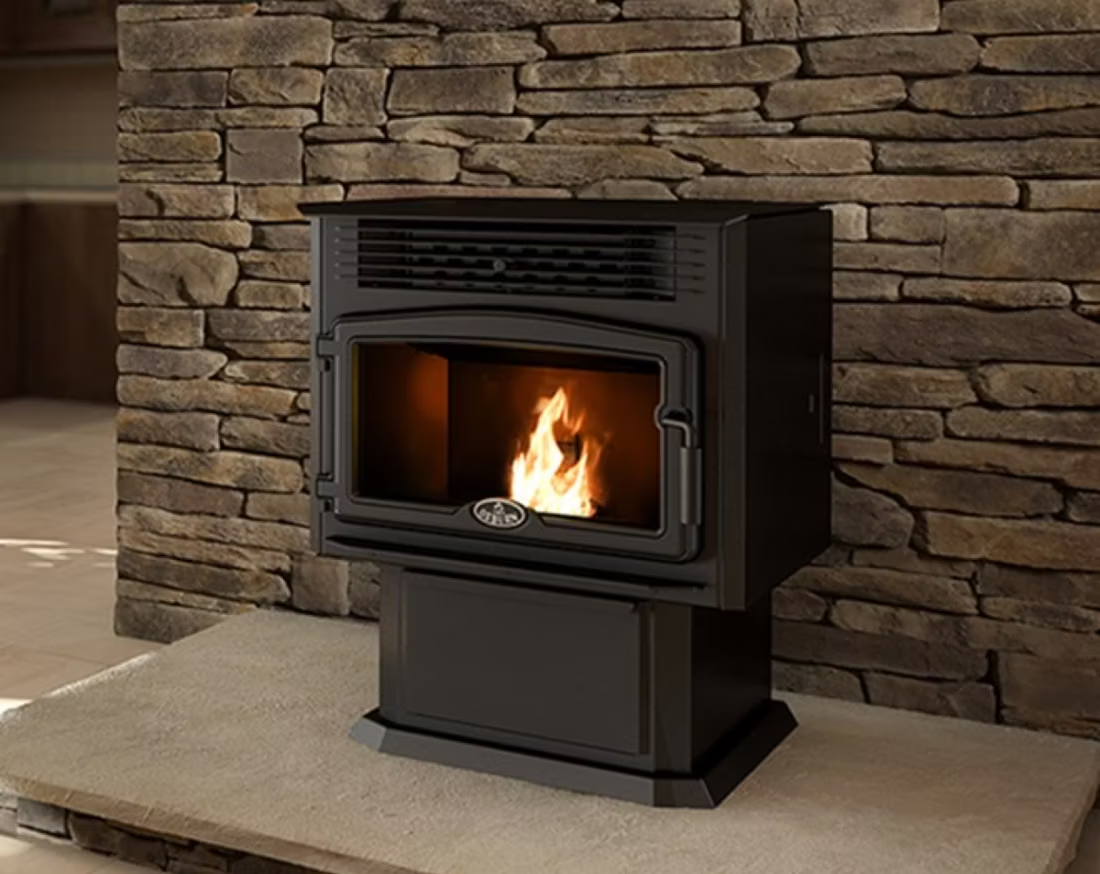
That said, pellet appliances do show up in Blount County—usually in a den or sunroom for cozy supplemental warmth, in older rural farmhouses without central gas service, or at hunting camps and cabins outside city limits. Regional pellet brands like Lignetics, Hamer Pellet Fuel, and Greenway Renewable Energy are manufactured in the Southeast, so sourcing bagged fuel isn't the obstacle—it's simply that Oneonta's winters rarely demand it. If you're one of the homeowners who wants one anyway, we'll match you with a local dealer who can size the unit correctly and handle the venting, rather than sending you to a big-box store with a one-size-fits-all setup.
Three steps. No salesperson until you're ready.
Tell us about your project
Your zip code, your situation, and the fuel you're leaning toward—or let the answers point you to one.
See what's actually available
The brands dealers within 100 miles genuinely carry—real options, never a catalog mirage.
Get your dealer & Project Guide
A trusted local dealer, plus the free Project Guide & Parts List that names every component of the job.
Frequently Asked Questions
How much does a pellet stove installation cost in Oneonta?
Because pellet stoves are uncommon in Blount County, there isn't a deep bench of pellet-only specialists the way you'd find in a colder market—most installs here are handled by hearth dealers who also do gas and electric work. Nationally, a pellet stove or insert installation with venting typically runs $3,000 to $6,500 depending on the unit and whether it's a freestanding stove or an insert into an existing fireplace. Get a quote from a local dealer before assuming a number—with light local demand, pricing can vary more between installers than it does in a place like Bozeman, MT, where every hearth shop runs pellet units through the winter.
Why don't more homes in Oneonta use pellet stoves?
It comes down to heating load. Oneonta's roughly 2,862 heating degree days and 33°F average winter low mean most homes get by comfortably on an Alabama Power heat pump or a gas furnace, with mild snaps rather than sustained deep cold. Pellet stoves earn their keep in places with long, hard winters—think Fargo, ND or Burlington, VT—where a consistent, thermostatically controlled solid-fuel heat source offsets real fuel costs for months at a time. In Oneonta, a pellet stove is more often a lifestyle choice for a specific room than a household necessity.
Where can I buy pellet fuel in Oneonta or Blount County?
Bagged pellets aren't hard to find even though demand is light—Lignetics, Hamer Pellet Fuel, and Greenway Renewable Energy all produce fuel in the Southeast, and farm supply retailers around Blount County typically stock or can order bags seasonally. Because Oneonta isn't a high-volume pellet market, it's worth calling ahead in fall to confirm stock rather than assuming a full pallet will be sitting on the shelf in January the way it would in a heavier pellet-heating region.
Is a pellet stove a good backup heat source during an ice storm?
Not really, and it's worth knowing before you buy. Pellet stoves rely on an electric auger and blower to feed fuel and circulate heat, so when Alabama Power lines go down in an ice storm—which does happen periodically in the Blount County foothills—the stove goes dark along with everything else unless you've got a battery backup or generator running it. If outage-proof backup heat is the actual goal, a wood-burning stove or fireplace insert (which needs no electricity to produce heat) is the more reliable choice for that specific job.
Pellet stove vs. wood stove—which fits a Blount County home better?
Both are niche choices in Oneonta's mild climate, but they serve different homeowners. Wood is the more traditional fit here—oak, pine, and hickory are abundant and cheap or free for anyone with land or a chainsaw, and a wood stove keeps working through a power outage. Pellet stoves trade that self-sufficiency for convenience: load a hopper, set a thermostat, get consistent heat without splitting or stacking logs, as long as the power stays on. For a rural property with access to firewood, wood often wins. For a homeowner who wants set-and-forget warmth in a den without dealing with logs, pellet is the better fit.
Do I need a permit to install a pellet stove in Oneonta?
Most likely yes—a new solid-fuel appliance installation typically requires a permit through the City of Oneonta Building Department, or the Blount County Building Department for properties outside city limits, covering the wall or roof penetration for the vent pipe and clearance-to-combustibles compliance. The good news is that pellet venting uses small-diameter PL (pellet-listed) vent pipe rather than a full masonry chimney, so the work and inspection are generally more straightforward than a wood-burning install. A local dealer familiar with Blount County code will usually pull the permit as part of the job.
What size pellet stove do I actually need in a climate this mild?
Smaller than you might expect. With Oneonta's roughly 2,862 heating degree days, most homeowners are using a pellet stove to heat a single room—a den, sunroom, or open living area—rather than the whole house, since central heat pump or gas service already covers the rest. A compact to mid-size unit rated for 1,000 to 1,500 square feet is usually plenty for supplemental use; going bigger just means more cycling and more idle time on mild Alabama evenings when you only need a few hours of extra warmth.
Are there any rebates or tax credits for pellet stoves in Alabama?
Alabama doesn't currently run a state-level rebate program for biomass appliances, but the federal government does: the Section 25(C) tax credit covers 30% of the cost of a qualifying pellet stove or insert (equipment and installation), up to $2,000 per year, for units rated at 75% efficiency or higher on a higher heating value basis. Ask your local dealer for the manufacturer's certification statement showing the efficiency rating—you'll need it at tax time, and not every model on the market qualifies.
Pellet, gas, or electric—what actually makes sense for an Oneonta home?
For most Oneonta homes, gas or electric will be the practical choice for primary heat—Alabama Power service is universal and gas is standard where available, and both integrate cleanly with central HVAC. Pellet makes sense as a secondary, room-specific choice: consistent, thermostatically controlled heat for a den or sunroom without the ash and log-handling of wood, for a homeowner who likes the idea of a real flame but doesn't want to depend on it as backup power. If backup heat during an outage is the priority, wood is the better answer of the three; if convenience for daily supplemental warmth is the goal, pellet holds up well even in a mild climate like this one.
Why is a fireplace insert so efficient?
An insert does two things: it seals the chimney completely, so you stop losing air you already paid to heat, and it radiates warmth into the room through the firebox and glass. Most add a heat-exchange fan that pulls cool room air underneath, wraps it around the hot firebox, and pushes it back out warm. Your home is more efficient before you've even lit the first fire.
Why is my open fireplace making my house colder?
Open fireplaces suck—literally. As the fire burns, it consumes air your furnace already paid to heat and pulls it out through the chimney, so the house is actually colder after the fire goes out than before you lit it. An insert fixes this: it seals the chimney, puts fixed glass across the front, and turns that hole in your house into a real heat source.
Can a fireplace actually lower my heating bill?
Yes—by creating a comfort zone. A furnace heats every square foot of the house just to warm the one room you're in; a gas fireplace on low burns roughly a sixth of the gas a typical furnace does. Set the furnace around 55–60 degrees as a baseline, then heat the rooms your family actually uses. Families who heat this way commonly save $20–$60 a month.
Does a fireplace add value to my home?
On average, a fireplace adds back to the home about the same amount you spent installing it. Add the monthly savings from heating the rooms you actually use instead of the whole house—often hundreds of dollars a year—and the value case is strong before you even count what a fire does for how your family uses the room.
Nearby Dealers
Hearth shops serving Oneonta and the surrounding area. Every listing shows whether it is a WhyFire partner, a dealer we have verified as authorized for the brands we recommend, or a local business carrying hearth products. No manufacturer pays for placement. How we verify dealers →
Allgas, Inc. - Gardendale
Allgas, Inc. - Arab
Allgas, Inc. - Gadsden
Pellet Brands Stocked Around Oneonta
Manufacturers will point you to the nearest stocking dealer.
Find your pellet stove in Oneonta.
Tell us about your home and how you'd use a pellet stove, and we'll match you with a trusted local dealer plus a free Project Guide & Parts List—sized right for a Blount County home, not a one-size-fits-all catalog pick.
Find Your Fireplace →