
Instant warmth for Blount County's mild but unpredictable winters.
Oneonta doesn't see the kind of cold that demands a wood-fired furnace, but ice storms and cold snaps still roll through the foothills. I'll match you with a trusted local dealer who knows what's actually installable in a Blount County home.
Every Project Starts From One of These Five Situations
Reliable heat for a climate that's mild most of the year.
At 866 feet in the Appalachian foothills of Blount County, Oneonta sits firmly in climate zone 3A, with an average winter low around 33°F and only a short, mild heating season each year—a fraction of what a place like Fargo, ND deals with. That mild profile is exactly why wood stoves haven't caught on locally; there's rarely a stretch cold enough to justify feeding a firebox around the clock. A gas fireplace or insert fits the actual pattern here better: it sits ready for the occasional January freeze or the ice storms that periodically knock out power along the county's rural lines, and otherwise runs as an ambiance piece the rest of the year.
Oneonta is a small, rural community, and unlike bigger Alabama metros, there isn't a municipal natural gas main reaching every neighborhood—most homes here run on propane, with a tank set on the property and refilled by a local supplier. Alabama Power Co serves the area's electric needs at a residential rate around 16.8 cents per kWh, which is worth factoring in if you're weighing a gas unit's standing pilot or electronic ignition against an electric fireplace for a bonus room or den. Either way, a correctly sized and vented gas unit gives Oneonta homeowners heat that doesn't depend on the grid staying up during a winter storm.
Three steps. No salesperson until you're ready.
Tell us about your project
Your zip code, your situation, and the fuel you're leaning toward—or let the answers point you to one.
See what's actually available
The brands dealers within 100 miles genuinely carry—real options, never a catalog mirage.
Get your dealer & Project Guide
A trusted local dealer, plus the free Project Guide & Parts List that names every component of the job.
Frequently Asked Questions
How much does it cost to install a gas fireplace in Oneonta?
Most gas fireplace and insert projects in and around Oneonta run somewhere between $3,500 and $9,000, with the propane tank setup being the biggest variable most homeowners don't anticipate. If you already have a propane tank serving your water heater or range, tapping into that line for a fireplace keeps costs toward the lower end. If you need a new tank installed and set, or you're framing a built-in unit into a wall for a remodel rather than dropping an insert into an existing masonry firebox, expect to land in the upper half of that range. A local dealer can walk your property and give you a firm number once they've seen your existing gas setup, if any.
Is natural gas available in Oneonta, or will I need propane?
Most homes in Oneonta and the surrounding Blount County countryside run on propane rather than piped natural gas—there isn't a citywide natural gas main serving the area the way there is in larger Alabama metros. That's not a drawback for a fireplace; propane-fired units perform identically to natural gas ones, just with a tank on the property instead of a meter. If you're not sure what your home currently runs on, check your water heater or range, or ask a local hearth dealer to confirm before you shop for a unit, since gas fireplaces need to be configured for the specific fuel they'll burn.
Can I convert an old wood-burning fireplace to gas?
Yes, and it's a common upgrade in Oneonta's older brick ranch homes built with a traditional masonry firebox decades ago, back when wood was the default. Given the area's mild winters—average lows only around 33°F and a short, mild heating season overall—most homeowners here were never burning wood heavily to begin with, and converting to a gas insert with a stainless liner run through the existing chimney gets you real flame and heat without the upkeep. It's typically a more affordable retrofit than a new built-in unit since the chimney structure is already in place.
Will my gas fireplace still work if the power goes out?
It depends on the ignition system, and this matters more in Blount County than you might expect—ice storms occasionally coat power lines in the foothills and outages can run a day or more. Units with a standing pilot light will keep running through an outage with no interruption at all. Units with IPI (intermittent pilot ignition) rely on a small battery backup that kicks in automatically. Fully electronic ignition units, without any battery backup, will go dark when the grid does. Ask your local dealer which system is on any model you're considering if outage resilience matters to you.
What's the difference between a gas fireplace, insert, and stove?
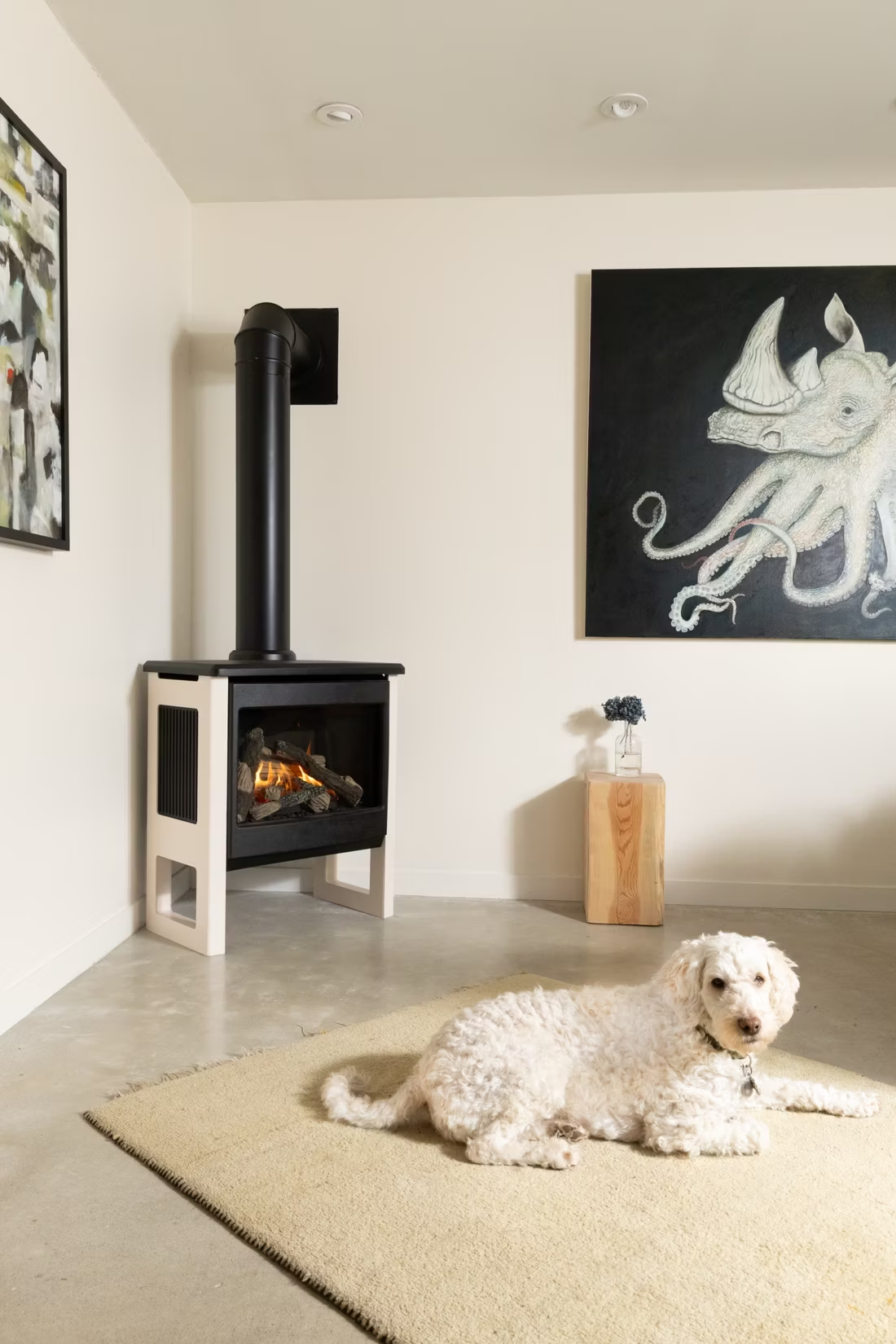
A gas fireplace is a built-in unit, framed into a wall—the right call for new construction or a remodel where there's no existing firebox. A gas insert slides into an existing masonry fireplace opening, which fits a lot of Oneonta's older homes that were originally built around a wood-burning hearth. A gas stove is freestanding on a hearth pad, similar in footprint to a wood stove but running on a gas or propane line. For most homeowners here with an existing fireplace opening, an insert is the simplest and most cost-effective path.
Do I need a permit to install a gas fireplace in Oneonta?
Yes. You'll need a building permit through the appropriate local jurisdiction—the City of Oneonta or Blount County Building Department, depending on your address—plus a gas line permit, since propane and gas line work requires a licensed installer. Most established hearth dealers who serve the Oneonta area handle this coordination as part of the installation, pulling the permit and scheduling the final inspection so you're not managing multiple trades yourself.
Should I get a vented or vent-free gas fireplace?
Vented (direct-vent) units draw combustion air from outside and exhaust it back outside through sealed venting, which makes them the safer, code-compliant default in nearly any home. Vent-free units burn directly into the room and are legal in Alabama within certain room-size limits, and they're a reasonable fit for a lot of Oneonta homes given how little of the year actually calls for sustained heavy heating—a vent-free unit can supplement a bonus room or den on the occasional cold night without any venting work at all. A local dealer can tell you which option fits your specific room and floor plan.
How often does a gas fireplace need to be serviced?
An annual inspection, ideally in the fall before the first real cold snap, is the standard recommendation—a technician checks the burner, pilot assembly, gas connections, and glass. Since Oneonta's heating season is short, many local gas fireplaces see lighter overall use than they would in a colder climate, but that doesn't eliminate the need for a checkup; components can still corrode or gum up in humid Alabama summers even when the fireplace sits unused for months at a time. Expect a service call to run somewhere in the $150-$250 range.
Gas, wood, or electric—what makes the most sense for an Oneonta home?
Gas is the practical default here: it lights instantly, doesn't require a woodpile of oak, pine, or hickory that most Oneonta households have no real need to keep stocked, and can be configured to keep running through a power outage if you choose the right ignition system. Wood-burning setups are genuinely uncommon in this climate—with lows averaging only 33°F and a short, mild heating season overall, there's rarely enough sustained cold to justify a dedicated wood stove, so most local demand for wood heat is limited to the occasional outdoor fire pit rather than an indoor system. Electric fireplaces are a solid no-venting option for a bonus room or apartment, though at Alabama Power's residential rate of roughly 16.8 cents per kWh, running one as a primary heat source costs more over time than a gas unit would.
Is my gas fireplace wasting gas?
If it was installed more than 15 years ago, probably. Older gas fireplaces keep a standing pilot light burning all the time, and that little flame can cost a couple hundred dollars a year. Newer models use pilot-on-demand ignition—the pilot lights only when you use the fireplace and goes out when you turn it off.
Does a gas fireplace work when the power is out?
Yes—modern gas fireplaces have a battery backup for the ignition system that lasts for weeks, so no power equals no problem. Your furnace can't say that: no electricity, no blower, no heat. It's one of the most common reasons families add a fireplace, and worth confirming on any model you're considering.
Does a fireplace add value to my home?
On average, a fireplace adds back to the home about the same amount you spent installing it. Add the monthly savings from heating the rooms you actually use instead of the whole house—often hundreds of dollars a year—and the value case is strong before you even count what a fire does for how your family uses the room.
How much should I budget for a fireplace?
For an average home—covering the fireplace, the vent pipe, and basic installation—a budget between $3,900 and $5,500 gives you a lot of options across wood, gas, and pellet. By the time you add finish work, gas line, and electrical, the average complete installation lands between $5,000 and $12,000 all-in. In a remodel or new build, a good rule is to put about 2.5% of the total project cost toward the fireplace.
Nearby Dealers
Hearth shops serving Oneonta and the surrounding area. Every listing shows whether it is a WhyFire partner, a dealer we have verified as authorized for the brands we recommend, or a local business carrying hearth products. No manufacturer pays for placement. How we verify dealers →
Allgas, Inc. - Gardendale
Allgas, Inc. - Arab
Allgas, Inc. - Gadsden
Get your free Project Guide & Parts List for a gas fireplace in Oneonta.
Tell me about your home and your current gas setup—propane tank, existing line, or starting from scratch—and I'll match you with a trusted local dealer and send a free Project Guide & Parts List with the exact vent kit and parts your project needs.
Find Your Fireplace →