
Pellet Heat in Montgomery: A Niche Choice for Mild Winters.
With winter lows averaging 40°F and a heating season that barely registers, most Montgomery homes don't need a pellet stove. For the households that do want one—cabins, sunrooms, or backup heat for a cold snap—we'll help you find a dealer who actually carries and installs them here.
Every Project Starts From One of These Five Situations
Montgomery's climate rarely calls for a pellet stove.
Montgomery sits in climate zone 3A at just 261 feet elevation, where winter lows average a mild 40°F and the whole heating season is short and light. Compare that to a place like Duluth, Minnesota, which has a long, brutal winter heating season lasting many months—Montgomery's cold season is measured in weeks, not months. That's the core reason pellet stoves never caught on locally the way they have in the Upper Midwest or the mountain West: air conditioning and mild-winter heat pumps dominate the HVAC conversation here, not sustained solid-fuel heating.
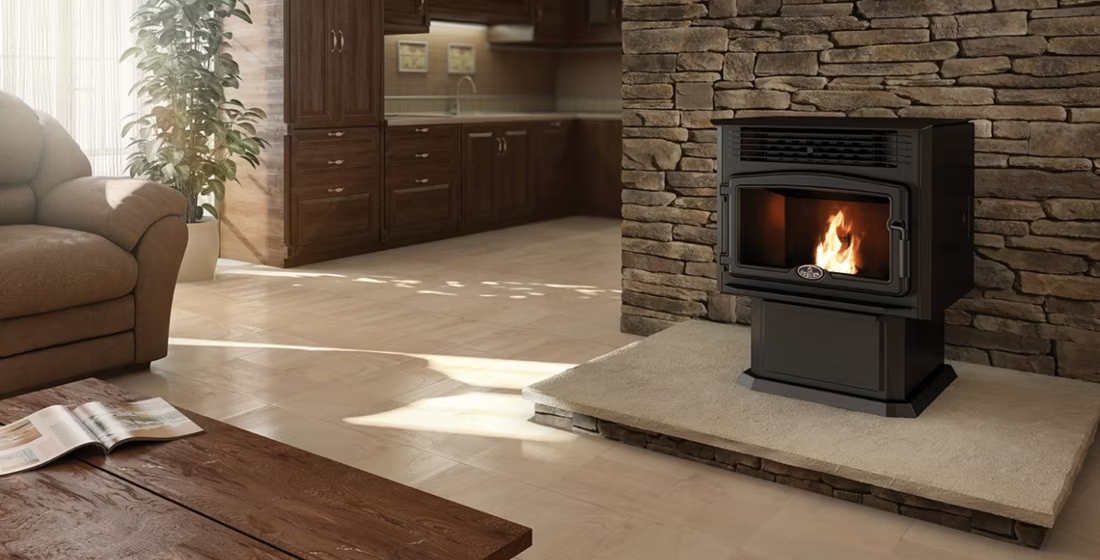
That doesn't mean nobody installs one. A handful of Montgomery-area homeowners add a pellet stove or insert to a hunting camp outside the city, a sunroom or converted garage that gets cold on the rare hard-freeze night, or simply because they prefer the low-mess convenience of pellets over splitting oak and hickory. Worth knowing upfront: pellet appliances run on an electric auger and blower, so they won't function during a power outage the way a wood stove would—a real consideration when Alabama ice storms occasionally knock out Alabama Power service for days at a time. Regional pellet suppliers like Lignetics, Hamer Pellet Fuel, and Greenway Renewable Energy do serve the area, so fuel sourcing isn't the obstacle—demand for the appliance itself is what's limited.
Three steps. No salesperson until you're ready.
Tell us about your project
Your zip code, your situation, and the fuel you're leaning toward—or let the answers point you to one.
See what's actually available
The brands dealers within 100 miles genuinely carry—real options, never a catalog mirage.
Get your dealer & Project Guide
A trusted local dealer, plus the free Project Guide & Parts List that names every component of the job.
Frequently Asked Questions
Does a pellet stove make sense in Montgomery's climate?
For most Montgomery homes, not really—with such a short heating season and winter lows averaging 40°F, the cold months are too brief to justify the investment for whole-home heat. Where it does make sense is narrower: a detached cabin or hunting camp in rural Montgomery County, a sunroom or bonus room that gets genuinely cold a few weeks a year, or a homeowner who simply wants supplemental ambiance without stacking wood. If your goal is reliable primary heat, a heat pump or gas furnace will serve a Montgomery home far better than a pellet appliance.
How much does a pellet stove installation cost in Montgomery?
Because pellet stoves are a niche purchase in this market, there isn't a deep local pricing history to draw from the way there is in colder states. Nationally, a pellet stove or insert installation typically runs $3,000 to $6,000 depending on the unit, venting path, and whether an existing masonry fireplace is being converted. Given how few Montgomery hearth dealers stock pellet appliances regularly, it's worth getting a firm in-home quote from a trusted local installer rather than assuming a price off a website.
Will a pellet stove keep my home warm during a power outage?
No—and this is one of the most important things to understand before buying one in Alabama. Pellet stoves rely on an electric auger to feed fuel and a blower to distribute heat, so when the power goes out, the stove goes out too. That matters here because winter ice storms occasionally take down Alabama Power service for extended stretches. If backup heat during outages is your priority, a wood stove or a battery-backed gas fireplace is a more reliable choice than pellet.
Where do pellets come from if pellet stoves aren't common in Montgomery?
Fuel sourcing isn't actually the barrier here—regional producers like Lignetics, Hamer Pellet Fuel, and Greenway Renewable Energy supply the Southeast, so bagged hardwood and softwood pellets are available through farm supply stores and online delivery even though few Montgomery retailers sell the stoves themselves. The bigger challenge is finding a local dealer who installs and services pellet units regularly, which is exactly the kind of matching a trusted local search helps with.
Should I consider a wood stove instead, since both are uncommon in Montgomery?
Both wood and pellet appliances are unusual choices for Montgomery's mild climate, but they solve different problems. A wood stove can run without electricity, which matters if outage resilience is your goal, and Montgomery County has plenty of oak, pine, and hickory available regionally. A pellet stove is cleaner to operate and easier to maintain, but needs power to function. For most Montgomery homeowners, though, neither is the default recommendation—gas and electric heat pumps handle the region's short, mild heating season more efficiently and with far less local dealer scarcity.
Is it worth installing a pellet stove for just a few cold weeks a year?
It depends on how you use the space. If you're heating a sunroom, converted garage, or detached structure that central HVAC doesn't reach well, a pellet stove can be a reasonable supplemental solution—you load it during the cold snap in January and let it sit idle the rest of the year. If you're hoping it will meaningfully offset a whole-home heating bill, the math rarely works in a 3A climate zone like Montgomery's, where the heating season is short enough that the appliance spends most of the year unused.
Do I need a permit to install a pellet stove in Montgomery?
Generally yes—new solid-fuel and pellet-burning appliance installations require a building permit through the City of Montgomery's building inspection division, similar to what's required for a gas insert. Most installers who regularly handle these jobs will pull the permit as part of the project. Because pellet installs are infrequent here, it's worth confirming directly with your chosen installer that they're familiar with the local permitting process rather than assuming it's routine for them.
What's the difference between a pellet stove and a pellet insert?
A pellet stove is a freestanding unit that vents through a wall or existing chimney and can go almost anywhere with proper clearances—a good option for a sunroom or standalone cabin. A pellet insert is built to slide into an existing masonry fireplace opening, using the chimney as its vent path, which suits a Montgomery home with an older wood-burning fireplace that's rarely used. Given how few local dealers stock either configuration, the right choice often comes down to which one a trusted local installer can actually source and service.
Pellet vs. gas—which is the better fit for my Montgomery home?
For most homes here, gas wins on practicality: natural gas and propane service are widely available in Montgomery, gas fireplaces and inserts are far more common locally, and dealers who install and service them are easy to find. Gas also delivers instant, consistent heat without any fuel storage or auger maintenance. Pellet makes more sense only in specific situations—a detached structure without gas service, or a homeowner who specifically wants the pellet-stove experience for ambiance. If you're simply looking for reliable supplemental heat in a Montgomery home, gas is the more dealer-supported, lower-friction choice.
What's the difference between an insert and a zero-clearance fireplace?
An insert is a fireplace that slides into a pre-existing wood-burning fireplace—if you don't have one, there's nothing to insert it into. A zero-clearance fireplace is built into a framed wall, which makes it the answer for remodels and new construction. Simple test: existing masonry fireplace means insert; blank or framed wall means zero-clearance.
Why is my open fireplace making my house colder?
Open fireplaces suck—literally. As the fire burns, it consumes air your furnace already paid to heat and pulls it out through the chimney, so the house is actually colder after the fire goes out than before you lit it. An insert fixes this: it seals the chimney, puts fixed glass across the front, and turns that hole in your house into a real heat source.
Can a fireplace actually lower my heating bill?
Yes—by creating a comfort zone. A furnace heats every square foot of the house just to warm the one room you're in; a gas fireplace on low burns roughly a sixth of the gas a typical furnace does. Set the furnace around 55–60 degrees as a baseline, then heat the rooms your family actually uses. Families who heat this way commonly save $20–$60 a month.
Does a fireplace add value to my home?
On average, a fireplace adds back to the home about the same amount you spent installing it. Add the monthly savings from heating the rooms you actually use instead of the whole house—often hundreds of dollars a year—and the value case is strong before you even count what a fire does for how your family uses the room.
Nearby Dealers
Hearth shops serving Montgomery and the surrounding area. Every listing shows whether it is a WhyFire partner, a dealer we have verified as authorized for the brands we recommend, or a local business carrying hearth products. No manufacturer pays for placement. How we verify dealers →
Brick Acquisition Company
Allgas, Inc. - Montgomery
Apex Gas & Appliance
Pellet Brands Stocked Around Montgomery
Manufacturers will point you to the nearest stocking dealer.
See if pellet heat makes sense for your Montgomery home.
Tell us about your space and how you plan to use it, and we'll help you figure out whether pellet is the right call—or point you toward a better local fit—then match you with a trusted Montgomery-area dealer and a free Project Guide & Parts List for your project.
Find Your Fireplace →