
Warm evenings, without the woodpile.
Montgomery winters rarely demand a furnace, but a gas fireplace still earns its keep on the cold snaps and the cool evenings you actually want to sit by a fire. Find the right unit and connect with a trusted local dealer.
Every Project Starts From One of These Five Situations
Gas heat built for Montgomery's mild winters.
Montgomery sits in climate zone 3A at just 261 feet of elevation, with an average winter low around 40°F and only a light overall winter heating load—a fraction of what a place like Fargo, ND or Duluth, MN sees in a single January. That means a gas fireplace here isn't usually pulling primary-heat duty the way it might up north. Instead, it's the thing that takes the chill off during the occasional 20s-and-30s cold snap, warms a single room on a damp winter evening, and lets you skip firing up the central HVAC just to sit in the den.
Natural gas service reaches most of the city through Spire Alabama (formerly Alagasco), and it's common to see gas log sets and direct-vent inserts in the older brick homes of Cloverdale, the Garden District, and Old Cloverdale, as well as new gas fireplaces built into newer construction around EastChase and Pike Road. Montgomery also sits squarely in a region prone to severe spring storms and occasional ice events that knock out power—Alabama Power serves the grid here, and a gas fireplace with battery-backed ignition keeps working when the lights don't.
Three steps. No salesperson until you're ready.
Tell us about your project
Your zip code, your situation, and the fuel you're leaning toward—or let the answers point you to one.
See what's actually available
The brands dealers within 100 miles genuinely carry—real options, never a catalog mirage.
Get your dealer & Project Guide
A trusted local dealer, plus the free Project Guide & Parts List that names every component of the job.
Frequently Asked Questions
How much does a gas fireplace installation cost in Montgomery?
Most gas fireplace installations in Montgomery run roughly $3,500 to $9,000, depending on the unit and how much venting or gas line work is involved. A gas log set or direct-vent insert dropped into an existing masonry fireplace with gas already run nearby sits toward the lower end. A new built-in gas fireplace for a remodel or new construction—with framing, a fresh gas line, and direct venting through an exterior wall—lands toward the upper end. Because Montgomery's mild winters mean many homeowners are prioritizing ambiance and occasional-use warmth over all-day heating capacity, a local dealer can help you avoid over-buying BTU output you'll rarely need.
Can I convert my existing wood fireplace to gas?
Yes, and it's one of the most common projects in Montgomery's older neighborhoods, where brick homes in Cloverdale and the Garden District often still have their original masonry wood fireplaces. A gas insert or vented log set typically installs into that existing firebox using a stainless liner run up the current chimney, with cost usually landing between $3,500 and $7,500 depending on whether new gas line work is needed. Given how rarely Montgomery sees hard freezes, most homeowners making this switch are after convenience and cleaner operation rather than more heat output.
Do I need natural gas, or should I use propane?
Spire Alabama's natural gas service covers most of the city of Montgomery, so if you're already on natural gas for your water heater or range, adding a fireplace is generally straightforward. Homeowners further out in Montgomery County—toward areas like Pike Road or the more rural stretches near the 36057 and 36117 zips—may fall outside natural gas territory and rely on propane instead, which requires a tank from a local propane supplier. Most gas fireplace models can be configured for either fuel; your installer sets the correct orifice and regulator for whichever you have.
Will my gas fireplace still work if the power goes out?
For most units, yes. Montgomery sees its share of severe spring storms and occasional ice events that can knock out power for hours or days, and a gas fireplace with intermittent pilot ignition (IPI) typically runs on a small battery backup that kicks in automatically when the grid drops—no Alabama Power service needed to light the fire. Valor units take it a step further: their pilot generates its own electricity through the thermocouple, so there's no battery to remember at all. If storm-season backup heat matters to you, ask your local dealer specifically about the ignition system on any model you're considering.
What's the difference between a gas fireplace, gas insert, and gas stove?
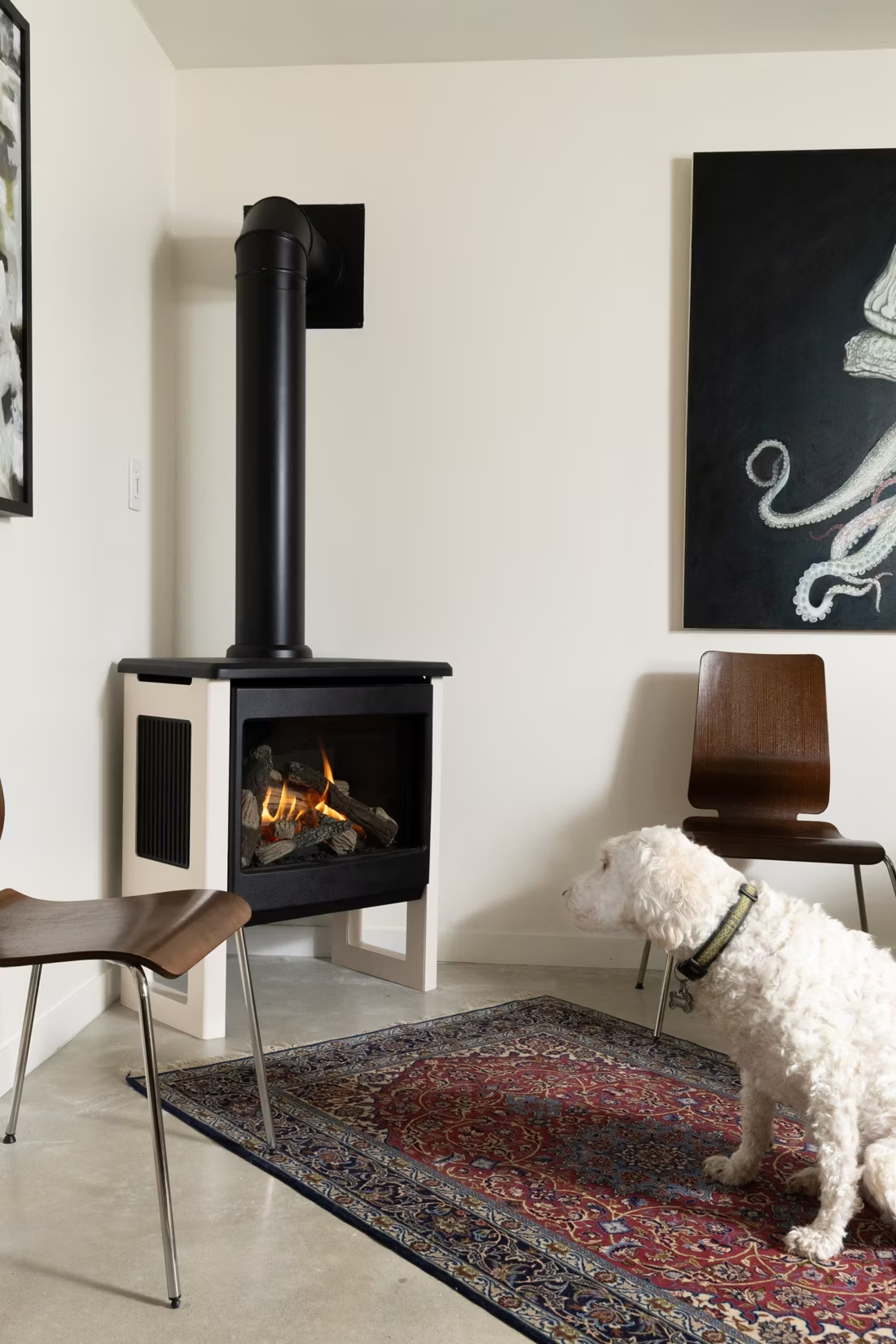
A gas fireplace is a fully built-in unit framed into a wall—the right call for new construction or a full remodel. A gas insert is sized to slide into an existing masonry firebox, which is common in Montgomery's older brick housing stock with a chimney already in place. A gas stove is freestanding, sitting on the floor like a wood stove but running on gas—a good option for a room with no existing fireplace and no interest in framing one in. Most Montgomery homeowners upgrading an existing wood fireplace go the insert route since it reuses the chimney they already have.
Do I need a permit to install a gas fireplace in Montgomery?
Yes—the City of Montgomery's building and gas permitting requires both a building permit and sign-off on the gas line work, which has to be run by a licensed gas fitter. Most established hearth dealers handle this paperwork as part of the installation, coordinating the gas line, venting, and inspection so you're not juggling separate trades. If you're outside city limits in unincorporated Montgomery County, check with the county building department, since permitting requirements can differ slightly.
Should I get a vented or vent-free gas fireplace?
Vented (direct-vent) gas fireplaces pull combustion air from outside and exhaust it back outside through sealed venting—they're the cleanest, safest option and work in every state, including Alabama. Vent-free units are also legal here and burn fuel directly into the room, which sounds efficient on paper but adds water vapor and combustion byproducts to indoor air. In Montgomery's humid Gulf South climate, that added moisture is a real downside—it can contribute to condensation and mold issues in a way it wouldn't in a drier region. For that reason, most local dealers steer Montgomery homeowners toward direct-vent units even though vent-free is permitted.
How often should a gas fireplace be serviced in Montgomery?
Plan on an annual inspection, ideally in early fall before you start using it regularly through the cooler months. A technician checks the burner, pilot assembly, venting, and gas connections, and cleans the glass and interior—quick work compared to a wood chimney sweep, but it matters for safety and keeps the warranty intact. Local gas appliance service providers typically charge in the $150–$250 range for this visit, and it's worth doing even in a mild-winter city like Montgomery where the unit might only run a few dozen nights a year.
Gas or wood—which makes more sense for a Montgomery home?
Given Montgomery's mild winters and a light overall winter heating load, most homeowners here choose gas over wood for anything beyond occasional ambiance. Gas gives you instant on-off heat with no wood handling, ash cleanup, or chimney creosote buildup to manage—and since the region rarely sees the kind of sustained cold that makes an all-night wood burn worthwhile, the convenience trade-off tends to favor gas. Wood fireplaces still show up in some of Montgomery's older homes for character and the occasional cozy fire, and local oak, pine, and hickory are the traditional species when they're used, but as a heating strategy, gas is the more practical fit for this climate.
Why is a fireplace insert so efficient?
An insert does two things: it seals the chimney completely, so you stop losing air you already paid to heat, and it radiates warmth into the room through the firebox and glass. Most add a heat-exchange fan that pulls cool room air underneath, wraps it around the hot firebox, and pushes it back out warm. Your home is more efficient before you've even lit the first fire.
Are new gas fireplaces really better than old ones?
Two ways, and they're both big. Looks: modern gas fireplaces are realistic enough that it's hard to believe they aren't burning wood. Cost: old units burn a standing pilot year-round (roughly $200 a year), while new ones use pilot-on-demand ignition and modern burners. Add remote controls and thermostat operation, and the day-to-day experience isn't close.
What is an in-home preview and do I need one?
It's a visit where a hearth professional measures your space, confirms the model you picked actually works in your home, and walks the specs—framing, gas line, venting, finish work—before anything is ordered. Some details you just can't know until you see the house. Never make a down payment without one; it's the single most-skipped step that burns buyers.
Does a fireplace add value to my home?
On average, a fireplace adds back to the home about the same amount you spent installing it. Add the monthly savings from heating the rooms you actually use instead of the whole house—often hundreds of dollars a year—and the value case is strong before you even count what a fire does for how your family uses the room.
Nearby Dealers
Hearth shops serving Montgomery and the surrounding area. Every listing shows whether it is a WhyFire partner, a dealer we have verified as authorized for the brands we recommend, or a local business carrying hearth products. No manufacturer pays for placement. How we verify dealers →
Brick Acquisition Company
Allgas, Inc. - Montgomery
Apex Gas & Appliance
Find your gas fireplace in Montgomery.
Tell us a bit about your home and we'll match you with a trusted local Montgomery dealer and send over a free Project Guide & Parts List—the exact parts, venting, and recommended installer for your gas fireplace project.
Find Your Fireplace →