
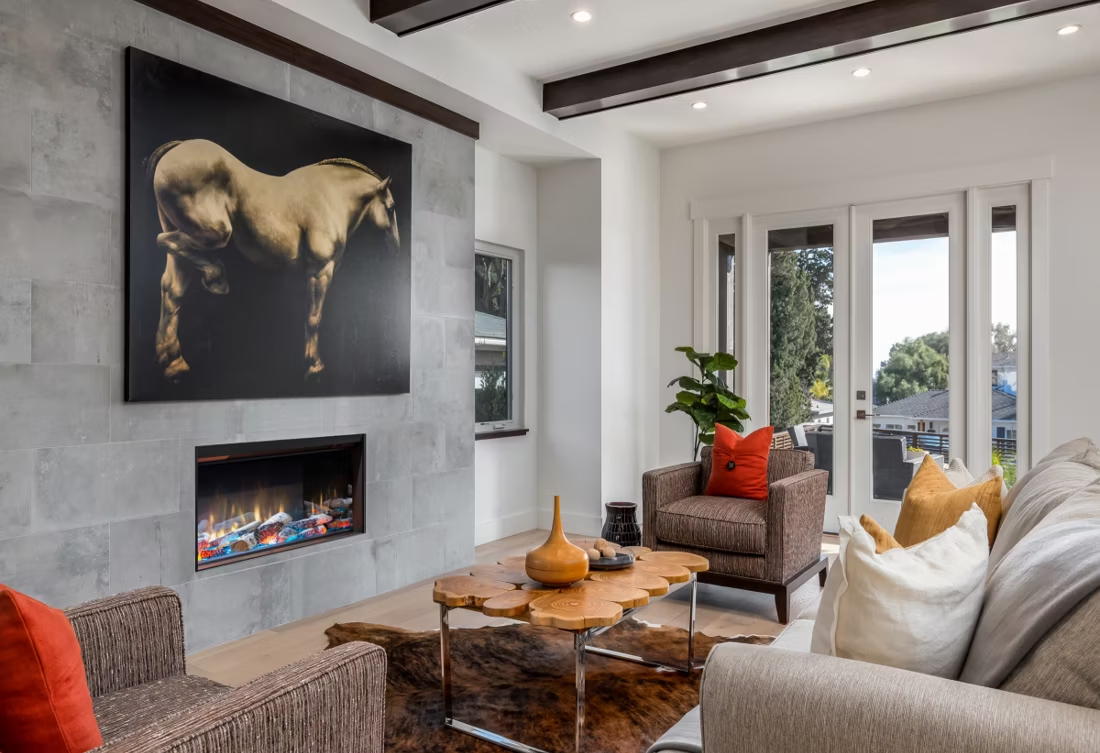
Add electric fireplace warmth to your Limestone County home.
Instant heat and ambiance for Athens, Elkmont, Ardmore, and every growing corner of Limestone County—no chimney, no gas line, no venting required. Find the right unit and connect with a trusted local dealer.
Every Project Starts From One of These Five Situations
Mild winters, modern homes, instant heat.
Limestone County sits in Alabama's Tennessee Valley, in climate zone 3A, where winters are short and mild—heating degree days run around 2,889 for the year, and the average winter low sits near 34 degrees. Compare that to Duluth, Minnesota's 8,000-plus HDD, and it's clear why central heat pumps, not wood stoves, do the heavy lifting here. Wood-burning appliances are effectively absent from new construction, and pellet stoves rarely make sense in a county where sub-freezing nights are the exception rather than the rule. Electric fireplaces, on the other hand, fit both the climate and the county's building boom.
Limestone County is one of the fastest-growing counties in Alabama, with Athens, Elkmont, Ardmore, and Mooresville absorbing spillover growth from Huntsville's manufacturing and aerospace expansion just across the county line. New subdivisions throughout the county favor open-concept great rooms and primary suites where an electric fireplace adds a focal point without the cost of a chimney, gas line, or masonry structure. Power comes through Athens Utilities Board and, in outlying areas, North Alabama Electric Cooperative—both distributing TVA electricity at rates that keep the daily operating cost of an electric fireplace modest even when it's run every evening for ambiance.
Three steps. No salesperson until you're ready.
Tell us about your project
Your zip code, your situation, and the fuel you're leaning toward—or let the answers point you to one.
See what's actually available
The brands dealers within 100 miles genuinely carry—real options, never a catalog mirage.
Get your dealer & Project Guide
A trusted local dealer, plus the free Project Guide & Parts List that names every component of the job.
Frequently Asked Questions
How much does an electric fireplace installation cost in Limestone County?
Electric fireplace installations in Limestone County vary widely by unit type. A plug-in freestanding unit or a mantel package with a built-in electric insert typically runs $600 to $2,500 including basic setup, while a fully recessed wall unit or linear built-in requiring new framing and a dedicated circuit can run $2,000 to $5,000 once an electrician is involved. Because there's no chimney, venting, or gas line to install, electric fireplaces are consistently the least expensive hearth option in the county—a big part of why they show up so often in new Athens and Elkmont subdivisions. A trusted local dealer can give you an exact quote once they know the unit and your electrical setup.
Do I need a permit to install an electric fireplace in Limestone County?
Most plug-in electric fireplaces need no permit at all—they draw from a standard outlet like any other appliance. Built-in units that require new wiring, a dedicated circuit, or structural framing changes typically need an electrical permit through the City of Athens or Limestone County, depending on whether the home sits inside or outside city limits. Your installer or electrician will pull any required permit as part of the job; it's worth confirming before work starts if you're in an unincorporated part of the county, since inspection requirements can differ slightly from what applies inside Athens or Elkmont town limits.
What size electric fireplace do I need for my home?
Sizing an electric fireplace is mostly about the wall or opening you're filling and how much supplemental warmth you want, since these units are built for comfort heating a single room rather than the whole house—expected in a climate zone 3A county where central HVAC handles the bulk of the heating load. A 26 to 40-inch insert suits a bedroom or den; a 50-inch-plus linear unit fills a great room wall in the kind of open floor plans common in newer Limestone County construction. Local dealers will measure your space and recommend a model that matches both the opening and the heat output you actually need on an occasional cold snap.
What's the difference between an electric insert, wall-mount, and freestanding electric stove?
An electric insert is designed to slide into an existing fireplace opening—a popular option for older homes in Athens or Ardmore with an existing masonry firebox that's rarely used for wood anymore. A wall-mount or built-in linear unit is recessed into new framing, common in new-construction great rooms. A freestanding electric stove or mantel package needs no construction at all—it plugs in and sits against a wall, which makes it the easiest option for renters or homeowners who want heat and ambiance without any electrical work. Each style delivers similar heat output; the choice usually comes down to the space you're filling.
Will an electric fireplace work during a power outage?
No—and this is worth knowing up front. Electric fireplaces need continuous power to run the heater, flame effect, and any fan, so they shut off completely during an outage, unlike a gas unit with battery-backup ignition or a wood stove that needs no electricity at all. For most Limestone County homes this is a minor tradeoff since outages here are typically short, but if backup heat during ice storms or TVA grid disruptions is a priority, a gas fireplace or insert is a better complement alongside an electric unit used mainly for everyday ambiance and zone heat.
How much does it cost to run an electric fireplace on my Limestone County utility bill?
Running cost depends on the wattage and how many hours a day you use it, but most electric fireplaces draw 750 to 1,500 watts on the heat setting—roughly comparable to a space heater. With Athens Utilities Board and North Alabama Electric Cooperative both distributing TVA power at rates generally below the national average, running an electric fireplace for several hours a night through a mild Limestone County winter typically adds somewhere in the range of $10 to $30 to a monthly bill, depending on the unit and how often the heater—versus just the flame effect—is running.
Are wood-burning fireplaces still used in Limestone County?
Wood-burning fireplaces are uncommon in new Limestone County construction, and it's rare to see a wood stove installed as a primary heat source—the climate simply doesn't demand it, with average winter lows only dipping to the mid-30s. That said, older homes throughout Athens, Elkmont, and the rural parts of the county sometimes still have a working masonry fireplace, often burning local oak, hickory, or pine on especially cold nights or just for the ambiance of a real fire. Many homeowners with an underused wood fireplace end up converting it to an electric or gas insert instead, trading occasional wood-hauling for a fireplace they'll actually use daily.
Electric vs. gas—which is right for my home?
Gas fireplaces produce real heat output and, with the right ignition system, can run during a power outage—a genuine advantage in Limestone County during TVA grid disruptions or ice storms. Electric fireplaces cost less to install, need no gas line or venting, and can go almost anywhere in the house, including bedrooms and apartments where gas isn't practical. For a primary living space where you want dependable heat, gas is often the better fit; for a bedroom, basement, or secondary room where ambiance and modest supplemental warmth are the goal, electric is usually the simpler and more affordable choice. Some Limestone County homeowners install both—gas in the main living area, electric elsewhere.
How long do electric fireplaces last, and what maintenance do they need?
Electric fireplaces are close to maintenance-free—there's no chimney to sweep, no gas lines to inspect, and no ash to clean up. The main components that eventually need attention are the heating element and the LED light strip that creates the flame effect, both of which typically last 10 to 15 years or more with normal household use before a repair or replacement is worth considering. Occasional dusting of the vents and keeping the unit's air intake clear are really the only upkeep most Limestone County homeowners ever need to do.
Can I put a TV above my fireplace?
Yes—with an asterisk. Fireplaces are hot and TVs don't like heat. Either put a mantel between them to deflect rising warmth, or choose a fireplace with heat-management technology that creates a cool zone on the wall above—the wall stays around 125 degrees, barely warm, while the room still gets full heat. If you like clean lines and don't want a mantel, heat management is the answer.
Does an electric fireplace need a vent or chimney?
No—that's its superpower. An electric fireplace needs a wall and an outlet, period. No vent pipe, no gas line, no clearances to design around, which is why it works in bedrooms, offices, apartments, and walls where venting a gas or wood unit would be impractical or impossible. Installation is typically the simplest and least expensive of any fireplace type.
How much should I budget for a fireplace?
For an average home—covering the fireplace, the vent pipe, and basic installation—a budget between $3,900 and $5,500 gives you a lot of options across wood, gas, and pellet. By the time you add finish work, gas line, and electrical, the average complete installation lands between $5,000 and $12,000 all-in. In a remodel or new build, a good rule is to put about 2.5% of the total project cost toward the fireplace.
Does a fireplace add value to my home?
On average, a fireplace adds back to the home about the same amount you spent installing it. Add the monthly savings from heating the rooms you actually use instead of the whole house—often hundreds of dollars a year—and the value case is strong before you even count what a fire does for how your family uses the room.
Stove and Fireplace Dealers in Limestone County
Listings include WhyFire partner dealers, dealers we have verified as authorized for the brands we recommend, and established local businesses that carry hearth products. Every listing shows which one it is. The ones marked Preferred run on WhyFire's software, so they can show you real pricing and book your appointment right here. No manufacturer pays for placement. How we verify dealers →
Higdon Service, Inc.
Atnip Design & Supply Center
Allgas, Inc.
Alabama Fireplace & Construction Specialties
Find your electric fireplace in Limestone County.
Tell us about your home and how you want to use it, and we'll match you with a trusted local dealer and a free Project Guide & Parts List—the exact unit, electrical requirements, and installation plan for your Limestone County home.
Find Your Fireplace →