
The right gas fireplace for Limestone County's mild winters.
Instant, controllable heat for the Tennessee Valley's short heating season—natural gas through Athens Utilities Board in town, propane across the rest of Limestone County. Get matched with a local dealer who can size and install it right.
Every Project Starts From One of These Five Situations
Comfort heat for Limestone County's short winters.
Limestone County sits in the Tennessee Valley just west of Huntsville, in a humid subtropical climate zone (3A) with a short, mild winter heating season—just a fraction of the heating load a place like Duluth, MN or Burlington, VT sees each year. Winter lows average around 34°F, and most years bring a handful of nights in the 20s rather than sustained deep freezes. The county's growth, driven by the Toyota Mazda plant and the broader Huntsville-Decatur job market, has brought a wave of new construction to Athens and the surrounding growth corridors—and a lot of those new homes are built gas-ready from the start.
Oak, pine, and hickory grow throughout Limestone County, and plenty of older homes in Athens still have a working masonry fireplace—but with a heating season this short and mild, full-time wood burning isn't the practical choice it is in colder parts of the country. Gas fills that gap well: instant heat at the flip of a switch or remote, no wood to split or stack, and a clean look that suits both new-build homes near I-65 and historic houses closer to the downtown Athens square. It's also worth noting that ice storms—not heavy snow—are the county's typical winter power-outage risk, which makes a gas fireplace with battery-backup ignition a genuinely useful backup heat source, not just a design feature.
Three steps. No salesperson until you're ready.
Tell us about your project
Your zip code, your situation, and the fuel you're leaning toward—or let the answers point you to one.
See what's actually available
The brands dealers within 100 miles genuinely carry—real options, never a catalog mirage.
Get your dealer & Project Guide
A trusted local dealer, plus the free Project Guide & Parts List that names every component of the job.
Frequently Asked Questions
How much does a gas fireplace installation cost in Limestone County?
A typical gas fireplace or insert installation in Limestone County runs roughly $3,500 to $9,000, depending on the unit, the venting path, and whether new gas line work is required. A direct-vent insert going into an existing masonry fireplace with gas already run to the house sits toward the lower end. A new direct-vent fireplace in a remodel or new-construction home—with framing, venting, and a fresh gas line—lands in the middle to upper range. Homes outside the natural gas service area that need a propane tank set and line run will typically see costs at the higher end. A local dealer can give you a firm number after an in-home look at your space.
Can I convert my existing wood fireplace to gas?
Yes, and it's a common upgrade for older homes in and around Athens with a working masonry fireplace. A gas insert is installed into the existing firebox, typically using a stainless liner run up the current chimney as the vent path. In Limestone County this conversion usually runs $3,500 to $7,000, with cost driven mainly by whether the home already has natural gas or propane on site and whether new gas line work is needed. It keeps the look of the original fireplace while trading ash and wood handling for instant, adjustable heat—a popular move for homeowners who inherited a fireplace but never wanted to deal with firewood.
Do I need natural gas, or can I use propane?
Either works, and which one you use mostly comes down to where in the county you live. Athens Utilities Board provides natural gas service in and around Athens and the newer growth areas closest to town. Outside that footprint—including much of rural Limestone County around Elkmont, Ardmore, and Mooresville—propane is the standard fuel, supplied by regional propane companies with either a leased or owned tank on the property. Most gas fireplace models can be set up for either fuel; your installer just configures the correct orifice and regulator for the gas type you have.
Will my gas fireplace work during a power outage?
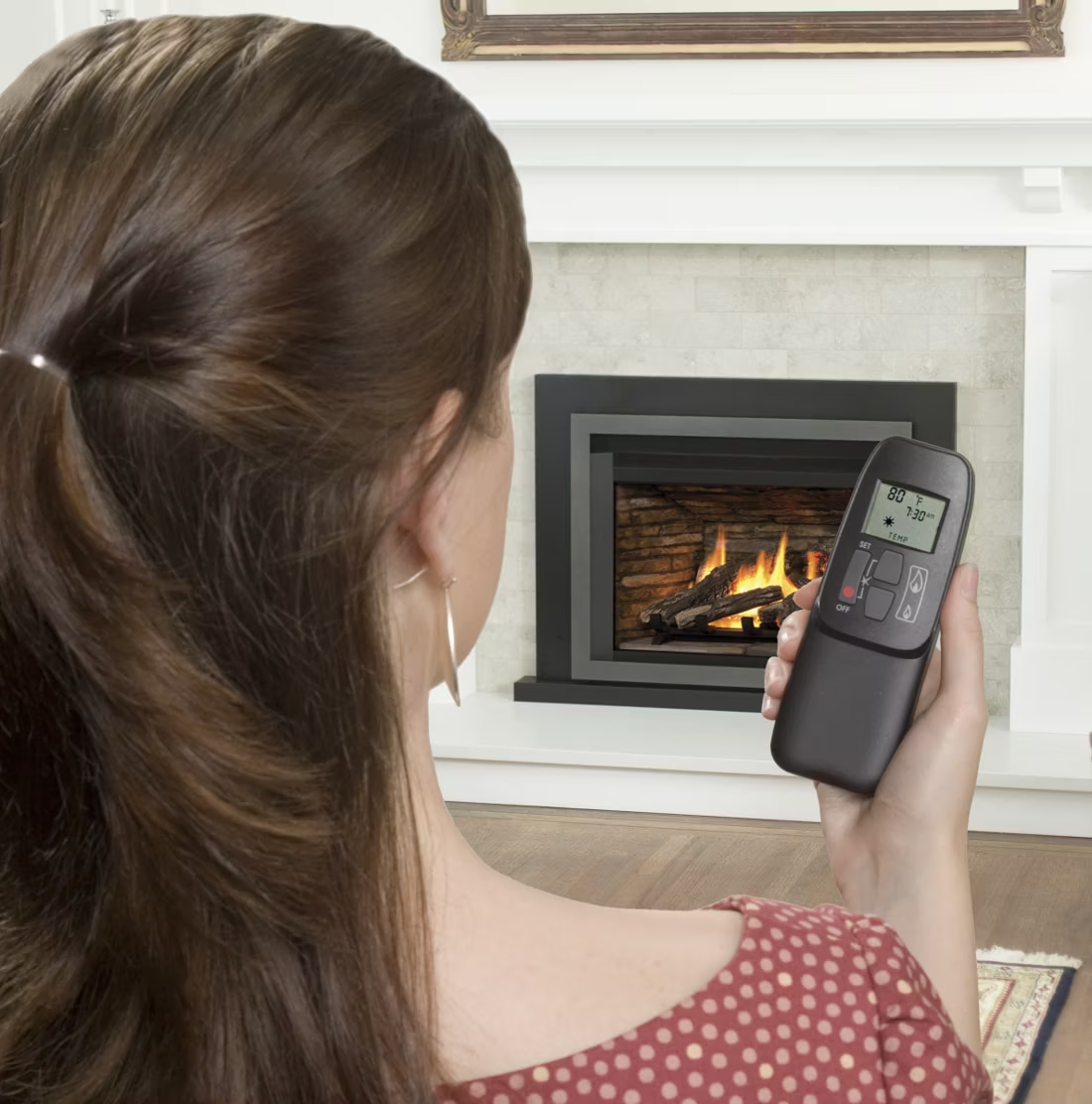
Most modern gas fireplaces will, which matters more in Limestone County than you might expect—the county's biggest winter power-outage risk isn't heavy snow, it's ice storms, and those can knock out power for a day or more. Units with IPI (intermittent pilot ignition) run on a battery backup that kicks in automatically when the power drops, so the fireplace still lights on demand. Valor's gas fireplaces go a step further: their pilot's thermocouple generates its own electricity, so there are no batteries to remember at all. Either approach gives you real backup heat during an ice-storm outage, which a standard wood-burning setup can't offer if you don't already have one installed.
What's the difference between a gas fireplace, gas insert, and gas stove?
A gas fireplace is a fully built-in unit, framed into a wall—the right call for new construction or a remodel without an existing fireplace. A gas insert drops into an existing masonry firebox, sealing it up and venting through the current chimney with a liner—the common choice for older Athens homes with a fireplace they want to upgrade. A gas stove is a freestanding unit that sits on the floor like a wood stove but burns gas, useful when you want heat in a room with no existing chimney or fireplace opening at all. Most Limestone County homeowners with an existing fireplace end up choosing an insert; new-build homeowners more often go with a built-in fireplace.
Do I need a permit to install a gas fireplace in Limestone County?
Yes—new gas fireplace installations typically require both a building permit and a gas line permit through the Limestone County building department, or through the City of Athens if the home is inside city limits. The gas line portion has to be done by a licensed gas-fitter, which is one of the main reasons to go with an established local dealer rather than a general contractor: they coordinate the gas work, venting, and inspection sign-off as one job instead of leaving you to manage separate trades.
What's the difference between vented and vent-free gas fireplaces?
Vented (direct-vent or B-vent) fireplaces pull combustion air from outside and exhaust the byproducts back outside through sealed venting. Vent-free units burn fuel directly into the room, with no exterior vent, releasing some water vapor and trace combustion gases into the living space. Vent-free is legal in Alabama, but it comes with a real drawback in Limestone County's already humid Tennessee Valley climate: adding extra moisture into a home during a mild, humid winter can aggravate condensation and mold issues that this region already deals with more than drier climates do. For that reason, most local dealers steer homeowners here toward vented direct-vent units, which sidestep that problem entirely and still deliver a strong flame and real heat.
How often should my gas fireplace be serviced?
An annual inspection is the standard recommendation for any gas fireplace or insert. A technician checks the burner, pilot assembly, venting, and gas connections, and cleans the glass and interior—a much quicker job than a wood chimney sweep, but still important for safe operation. In Limestone County, expect to pay roughly $125 to $200 for a standard annual service call from a local hearth or gas appliance company.
Gas vs. wood—which makes more sense in Limestone County?
With winters this short and mild—average lows around 34°F and a heating season that's a fraction as long as it is farther north—full-time wood heat just isn't the practical fit here that it is farther north. Oak, hickory, and pine are all around the county and plenty of older homes still have a wood-burning fireplace, but it's mostly used occasionally, for ambiance or a chilly evening, not as a primary heat source. Gas is the more common choice for homeowners who want reliable, on-demand heat without tending a fire or storing cordwood, and it's the standard install in most new Limestone County construction. If you already have a wood-burning fireplace you enjoy using a few nights a winter, there's no need to give it up—a gas insert or a second gas unit elsewhere in the home covers the convenience side without replacing it.
Does a gas fireplace work when the power is out?
Yes—modern gas fireplaces have a battery backup for the ignition system that lasts for weeks, so no power equals no problem. Your furnace can't say that: no electricity, no blower, no heat. It's one of the most common reasons families add a fireplace, and worth confirming on any model you're considering.
Why is my open fireplace making my house colder?
Open fireplaces suck—literally. As the fire burns, it consumes air your furnace already paid to heat and pulls it out through the chimney, so the house is actually colder after the fire goes out than before you lit it. An insert fixes this: it seals the chimney, puts fixed glass across the front, and turns that hole in your house into a real heat source.
Can a fireplace actually lower my heating bill?
Yes—by creating a comfort zone. A furnace heats every square foot of the house just to warm the one room you're in; a gas fireplace on low burns roughly a sixth of the gas a typical furnace does. Set the furnace around 55–60 degrees as a baseline, then heat the rooms your family actually uses. Families who heat this way commonly save $20–$60 a month.
Does a fireplace add value to my home?
On average, a fireplace adds back to the home about the same amount you spent installing it. Add the monthly savings from heating the rooms you actually use instead of the whole house—often hundreds of dollars a year—and the value case is strong before you even count what a fire does for how your family uses the room.
Stove and Fireplace Dealers in Limestone County
Listings include WhyFire partner dealers, dealers we have verified as authorized for the brands we recommend, and established local businesses that carry hearth products. Every listing shows which one it is. The ones marked Preferred run on WhyFire's software, so they can show you real pricing and book your appointment right here. No manufacturer pays for placement. How we verify dealers →
Higdon Service, Inc.
Atnip Design & Supply Center
Allgas, Inc.
Alabama Fireplace & Construction Specialties
Find your gas fireplace in Limestone County.
Tell us about your home and we'll match you with a trusted local dealer and send over a free Project Guide & Parts List—the exact parts, vent kit, and recommended installer for your Limestone County gas project.
Find Your Fireplace →