
Keep Your Family Warm and Safe—No Matter What
Wood heat isn't the default here, but it still has a place—backup warmth during ice storms, ambiance on the occasional cold night, and a real fire for those who want one. We'll connect you with a local dealer who can tell you straight whether it makes sense for your home.
Every Project Starts From One of These Five Situations
Wood is the exception here, not the rule.
Hueytown sits in climate zone 3A with an average winter low around 34°F and just 2,537 heating degree days a year—a fraction of what a place like Duluth, MN or Burlington, VT racks up in a single hard winter. Most homes here are built and heated around that reality: central HVAC does the heavy lifting, and a fire is more often something people want than something they need. That's a very different starting point than the wood-heavy heating culture you'd find further north.
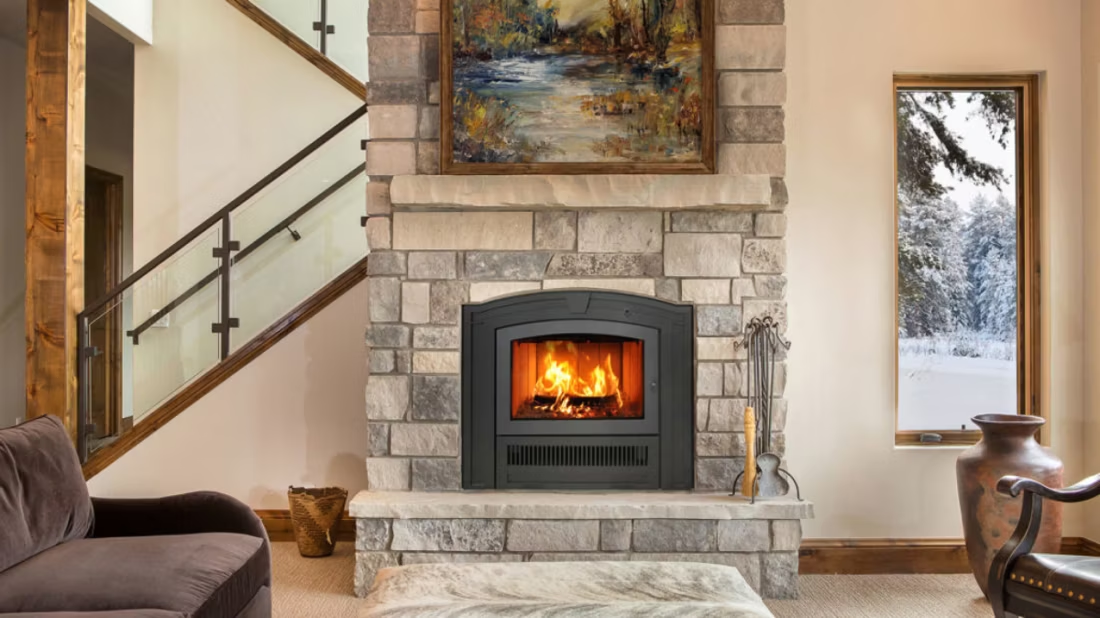
That said, wood isn't irrelevant in Hueytown—it's just a secondary choice. Jefferson County's oak, pine, and hickory are all commonly available and burn well, and there's no local air quality nonattainment issue to complicate burning, unlike parts of the Southeast that restrict wood smoke. Where wood stoves earn their keep locally is as backup heat during the ice storms that occasionally knock out Alabama Power service for days, or simply as the centerpiece of a den or sunroom where homeowners want real flame and radiant heat rather than the look of a fire. If that's you, a trusted local dealer can walk you through what actually makes sense for your house rather than talking you into more stove than you'll ever use.
Three steps. No salesperson until you're ready.
Tell us about your project
Your zip code, your situation, and the fuel you're leaning toward—or let the answers point you to one.
See what's actually available
The brands dealers within 100 miles genuinely carry—real options, never a catalog mirage.
Get your dealer & Project Guide
A trusted local dealer, plus the free Project Guide & Parts List that names every component of the job.
Frequently Asked Questions
How much does a wood stove installation cost in Hueytown?
Because wood-burning installs are less common in the Birmingham metro than in colder parts of the country, pricing runs on the higher end of the national range—typically $3,500 to $7,500 for a freestanding stove or insert, depending on whether you're venting through an existing masonry chimney or need new Class A pipe run through a wall or roof. Homes without any existing chimney or hearth pad will sit at the top of that range once framing and hearth clearance work are added in. A local dealer can give you a firm number after seeing your specific setup.
Does a wood stove even make sense in Hueytown's climate?
For most homes, no—not as a primary heat source. With an average winter low around 34°F and roughly 2,537 heating degree days a year, Hueytown just doesn't get the sustained cold that makes wood heat a practical everyday necessity the way it is in northern climates. Where it does make sense is as supplemental or backup heat: something to fall back on when an ice storm takes down power lines, or simply a real fire for a den or sunroom where the homeowner wants the experience, not the BTUs. We'll be straightforward with you about that rather than oversell the case.
What firewood is available locally, and how do I store it in this climate?
Oak and hickory are the standard choices around Jefferson County for heat output and burn time, and pine is widely available for kindling or quicker-burning fires. The tricky part in this climate is humidity, not cold—wood needs a full 6 to 12 months of seasoning under cover with good airflow before it burns clean, and stacked wood left uncovered through an Alabama summer can mold or attract termites faster than it would in a drier climate. Elevated, covered, off-ground storage matters more here than the species you pick.
Do I need a permit to install a wood stove in Hueytown?
Most new wood-burning installations require a building permit through the applicable local building department, and the unit itself needs to meet current EPA emissions standards. There's no local air quality nonattainment designation affecting burning in this area, so you won't run into the seasonal curtailment rules that some Western cities impose. Most installers who handle wood stoves in this market will pull the permit as part of the job, since installs are infrequent enough that they know the process well.
Is a wood stove a good backup heat option during power outages?
Yes, and it's one of the better arguments for wood heat in a mild climate like this one. Alabama Power service in Jefferson County can go down for extended stretches during ice storms, and a wood stove or insert keeps producing heat with zero electricity—no auger, no blower, no thermostat. If backup heat during winter storms is your main reason for considering wood, look at a simple, non-catalytic freestanding stove rather than a complex catalytic unit; it's less to maintain for something you might only run a handful of times a year.
Wood vs. gas—which makes more sense for a Hueytown home?
For most homes here, gas is the more practical everyday choice—it's instant, requires no wood handling, and fits the way people actually heat in a climate zone 3A winter. Wood earns its place when a homeowner specifically wants the experience of a real fire, wants heat that doesn't depend on the grid during ice storms, or has a den or sunroom they want to center around a wood-burning unit rather than a switch-operated one. Many local homeowners who install wood do so alongside existing gas or electric heat rather than instead of it—it's an addition, not a replacement.
Should I install a freestanding wood stove or a wood insert?
If you already have a masonry fireplace—common in older Hueytown homes—an insert is usually the better fit. It uses the chimney you already have, closes up the drafty open hearth, and turns an inefficient fireplace into something that actually throws heat. A freestanding stove makes more sense in a room without an existing fireplace, like a converted garage, sunroom, or workshop, where you're starting from scratch on venting anyway. A local dealer will look at your existing masonry and chimney condition before recommending either.
How often does a wood stove need chimney inspection and cleaning in a mild climate?
The Chimney Safety Institute of America recommends an annual inspection regardless of climate, and that holds true even for a stove that only gets occasional use in Hueytown. Light seasonal or backup-heat use still deposits creosote, and a chimney that sits unused most of the year is also more prone to animal nesting and blockages between burns. Plan on a sweep and inspection once a year, ideally in early fall before the first cold snap, even if you only expect to light a handful of fires all winter.
Would I be better off with an electric fireplace instead of wood?
For a lot of Hueytown homes, yes—especially if ambiance matters more than backup heat. An electric fireplace or insert runs on Alabama Power service at roughly $0.17 per kWh, needs no chimney, no wood storage, and no annual sweep, and installs for a fraction of what a wood stove costs. The tradeoff is that it won't produce heat during a power outage, which is the one scenario where wood clearly wins in this climate. If storm backup is your priority, wood or a battery-backed gas unit makes more sense; if you just want flame and glow with zero maintenance, electric is hard to beat here.
What's the difference between an insert and a zero-clearance fireplace?
An insert is a fireplace that slides into a pre-existing wood-burning fireplace—if you don't have one, there's nothing to insert it into. A zero-clearance fireplace is built into a framed wall, which makes it the answer for remodels and new construction. Simple test: existing masonry fireplace means insert; blank or framed wall means zero-clearance.
Why is my open fireplace making my house colder?
Open fireplaces suck—literally. As the fire burns, it consumes air your furnace already paid to heat and pulls it out through the chimney, so the house is actually colder after the fire goes out than before you lit it. An insert fixes this: it seals the chimney, puts fixed glass across the front, and turns that hole in your house into a real heat source.
Can a fireplace actually lower my heating bill?
Yes—by creating a comfort zone. A furnace heats every square foot of the house just to warm the one room you're in; a gas fireplace on low burns roughly a sixth of the gas a typical furnace does. Set the furnace around 55–60 degrees as a baseline, then heat the rooms your family actually uses. Families who heat this way commonly save $20–$60 a month.
Does a fireplace add value to my home?
On average, a fireplace adds back to the home about the same amount you spent installing it. Add the monthly savings from heating the rooms you actually use instead of the whole house—often hundreds of dollars a year—and the value case is strong before you even count what a fire does for how your family uses the room.
Nearby Dealers
Hearth shops serving Hueytown and the surrounding area. Every listing shows whether it is a WhyFire partner, a dealer we have verified as authorized for the brands we recommend, or a local business carrying hearth products. No manufacturer pays for placement. How we verify dealers →
Southern Fireplaces
Colonial Fireplace Company
Allgas, Inc. - Gardendale
Find your wood fireplace in Hueytown.
Tell us about your home and what you actually need it for—ambiance, backup heat, or both—and we'll match you with a local dealer and a free Project Guide & Parts List for your specific setup.
Find Your Fireplace →