
Pellet heat in Hamilton, Alabama? Here's the honest answer.
With winter lows averaging 28°F and a fairly short, mild heating season, Hamilton doesn't see much demand for pellet stoves—but for the right home, one can still make sense. We'll help you find out, and connect you with a trusted dealer if it does.
Every Project Starts From One of These Five Situations
A mild climate makes pellet stoves a niche choice here.
Hamilton sits at 434 feet in Marion County, in climate zone 3A—mild enough that most homes lean on central heat pumps and propane furnaces to get through winter, not solid-fuel stoves. With a fairly short, mild heating season and average winter lows near 28°F, Hamilton's heating season is a fraction of what a town like Duluth, Minnesota deals with, where the winter heating load runs three times as high. That difference shows up directly in what local hardware stores and hearth dealers keep in stock: pellet stoves aren't a standard item here the way they are farther north.
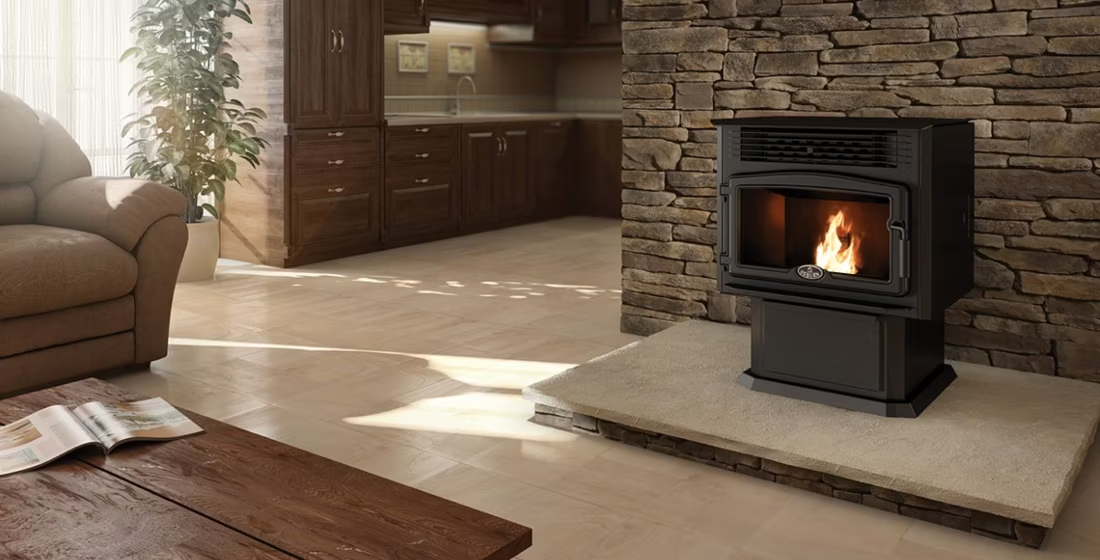
That doesn't mean nobody uses one. Homeowners with a sunroom or workshop the central system doesn't reach, people who relocated from colder states and already know pellet heat, and folks who like the look of a stove without splitting oak, pine, or hickory firewood still install them occasionally. Regional pellet brands like Lignetics, Hamer Pellet Fuel, and Greenway Renewable Energy all distribute into northwest Alabama, so fuel supply isn't the obstacle—finding a dealer who installs and services pellet appliances regularly is the harder part, and that's exactly where a trusted local match matters.
Three steps. No salesperson until you're ready.
Tell us about your project
Your zip code, your situation, and the fuel you're leaning toward—or let the answers point you to one.
See what's actually available
The brands dealers within 100 miles genuinely carry—real options, never a catalog mirage.
Get your dealer & Project Guide
A trusted local dealer, plus the free Project Guide & Parts List that names every component of the job.
Frequently Asked Questions
Are pellet stoves actually common in Hamilton, AL?
Not especially. Hamilton's climate (zone 3A, a fairly short, mild heating season, winter lows averaging 28°F) is mild enough that most homes rely on heat pumps from Alabama Power or Tombigbee Electric Cooperative, or propane, for daily heat. Pellet stoves show up here more as a supplemental or specialty choice—a sunroom, a detached shop, a second home—rather than a primary heat source. If you're set on one, it's worth talking through your specific space with a dealer before assuming it's the right fit.
How much does a pellet stove installation cost in Hamilton?
Because pellet installs are infrequent here, there isn't a well-established local price list the way there is for gas or heat pump work. Regionally, a pellet stove or insert installation—including venting and hearth pad—typically runs $3,000 to $6,000 depending on the unit and whether you're venting through an existing masonry chimney or a new wall penetration. A local or regional dealer can give you a firm number once they've seen the space; this is one area where an actual quote matters more than a national average.
Where can I buy pellet fuel near Hamilton?
Lignetics, Hamer Pellet Fuel, and Greenway Renewable Energy all distribute pellets into northwest Alabama, and any of them can typically be special-ordered through a farm supply or hearth dealer even if they're not sitting on the shelf. Because Hamilton doesn't have the volume of pellet-stove households that a colder market does, don't expect big-box pellet aisles year-round—plan to order ahead of the season or set up standing delivery through a dealer.
Will a pellet stove keep my house warm if the power goes out?
Not on its own—this is a common misconception. Pellet stoves depend on an electric auger to feed fuel and a blower to circulate heat, so a power outage shuts them down just like central HVAC does. If backup heat during Marion County's occasional ice storms is your real goal, a battery backup or small generator dedicated to the stove is one option, but a vented gas appliance or a wood-burning unit will typically handle outages more simply. Worth discussing with a dealer before you commit to pellet as your storm-heat plan.
What size pellet stove makes sense for a Hamilton home?
Given the mild climate here—winter lows averaging 28°F and a short heating season—most Hamilton installs are sized for supplemental heat rather than whole-home output. A smaller unit rated for 1,000 to 1,500 square feet is plenty for a sunroom, den, or workshop; going bigger just means more idle time and short burn cycles, which pellet stoves don't handle as gracefully as a well-matched smaller unit. A dealer should size the stove to the specific room, not just the whole house square footage.
Can I convert an existing wood fireplace to pellet in Hamilton?
Yes—a pellet insert can go into most existing masonry fireplaces, using the chimney chase for venting (often with a new liner) or venting directly through the wall behind it, since pellet appliances don't require the same draft as wood. It's a straightforward project for a dealer experienced with inserts, even in a market like Hamilton where pellet work isn't the daily bread-and-butter job. Expect the dealer to inspect your existing chimney condition before quoting the conversion.
Do I need a permit to install a pellet stove in Hamilton?
Likely yes, though pellet installs are uncommon enough locally that it's not a well-worn process. Check with the City of Hamilton or Marion County building department before installation—most jurisdictions in Alabama require a permit for a new venting penetration or hearth appliance install, and a qualified installer will typically pull it for you as part of the job rather than leaving it to you.
Pellet vs. gas vs. electric heat—what actually makes sense in Hamilton?
For most Hamilton homes, gas where propane service is available, or an electric heat pump through Alabama Power or Tombigbee Electric Cooperative, is the practical daily heat source—that's reflected in local relevance ratings, where gas and electric are standard and pellet is not. At the roughly 16.8-cent-per-kWh residential rate common to both utilities, running a pellet stove for supplemental heat can still pencil out cheaper than pure electric resistance heat, but it won't out-compete a well-sized heat pump for whole-home efficiency. Pellet tends to make the most sense as a secondary, ambiance-plus-backup source rather than the primary system.
If pellet stoves are rare here, why would anyone choose one over wood?
Cleaner operation is the main draw—no splitting or stacking oak, pine, or hickory, no chimney creosote to manage, and a thermostat-controlled burn instead of tending a fire. The tradeoff is that pellet stoves need electricity to run the auger and blower, so they're not the choice if uninterrupted heat during a power outage is your priority—wood handles that better. In a mild climate like Hamilton's, where either fuel is really running a supplemental appliance rather than a primary heat source, the choice usually comes down to how hands-on you want to be, not which one heats better.
Why is my open fireplace making my house colder?
Open fireplaces suck—literally. As the fire burns, it consumes air your furnace already paid to heat and pulls it out through the chimney, so the house is actually colder after the fire goes out than before you lit it. An insert fixes this: it seals the chimney, puts fixed glass across the front, and turns that hole in your house into a real heat source.
How often does a pellet stove need cleaning?
A clean pellet stove is a happy pellet stove. Plan on cleaning the burn pot about once a week when you're burning regularly—ash and clinkers gum up the air holes just like a pellet barbecue. Most pellet stove problems trace back to skipped cleaning that nobody explained up front. Some designs make it easy with a trapdoor burn pot: pull a lever and the gunk drops into the ash pan.
How much should I budget for a fireplace?
For an average home—covering the fireplace, the vent pipe, and basic installation—a budget between $3,900 and $5,500 gives you a lot of options across wood, gas, and pellet. By the time you add finish work, gas line, and electrical, the average complete installation lands between $5,000 and $12,000 all-in. In a remodel or new build, a good rule is to put about 2.5% of the total project cost toward the fireplace.
Can a fireplace actually lower my heating bill?
Yes—by creating a comfort zone. A furnace heats every square foot of the house just to warm the one room you're in; a gas fireplace on low burns roughly a sixth of the gas a typical furnace does. Set the furnace around 55–60 degrees as a baseline, then heat the rooms your family actually uses. Families who heat this way commonly save $20–$60 a month.
Nearby Dealers
Hearth shops serving Hamilton and the surrounding area. Every listing shows whether it is a WhyFire partner, a dealer we have verified as authorized for the brands we recommend, or a local business carrying hearth products. No manufacturer pays for placement. How we verify dealers →
Vaughan Gas
Thompson Gas
Fireplace Creations By Bmc
Lavastone Industries
Jasper Feed & Seed Supply
Rogers Lp Gas LLC
Phoenix Sales
Hawkins Heating & Air Conditioning
Pellet Brands Stocked Around Hamilton
Manufacturers will point you to the nearest stocking dealer.
Find your pellet stove in Hamilton.
Pellet heat isn't the default in Hamilton, but if it's right for your home, we'll match you with a trusted regional dealer and send you a free Project Guide & Parts List—the exact parts, including the vent kit, and the dealer we recommend for your project.
Find Your Fireplace →