
Bring Reliable Gas Heat to Your Hamilton Home.
Instant, low-maintenance warmth for Marion County's mild but real winters. Find the right gas fireplace or insert and get matched with a trusted local dealer.
Every Project Starts From One of These Five Situations
Mild winters still call for reliable gas heat.
Hamilton sits at 434 feet in the foothills of Marion County, in climate zone 3A, where winter lows average around 28 degrees and the area has a modest, short heating season. That's a fraction of what a place like Fargo, North Dakota sees in a single winter, which is exactly why so few Hamilton homes rely on wood as a primary heat source anymore. Gas has become the go-to for homeowners who want dependable warmth on the occasional hard-freeze night without tending a fire or stacking cordwood.
Natural gas infrastructure is limited in Hamilton and much of rural Marion County, so most gas fireplace and insert installations here run on propane, supplied and delivered by local propane companies rather than a piped municipal utility. For homeowners who'd rather skip combustion appliances altogether, Alabama Power and Tombigbee Electric Coop both serve the area at a residential rate around 16.8 cents per kWh, which keeps electric fireplaces and log inserts a genuinely practical option in a climate this mild. Either way, the right unit gets you real heat at the flip of a switch without the upkeep of a wood-burning setup.
Three steps. No salesperson until you're ready.
Tell us about your project
Your zip code, your situation, and the fuel you're leaning toward—or let the answers point you to one.
See what's actually available
The brands dealers within 100 miles genuinely carry—real options, never a catalog mirage.
Get your dealer & Project Guide
A trusted local dealer, plus the free Project Guide & Parts List that names every component of the job.
Frequently Asked Questions
How much does a gas fireplace installation cost in Hamilton?
A propane fireplace or insert installation in Hamilton typically runs $3,000 to $7,500, depending on the unit, whether you're venting into an existing masonry chimney, and whether a new propane tank needs to be set. Homes already running propane for a water heater or range are usually on the lower end since the fuel line infrastructure is already in place. Adding a new above-ground propane tank and running line to a fireplace location can push a project toward the higher end. A local dealer will give you a firm number after walking your home, since propane tank placement and line runs vary a lot from lot to lot in Marion County.
Can I convert my existing wood fireplace to gas?
Yes, and it's a common upgrade in Hamilton's older homes, many of which were built with open masonry fireplaces designed for local oak, pine, or hickory. A propane insert slides into that existing firebox and uses a stainless liner run up the current chimney, which keeps the exterior look of the fireplace while eliminating the ash, smoke, and wood handling. Given how mild Hamilton winters run, most homeowners find a mid-size insert more than covers their heating needs even as a supplemental unit rather than a whole-home heat source.
Is natural gas available in Hamilton, or will I need propane?
Most of Hamilton and the surrounding Marion County area runs on propane rather than piped natural gas, since municipal gas infrastructure is limited outside a handful of larger Alabama cities. If you don't already have a propane tank on your property, your installer will coordinate with a local propane supplier to set one and size the line to your fireplace. Nearly every gas fireplace and insert on the market today can be configured for propane with the correct orifice kit, so fuel availability shouldn't limit your choice of unit.
Will my gas fireplace still work if the power goes out?
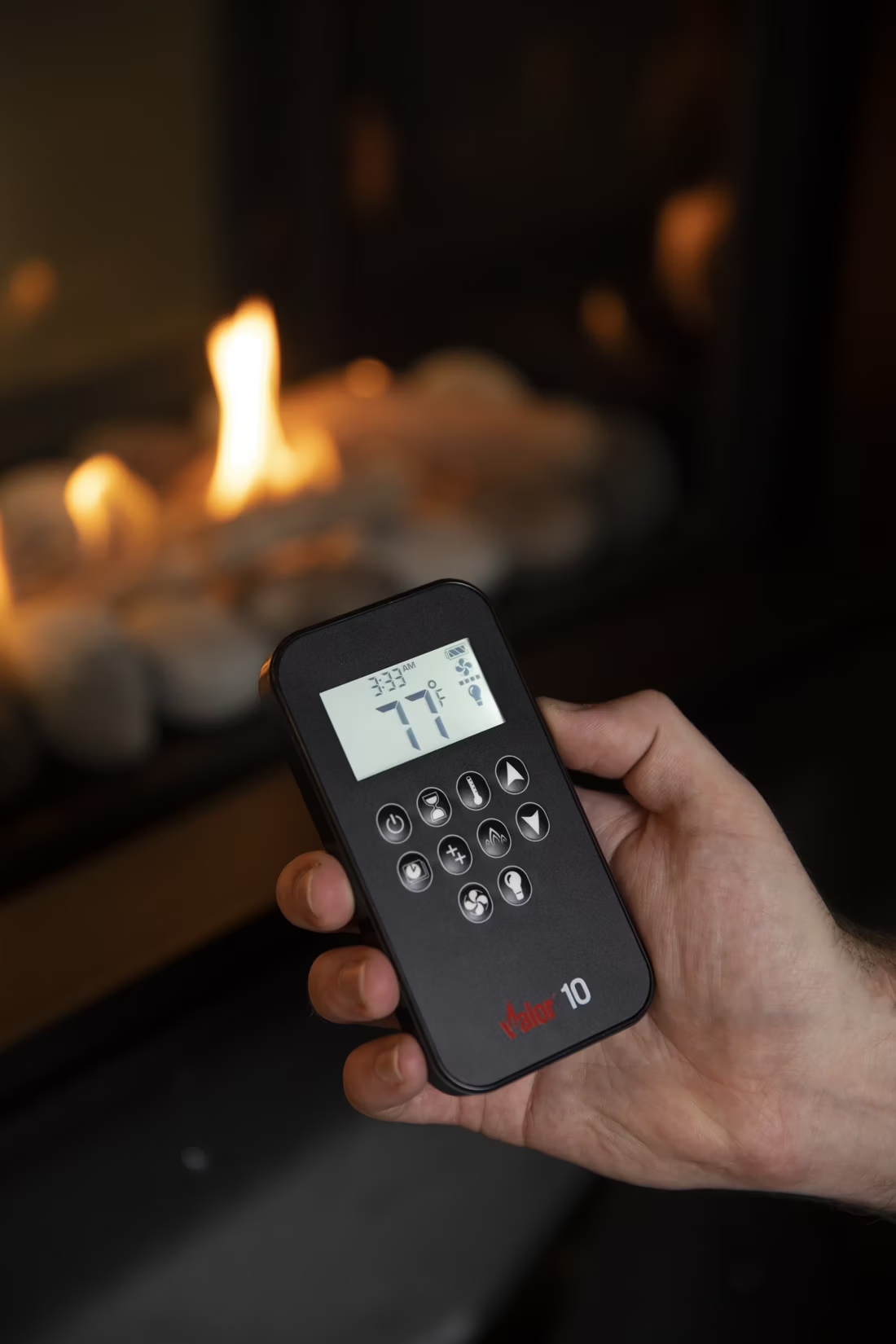
Most gas fireplaces with IPI (intermittent pilot ignition) run on a small battery backup that kicks in the moment power drops, so the unit lights and operates normally off batteries alone. Ice storms and severe thunderstorms do occasionally knock out power in Marion County, so it's worth keeping fresh batteries in the unit. Valor fireplaces take a different approach: their pilot generates its own electricity through the thermocouple, so there's no battery to remember at all. Ask your local dealer which ignition system is in the unit you're considering.
What's the difference between a gas fireplace, gas insert, and gas stove?
A gas fireplace is a fully built-in unit installed during new construction or a remodel, framed into a wall. A gas insert is built to drop into an existing masonry firebox, converting an old wood-burning fireplace into a sealed, efficient gas unit using the existing chimney as the vent path. A gas stove is a freestanding cabinet-style unit that sits on the floor, similar in footprint to a wood stove but running on propane. For Hamilton's stock of older homes with existing fireplaces, an insert is usually the simplest and most cost-effective route.
Do I need a permit to install a gas fireplace in Hamilton?
Yes, a building permit is generally required through the Marion County Building Department for new gas fireplace or insert installations, and any new propane tank installation needs to meet state fire marshal setback requirements from the structure and property lines. Most established local hearth dealers handle this coordination as part of the installation, including scheduling the propane supplier's tank set and the final inspection, so you're not left managing multiple contractors yourself.
Should I get a vented or vent-free gas fireplace?
Vented (direct-vent) units draw combustion air from outside and exhaust exhaust gases back outdoors through a sealed pipe, which makes them the cleaner, more universally recommended choice regardless of climate. Vent-free propane units burn directly into the room and are legal in Alabama, and with no air quality non-attainment issues in Marion County, some homeowners do choose them for supplemental rooms. That said, vent-free units still require correct room-volume sizing and an oxygen depletion sensor, and they add moisture to the indoor air. For a primary living space, most local dealers will steer you toward a direct-vent model.
How often does a gas fireplace need to be serviced?
Plan on an annual inspection, ideally in early fall before the first cold snap. A technician checks the burner, pilot assembly, gas connections, and venting, and cleans the glass and interior. This runs closer to $125 to $200 in the Hamilton area, and it's a quick appointment compared to wood chimney sweeping, but skipping it is how minor issues like a dirty pilot or a failing thermocouple turn into a fireplace that won't light on the coldest night of the year.
Gas or electric fireplace—which makes more sense in Hamilton?
Given Hamilton's mild winters and modest, short heating season, both are legitimate options. A propane gas fireplace or insert delivers real radiant heat and can double as backup heat if the power goes out, which matters when Marion County sees an ice storm. An electric fireplace or log insert skips the propane tank and gas line entirely, installs for a few hundred dollars, and runs efficiently at Alabama Power's or Tombigbee Electric's roughly 16.8 cents per kWh rate—plenty for a supplemental heat source in a climate this temperate. Homeowners without an existing propane tank and who mainly want ambiance plus light heat in one room often lean electric; those wanting a true backup heat source during outages usually choose gas.
Why is a fireplace insert so efficient?
An insert does two things: it seals the chimney completely, so you stop losing air you already paid to heat, and it radiates warmth into the room through the firebox and glass. Most add a heat-exchange fan that pulls cool room air underneath, wraps it around the hot firebox, and pushes it back out warm. Your home is more efficient before you've even lit the first fire.
Are new gas fireplaces really better than old ones?
Two ways, and they're both big. Looks: modern gas fireplaces are realistic enough that it's hard to believe they aren't burning wood. Cost: old units burn a standing pilot year-round (roughly $200 a year), while new ones use pilot-on-demand ignition and modern burners. Add remote controls and thermostat operation, and the day-to-day experience isn't close.
What is an in-home preview and do I need one?
It's a visit where a hearth professional measures your space, confirms the model you picked actually works in your home, and walks the specs—framing, gas line, venting, finish work—before anything is ordered. Some details you just can't know until you see the house. Never make a down payment without one; it's the single most-skipped step that burns buyers.
Can a fireplace actually lower my heating bill?
Yes—by creating a comfort zone. A furnace heats every square foot of the house just to warm the one room you're in; a gas fireplace on low burns roughly a sixth of the gas a typical furnace does. Set the furnace around 55–60 degrees as a baseline, then heat the rooms your family actually uses. Families who heat this way commonly save $20–$60 a month.
Nearby Dealers
Hearth shops serving Hamilton and the surrounding area. Every listing shows whether it is a WhyFire partner, a dealer we have verified as authorized for the brands we recommend, or a local business carrying hearth products. No manufacturer pays for placement. How we verify dealers →
Vaughan Gas
Thompson Gas
Fireplace Creations By Bmc
Lavastone Industries
Jasper Feed & Seed Supply
Rogers Lp Gas LLC
Phoenix Sales
Hawkins Heating & Air Conditioning
Find your gas fireplace in Hamilton.
Tell us about your home and heating goals, and we'll match you with a trusted local Hamilton-area dealer plus a free Project Guide & Parts List—the exact parts, including the vent kit, for your gas fireplace project.
Find Your Fireplace →