
Keep Your Family Warm and Safe—No Matter What
With winter lows averaging 35°F and just 2,533 heating degree days a year, Graysville doesn't need wood heat to get through winter. But plenty of homeowners here still want one—for the look, the backup warmth during ice storms, and the option of a real fire on the coldest nights.
Every Project Starts From One of These Five Situations
Why wood isn't the default heating choice in Graysville.
Graysville sits in climate zone 3A at 485 feet, part of the Birmingham metro's mixed-humid belt. Winters are short and mild—the average low hovers around 35°F, and the town logs roughly 2,533 heating degree days a year. Compare that to a place like Duluth, MN, where sub-zero nights make wood stoves a genuine survival tool, and it's clear why wood isn't the backbone of home heating here. Most Jefferson County homes lean on heat pumps and gas furnaces for day-to-day warmth.
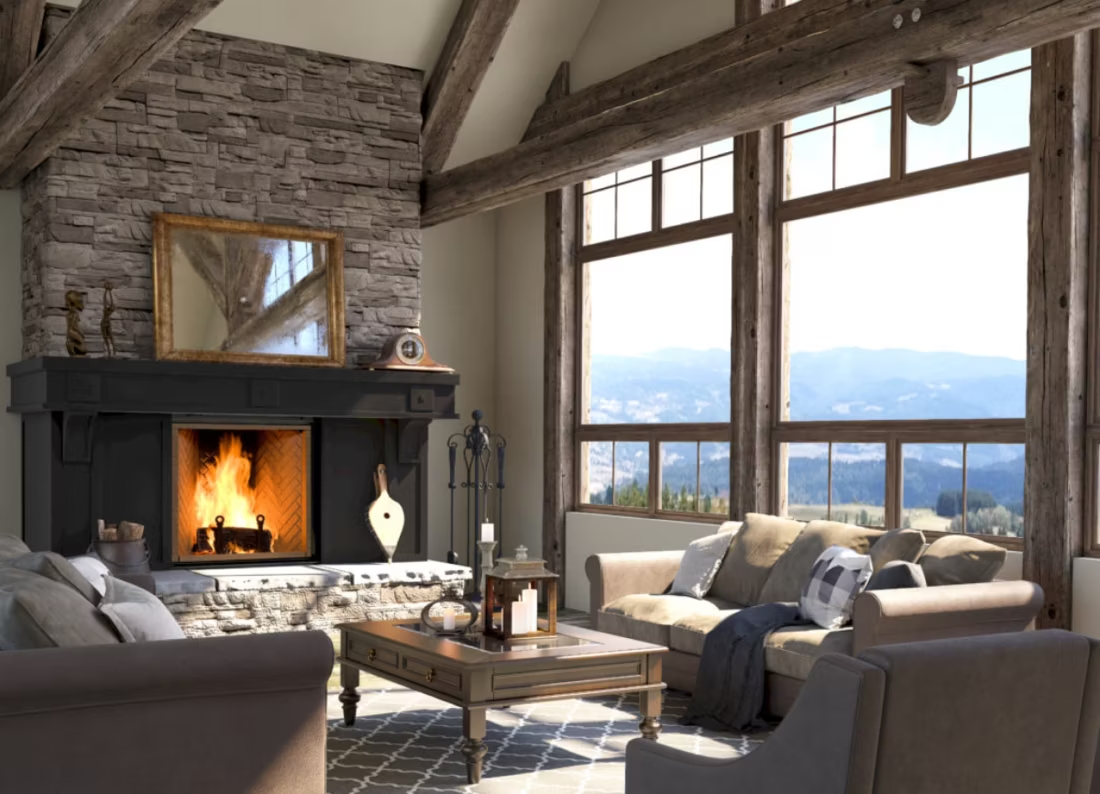
That doesn't mean wood-burning fireplaces and stoves are absent from Graysville—they're just installed for different reasons. Homeowners here often want one for the ambiance of a real fire, as a design feature in a den or living room, or as backup heat for the occasional ice storm that knocks out Alabama Power service across Jefferson County (the February 2014 ice event that paralyzed the Birmingham metro is still fresh in a lot of people's minds). Oak, hickory, and pine are all common and easy to source locally, so anyone who does install a stove or insert has no trouble keeping it fed.
Three steps. No salesperson until you're ready.
Tell us about your project
Your zip code, your situation, and the fuel you're leaning toward—or let the answers point you to one.
See what's actually available
The brands dealers within 100 miles genuinely carry—real options, never a catalog mirage.
Get your dealer & Project Guide
A trusted local dealer, plus the free Project Guide & Parts List that names every component of the job.
Frequently Asked Questions
Does it make sense to install a wood stove in Graysville's climate?
It can, but not as your primary heat source. With an average winter low around 35°F and only about 2,533 heating degree days a year, Graysville's winters are far too mild for wood to be the main way most homes stay warm—heat pumps and gas furnaces handle that job efficiently and cheaply given the short season. Where a wood stove or fireplace earns its keep here is supplemental and situational: a real fire on the handful of nights each year that dip into the 20s, ambiance in a main living space, or backup heat if an ice storm takes down power lines, which happens in Jefferson County more often than people expect.
How much does a wood stove or fireplace installation cost in Graysville?
Because most Graysville installs are ambiance or backup projects rather than whole-home heating systems, they tend to run toward the simpler end of the spectrum—typically $3,000 to $6,500 for a freestanding stove or insert with a Class A chimney or liner, depending on whether you're venting through an existing masonry chimney or building new. Homes without any existing fireplace or flue run higher once framing and roof penetration are factored in. A local hearth dealer can give you a firm number after seeing your layout.
Do I need a permit to install a wood stove in Graysville?
Yes—new wood-burning installations generally require a building permit, coordinated through the City of Graysville or Jefferson County's development services department depending on your address (Graysville straddles both zip codes 35117 and 35073). Air quality isn't a concern in this part of Jefferson County the way it is in some Western non-attainment zones, so there's no burn-curtailment schedule to worry about—the permit process here is mostly about clearances, chimney construction, and confirming the unit meets current EPA emissions standards.
What firewood works best for a stove in Graysville?
Oak and hickory are the standouts—both are dense hardwoods native to the Jefferson County area that burn long and hot, which matters if you're using the stove for backup heat during an outage. Pine is also common locally and lights easily, making it a good choice for kindling or quick ambiance fires, though it burns faster and leaves more resin buildup in the flue than oak or hickory. Most local firewood sellers around the Birmingham metro sell mixed hardwood by the cord, and seasoned oak or hickory is worth the slightly higher price if you'll actually be burning through winter storms rather than just for looks.
Wood stove or fireplace insert—which fits a Graysville home better?
If you already have a masonry fireplace—common in Graysville's older homes—an insert is usually the better move. It uses the chimney you've already got, dramatically improves heat output over an open hearth, and keeps the existing look of the room. A freestanding stove makes more sense in newer construction or a room without an existing flue, since it can be installed almost anywhere with the right clearances and a new Class A chimney. Given how few homes here rely on wood as primary heat, most Graysville installs are inserts into existing hearths rather than new stove setups from scratch.
Will a wood stove keep my house warm if the power goes out?
Yes, and that's actually one of the strongest arguments for having one in this area. Heat pumps and gas furnaces with electric ignition and blowers stop working the moment Alabama Power service drops—and Jefferson County has seen multi-day outages from ice storms, including the February 2014 event that left parts of the Birmingham metro without power for days in freezing conditions. A wood stove with a masonry or Class A chimney needs no electricity at all, which is why some Graysville homeowners who'd otherwise skip wood heat entirely still keep a stove or insert on hand specifically for that scenario.
How often should my chimney be cleaned if I only burn occasionally?
Even light or seasonal use warrants an annual inspection—the CSIA recommends this regardless of how often you burn, since creosote can build up from just a handful of fires, especially if pine is part of your wood mix. For a Graysville home using a stove mainly for ambiance or occasional cold nights, a once-a-year sweep before the season's first fire (typically late fall) is enough. Homes using the stove more seriously as ice-storm backup heat should have it checked and swept every year without exception, since that's exactly the appliance you're counting on to actually work when you need it.
Where can I buy firewood near Graysville?
Firewood suppliers throughout the Birmingham metro and Jefferson County deliver to Graysville addresses in both the 35117 and 35073 zip codes, typically selling seasoned mixed hardwood—often oak, hickory, and pine—by the cord for somewhere in the $200 to $325 range depending on species and how well-seasoned it is. Since wood isn't a primary heat source for most homes here, you're generally buying in smaller quantities than someone heating full-time would, and a face cord or half cord often covers a season of occasional or backup use.
Wood stove vs. electric heat pump—what actually makes sense for a Graysville home?
For day-to-day heating, an electric heat pump almost always wins in Graysville's climate. Alabama Power's residential rate runs around 16.77 cents per kWh, and a modern heat pump is efficient enough in a zone 3A climate with only 2,533 heating degree days to keep a house comfortable cheaply all winter—which is exactly why heat pumps dominate here. A wood stove isn't really competing with that for your primary heat; it's filling a different role, as backup heat during an ice-storm outage or as a fireplace you actually enjoy using. Most Graysville homeowners who install one already have electric or gas as their main system and add wood on top of it, not instead of it.
Why won't my new wood stove get going like my old one?
New wood stoves are 70%+ efficient, so far less heat goes up the flue—which also means less draft to get a fire established. The rule: build a genuinely hot fire for about 45 minutes before you choke it down. Skip that and you get smoke in the room, creosote in the chimney, and a fire that never takes off. Most performance complaints trace straight back to this.
What's the difference between an insert and a zero-clearance fireplace?
An insert is a fireplace that slides into a pre-existing wood-burning fireplace—if you don't have one, there's nothing to insert it into. A zero-clearance fireplace is built into a framed wall, which makes it the answer for remodels and new construction. Simple test: existing masonry fireplace means insert; blank or framed wall means zero-clearance.
How much should I budget for a fireplace?
For an average home—covering the fireplace, the vent pipe, and basic installation—a budget between $3,900 and $5,500 gives you a lot of options across wood, gas, and pellet. By the time you add finish work, gas line, and electrical, the average complete installation lands between $5,000 and $12,000 all-in. In a remodel or new build, a good rule is to put about 2.5% of the total project cost toward the fireplace.
Does a fireplace add value to my home?
On average, a fireplace adds back to the home about the same amount you spent installing it. Add the monthly savings from heating the rooms you actually use instead of the whole house—often hundreds of dollars a year—and the value case is strong before you even count what a fire does for how your family uses the room.
Nearby Dealers
Hearth shops serving Graysville and the surrounding area. Every listing shows whether it is a WhyFire partner, a dealer we have verified as authorized for the brands we recommend, or a local business carrying hearth products. No manufacturer pays for placement. How we verify dealers →
Allgas, Inc. - Gardendale
Southern Fireplaces
Jasper Feed & Seed Supply
Hawkins Heating & Air Conditioning
Find your wood fireplace in Graysville.
Tell us a bit about your home and how you'd actually use it—ambiance, backup heat, or both—and we'll match you with a trusted local dealer and a free Project Guide & Parts List for your wood fireplace or stove.that includes the exact venting and parts needed for installation.
Find Your Fireplace →